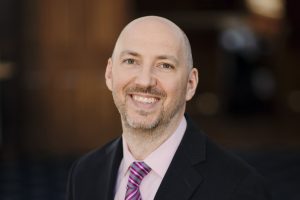
Michael Pearlmutter, CEO of the EveryLife Foundation for Rare Diseases (the EveryLife Foundation), brings a deeply personal motivation and commitment to driving meaningful change for the rare disease community. In this conversation, Pearlmutter reflects on the Foundation’s mission, its impact across the rare disease ecosystem, and the evolving opportunities to better serve the 30 million Americans living with a rare condition. Following its own “theory of change,” the EveryLife Foundation focuses on science-driven advocacy, evidence-based policy, and empowering patients to use their stories to fuel progress.
What motivated you to join the EveryLife Foundation, and how has your personal and professional background shaped your vision for leading the organization?
For me, joining the EveryLife Foundation was both professional and deeply personal. When I was younger, I wanted to be a submarine officer in the US Navy and attended the Naval Academy in Annapolis with that goal in mind. Six years later, I was medically discharged and eventually found my way into nonprofit work. I supported organizations funding scientific research in the disabilities space, which I loved and felt deeply connected to.
Then in 2022, everything changed. When my twins were nine months old, I went to what I thought was a routine doctor’s appointment and was told I had a rare disease, which was initially described to me as terminal blood cancer. I was told I likely would not live long enough to see my twins start elementary school. Like so many people in the rare disease community, I quickly learned that you cannot accept the first terrifying thing you hear in a medical office. Because I worked in research, I started digging into the science and found a researcher in New Jersey. I convinced him to take me on as a patient, and that’s really where my rare disease journey began.
I also recognize how much privilege I have in our community. There is a repurposed drug that works for my condition. It’s covered by insurance, and I respond to it. That is not the case for so many people. So, I made a promise to myself in those early days that if I ever had the chance to serve this community that I was now a part of, I wouldn’t pass it up.
I joined the EveryLife Foundation in April 2024, and it was the first time I publicly shared my story. Since then, I’ve had the privilege of standing shoulder to shoulder with rare disease advocates, making sure their voices are heard and that their lived experiences shape policy, regulation, and innovation.
If the EveryLife Foundation has a superpower, it’s that we give people the confidence to feel part of something bigger. We help people tell their stories not just for the sake of telling them, but to drive real, meaningful change. When I was diagnosed, I felt completely alone with only a handful of people knowing about my condition. Joining the EveryLife Foundation showed me that I was actually part of a 30-million-person community. There is tremendous power in that, and with that power comes the responsibility to use our stories to help build the world rare disease patients deserve.
Could you give a brief overview of the EveryLife Foundation’s mission, its core focus areas, and the role it plays in advancing rare disease policy?
The EveryLife Foundation is an umbrella, rare-disease patient, advocacy organization, and our work really centers on policy, advocacy, and patient engagement. What makes the EveryLife Foundation special is the way we bring all of those pieces together through a very intentional theory of change.
One thing that really sets us apart is our Community Congress program. We believe real progress in rare disease only happens when patient advocacy groups and industry sit at the same table as equal partners. Community Congress is built around that idea. It brings together more than 250 patient advocacy organizations and around 100 industry partners to help set the Foundation’s priorities through four working groups: public policy, regulatory, access and value, and newborn screening and diagnostics. Each working group is co-led by someone from the patient advocacy community and someone from industry, which keeps the balance right where it needs to be.
Another core part of who we are is the way we operate at the intersection of data and storytelling. Patient stories are powerful, and they’re at the heart of everything we do. But those stories become even more impactful when they’re backed by solid evidence. Through our Policy Research Program, we’ve produced more than a dozen papers over the past six years that have shaped conversations across the rare disease ecosystem. When an advocate shares what their diagnostic journey looked like, we can support that with data showing that, on average, the diagnostic odyssey takes six years, includes 17 medical appointments, and costs more than USD 220,000. That combination of lived experience and evidence-based data is what moves people.
Finally, our work blends policy and advocacy in a very intentional way. Policy priorities come directly from the community through the Community Congress process rather than being dictated from the top down. We have a living policy agenda on our website that reflects those needs at both the state and federal level. On the advocacy side, our (Rare Disease Legislative Advocates) RDLA program gives people the tools and opportunities to act on their priorities, whether that’s during Rare Disease Week on Capitol Hill, Rare Across America, or in smaller meetings throughout the year. The community sets the direction, and we help ensure their voices are heard.
Which specific policy areas are you most focused on today?
Rare disease is such a dynamic policy environment that my answer today may not be the same three months from now. Some issues move quickly, and others take years to come to life. A good example is the Rare Disease Innovation Hub at the FDA. The idea first came out of a scientific workshop we hosted in 2018 and only became a reality in 2024.
Today we have a few areas that are top of mind for us. We’re very focused on strengthening the core infrastructure that the rare disease community depends on. Things like the FDA Innovation Hub and NCATS may not make headlines every day, but they’re essential. They’re the backbone that makes real progress possible.
Access issues are also front and center. We’re deep into an effort called the Rare Access Initiative, which has a lot of components but is heavily focused on Medicaid. More than half of the rare disease community relies on Medicaid, so making sure it works for them is absolutely critical. Additionally, geography is a major access issue. Many rare disease patients need to cross state lines to visit specialists or receive certain treatments. Hence, we’re doing significant work on rural health and payer barriers to make sure patients aren’t penalized simply for where they live.
Third, we’re prioritizing policies that keep innovation moving. The Priority Review Voucher (PRV) program is a great example. It costs taxpayers nothing, it’s market-based, and it has helped bring more than 40 therapies to patients, which included over 30 first-ever treatments. The EveryLife Foundation led a sign-on letter supporting the program that more than 200 patient advocacy organizations joined, and the Give Kids a Chance Act recently received unanimous support in the House and has moved on to the Senate. That’s how important this is to the community.
Newborn screening and shortening the diagnostic odyssey are also huge priorities. We had some big wins last year, like Virginia becoming RUSP-aligned, which means more than half of all babies in the US are now born in states aligned with the federal recommendations. But we also faced major setbacks, like the federal committee that approves new RUSP conditions being disbanded. The Foundation stepped in and convened an ad hoc review for Duchenne muscular dystrophy and MLD and we were excited to learn in late December that both conditions were added to the federal RUSP.
Finally, we’re seeing rapid growth in patient-led drug development, where patient advocacy groups or individual advocates are essentially building mini biotech efforts to pursue treatments for their loved ones. It’s inspiring, but incredibly complex. Our Rare Bootcamp program, in partnership with Ultragenyx, gives those groups a roadmap and the expertise they need to move forward responsibly and effectively.
Together, all of these efforts sum up to the same goal of making sure rare disease patients have access to timely diagnosis, meaningful innovation, and the care they need, no matter where they live or what condition they face.
From your perspective, how would you characterize the greater rare disease landscape of the US as it relates to being a prioritized focus area at the federal level?
To start off, there is federal infrastructure in place, and we’re incredibly grateful for it. The Rare Disease Innovation Hub at the FDA is a great example of a success that we advocated for and eventually became a reality. Having something that functions as a center of excellence to ensure best practices are shared across CDER and CBER every time a rare disease product is reviewed is absolutely pivotal. It supports getting safe, effective treatments to patients as quickly as possible, which is what the entire community is striving for. Still, the truth is that 95 percent of rare disease patients in the US still don’t have an FDA-approved treatment. That is not what success looks like. While we are grateful for the existing innovation hubs, NCATS, and other federal entities that act as engines of hope, we also have to acknowledge the gaps.
However, the thing that really differentiates the US from some countries that have wider, more holistic national rare diseases strategies is our tremendous innovation ecosystem. Much of the work done does not sit within the federal government. In many cases, it’s being driven by patient advocacy organizations and umbrella organizations like the EveryLife Foundation.
Everyone in this space is working incredibly hard to keep patients at the center, whether the focus is regulatory flexibility, policy reform, innovation, or development. But it’s also challenging. Resources are always tight, especially when nonprofits are carrying responsibilities that, in many countries, would fall to the public sector.
That being said, the EveryLife Foundation wouldn’t exist if we didn’t believe the system could work better. Our mission is to make the ecosystem be as patient-centric, accessible, and innovation-friendly as possible. That means bringing together policy work, regulatory work, and therapy development efforts every day with the goal that safe and effective treatments reach every patient in this country.
What makes collaboration so essential in rare disease policy and innovation, and can you share examples of programs that helping advance outcomes for rare disease patients?
Collaboration is absolutely central to rare disease progress, and it is the foundation of EveryLife’s theory of change. We are, by design, a coalition organization. Our Community Congress brings together more than 250 patient advocacy organizations and over 100 industry partners. In rare disease, no effort that is meant to be sustainable or truly impactful happens without multiple stakeholders at the table. The mix of stakeholders may shift depending on the issue, but one thing we insist on is that patients and caregivers are included from the start.
One example that really showcases this approach is our bi-annual Scientific Workshop. The 2024 workshop focused on developing guidance for ultra-rare conditions which affect only a fraction of the broader rare disease population but have extremely high unmet need. We had industry, regulators, researchers, consultants, patients, caregivers, nonprofits, and clinicians all in one room, and together, they shaped a set of guidelines specifically for ultra-rare diseases.
Our next workshop in 2026 will look at the regulatory landscape of rare diseases. The goal is to produce an updated version of the Guide to Patient Involvement in Rare Disease Therapy Development. The guide provides a framework for patient advocates and sponsors to integrate patient experiences into the entire drug development process, which is called patient focused drug development (PFDD). When we created the first edition of the guide, it involved 23 steering committee members and 88 subject matter experts across academia, industry, patient groups, and payers. What makes the guide so impactful is that it wasn’t created for the community but with the community. That is the essence of why collaboration matters. It ensures the science, the policies, and the strategies that come out of these efforts actually reflect the needs, priorities, and lived experiences of the people they are meant to serve.
Looking ahead, where do you see the greatest opportunities to scale the organization’s policy impact?
I think of the EveryLife Foundation as having four legs of a stool. Two foundational legs are policy and advocacy. While the specific needs change year to year, those pillars will always be central to our work. For example, at the start of the year I would not have guessed that Medicaid utilization would become such a major focus for 2025. Yet we spent much of the year advancing the Rare Access Initiative, which will generate much-needed evidence about how the rare disease community relies on Medicaid, as well as provided opportunities for members of the community to be involved at the state level through DUR and P&T boards.
The other two legs — patient engagement and therapy development — are where we expect to see real growth in the coming years. We have always had patient engagement integrated within the organization, but we continue to build it out as its own dedicated effort. One example is our rural health initiative, which will launch in 2026 and addresses the geographic disparities that limit access to specialists, diagnostics, and treatments for people who live far away from major medical centers.
Another emerging priority for our patient engagement efforts is the transition from pediatric to adult care. As more treatments extend and improve life expectancy, the transition period has become a critical gap for rare disease patients. We call this the “care cliff” when pediatric supports fall away, and families are left unsure of what adult care even looks like. We are tackling this transition through a policy and advocacy lens, exploring how we ensure continuity of care by making sure adult patients have access to the specialists, coverage, and services they need.
The last major area of expansion is patient-led therapy development. Our PFDD guide has become a roadmap for communities starting this journey, but the process is incredibly complex. In 2025, we launched a partnership with Ultragenyx to create the Rare Bootcamp. This is a three-day program that walks families through the fundamentals of therapy development and gives them direct access to mentorship and expertise. The demand has been overwhelming, and we are finding that families don’t just want a single point of training but want ongoing support. In 2026, you will see us expand this work into more of a continuum with ongoing coaching for advocates, access to subject matter experts, and a structured pathway that supports families from early conversations with providers, all the way through the long arc of therapy development.
What message would you like to share with rare disease patients, advocates, healthcare partners, and policymakers who look to the Foundation for guidance in the space?
I want to come back to the EveryLife Foundation’s core mission of providing hope for meaningful change through science-driven policy and advocacy. Every word in our mission matters but science-driven is especially important. For so many people in this community, progress only happens when they themselves help move the science forward. Our job is to be the trusted partner that supports that effort in every way we can.
Our “four legs” of policy, advocacy, patient engagement, and therapy development are all interconnected. You cannot separate regulatory progress from drug development, or access issues from policy change. Whether we are fighting for the continuation of the PRV program, pushing to strengthen the infrastructure at FDA, or working to ensure families can actually access treatments once they exist, every one of those priorities has to be shaped by the patient community. And having that patient-centric lens is the foundation of everything we do.
With the cutting of public funds to research, 2025 has been a difficult year for the rare disease community. At the same time, we have also seen an extraordinary level of strength, resilience, and collective advocacy. People are still fighting for their own conditions and standing up for the entire rare disease ecosystem. That solidarity has been a real source of hope, and I want to say that the EveryLife Foundation is here for you.
We are standing shoulder to shoulder with this community through every policy battle, every access challenge, and every effort to bring therapies to patients. We are inspired by the advocates who push us to do more, and we are committed to making sure they have every tool, resource, and ounce of support we can offer. Hearing their stories and working with this community every day is incredibly humbling. It drives us to keep building a system that truly serves each and every rare disease patient.