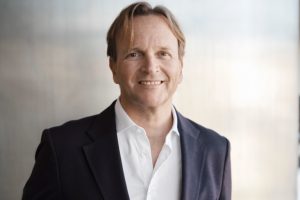
Michael Kocher, Chief Executive Officer of Xellia, brings over 15 years of pharmaceutical industry experience to his leadership role at the Danish API manufacturer. Under his leadership since October 2023, the company has undertaken a comprehensive strategic realignment, divesting its US operations while refocusing on its core competencies in fermentation-based API manufacturing. His tenure has been marked by decisive operational restructuring, achieving near-breakeven performance in under two years and establishing the company as the leading supplier of critical non-beta-lactam antibiotics with a 95 percent on-time, in-full delivery rate.
How has Xellia’s strategic positioning evolved in recent years, particularly regarding its transition between B2B operations and direct market engagement?
Xellia’s evolution over the last decade reflects the broader challenges facing European pharmaceutical manufacturing, and our inherent determination to safeguard our production and supply of critical medicines. Initially, we operated successfully within the traditional B2B framework, serving as a reliable manufacturing partner. However, the increasing dominance of Indian finished dosage form manufacturing created significant competitive pressures across the industry. This not only true for Xellia, but for European manufacturers generally.
In response to these market dynamics, our previous management team pursued forward integration as a strategic differentiator. The concept centred on developing proprietary ready-to-use technology and establishing direct market presence rather than maintaining our traditional B2B supplier role. This vision led to substantial investments in research and development capabilities and the acquisition of a large-scale manufacturing facility in Cleveland, USA.
However, the ambitious scope of this transformation proved incompatible with our organizational scale and capabilities held up against market complexities in the United States. Despite significant capital deployment, the venture became financially unsustainable by 2022-23. Upon my appointment in October 2023, we conducted a comprehensive strategic review and concluded that divestiture of our US operations was essential. We subsequently refocused the organization on our established core competencies: API manufacturing and commercialization within a B2B framework.
Today, while we only selectively pursue finished dosage form opportunities, our primary focus remains API manufacturing combined with relentless commercialization of our ten-molecule portfolio.
Can you elaborate on the rationale behind the decision to close the Copenhagen manufacturing facility and outline the subsequent strategic direction?
The gradual closure of our Copenhagen site over the next decade reflects multiple converging market pressures. European manufacturers face intense pricing competition from Chinese and Indian producers operating with substantially lower cost structures – often including various forms of state support. Simultaneously, our customers operate under heavily regulated reimbursement frameworks, particularly across European markets, which constrain their pricing flexibility and, consequently, their ability to absorb cost increases.
External factors have further compressed margins, including raw material prices, and labour expenses, which have all increased significantly. This creates what I characterize as a “sandwich position”: It is extremely difficult to implement necessary price increases without placing unsustainable pressure on our customers, while our input costs continue rising. Labour costs in Denmark versus India or China represent fundamentally different economic realities. Additionally, the CapEx investment required to maintain and upgrade production capacities on-site is significant. Holistically, the economic fundamentals simply do not support continued manufacturing in this environment, and to future-proof our operations for the years to come, we are focusing on investing in a manufacturing network outside of Denmark, still including our sites in Hungary and China.
Given Europe’s reliance on external API suppliers and the strategic lessons from COVID-19, do you see viable paths for renewed European investment in API production, or will economic pressures continue to push it eastward?
The risk you describe is substantial, without intervention, continued industry migration eastward appears likely unless fundamental conditions change within Europe.
Rather than focusing on reshoring initiatives, which present excessive complexity, our priority should be sustaining the critical manufacturing capabilities that remain in Europe. This requires a three-pronged approach.
First, we must restore market attractiveness, which is admittedly a formidable challenge. Second, we need comprehensive support for existing industry participants to maintain European manufacturing sites. This involves dual mechanisms: capital expenditure support for facility investments, as European manufacturing infrastructure requires substantial investment, as well as a form of volume commitment to drive facility utilization and/or direct operating expenditure support for sustainable economics.
The pandemic provided instructive lessons here. Numerous companies received significant capital to build capacity, but without operational support, underutilization becomes economically devastating. Effective support must address both capital deployment and ongoing operational viability.
Current discussions typically focus exclusively on capital expenditure support. Our counterparts in Brussels often express surprise when operational expenditure support is raised, despite my advocating this dual approach for years, including in previous roles. While capital support mechanisms exist, operational support remains largely unaddressed.
Does industry dependence on government support risk creating unsustainable entities that merely survive from grant to grant, rather than fostering innovation or competitive differentiation?
This question requires distinguishing between two distinct pharmaceutical sectors. The innovator industry primarily focuses on developing novel therapeutic solutions for unmet medical needs. Generic manufacturing, however, is fundamentally about democratizing medicine and ensuring access to life-saving drugs at the lowest possible cost. Generic medicines are estimated to represent approximately 70 percent of European pharmaceutical treatment volume, yet the generics industry operates under entirely different principles from those of the innovator industry.
If we cannot provide attractive market conditions, alternative support mechanisms become necessary. However, please remember, generic industry margins bear no resemblance to innovator pharmaceutical margins.
Can you elaborate on Xellia’s current portfolio composition, particularly your antibiotic production capabilities, and how you navigate the inherent commercial challenges in antibiotic manufacturing?
Our portfolio represents a highly focused strategic concentration comprising 10 distinct APIs with revenue distribution showing roughly 80 percent generated through API business and 20 percent through finished dosage forms. This concentration reflects deliberate strategic positioning rather than limitations; we maintain global market leadership in fermentation-based non-beta-lactam anti-infective APIs, representing our therapeutic focus.
This specialization carries profound responsibility. Five of our ten molecules appear on either the WHO list of essential medicines or the European Union list of critical medicines. If we were to cease vancomycin production, for instance, we would only have two remaining global sources that manufacture and market the product at scale, both located in China. This reality underscores both our market significance and the broader European supply chain vulnerabilities we discussed earlier.
Antibiotic manufacturing presents unique commercial paradoxes that require sophisticated management approaches. These products demand limited usage to preserve therapeutic effectiveness through responsible antimicrobial stewardship, yet commercial viability traditionally depends on volume-based sales models. This creates inherent tension between public health imperatives and business sustainability.
We approach this responsibility with considerable strategic care. We deliberately avoid the feedstock industry despite substantial revenue opportunities to better align with our commitment to responsible antimicrobial stewardship. Additionally, we implement rigorous partner selection processes, conducting thorough due diligence to ensure our products are utilized appropriately within established medical protocols.
This approach requires balancing competing demands through intelligent market positioning. Rather than maximizing volume indiscriminately, we focus on sustainable partnerships with healthcare systems and pharmaceutical companies that demonstrate commitment to appropriate antimicrobial usage. While this creates inherent commercial tension, smart strategic management can effectively balance these competing demands while maintaining both profitability and public health responsibility.
You have led through major transformation and challenging conversations over the past two years. How have you approached this, and what leadership lessons have emerged?
I am fortunate to work with exceptionally skilled colleagues throughout our global organization. Our clear purpose of manufacturing and promoting life-saving drugs provides a crucial foundation that we all share. This responsibility, while substantial, creates meaningful purpose for our employees.
During dramatic organizational change, recognizing the profound impact on employees’ lives becomes paramount. Our approach emphasizes three core principles: absolute transparency regarding our situation and future direction, authentic communication that reflects reality rather than pleasant messaging, and empowering our people to become genuine entrepreneurs and future-shapers with real impact on both company trajectory, personal development, and global health.
This entrepreneurial empowerment represents a significant cultural shift. Employees can make decisions, create impact, and take on corresponding accountability. While demanding, this approach has been well-received. Our mid-sized scale provides distinct advantages, enabling rapid decision-making, co-creation and meaningful individual contribution as we venture into an era of increasing focus on commercialization.
Ultimately, successful change management requires transparency, accountability, and humanity.
Looking ahead, with your streamlined organization, new corporate identity, and refined messaging to stakeholders, what provides cause for optimism despite the challenges discussed?
We initiated this transformation 18 months ago, and our financial performance demonstrates remarkable progress. While legacy burdens remain, we are approaching breakeven, a significant achievement given our starting position.
Our manufacturing performance speaks volumes: we maintain a 95 percent on-time, in-full delivery rate, unprecedented in my pharmaceutical experience. This reflects organization-wide commitment to our strategic direction and represents sustainable performance rather than temporary improvement. We are rapidly approaching financial sustainability.
Our quality track record exceeds anything I have encountered previously. We deliver products punctually and completely, ensuring patients receive uninterrupted treatment access. We are systematically constructing new supply chain infrastructure to secure future procurement and supply capabilities.
Our ambition is to grow our market leadership by continuing to deliver excellence to our customers, and ultimately patients. We will expand beyond our current portfolio, but always within our core areas of expertise.
Looking further ahead, the relocation from Copenhagen is a long-term plan, likely requiring eight to ten years. We have chosen to be fully transparent about this timeline, which reflects our broader commitment to open communication.
I am confident that the foundations of our strong performance, clear strategic path, and honest leadership, position us to become one of Europe’s leading API manufacturers.
Do you have final thoughts on this transformation and Xellia’s evolution from a Danish company to a more global positioning while maintaining European roots?
Our fundamental purpose of providing life-saving drugs to society remains unchanged and will continue as our guiding principle. We take pride in our European roots and recognize the critical importance of European supply chains for accessing life-saving medicines within Europe. This consideration will perpetually inform our strategic decisions.
While we will supply our portfolio globally, we guarantee preservation of our European heritage. Our company purpose will not change; rather, we will intensify our ambition to expand global market leadership and drive commercialization to provide critical medicines to even more patients across the globe.