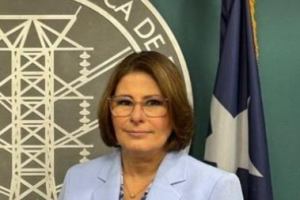
Mary Carmen Zapata brings over 30 years of experience at PREPA into her historic role as the organisation’s first female CEO. Since taking office in January 2025, her top priority has been stabilising Puerto Rico’s strained electrical system by coordinating efforts between the public sector and private operators like LUMA and Genera. She emphasises the critical need for accelerated repairs and improved performance from these partners. While progress toward the island’s goal of 100% renewable energy by 2050 is underway—with major solar and battery storage projects in motion—she underscores the importance of reinforcing existing fuel-based generation to maintain short-term reliability. Committed to collaboration with U.S. federal agencies and determined to foster industrial growth, she urges investors not to hesitate: Puerto Rico is focused on delivering reliable, affordable, and sustainable energy to power its future.
You have spent 30 years with the Puerto Rico Electric Power Authority. How has your extensive experience prepared you for this leadership position?
I began my career in the Electrical System Planning Division in 1990, conducting load flow studies and evaluating new technologies. I then moved to the Transmission and Distribution Directorate, where I worked on the development of construction standards for transmission and distribution systems, as well as operational procedures for the transmission network.
After that, I transitioned to the Generation and Electrical System Directorate. There, I focused on protection system studies and substation maintenance. I also served as a technical advisor to the Generation Director and was involved in preparing specifications. Eventually, I returned to the Planning Division, this time as Division Head, where I worked on Puerto Rico’s Integrated Resource Plan. I oversaw planning for generation, transmission, and distribution systems, as well as the financial planning for PREPA.
You stepped into this position in January 2025. How has the transition been so far, and what are your main priorities in this new chapter for PREPA?
My primary responsibility is working closely with the Energy Czar and the Governor of Puerto Rico to stabilise the electrical system, beginning with generation. At the moment, the system’s dependable capacity is critically low. We are concerned it may not be sufficient to meet summer demand. Given the current challenges, our immediate focus is on working collaboratively with the Energy Czar, the Governor, and PREPA’s operators — LUMA and Genera — to help stabilise the grid.
What is the current role of private operators like LUMA and Genera in Puerto Rico’s energy sector, and how is PREPA coordinating with them to improve infrastructure and reliability? Are there any incentives in place to attract private investment?
PREPA continues to play a central role in shaping energy strategy and overseeing operations, as all transmission and distribution assets, along with around 60% of generation assets, remain publicly owned. Private operators such as LUMA and Genera are required to follow the government’s guidance to stabilise the system. However, the energy infrastructure has seen little improvement in the past three years. For example, PREPA began essential repairs on key generation units in 2021, but progress slowed significantly after Genera assumed control in mid-2023. LUMA’s performance metrics have also declined compared to when PREPA managed the grid, and both operators must accelerate repair and maintenance efforts. While local legislation exists to support public-private collaboration, these current contracts are not traditional partnerships, as the private companies involved do not invest their own capital, highlighting a major challenge in incentivising meaningful private sector investment.
Given that Puerto Rico is a U.S. territory, how would you describe the current relationship between PREPA and U.S. federal agencies? What type of support is most critical for accelerating Puerto Rico’s energy transformation?
As a U.S. territory, we must comply with all federal regulations when developing infrastructure projects. PREPA has maintained consistent and direct communication with several federal agencies, including the EPA, FEMA, and the Department of Energy (DOE).
One of the main bottlenecks we’re currently facing is the EPA permitting process, which is critical to moving our reconstruction projects forward. The Governor of Puerto Rico met with EPA Region 2 Director Mike Martucci, who expressed a strong commitment to accelerating the permitting timeline so we can make faster progress. In addition, more meetings have been held with FEMA and DOE, resulting in the Secretary of Energy declaring an emergency on the electrical system, which will facilitate an expedited execution of repairs and reconstruction works.
Puerto Rico has set a target of 100% renewable electricity by 2050. What progress has been made so far, and how is PREPA balancing short-term reliability with long-term renewable investments?
Puerto Rico is making steady progress toward its renewable energy goals. Over 250 megawatts of utility-scale solar and about 1,000 megawatts of rooftop solar are already operational. In line with the Integrated Resource Plan, PREPA has signed contracts for around 800 megawatts of additional utility-scale solar and nearly 900 megawatts of battery storage. To ensure short-term reliability while transitioning to renewables, we are reinforcing our existing fuel-based generation fleet and investing in smaller, flexible units capable of handling the variability of solar and wind. Strengthening our current system is essential to support a sustainable and resilient energy future.
What is your vision for Puerto Rico’s energy sector over the next four years?
Within the next four years, we must complete repairs on critical generation units and finalise the fuel conversion of some units from fuel oil to natural gas. We also plan to construct two new combined-cycle power plants based on natural gas — one in the north and one in the south. The southern plant will replace the coal-fired facility at AES in Guayama.
Additionally, we aim to complete the reconstruction of critical substations and make essential repairs to 230 kV and 115 kV transmission lines.
What would you like to say to our global readers, particularly those who may hesitate to invest in Puerto Rico due to energy challenges?
I would say: do not hesitate. Our public energy policy is now clearly focused on supporting the development of the industrial sector. The Government of Puerto Rico is committed to regaining our leadership in industry. One of our key goals is to retain our current pharmaceutical base and encourage further investment in Puerto Rico.
We are working to ensure that the island can offer reliable and affordable electricity to support existing industries and attract new ones.
Is there anything else you would like to add, something we may have missed that you would like to share with our readers or future investors?
I would just say that there is no single solution to the energy situation in Puerto Rico. We believe we will find the right balance between renewable and conventional generation, along with robust investment in transmission and distribution systems. That is how we will deliver a safe and reliable energy service, one that promotes industrial and commercial growth.
If the government can resolve key issues with the private operators, we could begin to see progress within two years. In four years, we should see more tangible results. But I believe reaching the ideal balance may take closer to ten years.
On a more personal note, you are the first woman to lead PREPA since its creation in 1941. What does this milestone mean to you?
It is both an honour and a privilege to be the first woman appointed CEO of PREPA. The journey has been long and filled with challenges, especially as a minority in the electrical engineering field. But it has also been incredibly rewarding. I am deeply grateful to the Governor of Puerto Rico for the trust she has placed in me with this appointment.