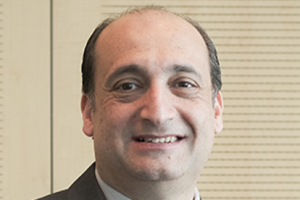
Marwan Fathallah, President and CEO of DIA, outlines how the organisation has evolved into a neutral platform bringing together regulators, industry, and academia to navigate the most pressing issues in healthcare and life sciences. From the transformative potential of AI to the realities of drug pricing, onshoring, and global competition, he highlights DIA’s unique role in shaping dialogue across the ecosystem.
What is DIA, and how has it established itself as a neutral platform for dialogue in healthcare and life sciences?
DIA was founded 61 years ago in direct response to the thalidomide crisis, when a drug prescribed to pregnant women without adequate clinical investigation led to more than 10,000 children being born with severe birth defects. That tragedy compelled regulators, industry leaders, and academia to create a neutral forum where all parties could come together to prevent such failures from happening again. From that starting point, DIA has evolved into a truly global organisation with a presence in nearly every major region of the world.
At its core, DIA serves as a neutral platform where stakeholders across the life sciences ecosystem, from industry, academia, or regulatory bodies, can openly exchange perspectives and address pressing challenges, even when those perspectives diverge. Today, we engage more than 70,000 C-level professionals spanning pharmaceuticals, biotechnology, medical devices, and healthcare systems, while maintaining close relationships with leading regulators across the world. Leaders such as Emer Cooke, Executive Director of the EMA, and Peter Marks, former Director of the FDA’s Centre for Biologics Evaluation and Research (CBER), are Fellows of DIA, a community that plays a vital role in guiding our mission and contributing back to the ecosystem.
Our activities range from flagship annual meetings and regional gatherings to education programmes and targeted consortia. A recent example is our initiative on responsible artificial intelligence in healthcare, which is already gaining significant traction. At this year’s Annual Meeting in Japan, Dr Yasuhiro Fujiwara, Chief Executive of the PMDA, co-hosted the event with us, further underscoring our role in fostering international collaboration. Finally, an area especially close to my heart is our work in nurturing the next generation of leaders. From high school students to university graduates, we seek to inspire and guide young people who may one day follow in the footsteps of today’s leading regulators and innovators.
How would you characterise the current priorities and challenges shaping the US healthcare and life sciences ecosystem?
The US healthcare and life sciences sector is in the midst of profound change. The administration has placed the health of the American population at the centre of its agenda, and that requires a genuine two-way exchange. Regulators need input from industry, while industry, in turn, needs clarity on regulatory expectations. At the same time, the payer system is shifting, with drug pricing and reimbursement under greater scrutiny than ever before, creating a new layer of complexity across the ecosystem.
Innovation rarely comes during times of ease. It is the challenges in the world that drive new thinking. The “America First” focus on strengthening domestic manufacturing and encouraging disruptive innovation is adding momentum to this transformation. It is creating a sharper sense of competition, both within the US and internationally, and that competition ultimately benefits patients, because at the end of the day, we are all patients.
China illustrates this global dynamic well. The country has advanced rapidly from producing raw materials and “me-too” drugs to becoming a genuine engine of innovation. The US recognises this shift and is now doubling down on its own strengths in innovation and supply chain resilience.
Amid these pressures, artificial intelligence has emerged as one of the most disruptive and promising forces, and the appetite for dialogue on these issues is extraordinary. At our recent Annual Meeting in Washington, DC, the AI Town Hall was filled, with participants standing outside the doors to join the discussion. That level of engagement reflects the urgency of the questions now being asked: how can AI accelerate discovery, streamline development, and reduce waste in regulatory review?
How is artificial intelligence being applied in healthcare and life sciences, and where do you see its most immediate impact?
Across the drug development cycle, AI is already proving transformative. In discovery, it is accelerating the comparison, iteration, and suggestion of new entities at a pace we have not seen before. This has drawn in major technology players such as Google, Microsoft, and OpenAI, whose involvement is fuelling innovation and creating new momentum, often through partnerships and deals that are not always visible in the public eye. For the pharmaceutical and biotech sectors, faster discovery not only opens the door to saving lives but also strengthens pipelines and business sustainability.
In development, the focus turns to efficiency. AI is being used to draft protocols, analyse and project data, and reduce the time and cost of clinical programmes. Human oversight remains essential; AI cannot operate in isolation, but these tools are enabling a new market of companies dedicated to development efficiency. Under pressure to deliver medicines more quickly and affordably, this kind of innovation is becoming indispensable.
Regulators are also moving rapidly. At a recent DIA town hall in Washington, DC, the FDA shared how it is working with technology partners to incorporate AI into its processes. One can easily imagine companies using AI to prepare submissions, with the agency applying its own tools to identify critical issues for follow-up, thereby streamlining review without sacrificing rigour. With workforce shortages a persistent challenge, AI also enables regulators to reserve human expertise for complex decisions while automating routine tasks.
The same logic applies to manufacturing, where AI is helping to process vast volumes of documentation and records. By consuming and interpreting this data, it can detect inefficiencies, ensure compliance, and recommend improvements, ultimately driving quality and productivity.
The greatest opportunity lies in applying AI to these resource-intensive, repetitive aspects of the system, freeing up capacity to focus on innovation. Combined with its role in discovery, I believe AI has the potential to reshape how we develop, regulate, and manufacture new therapies in profound ways.
How do you view the push for onshoring and supply chain resilience in the US, and what factors are shaping industry sentiment around it?
It is a complex issue with no straightforward answers. Offshoring took hold because of lower labour costs, the ability to diversify operations, and the strategic value of being closer to individual markets rather than centralising everything in one location. Yet the global landscape has shifted. These are no longer simply low-skill jobs; they are increasingly high-tech, and talent can now be found in abundance not only in the US but also in China, India, Europe, and beyond.
Against this backdrop, there is a growing political and industrial push for “America First.” At DIA, although our headquarters are in Washington, DC, we consider ourselves a global organisation serving patients everywhere. Still, I understand the desire to strengthen supply chain resilience and to create greater stability in the US market. The real question is how to reconcile that goal with cost. Companies may need to embrace greater automation, carefully select which products should be manufactured domestically, and face the reality that higher production costs will inevitably raise questions about who ultimately bears the burden. These are the kinds of discussions happening across the ecosystem today.
Disruption, however, often creates opportunity. Over time, R&D investment has shifted from Europe and Japan into the US, and more recently, some has flowed from the US to China. A renewed emphasis on onshoring could well spark competition, encouraging other regions – Europe in particular – to seek new ways to attract industry and R&D investment. I expect that this dynamic will generate significant global competition, but it will also drive greater innovation within the US as companies adapt to remain competitive.
What impact will the upcoming Medicare price negotiations have on the US healthcare system, and how is DIA contributing to the creation of dialogue?
These negotiations will put immense pressure on the system to deliver care more efficiently and at lower cost, because otherwise the changes cannot be sustained. I believe this will mark the beginning of a profound transformation in US healthcare. The administration has already brought in leaders with deep experience in this area, or with a record of challenging the status quo, signalling that reform is a serious priority. There will inevitably be winners and losers, but the central challenge is ensuring that efficiency and cost-effectiveness do not come at the expense of innovation.
DIA’s role is to convene all stakeholders, from industry and regulators to payers and policymakers, so that these reforms are shaped through constructive dialogue and in a way that ultimately serves patients. That is precisely why DIA’s work is more relevant today than ever.
What are the key issues in ensuring patients have access to innovative therapies while still sustaining long-term innovation?
The most difficult question is how to fund advanced therapies. Cell and gene therapies, including CAR-T, can cost several million dollars per patient. For families, they may represent the difference between a lifetime of treatment and a potential cure, and understandably, patients are pressing governments to make them accessible. Yet the financial question of who pays cannot be ignored. One possible answer is to reduce inefficiencies within the healthcare system. If resources are used more effectively, savings can be redirected to fund breakthrough therapies, which in turn supports continued innovation.
This is where value-based healthcare becomes particularly important. Insurers increasingly want to pay for outcomes, and providers are under pressure to demonstrate value. At the same time, the burden of cancer is growing, and rare diseases are becoming more prevalent. Without new therapeutic modalities, the system risks being overwhelmed. Difficult choices will need to be made, but I believe these discussions can lead to a framework in which efficiency, access, and innovation reinforce one another. That is the dialogue we need to advance.
With China rapidly evolving from manufacturing and “me-too” drugs to genuine innovation, how can the US maintain its position as a global leader in life sciences?
I recently addressed this question at the National Academy of Sciences in Washington, DC, and I believe the starting point is mindset. One of China’s greatest strengths is its long-term orientation. When national objectives are set, the entire system aligns behind that goal. This is evident if we trace China’s transformation from raw materials to generics, to drugs for local use, and ultimately to innovative medicines for the global market. For the US, sustaining leadership will require a similar collective mindset across government, industry, and institutions, where innovation is treated as the central driver of healthcare transformation.
Talent is equally critical. The US has long benefited from its identity as a nation of immigrants, and the diverse perspectives, ambition, and entrepreneurial spirit of those who come here have fuelled much of its innovative capacity. That advantage must be preserved and actively nurtured. At the same time, we need to inspire and prepare the next generation. STEM is essential, but I prefer to think of it as “STEM+.” Innovation depends not only on scientists and engineers, but also on business leaders, marketers, and educators who can translate new ideas into real-world impact. At DIA, we place strong emphasis on engaging young people and supporting them throughout their journey so they are equipped to contribute to this ecosystem.
The policy environment also plays a decisive role. The administration is working to reduce complexity and bureaucracy to make it easier to invest and operate in the US. Regulation will always be necessary, but it must be designed in a way that enables rather than hinders innovation. Finally, leadership requires a long-term vision. Without sustained investment in early-stage technologies, the risk is that the system stagnates and drifts toward genericism. As difficult as today’s debates and opposing viewpoints may seem, they are creating the pressure for change that the US needs, pressure that, if channelled correctly, will help the country continue to serve its people through innovation.
As we close, is there a final message you would like to share with our readers?
While our discussion has centred on the US, I would emphasise that similar conversations are taking place around the world. In Asia, Europe, the Middle East, Africa, Southeast Asia, and India, healthcare and life sciences are evolving at a remarkable speed, and DIA is deeply engaged in these regions as we are in the US. It is humbling to see how rapidly these ecosystems are advancing and how committed stakeholders everywhere are to shaping the future of health.
I also like to end on a more personal note, one that I share often at our conferences. The life sciences are, in my view, one of the most rewarding fields to work in, because at their core they are about saving and improving lives. But I remind everyone that at the end of the day, we are all patients. Holding on to that perspective keeps us grounded and ensures that our collective efforts remain focused on what truly matters.