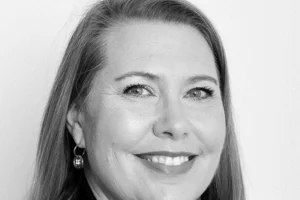
Marianne Pilgaard discusses the evolution of Denmark’s clinical trial landscape, the continued top-tier status of the country in trial activity per capita, and the nation’s commitment to digital innovation and patient-centric research. Pilgaard covers the impact of healthcare reform, regulatory harmonisation, decentralised trials, and the prospects for advanced therapies and medtech in the Danish context.
Since your last interview in 2021, what have been some of the key developments that have allowed Denmark to remain the European leader in the number of clinical trials per capita?
Since 2021, Denmark has continued to build upon its strengths in clinical research. We possess a very robust life science ecosystem, largely due to our highly skilled researchers and the consistent political commitment to supporting clinical research. What is particularly noteworthy is that this political support spans across different governments. Regardless of political alignment, everyone recognises that life science is a long-term investment, and it is an area of shared priority.
Danish culture also significantly contributes to our success. We have a longstanding tradition of public-private collaboration grounded in trust, transparency, and openness. These cultural elements create an environment where science, and clinical trials in particular, can truly thrive.
In addition, the Danish public generally places a high degree of trust in science and understands the importance of contributing to innovation—including through participation in clinical research.
Of course, maintaining leadership in this space requires ongoing effort. Clinical trials are not static, they demand constant improvement. Many countries see the benefits that trials bring not only in public health, but to economic growth as well. Therefore, competition in this area is stiff.
Another crucial element in our competitiveness is Denmark’s advanced digital infrastructure. Our use of the CPR (central person register) number enables detailed and secure research while facilitating both regulatory and exploratory clinical studies.
For those not familiar with Trial Nation, can you offer an overview of the organization’s mission and positioning?
Trial Nation is a public-private partnership structured as an association. Our mission is to increase investments in pharmaceutical and medtech clinical trials within Denmark. We represent the full spectrum of stakeholders—hospital owners, government ministries, patient organisations, researchers, and a large number of life science companies.
Our work focuses on two main areas. Firstly, we facilitate access to a nationally coordinated clinical trial infrastructure. This infrastructure is staffed by highly skilled professionals who are experts in managing clinical trials. Secondly, we focus on improving operational framework conditions. Essentially, we try to remove the “bumps on the road” that can hinder clinical trial execution in Denmark. Acting as a neutral facilitator, we bring all stakeholders together to craft solutions that support the entire ecosystem.
With Denmark’s government proposing a healthcare reform last year, Health Close to You, what kind of impact do you foresee for clinical trials in Denmark?
Systemic changes require attention, and this includes the proposed healthcare reform. Maintaining Denmark’s strong position in clinical research takes continued focus and collaboration among all stakeholders. When speaking to various actors across the healthcare system, there is a shared focus on maintaining Denmark’s strong position in clinical research throughout the restructuring process. While any systemic change requires close attention, the consistent message I hear is: “let’s make sure we keep the momentum going.”
With increased patient centricity being a core goal of the healthcare restructuring, how does this influence the clinical trial landscape, and how is Trial Nation contributing to that shift?
Since 2022, we have been involved in a major project focused on decentralised clinical trials. This model brings some or all aspects of a trial closer to the patient. Whether that means data collection, treatment, or communication, the goal is to make the entire process more accessible and patient centred.
Interestingly, this initiative began before we knew anything about the healthcare reform. So, in a way, we were ahead of the curve. The project includes participation from all regions and numerous life science companies—reflecting our strength in uniting different stakeholders.
To name two practical applications, we have worked on national solutions for how to report safety events remotely and how to deliver medications to patients participating in trials.
Given Denmark’s strong position in digital health, how is digitalisation currently being utilised to enhance clinical trials?
At the national level, we work closely with the Ministry of the Interior and Health which manages the regulatory framework around clinical trials and the digital use of health data. To work with data in Denmark, you need a valid research purpose and a qualified researcher. We do not handle data independently within Trial Nation, but we facilitate access by connecting the right people across our network.
At the EU level, Denmark is participating in preparatory case-study projects related to the European Health Data Space initiative. While Trial Nation is not formally involved as a partner, we remain in close contact with those who are monitoring the developments closely. The potential is significant, particularly depending on how implementation unfolds.
The EU has been working on harmonising clinical trial regulations to facilitate multi-country studies. What implications does that have for Denmark?
I must commend the Danish Medicines Agency. They have been true frontrunners in various EMA projects and are deeply committed to scientific guidance and speedy regulatory approvals. They have even introduced an expedited review process for early-phase trials.
While the EU regulation and IT systems are unified, there are still operational discrepancies across countries. The devil is in the details as they say. But from a Danish perspective, the implementation has been smooth and the dialogue between the Agency and stakeholders has been very constructive.
There is growing recognition within the EU that national legislation can sometimes overlap or conflict with the broader European regulatory framework. Recent surveys circulated by the European Commission are a clear sign of their willingness to understand and address these barriers. The surveys highlight the Commission’s effort to identify where local regulations continue to impact clinical trial operations, despite the existence of EU-wide rules. This initiative showcases a broader commitment to improving regulatory alignment across member states, and operational harmonisation of the regulatory processes in the EU is crucial for our ability to compete in the international clinical trial arena.
What does the current landscape for medtech clinical trials in Denmark look like?
The current version of the Medical Device Regulation presents real challenges, particularly for smaller medtech companies. There is a mismatch between their developmental stage and the heavy administrative burden imposed by regulation. While we do continue to see medtech trials, the need for regulatory revision is urgent.
Are there any other ongoing projects that are a current focus for Trial Nation?
Besides decentralisation and digitalisation, we are also looking at readiness within general medicine. This includes participation in an Innovative Health Initiative project, READI, aimed at reaching under-researched and underserved populations who are often seen in general practice.
We are also collaborating on developing infrastructure around advanced therapy medicinal products (ATMPs). While we are not leading that effort, we do contribute expertise and coordination support.
The Novo Nordisk Foundation has made significant investments in this area, including in an accelerator developed with the Danish Technical University. In general, Denmark has long-standing research excellence in ATMPs—particularly in areas like oncology with CAR-T therapies through Prof. Svane.
While the capabilities are here, the challenge now is more about how we organise those capabilities and align them with European initiatives. Essentially, how can we connect all the right actors across both national and EU-level platforms.
Looking ahead, what are the top priorities for Trial Nation in the coming years?
Our main focus will be on continuing to attract clinical trials to Denmark and securing the solid framework conditions for conducting trials in Denmark. Our focus will therefore also be on securing a constant focus on research during the ongoing healthcare reform.
For example, one goal is to increase trial accessibility while reducing pressure on specialised hospitals by shifting some responsibilities to the primary care sector. This will not replace highly specialised treatment, but it will help balance the system to make it more efficient and accessible.
What final message would you like to deliver on behalf of Trial Nation and the broader Danish medical research community?
Come to Denmark. We are happy to work with you, and we are a nation that is easy and rewarding to collaborate with.