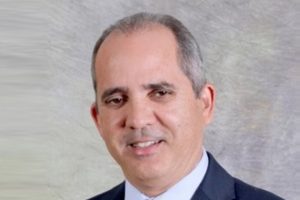
With a firm foothold in Puerto Rico’s life sciences sector, leading service provider ISPV is charting a path beyond its home market, balancing expansion with the industry’s evolving challenges. Founder Luis Manuel Baez shares how the company is leveraging technology, refining its talent strategy, and adapting to shifting market demands to stay ahead.
What are ISPV’s core services, business model, and strategic market focus?
ISPV is a specialized service provider for the life sciences industry, operating across three key areas: outsourcing, regulatory consulting, and equipment representation. Its outsourcing division, the company’s most in-demand service, supplies expert personnel for both short- and long-term assignments, allowing companies to maintain operational continuity without committing to permanent hires. This tailored approach supports leading industry players such as Amgen, Boehringer Ingelheim, Viatris Pharmaceuticals, Boston Scientific, and Haleon in Puerto Rico, reinforcing ISPV’s role as a trusted partner in the sector. In 2024, the company expanded into the U.S. mainland with the opening of a North Carolina office, marking a significant step toward broader market penetration.
Complementing its outsourcing expertise, ISPV provides regulatory consulting, assisting clients in navigating compliance frameworks and optimizing operational efficiencies. Meanwhile, its equipment representation division serves Puerto Rico and the Caribbean, offering manufacturing, packaging, and inspection solutions. A key product in this portfolio is GlobalVision, an advanced electronic proofreading and quality inspection software that automates verification processes, eliminating manual QA inspections and significantly enhancing accuracy and efficiency.
As of 2024-2025, ISPV’s business remains centered in Puerto Rico, with an expanding footprint in the Dominican Republic, where it services equipment purchased by clients. To support this, the company operates an in-house calibration laboratory, ensuring comprehensive maintenance and technical support for Original Equipment Manufacturer (OEM) products. With its recent U.S. expansion and increasing presence across the Caribbean, ISPV is strategically positioning itself for continued growth, reinforcing its commitment to delivering high-value, innovative solutions for the life sciences industry.
How does ISPV maintain its competitive edge in a highly saturated market, and what strategies ensure long-term employee retention?
In a fiercely competitive landscape where over 40 firms in Puerto Rico provide similar validation and resource outsourcing services, ISPV has distinguished itself through a meticulous, client-centered approach to talent placement. Among Amgen’s 32 validation suppliers, ISPV was ranked number one in 2014 and has remained among the top four ever since—a testament to its ability to consistently deliver highly specialized professionals tailored to client needs. Rather than relying on generic databases, ISPV carefully evaluates each candidate, ensuring not only technical expertise but also compatibility with the client’s operational culture, workflow, and project demands. This precise alignment enables companies to integrate ISPV’s resources seamlessly, optimizing performance in high-stakes environments.
Beyond talent acquisition, employee retention is a critical pillar of ISPV’s success. Since its founding in 2007, the company has cultivated a remarkably stable workforce, with many employees staying for over a decade, some for 15 years or more. This longevity stems from a strong organizational culture built on transparency, engagement, and continuous support. Employees receive clear contract terms from the outset, eliminating uncertainty about project scope and duration. Additionally, ISPV maintains proactive communication, regularly visiting on-site professionals at client facilities or remote locations to ensure they remain supported and engaged.
To foster a sense of belonging, ISPV organizes quarterly gatherings, providing employees with opportunities to connect beyond their day-to-day responsibilities. The company’s leadership plays a pivotal role in sustaining this environment, with a highly respected recruitment and business development leader, a dedicated office administrator, and a customer service specialist who actively address both employee and client concerns. This holistic, people-first strategy—blending strategic hiring, personalized engagement, and a culture of trust and support—has solidified ISPV’s reputation as a premier partner in the life sciences sector, driving both client success and long-term organizational growth.
How does ISPV leverage technology to enhance efficiency and remain a preferred partner?
ISPV continuously adopts advanced technology to optimize operations, streamline processes, and maintain its competitive edge. The pandemic accelerated digital transformation, prompting the company to implement a cloud-based infrastructure that allows employees to securely access systems, documents, and communication tools from anywhere. This ensures seamless workflow, business continuity, and operational efficiency, reducing reliance on a traditional office setup. To stay ahead of industry advancements, ISPV works with IT advisors to integrate the latest software, hardware, and AI-driven automation, further enhancing productivity. As part of this effort, the company is actively investing in AI training and process automation to improve internal systems and service delivery.
These technological upgrades have also enabled greater workplace flexibility, allowing key personnel, including the recruitment and business development leader, to work remotely while maintaining strong client engagement. By prioritizing results over physical presence, ISPV fosters a modern, technology-driven work environment that supports both efficiency and employee satisfaction, reinforcing its position as an innovative, future-ready organization.
What are the biggest challenges facing Puerto Rican service providers, and how is ISPV addressing them?
One of the most pressing challenges for service providers in Puerto Rico is recruiting and retaining skilled professionals who are both highly competent and genuinely committed to their work. While the job market is saturated with candidates, identifying individuals who possess both technical expertise and a strong work ethic has become increasingly difficult. Changing workforce expectations, particularly among younger generations, have shifted the hiring landscape, with many candidates prioritizing compensation and benefits over professional growth. To navigate this, ISPV places a strong emphasis on strategic recruitment, ensuring that its Talent Acquisition Leader remains actively engaged with industry associations, training programs, and benchmarking initiatives to stay ahead of evolving hiring trends.
Beyond talent acquisition, market pricing inconsistencies have created significant obstacles in securing and retaining top talent. Decades ago, a process engineer with three years of experience could command an industry-standard rate of $60 per hour, yet today, some companies still offer the same rate while expecting senior-level expertise with 20 years of experience. This disparity between market realities and client expectations poses a challenge, as companies often dictate pricing structures rather than allowing suppliers to establish fair compensation levels. ISPV remains committed to paying professionals what they are truly worth, but the industry as a whole continues to struggle with undervaluation of specialized expertise.
Additionally, the highly fragmented nature of the life sciences service provider industry in Puerto Rico—with 40 to 50 firms competing in the same space—has further complicated pricing dynamics. Smaller firms with minimal overhead can afford to accept narrower profit margins, creating downward pressure on rates and disrupting industry standards. Meanwhile, established firms must account for rising operational costs, including increased insurance rates, high utility expenses, and post-Hurricane Maria inflation, all of which impact their ability to remain competitive. ISPV recognizes that greater collaboration among service providers could help establish standardized pay structures, ensuring both fair compensation and industry sustainability. However, in an environment where competition often outweighs collective advocacy, achieving this level of alignment remains a challenge.
Why does Puerto Rico’s life sciences industry lack the global recognition it deserves, and what challenges impact its growth?
Despite being a key global hub for pharmaceuticals and medical devices, Puerto Rico’s life sciences industry does not receive the visibility it warrants. The sector drives a substantial portion of the island’s exports and GDP, yet investment and expansion remain inconsistent due to a combination of corporate decisions, infrastructure challenges, and shifting industry dynamics.
Some site closures have been influenced by corporate leadership rather than economic rationale. In certain cases, manufacturing in Puerto Rico was more cost-effective than in the mainland U.S., yet executives chose to relocate operations based on personal preferences or strategic shifts. Mergers and acquisitions, such as Pfizer’s integration of Wyeth, have further reshaped the landscape, leading to the consolidation and closure of multiple sites. Infrastructure limitations, particularly high electricity costs and an unreliable power grid, pose additional barriers to investment. As large multinational pharmaceutical firms consolidate, the industry is increasingly driven by smaller biotech companies and startups that require contract manufacturing organizations (CMOs) for production. Puerto Rico possesses the expertise, facilities, and regulatory framework to meet this demand, but proactive engagement with U.S. biotech hubs is essential to attract these emerging players.
Government incentives exist, but their structure and accessibility remain inconsistent. While multinational corporations often receive upfront financial support, local businesses must navigate reimbursement-based models, which can hinder access to critical funding. Additionally, some startups have misused incentives, securing funds before shutting down, raising concerns about oversight and accountability. While another Amgen-scale investment may be unlikely, Puerto Rico has the potential to attract multiple mid-sized biotech and pharmaceutical firms, generating significant economic impact. Facilities such as the 135,000-square-foot Humacao site, which remains unsold years after its closure, highlight the untapped opportunities that could be leveraged through stronger alignment between government policies and industry needs.
What inspired you to establish ISPV, and how has your journey evolved?
The decision to create ISPV was driven by a combination of personal priorities and professional aspirations. In 2004, I chose to become independent to balance my career with fatherhood, as my prematurely born son required significant attention. A traditional corporate role, with its long hours and frequent travel, would have made it difficult to be the present and engaged father I wanted to be. As demand for my services quickly grew beyond what I could manage alone, I saw an opportunity to build a company and assemble a team. My background in process engineering and technical services had always been my strength, but my brief experience as a manufacturing manager reinforced that corporate politics and administrative responsibilities were not aligned with my interests. I thrived in the technical and problem-solving aspects of the industry, which became the foundation of ISPV.
Beyond flexibility, entrepreneurship also provided greater financial control and recognition for my efforts. In a corporate setting, working 50 to 60 hours a week did not translate to greater rewards, whereas running my own business allowed me to directly benefit from my contributions. Seventeen years later, ISPV continues to grow, guided by the belief that experience is a key differentiator. This philosophy is reflected in our team, where over 75% of employees are seasoned professionals, ensuring that expertise remains at the core of everything we do.
Where do you see ISPV in the next five years, and what is your vision for its growth?
ISPV has a clear roadmap for expansion, aiming to transition from a predominantly Puerto Rico-based operation to a more balanced global presence. While 95% of its business remains local, the goal is to establish a stronger foothold internationally, particularly in the mainland U.S. and the Caribbean. A key milestone in this strategy was the opening of a small office in North Carolina’s Research Triangle, a premier life sciences hub that enhances ISPV’s proximity to key industry players and emerging opportunities. Additionally, the company has been building a presence in the Dominican Republic, establishing client relationships and conducting business trips to strengthen its market position.
Looking ahead, ISPV is committed to expanding strategically, ensuring its growth aligns with industry demand while maintaining the quality, expertise, and adaptability that define its success.
What final message would you like to share with global readers, and what drives you to keep moving forward each day?
Puerto Rico has been a pillar of the life sciences industry for over five decades, offering cutting-edge facilities, a highly skilled workforce, and a strategic location near the U.S. While all materials must be transported by air or sea, the island has long-established expertise in manufacturing and research and development (R&D). For companies seeking expansion opportunities, Puerto Rico presents a competitive, well-established environment with deep industry knowledge and a proven track record.
What drives me every day is a resilient mindset and an unwavering belief in progress. Over the years, Puerto Rico has faced hurricanes, earthquakes, economic challenges, and a global pandemic, yet it has continually adapted and thrived. I believe in leading by listening, ensuring my team is not just heard but actively involved in shaping decisions. By fostering a culture of collaboration, adaptability, and continuous improvement, we embrace challenges as opportunities and reinforce the idea that each day holds the potential for growth, innovation, and success.