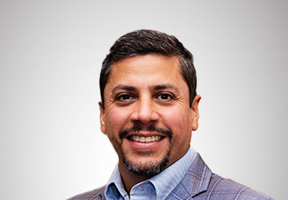
As the global spotlight turns toward healthcare resilience and equitable access, Puerto Rico emerges as a critical yet often overlooked player. Luis E. Pizarro Otero, President of the Puerto Rico Chamber of Commerce, articulates a clear and pragmatic vision for the island’s role at the intersection of federal advocacy, healthcare reform, and regional competitiveness. With a skilled, bilingual workforce, a strategic geographic position, and a renewed focus on retaining medical talent, Puerto Rico is quietly reshaping its narrative – “De Puerto Rico para el mundo” – from Puerto Rico to the world.
What is your professional background, and how is the Puerto Rico Chamber of Commerce helping to shape the island’s healthcare landscape?
As a healthcare attorney and the head of a consultancy specialising in legal, compliance, and public policy advisory within the health sector, I bring a practitioner’s perspective to my role as president of the Puerto Rico Chamber of Commerce (PRCC). The Chamber serves as a central platform for collaboration across Puerto Rico’s largely privatised healthcare system, where hospitals, physician organisations, independent practice groups (IPAs), federally qualified health centers, pharmacies, laboratories, pharmaceutical companies, managed care organisations, and other healthcare professionals and organisations, are the key providers of the healthcare delivery system, and the government assumes a predominantly regulatory function.
Under this structure, the Chamber has become a nexus for coordination and advocacy, uniting leading institutions such as the Puerto Rico Hospital Association, the Puerto Rico Medical Association, the Medicaid and Medicare Advantage Products Association (MMAPA), the Pharmaceutical Industry Association of Puerto Rico, Pharmacy Benefit Managers (PBMs), and the Association of Community Pharmacies as well as brand pharmacies, among several others. Given the complexity and strategic importance of the sector, healthcare represents a foundational pillar of the Chamber’s work. This is reflected in initiatives such as our Puerto Rico Health Insurance Conference, which stands as the most significant one-day event on the island dedicated to healthcare dialogue and policy advancement.
Our broader economic vision is anchored in the belief that sustainable development in Puerto Rico depends on reinforcing three fundamental pillars: education, healthcare, and security. The latter, in our view, encompasses not only physical safety, but also energy reliability, tax predictability, regulatory clarity, and ease of doing business. In line with this, we have structured our annual agenda around these interrelated themes. While the Chamber’s membership is composed predominantly of small and medium-sized enterprises, many of these firms are intricately connected to major national or international healthcare players, whether in manufacturing, insurance, or financial services. This integration underscores the sector’s relevance not only to the Chamber’s mission but to Puerto Rico’s broader socioeconomic trajectory.
How does the Puerto Rico Chamber of Commerce engage with US federal decision-makers, and what priorities guide your advocacy?
A core differentiator of PRCC is its structured, long-standing engagement with policymakers in Washington DC, an effort formalised through the Federal Affairs Chamber Educational Series (FACES). This initiative, now entering its tenth iteration, provides a consistent platform for communicating the island’s strategic priorities directly to federal lawmakers. Supported by seasoned advisors, including former US Congressman Jerry Weller, our agenda encompasses key issues such as manufacturing, healthcare, energy, recovery, and food security. Among the most pressing is Puerto Rico’s public health insurance program, particularly the Medicare Advantage and Medicaid programs. In 2022, these efforts culminated in the successful allocation of USD 19.4 billion in Medicaid funding, a landmark achievement made possible through close cooperation between the Chamber, elected officials, and the broader public and private sectors. This outcome exemplifies our role as a trusted and effective advocate for the island at the federal level.
How has the Chamber’s federal strategy evolved in response to the Trump administration’s policy priorities?
Under the Trump administration, the Chamber refined its federal engagement strategy to resonate more directly with the administration’s focus on fiscal responsibility, government efficiency, and domestic industrial revival. Rather than shifting its objectives, the Chamber adjusted its positioning, emphasising Puerto Rico’s proven ability to deliver high-quality healthcare and manufacturing outcomes under constrained budgets. Through FACES, these themes have been communicated effectively, particularly in relation to reshoring, where Puerto Rico has been presented as a natural extension of US manufacturing capacity, a message that aligned with the “China-fired, Puerto Rico-hired” narrative championed by Peter Navarro. On energy, the Chamber advocates for the release of previously allocated federal funds and the simplification of interagency processes to modernise the island’s grid infrastructure. These efforts ensured Puerto Rico remained aligned with federal goals while highlighting its untapped potential to contribute meaningfully to national resilience.
How is Puerto Rico contributing to global reshoring efforts and the push for greater supply chain resilience in healthcare and medtech?
Puerto Rico is taking a proactive role in global reshoring by reinforcing its position as a trusted hub for pharmaceutical and medtech manufacturing. With its mature industrial infrastructure and alignment with US regulatory standards, the island offers both capacity and reliability at a time when supply chain security is a strategic priority. Through its involvement in the Governor’s Task Force on Manufacturing, the Chamber is helping shape a coordinated response that spans both legislative and executive channels. While the Resident Commissioner works alongside federal allies such as Representative Nicole Malliotakis to advance supportive legislation, the governor is focused on securing Puerto Rico’s inclusion in reshoring-focused executive policies. These dual-track efforts are aimed not only at attracting investment but at ensuring Puerto Rico is fully integrated into future federal frameworks. By positioning the island as a stable, strategically located base for advanced manufacturing, the Chamber is helping to anchor Puerto Rico’s long-term role in strengthening US healthcare supply chains.
What are the primary challenges facing Puerto Rico’s healthcare system, and how have decades of structural disparities contributed to them?
Puerto Rico’s healthcare system operates under the same federal compliance standards as the mainland United States, but receives only a fraction of the financial support. Despite having the highest Medicare Advantage (MA) penetration rate in the country, with 85% of Medicare beneficiaries enrolled, and 99% in four-star plans or above, including the largest five-star plan in the nation, the island receives the lowest reimbursement rates. The average annual per capita healthcare expenditure in the US is approximately USD 15,400; in Puerto Rico, it is just USD 5,400. This imbalance has deeply affected healthcare infrastructure, diminished investment capacity, and driven a sustained migration of healthcare professionals to the mainland, where compensation is often two to three times higher.
The roots of this disparity date back to the 1965 Social Security Act, which excluded Puerto Rico from full Medicaid federal matching assistance percentage (FMAP) eligibility and funding cap, gradually forcing the local government to compensate through unsustainable borrowing, contributing to the island’s bankruptcy and the establishment of the Financial Oversight and Management Board for Puerto Rico. Temporary relief came in the aftermath of Hurricane Maria, when Puerto Rico received full federal matching under Medicaid during President Trump’s first administration. Today, thanks to a five-year USD 19.4 billion allocation, the island benefits from a 76% federal match, allowing the inclusion of previously unfunded but mandatory services such as non-emergency medical transport and diabetic durable medical equipment. However, critical programmes and essential mandatory federal benefits, like long-term care services and support, representing nearly a third of Medicaid spending in US states, remain out of reach. Puerto Rico could serve as a model-to-be for cost-effective long-term care, but lacks the financial latitude to pilot such reforms.
On the Medicare side, Puerto Rico’s reimbursement rates are approximately 41% below the national average and 22% lower than the US Virgin Islands, despite geographic proximity. Exclusions from federal safety-net programmes like Supplemental Security Income (SSI) and the Medicare Part D low-income subsidy (LIS) further constrain MA plans, which serve roughly 665,000 beneficiaries. The resulting financial pressure limits the services these plans can offer, reduces provider compensation, and curtails hospital investment. The territory is not asking for full parity but for a rational adjustment; being funded at even 80% of the lowest US state would help stabilise the system and slow the continued outmigration of health professionals to the US mainland.
What progress has been made through your federal advocacy, and how has the funding landscape evolved in recent years?
Since 2009, our advocacy has helped secure historic gains, particularly in Medicaid funding, and driven steady improvements through the MA administrative process. While no legislative solution has yet addressed the MA reimbursement gap, consistent engagement with the US Centres for Medicare & Medicaid Services (CMS) has resulted in incremental rate increases. After hitting a low in 2016, when physician departures peaked, rates began to recover, though the overall funding gap with the mainland has widened due to nationwide rate increases.
Each year, we participate in the rulemaking process, beginning with CMS’s proposed rule in January and concluding with the final decision in April. The forthcoming rule for 2026 is expected imminently. Through these efforts, we have helped the system avoid deeper financial strain, but administrative improvements alone cannot resolve the structural inequity. Until Puerto Rico’s reimbursement rates reflect its real costs and contributions, it will remain vulnerable to talent drain and chronic underinvestment, not because of its quality, but because of enduring federal indifference to its fiscal reality.
What short-term policy measures could help close the gap in Puerto Rico’s clinical workforce, particularly in high-need specialities?
Tackling the looming shortage of specialised healthcare professionals in Puerto Rico requires a more focused and efficient application of existing incentives and a rebalancing of local policy priorities. Although physician reimbursement rates have improved due to recent Medicaid reforms, the gains have not yet translated into sustainable workforce retention across all disciplines. A central area for immediate action is the restructuring of the four percent tax incentives currently available to all physicians. With finite resources, this benefit should be redirected to those specialities and regions experiencing acute shortages. For example, if Mayagüez lacks neurologists, incentives should be targeted specifically at attracting and retaining neurologists in that area, rather than being extended universally to physicians regardless of local need.
Moreover, incentives must be aligned with workforce renewal. Currently, many nearing retirement continue to benefit, and in some cases reduce their clinical activity, further straining patient access. To counter this, targeted waivers could allow these benefits to be phased out for late-career practitioners and reallocated to newly graduated physicians who are more likely to practise full-time and commit long-term. Addressing this imbalance would not only improve access but also maximise return on investment. Complementing these efforts with policies to strengthen the nursing workforce and broader care teams will be equally vital. These reforms, entirely within the island’s legislative and policy remit, represent actionable and necessary steps to ensure that recent financial progress is matched by tangible improvements in care delivery and system resilience.
Where is the Chamber focusing its long-term strategy in healthcare, and how are you aligning stakeholder priorities?
The Chamber’s long-term vision is rooted in its role as a convening force for Puerto Rico’s healthcare stakeholders and a steady advocate for policy continuity and equal access to all US citizens, including those in Puerto Rico. As national debates on Medicaid reform unfold – discussions from which Puerto Rico remains excluded – our current stance is one of strategic restraint. Rather than pushing into a conversation not designed to include us, our efforts are focused on maintaining rigorous compliance with federal funding requirements and information exchange with key congressional partners. In this context, protecting the existing level of Medicaid funding becomes a strategic success, allowing us to preserve essential resources until conditions shift in favour of a broader dialogue.
Simultaneously, we are intensifying engagement with CMS to safeguard the scope and depth of MA benefits, particularly those that address social determinants of health. These benefits are critical for an island facing high poverty levels and a disproportionately sick population. Yet sustaining benefits alone will not suffice. Additional funding is essential to retain healthcare professionals and invest meaningfully in infrastructure, steps necessary to stabilise the system and reverse the loss of clinical talent. As the Chamber brings together a broad and often diverse membership, our role is to identify areas of consensus and channel them into a focused, actionable agenda. While stakeholders may differ on specific policy issues, there is overwhelming alignment on the urgency of addressing healthcare funding, and that is where our leadership must continue to deliver.
What message would you like to share with our global readers about Puerto Rico’s potential and its contribution to healthcare?
Puerto Rico is a territory of significant promise, resilient in the face of challenges and rich in both opportunity and talent. Federal investment, particularly in energy and healthcare, has spurred momentum that the private sector is actively harnessing. Geographically positioned as a strategic link and with a highly educated, largely bilingual population, the island offers a compelling proposition for companies seeking to expand their footprint across the Americas. At the heart of this potential lies Puerto Rico’s people: technically proficient, globally oriented, and deeply committed to progress.
In the healthcare space, the island’s four medical schools produce a steady stream of physicians each year, an extraordinary asset at a time when the global demand for healthcare professionals continues to grow. While retaining this talent locally during the critical early stages of their careers remains a challenge, it is also an opportunity. By aligning educational output with healthcare system needs and creating the right conditions for young professionals to stay and serve, Puerto Rico can address its internal gaps while contributing to the global physician workforce. This vision is embodied in a phrase often heard across the island: “De Puerto Rico para el mundo!”