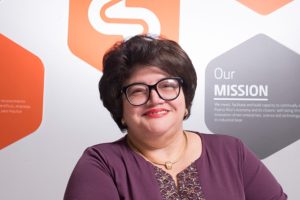
Lucy Crespo, CEO of the Puerto Rico Science Technology and Research Trust, highlights significant recent advancements in establishing Puerto Rico as a global innovation hub, including the recent designation of Puerto Rico as one of the US Economic Development Administration's technology hubs (Tech Hubs) and the opening of the island's first life sciences incubator.
Last time we spoke in 2019, you aimed to make Puerto Rico a global innovation hub by 2020. How close did you get, and what major milestones have you achieved?
I am thrilled to share the progress we have made in establishing Puerto Rico as a global innovation hub. A significant milestone occurred last October when the Biden and Harris administration designated Puerto Rico as one of the Economic Development Administration’s (EDA) technology hubs. Out of over 400 applicants, Puerto Rico was one of just 31 selected, with a focus on life sciences and biosciences.
The Puerto Rico Biotech Hub, as we call it, is a coalition involving several partners, including the Economic Development Department, the University of Puerto Rico, and key players from the pharmaceutical, biotechnology, and medical device industries operating here.
Another major announcement was last November when Parallel 18, one of our programs, was selected for the EDA’s Build to Scale program. We were among the 40 selected, and we received funding to establish the first life sciences incubator in Puerto Rico. This was incredibly significant for us, as Puerto Rico has long been recognized for its strengths in manufacturing and distribution. In fact, in a recent report published by BIO, the Biotechnology Innovation Organization in the United States, Puerto Rico was identified as the only jurisdiction within the US to demonstrate competencies in four of the five life sciences categories. The announcement was made during their annual conference in San Diego this past June, where we were proud participants. Needless to say, we were thrilled to receive the funding and officially open the first life sciences incubator in Puerto Rico, called BioLeap
With BioLeap, we recently completed our first cohort, which was unique in its specialization. Eight companies participated, focusing on areas like medical devices and tech bio, and they collectively raised over $1.7 million in capital investment in less than three months. We provided mentorship, education, and valuable connections throughout this process.
Lastly, we are excited about a collaboration between the New York Office of State and Tourism and Puerto Rico aimed at accelerating our life sciences ecosystems. This partnership is led by the governors of NY and Puerto Rico with the Puerto Rico Science Trust designated to lead the technology and innovation aspects. We are closely working with IndieBio, the largest life sciences incubator in New York, and we are in the process of establishing similar capabilities in Puerto Rico to support the growth of new start-ups in this field.
You have been expanding with the new Forward Center—could you tell us more about that?
The Forward Center is the latest scientific infrastructure in Puerto Rico. It was designed to house not only Parallel 18, which is our global innovator but also BioLeap, our incubator for life sciences. The first floor is dedicated to incubating start-ups in the life sciences sector. We already have a couple of participants in that space.
We are focused on bringing in the latest technology. One exciting company that will be working with us is Smartweave, which specializes in regenerative medicine using advanced 3D bioprinting technology. We are thrilled to have the opportunity to foster the creation of our own companies in Puerto Rico.
Historically, Puerto Rico’s economic development has been heavily reliant on multinational manufacturing companies, which contribute about 42% to 50% of our GDP in any given year. This initiative is about diversifying our economic profile while encouraging small companies in innovative fields to join the ecosystem.
What are the key opportunities and barriers facing innovative startups in Puerto Rico today, particularly regarding funding, education, and workforce?
Over the last nine years, we have focused on building what I call the “building blocks” of this ecosystem. This involves several dimensions, starting with research. We have funded 148 researchers, investing over $16 million, which has brought in additional incremental research funding exceeding $60 million.
More importantly, we have seen a significant increase in patents; our Technology Transfer Office, which was just opening when you last visited, now manages over 120 technologies from both public and private universities, as well as small companies we support.
We manage our own investment fund. This year, we have become advisors to the P.R. Economic Development Bank, managing $30 million through the Venture Capital Access Program. This program, established by the Treasury of the United States, provides funding for startups and small companies to help them grow.
Given our expertise in assessing and conducting due diligence, we have been selected as the partner of choice for the bank to facilitate this program. We announced this in August, and we already have several applicants in the system seeking this funding.
Previously, you mentioned the Trust’s aim to provide services beyond Puerto Rico, particularly to the Caribbean. How has this international focus pushed progress, and what are the opportunities in Caribbean research projects?
A lot has happened since you last visited. We launched a special edition of Parallel 18 for the Caribbean, which allowed us to expand our reach in that sector.
Additionally, we have been focusing on public health initiatives. Since we were designated as the Public Health Institute of Puerto Rico in 2017, we have been able to expand our work to other islands, like St. Thomas and St. Cruz, particularly through our vector control unit.
One of our most significant projects involves working in El Salvador, where we are developing innovative vector control strategies. Specifically, we are addressing the Aedes aegypti mosquito, which transmits dengue, chikungunya, and zika. We are implementing a Wolbachia mosquito population replacement technique that aims to eliminate virus transmission.
This work, led by Dr. Grayson Brown, highlights our commitment to advancing science not only in Puerto Rico but also in regions facing critical challenges. By focusing on tropical diseases that affect Central America and beyond, we are deploying new strategies for managing these health issues.
We have also shifted our focus from adult mosquitoes to larvae, using larvicides to prevent mosquitoes from maturing. This proactive approach is essential for effective prevention, addressing the urgent need for innovative solutions in public health.
Having been instrumental in setting up the Puerto Rico Consortium for Clinical Investigation, what progress has been made on this front in recent years?
Clinical trials have indeed been one of my key focuses. Since we established the consortium a few years ago, we have seen tremendous progress. For instance, between 2015 and 2022, we doubled the number of clinical studies being conducted in Puerto Rico. The economic impact has also been significant, with direct and indirect costs exceeding $50 million.
Clinical trials provide access to novel treatments for those who may not have economic means.
They allow individuals to access innovative therapies safely. We have also collaborated closely with patient advocacy groups to ensure responsible handling of clinical trials.
Looking ahead, what can our global audience expect from Puerto Rico’s science and technology research in the coming years?
One of our key focuses is workforce development. While Puerto Rico is known for its beauty and favourable climate, what truly sets us apart is our talent. We are investing in building capacity in clinical trial coordination and data science, for example. Over the past year, we have trained over 250 clinical trial coordinators and by partnering with local institutions we are not only enhancing our data science offerings but also ensuring that our life sciences programs are comprehensive and aligned with the latest advancements in technology.
We are also designing a Biotechnology Centre in collaboration with North Carolina State University, which will bolster our capabilities and support our researchers. Additionally, we are establishing a centre for personalized medicine, focusing on genomics and cell therapies.
During the COVID crisis, we quickly established advanced genomic facilities to process COVID samples, which allowed us to identify variants locally and more efficiently. Additionally, last year we ranked among the top five laboratories in the United States for processing COVID variants. Now, we are using that capability to address other public health challenges, like the current dengue epidemic, in collaboration with the P.R. Department of Health and the CDC. This foundational work in genomics will be critical as we move toward personalized medicine.
With all this investment in training and resources, is there a risk that these talented individuals might leave Puerto Rico for opportunities elsewhere, especially the United States?
That is a valid concern. Puerto Rico graduates over 20,000 STEM students annually, which is one of the highest rates in the U.S. Historically, many of our STEM graduates have sought opportunities outside Puerto Rico. However, we are seeing improved retention as we create an environment that encourages them to stay. We are actively working to provide attractive opportunities. Initiatives like our accelerators, including BioLeap, are helping to retain talent. Many individuals are choosing to stay and contribute to the local ecosystem.
One of our key partnerships is with Columbia University through a program called EnTrust, which helps our researchers commercialize their intellectual property. A fantastic example of this is Dr. Michelle Martinez from the Universidad Central del Caribe, who has developed a compound from a fungus that shows promise in treating triple-negative breast cancer.
She began with our Research Grants program, leading to a patent on her discovery. Through EnTrust and BioLeap, she received further support, including assistance with funding applications and navigating intellectual property challenges. Her journey exemplifies how we help researchers move from initial discovery to commercialization.
We provide not just funding, but also mentorship and guidance throughout the entire process—from research and patenting to clinical trials. My vision is to see innovators like Dr. Martinez grow their companies right here in Puerto Rico. We aim to build an ecosystem where they can thrive, which will ultimately benefit the local economy.
I firmly believe that with our ongoing efforts to establish robust infrastructure and state-of-the-art equipment, alongside valuable external partnerships, we are fostering a climate where more professionals will choose to remain in Puerto Rico.
What excites you most about the journey of innovation in Puerto Rico?
What truly excites me is how we have come together from various perspectives to work towards a common vision. There is a shared desire to leverage Puerto Rico’s long-standing strengths in life sciences, medical devices, and pharmaceuticals to enhance our R&D contributions.
We are preparing to embrace new technologies like cell and gene therapy, bioprinting, and the integration of artificial intelligence and machine learning. These advancements are revolutionizing how we translate scientific discoveries into market-ready products, and we are at the forefront of that movement.
One example is BrightPath, led by Tony Quiñones, who is using AI to accelerate the repositioning of medications for new treatments. This kind of innovation exemplifies the potential we have here.
I am also thrilled about companies like CytoImmune, led by José Vidal, and OcyonBio in Aguadilla, where Robert Salcedo has created an environment that allows emerging companies to focus solely on their growth, providing them with the necessary support.
Additionally, we are launching a personalized medicine center with Dr. Kenneth Ramos, who is a leading expert in the field. His vision for utilizing genomics to help people recover health in a tailored way aligns perfectly with our goals.
I genuinely believe the coming years will be transformative for Puerto Rico’s innovation landscape, leading to the emergence of new companies and advancements in healthcare.
What would you like your final message to be for our global readers?
My final message is to get to know Puerto Rico and its capabilities, especially our people. We are often called the “cabinet of medicine” in the Americas, and we pride ourselves on our multilingual skills—Spanish, English, and GMP (Good Manufacturing Practices).
I want people to recognize that we offer a strong foundation for collaboration and business opportunities. Being a part of the U.S., your intellectual property is protected under U.S. law, and we prioritize compliance and cybersecurity in our practices.
Organizations here, including ours, are dedicated to ensuring regulatory compliance, with all employees trained in these essential areas. This commitment extends across all sectors including life sciences and healthcare sectors in Puerto Rico.
Is there anything else you want to add?
I would like to highlight Science City, an incredible 68-acre facility with the potential for new construction. If anyone is interested in establishing a presence in life sciences, healthcare, or any tech field, we are here to talk.