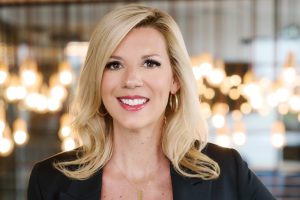
Kendalle O’Connell, President and CEO of MassBio, shares how Massachusetts has built one of the world’s most dynamic life sciences hubs through a mix of bold public investment, targeted programmes, and a “big tent” approach to collaboration. From guiding companies into the right communities with the BioReady programme to fostering global connections through MassBioDrive, she highlights the state’s ability to combine world-class science with practical support for growth.
What is MassBio’s mission today, and how has it evolved since its founding?
Founded in 1985 as the first biotechnology trade association in the world, MassBio today represents roughly 1,700 members spanning the full spectrum of the life sciences, from the smallest start-ups to the largest biopharmaceutical companies, alongside academic institutions, research hospitals, contract research and manufacturing organisations, and law firms. Our mission is to advance Massachusetts’ leadership in the sector, drive industry growth, create value for the healthcare system, and keep patients at the heart of everything we do by sharing both the economic and human impact of our members’ work.
Having been with MassBio for nearly 18 years, I have witnessed first-hand the state’s transformation into a global biotech leader, a shift that began in earnest around 2008. The exceptional density of biotech companies here forms the core of our ecosystem and has been instrumental in attracting 18 of the top 20 global biopharma companies to establish a presence in Massachusetts.
Recent and ongoing expansions underscore this strength: AstraZeneca’s new Kendall Square building, Takeda’s R&D tower, Bristol Myers Squibb’s expanded sites in Cambridge and Devens, Eli Lilly’s Seaport R&D facility, and EMD Serono’s relocation of its US headquarters to the Seaport. Together, these developments reflect the enduring appeal of our ecosystem and its ability to foster meaningful partnerships between global pharma and Massachusetts’ vibrant biotech community.
What role does your Vision 2030 strategy play in shaping a stronger foundation for emerging biotech companies?
Early-stage innovation is one of the most important catalysts in Vision 2030 and one I am particularly passionate about. If Massachusetts is to remain a global leader in research and development and sustain a truly holistic life sciences ecosystem, we must continue to nurture the community of entrepreneurs and early-stage biotech companies we are educating and training here. With over 100 academic institutions, including MIT and Harvard, the talent pipeline is exceptional, and our aim is to ensure that when these innovators decide where to establish their companies, Massachusetts stands out for its unrivalled access to stakeholders, partners, and investors.
We also benefit from a significant concentration of investment activity, but navigating this network can be challenging, especially in the current funding climate where early rounds can take 24 to 36 months to secure. Our focus is on reducing that to 12 to 18 months, giving companies a better chance of moving past the “valley of death.” MassBioDrive, our accelerator programme launched in 2021, works with start-ups from across the US and internationally, providing connections to funding, mentorship, and partnership opportunities. Strategic collaborations – such as with SCbio in South Carolina and potential new partnerships in Ohio – extend our reach beyond Massachusetts, recognising that great science is happening everywhere. Despite operating in what I believe is the tightest seed market in recent memory, companies in the programme have collectively raised nearly USD 70 million in pre-seed and seed funding.
Building on this success, we are introducing more targeted support, linking companies with CROs, legal expertise, and fractional executives, and piloting small co-investments – typically in the range of a few hundred thousand to around one million dollars – alongside other backers. While not a formal fund, this approach is unusual for a trade association and reflects the strong partner backing we enjoy.
Our progress is also rooted in a long-standing public-private partnership. In 2006, the Massachusetts Life Sciences Centre (MLSC) was created as a quasi-public agency, and in 2008 it was tasked with administering the state’s first 10-year, USD 1 billion Life Sciences Initiative. This investment focused on infrastructure, academic facilities, early-stage company support, and tax incentives. The initiative was renewed in 2018 for USD 640 million over five years, and in 2024, through the Mass Leads Act, it was extended again for another decade with a package of around USD 1 billion, reaffirming the state’s commitment to sustaining its leadership in life sciences.
From your perspective, what conditions help early-stage biotech teams remain focused on advancing their science?
Start-ups operate with finite capital and an equally limited window of time to achieve the scientific milestones that will position them for their next round of funding. When they face unnecessary administrative burdens, those demands consume both time and resources, making it harder to maintain momentum. The question we ask is how to create the conditions that allow these entrepreneurs to focus on what matters most, progressing their science. Over the past two decades, we have learned that while they excel in their scientific disciplines, many need support in navigating the business side of building a company.
Even in Massachusetts, where we have all the critical stakeholders in abundance, the network can be complex and time-intensive to navigate. If we can place CEOs in front of the right people, at the right time, and with the right partners, we can significantly accelerate their progress and improve their chances of success. In most cases, companies do not fail because the science is flawed. Instead, they fail because they run out of time and money. A clear well-structured roadmap can be decisive in changing that outcome.
LabCentral is a prime example of what this looks like in practice. It is a flagship incubator in Boston and was one of the first investments of the Massachusetts Life Sciences Initiative, receiving early funding from MLSC in 2013. Founded by Johannes Fruehauf, now its Executive Chairman, LabCentral was designed to give entrepreneurs at a critical stage in their journey access to world-class lab space, high-quality equipment, experienced mentors, and valuable partnerships, without the layers of complexity that come later during major funding rounds or due diligence processes. The Engine, located nearby, plays a similar role in supporting innovation.
This ability to reduce barriers while deepening connections is one of Massachusetts’ strengths, but it is something we must continue to develop. As scientific progress accelerates, particularly with the transformative potential of AI, ensuring that entrepreneurs can access the right mentors, technical expertise, partner companies, and investors will be essential to moving promising science forward quickly and efficiently.
Which areas of support do you see as most critical to further developing Massachusetts’ life sciences ecosystem?
One area of focus is expanding our network of alternative investors, including angel investors and family offices. We know they are present in the region, but we need a more consistent and effective way of engaging with them. Venture philanthropy is another important avenue. I serve on the board of the American Cancer Society, which is a major contributor to early-stage oncology research, yet many biotech entrepreneurs may not immediately recognise it as a funding source. A key part of our role is to demystify this wider network of alternative capital and create meaningful connections where they have not existed before.
MassBio has always operated at the centre of the network, positioning ourselves as conveners, connectors, and catalysers. In developing our recent report, we looked not only at the assets already in place but also at the gaps, and many of these gaps relate to creating stronger, more accessible pathways for networking, engagement, and partnership.
The Align Summit is one way we address this. It is our annual partnering conference for early-stage life sciences companies, designed to bring funders, strategic partners, and innovators together through one-on-one meetings, panel discussions, and networking sessions. This October will mark its third edition, with 50 companies pitching to investors and partners, all selected in collaboration with McKinsey to ensure strong alignment. All graduates of our MassBioDrive accelerator will have the opportunity to pitch, and the event typically draws more than 150 attendees from the investment and pharma communities, with many biotech CEOs participating specifically to connect with this audience.
Previously, we held the Align Summit alongside our flagship State of Possible Conference, which showcases the Massachusetts life sciences ecosystem. Separating the two has allowed each to stand on its own, providing greater focus, impact, and value, while giving our team the bandwidth to deliver both events to the highest standard.
With so many industry events taking place across the US, how does MassBio ensure its gatherings remain relevant for both biotech companies and investors?
It largely comes down to the strength of the MassBio brand and the network we have cultivated over the years. Within the Massachusetts life sciences ecosystem, we are a recognised and trusted name. Attendees know that when we host an event, they can expect a high standard of quality and meaningful engagement.
For large pharmaceutical companies, even those with a significant local presence, it is impossible to be aware of every development in the ecosystem. They rely on us to facilitate introductions and build relationships. One of the ways we do this is through our Pharma Days programme, which is specifically designed to bring global biopharma companies into direct contact with our innovation community.
The process is highly targeted. The visiting pharma outlines its therapeutic areas of interest, we identify biotech members working in those spaces, and the company selects which ones to meet. Their business development executives then spend a full day in a series of 30 to 40 one-on-one meetings with biotech CEOs and senior executives. Alongside these meetings, we organise an overview session, open to the wider community, as well as networking opportunities.
This model significantly reduces the time and resources these companies would otherwise spend arranging individual meetings across multiple locations. Just as importantly, it signals to the community that the visiting company is actively seeking partnerships. While mid-tier pharmaceutical companies are often the most engaged with this format, major players also see the value; for example, we recently hosted a well-attended Pharma Day with Novartis.
For international companies entering Boston’s life sciences hub, what are the main opportunities and challenges, and how does MassBio help them adapt?
Companies from Europe, Japan, China, and elsewhere often arrive believing that planting a flag in Boston will secure their place in the industry. They soon realise how saturated the market is and how easy it can be to become lost in the noise, even if their profile is strong in other regions. This is where MassBio can be an invaluable partner, helping to shape their narrative, raise visibility, and connect them with the right stakeholders. Our Pharma Days programme is central to this effort, enabling global biopharma companies to present their areas of interest, meet targeted biotech partners, and engage with the broader community, often without establishing a physical base here. We take a broad inclusive approach: local presence is never a requirement for membership or participation, as our goal is to accelerate innovation and deliver solutions to patients as efficiently as possible.
Massachusetts’ life sciences ecosystem consistently outperforms its size. With a population of just seven million, the state accounts for 15 percent of the US drug development pipeline, 6.5 percent of the global pipeline, and leads in advanced modalities. More than 20 percent of US venture capital investment in the sector flows to Massachusetts-headquartered companies, placing us second only to California. This concentration of talent, capital, and infrastructure attracts companies from across the world, and by sitting at the centre of it, we are well placed to help accelerate timelines by facilitating introductions, hosting strategic events, and opening doors to partnership opportunities.
Yet the funding landscape presents significant challenges. A healthy innovation cycle depends on steady early-stage investment, subsequent funding rounds, and viable exit opportunities, whether via IPO or M&A. That cycle has slowed markedly. In 2025, Massachusetts has recorded just one IPO, compared with 20-25 annually during the 2020-2021 peak, and venture capital investment has fallen to its lowest level since 2017. The structure of funding has shifted as well. Instead of many USD 30-40 million seed and Series A rounds, just 10 of the 93 rounds so far this year make up more than half of all funding, primarily targeting later-stage companies. This reflects a more cautious investment climate, shaped by the post-2021 market correction, investor demand for more mature data, and broader macroeconomic pressures.
While the current market remains subdued, the underlying strengths of Massachusetts’ ecosystem endure. Looking ahead to 2026, my hope is to see greater liquidity, more exit activity, and renewed reinvestment into early-stage ventures, the companies that will fuel the next wave of life sciences innovation.
How are current policy, regulatory, and global market dynamics influencing the investment climate for US biopharma, and Massachusetts in particular?
The issue is not a lack of capital. Companies have still managed to raise substantial funds, although large pharma companies would, under normal circumstances, be more active in M&A and partnerships at this point in the cycle. What we are dealing with instead is a sustained level of market uncertainty. At the beginning of the year, there was genuine “cautious optimism” coming out of the J.P. Morgan Healthcare Conference, yet the transition to a new administration quickly brought a series of significant changes like adjustments in NIH funding allocations to academic institutions, a complete leadership turnover at the FDA, and further downstream, policy shifts such as the Inflation Reduction Act, new tariff considerations, and most-favoured-nation pricing proposals.
Each of these has implications across the entire innovation lifecycle. Massachusetts, as the leading per capita recipient of NIH funding, is particularly exposed to the NIH changes, which directly affect our research hospitals and academic institutions. We are also watching the Small Business Innovation Research (SBIR) programme closely, as it is a critical source of early-stage funding and is due for reauthorisation in September. On the regulatory front, our member surveys show that nearly half of respondents experienced meaningful delays at the FDA earlier this year, whether in securing meetings or meeting Prescription Drug User Fee Amendment (PDUFA) timelines. While recent engagement between the agency and biotech companies suggests the initial disruption may have been tied to leadership changes, the uncertainty lingers.
Tariffs have already had a tangible effect on our companies, and the possibility of 15 percent duties on pharmaceutical imports would add another layer of complexity. Most-favoured-nation pricing is an even deeper concern. While the idea of price controls might seem attractive in theory, in practice they risk constraining the innovation pipeline by limiting the ability to recover the decade-long, multi-billion-dollar investments required to bring a drug to market. With around 90 percent of drug candidates ultimately failing, the US model with all its imperfections, has consistently produced the most advanced medicines in the world. Our role is to ensure we continue to be a catalyst for innovation rather than a source of additional barriers.
When looking at local early-stage companies, how would you assess their progress in advancing pipelines and competing with other regions?
If a major part of the federal discussion right now is to onshore more biopharma activity to the US, that is an overall positive thing. However, it must be competitive in both cost and capacity. We have strong capabilities here, but there is no excess bandwidth for early-stage biotech companies, and the cost base is substantially higher than in other regions, particularly China.
To do this effectively, we need to ensure that timelines are not prohibitive for companies already in development. That means creating a viable on-ramp and securing targeted investment from both industry and government, applied strategically, swiftly, and cost-effectively. Ultimately, business will operate where it makes sense to do so. The ability to credibly say, “We can do it faster, more efficiently, and more intelligently here” is critical, and we hope our government partners share that perspective.
Expanding domestic capabilities is an important goal, but it must be done in a way that does not unintentionally slow innovation or add new barriers for companies already contending with significant challenges. AI could play an important role in accelerating development timelines, and while we are hearing promising reports, there remain many unknowns. Here in Massachusetts, we do have initiatives in this space, where for example we are working with Google to train professionals on applying AI to drug development, but the state is not yet recognised for AI in the way it is for biotechnology. That signals a significant opportunity for growth.
How do you balance building strong local networks with pursuing collaborations beyond the US?
We are fortunate to receive consistent interest from both across the United States and around the world, with international delegations visiting us on a regular basis. Our approach is what I would describe as a “big tent” philosophy, we believe great science is taking place everywhere, and that sharing knowledge and best practices benefits the entire sector.
On a local level, we often work with emerging biotech ecosystems, offering insights from our own experience and sharing programmes such as BioReady, which rates cities and towns on their preparedness for life sciences and manufacturing. This has been particularly valuable for companies unfamiliar with Massachusetts. When a firm is considering relocation, we can point them to communities with a platinum rating, where the transition will be smooth and bureaucracy minimal, and connect them directly with local contacts to support their setup.
Our MassBioDrive programme extends that same openness. It is accessible to companies regardless of geography, which means we do not rely on formal agreements, pursuing those with every interested party would consume all our time. Instead, we focus on creating scalable, shareable programmes, meeting with participants, outlining the resources available, and leaving it to them to take the next step. Through this model, we have worked with companies from Canada, Argentina, and across the United States, including California, Nebraska, South Carolina, and Florida.
Massachusetts is a mature and robust ecosystem, but we see real value in supporting others where we can. We aim to keep the door wide open, to be a reliable partner, and to ensure that collaboration benefits both sides.
After nearly two decades at MassBio, what continues to inspire and motivate you in this role?
I genuinely believe I have the best job in the world, which is why I have stayed so long. MassBio is an exceptionally nimble organisation; we listen to our members, respond quickly to their needs, and act decisively. The Bioversity workforce training centre in Dorchester is a perfect example, from initial concept to graduating 100 local community members took just three and a half years. When we commit resources to something, we move fast and with purpose.
What makes this role so rewarding is the opportunity to tell the stories of the extraordinary work our companies do. Public debate often reduces the industry to “big pharma” stereotypes, but behind each breakthrough is a leader or team who has dedicated their career, and often much of their personal life, to advancing science in a specific area. Sometimes that commitment stems from losing a loved one to a disease; sometimes it comes from a moment of inspiration in the lab. Whatever the origin, it is lifelong dedication aimed at changing patients’ lives, and too often that story gets lost in the noise.
That is why the storytelling aspect of my role matters so much. At our annual meeting this year, I reflected on a small group of six friends from high school. Two of them have been directly affected by colon cancer, one lost her husband, the other had just finished treatment. Around the same time, I interviewed a CEO whose company is working on novel research in this area. Moments like that, when personal and professional worlds intersect, are a powerful reminder of why this work matters.
Our This is the Place campaign captures that purpose. Massachusetts is the place where innovation brings more birthdays, where lives are transformed. One story illustrates this better than any statistic. One of my colleagues here whose father, Bob Coughlin, was once MassBio’s CEO, has cystic fibrosis. When I joined in 2008, Bobby was a young child with no effective treatment. Thanks to research here in Massachusetts and the development of a Massachusetts biotech success, Vertex, he is now 23, healthier, out of the hospital, and working at MassBio himself. That journey shows what this industry means, not only to one person or family, but to communities everywhere.