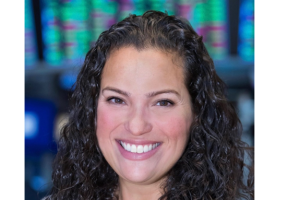
As the world’s largest stock exchange, the New York Stock Exchange (NYSE) plays a pivotal role in shaping access to capital for healthcare and life sciences companies. Johanna Grossman, PhD, who leads this sector for the NYSE, reflects on her career path, the exchange’s growing footprint in biotech, and the tailored programmes that support companies from early funding rounds through to public listing. She also assesses today’s challenging IPO environment and the opportunities that remain for well-prepared issuers.
Can you start by introducing your career journey, and in what way does your role engage with healthcare and life sciences companies?
I have been at the NYSE for just over four years, where I lead Healthcare and Life Sciences Capital Markets. My role is to work with private companies as they consider accessing the public markets, whether they are only a few months away from listing or several years out after an early funding round, but looking to learn more about what lies ahead. Before NYSE, I spent 13 years at Gerson Lehrman Group (GLG) running the healthcare practice, supporting hedge funds, private equity firms, VCs, and mutual funds as they conducted due diligence on both public and private investments. That role gave me the opportunity to collaborate with physicians and key opinion leaders, attend medical meetings, and help investors understand markets and competition across the full spectrum of healthcare, from pharma and biotech to devices, services, and health tech.
I originally trained as a scientist, completing a PhD in organic chemistry at Yale University, but I always knew I wanted to move into the business side of healthcare. What I thought would be a short stay at GLG turned into more than a decade, before I was recruited to the NYSE. Today, my engagement with companies is a balance of inbound interest and proactive outreach. The NYSE hosts around 2,500 events each year, many of them focused on healthcare and life sciences, which provide excellent opportunities to meet companies organically and invite them to explore what we offer. We also attend major industry gatherings such as the HLTH and SITC conferences and reach out directly to later-stage companies that may be considering an initial public offering (IPO), starting conversations to understand their roadmap and how we can best support them.
How would you describe the NYSE’s standing in healthcare and life sciences, and how has its role in biotech evolved over recent years?
With more than 2,400 listed issuers across all sectors and a market capitalisation of around USD 43 trillion, within a US total of approximately USD 70 trillion, we remain the largest and one of the most influential exchanges in the world.
Because of this, the NYSE continues to be the leading platform for healthcare, with many of the world’s largest pharmaceutical companies, medical device manufacturers, contract research organisations, hospital systems, and major payers listed on our exchange. This reflects decades of building and maintaining relationships across the sector. Our presence in biotech is more recent because, until 2014, pre-revenue companies were not eligible to list on the NYSE. That year, we modernised our rules to allow pre-revenue and unprofitable issuers to list on the exchange, which had an immediate positive effect on listings.
One of the barriers for scaling biotech at the NYSE was the Nasdaq Biotechnology Index (NBI), which, for many years, attracted the largest assets under management but only included Nasdaq-listed companies. This gave Nasdaq a structural advantage. However, exchange-driven indices, like the NBI or N100, are no longer applicable in today’s fragmented trading environment. The index landscape for biotech shifted in 2021 when BlackRock’s iShares Biotechnology ETF, or IBB, the largest of its kind at the time, moved from tracking the NBI as its benchmark index to the exchange-agnostic NYSE Biotechnology Index (ICEBIO), operated by our parent company, Intercontinental Exchange (ICE). This development enabled NYSE-listed biotechs to be included, expanding their visibility and prompting many new conversations with issuers. Since then, our representation in biotech has been steadily growing. Together, these changes have made the NYSE an increasingly compelling environment for innovative life science start-ups.
What programmes and services does the NYSE provide to support biotech IPOs and newly listed companies?
One important initiative is our Pre-Revenue Fee Relief Program, which was created with biotechs in mind but is also applicable more broadly across sectors. This program allows companies generating less than USD 5 million in revenues over the 12 months before the point of listing, among other listing requirements, to qualify for a 75% reduction in their annual listing fees for their first three years on the exchange. The goal is to help early-stage issuers conserve capital in the critical post-IPO phase. After, they transition back to the standard fee schedule in year four, which, for most biotechs, is comparable to that found on other US exchanges. Our fees are calculated on a per-share basis, which makes the process transparent, and the revenue qualification only applies to recurring revenue streams from a company’s own sales, not income derived from partnerships or licensing.
Equally important is the breadth of our service offering, which is the most extensive of any global exchange. Companies listed on our Big Board benefit from complimentary investor relations support, including an IR website, Business Wire press release distribution, a whistleblower hotline, access to NYSE Connect and Market Access Center data. Companies also get a choice of several additional services like stock surveillance, investor perception studies, or board portal access. NYSE-listed companies also get access to NYSE Connect, a market data portal that allows companies to see real-time prices, view consensus estimates, ownership and sell-side research.
These service offerings were designed through extensive dialogue with our listed companies to ensure they provide the governance, communications, and visibility tools needed to operate effectively as public companies from the very first day of trading.
How does the NYSE distinguish itself from Nasdaq in terms of market structure, and what additional services do you provide to issuers?
At their core, both Nasdaq and the New York Stock Exchange are electronic markets that automatically match buy and sell orders. What differentiates us at the NYSE is the additional human layer we bring through Designated Market Makers (DMMs). These firms – Citadel Securities, GTS Securities, and Virtu Financial – use their own capital to help reduce volatility and increase liquidity for NYSE-listed companies. This model has consistently produced fewer halts, tighter spreads, and lower volatility, particularly on IPO day. This delivers tangible benefits for issuers, often saving around USD 3 million on a USD 100 million follow-on offering, for example, compared with alternative venues.
In addition to complimentary IR services we offer newly listed companies, other distinctive benefits include access to our Global Advisory Services teams. Of particular interest are our Index Advisory and Sustainability Advisory offerings. Index inclusion can significantly influence visibility and liquidity, but is often complex to navigate, with eligibility hinging on details such as whether a company files as a domestic or foreign issuer or specific aspects of their F-1 or S-1. Our Index Advisory team works directly with issuers to review peers, highlight relevant benchmarks, and chart a clear path to potential inclusion. Similarly, our Sustainability Advisory team helps companies navigate the complex and evolving terrain of sustainability, focusing on environmental, social, and governance (ESG) issues. These tailored services are of particular importance for international companies as they plan and execute their listings in the US.
How does the NYSE help biotech companies prepare for an IPO and ensure they are ready from day one?
At the NYSE, we take a tailored approach to helping companies navigate the path to public, knowing that every organisation begins from a different point. This preparation generally combines education, visibility, and governance.
On the education side, we provide guides and, more importantly, host IPO summits where management teams can hear not only from advisors but also from peers who have recently gone through the process. Real testimonials are often the most valuable source of practical insight.
Visibility is another critical element, especially for early-stage biotechs that may not yet have a strong following. We have built an extensive media platform to help companies amplify their stories and milestones. We often invite later-stage private companies to participate in a variety of different ways, including participating in one of our NYSE TV broadcasts from the trading floor, podcasts, curated digital content, and collaborations with sector-specific outlets such as BiotechTV. Live platforms like NYSE TV Live and Taking Stock also give companies the opportunity to make timely announcements around major events such as fundraising rounds, FDA approvals, or acquisitions.
Another valuable resource for companies preparing for an IPO is our Board Services program, which was founded in 2019 to provide access to a pool of highly qualified, board-ready candidates. Our database, which now includes more than 1,000 vetted candidates, has become especially useful for companies preparing to meet governance requirements by recruiting independent board members.
Taken together, these services highlight the scale of what the NYSE offers.
What is your assessment of the current IPO environment for healthcare and life sciences, and how are different subsectors being affected?
At the beginning of the year, optimism was high, but a series of macro factors has since created some headwinds. Global unrest, a change in administration, uncertainty around reimbursement and policy, and pressure from tariffs and interest rates all contributed to a climate of caution. That uncertainty prompted investors to pause, and the slowdown affected the IPO market broadly, including healthcare and life sciences.
In recent months, however, there have been encouraging signs. High-profile listings such as Figma, Circle, and Hinge Health on the NYSE have performed strongly. While not all of these are healthcare companies, their success has helped restore confidence and reopen the window for other sectors. Within life sciences, activity has varied by subsector: biotech has remained subdued, medtech is beginning to re-emerge, and digital health has seen notable IPOs, including Hinge Health on the NYSE.
Biotech remains the most complex. For investors to return meaningfully, two conditions are critical. First, more M&A activity, and we’ve seen some noteworthy acquisitions recently, which is a positive sign. Second, the revival of the follow-on offerings. These transactions provide the liquidity that can be recycled into new opportunities. Until these conditions improve, lingering uncertainty around reimbursement, FDA requirements, and wider policy measures continues to weigh on the landscape for biotech IPOs.
What advice would you give to companies considering an IPO, particularly those outside the United States, and how should they view the NYSE in the current environment?
We are very much open for business for companies across the biotech and healthcare sectors and are committed to supporting innovators as they prepare to enter the public markets, whether that is only a few months away or still several years down the line. My advice is to engage with us early, because we have a wide range of resources designed to help private companies navigate the journey, and we can add significant value in that preparation phase – don’t miss out on opportunities!
The NYSE remains the largest and most liquid exchange globally, the capital of the world’s markets and the gold standard for listings, and that is why many global companies that begin on their domestic exchange later choose to add a secondary US listing or transfer their primary listing here as they grow — just recently AstraZeneca announced they would be listing on the NYSE to deliver a global listing for global investors in a global company. For international organisations, listing in the US can feel intimidating, but the reality is that strong companies will always find investors willing to support them. In the current market, biotech companies that are later stage – with clinical data, partnerships with major pharmaceutical players, and a more de-risked profile – are better positioned, while early-stage firms face greater challenges. That being said, across life sciences and other sectors, well-prepared companies with strong fundamentals will continue to attract investor confidence.