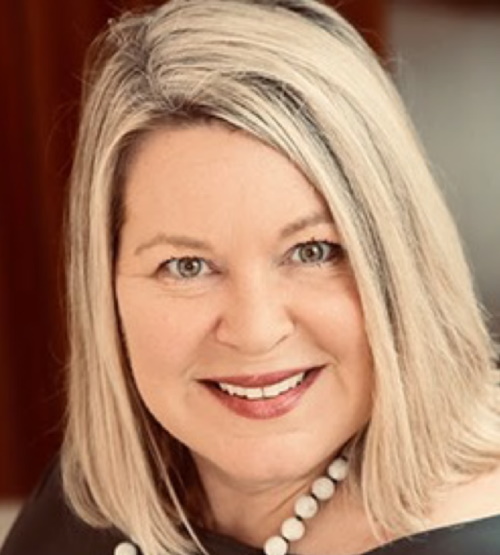
Jennifer Hawks Bland of NewYorkBIO, the premier trade association for the life sciences in New York State, discusses the association’s diverse list of members, the services it provides them, and how New York is building a bio-ecosystem to rival those of Boston and California.
Tell us a little about your background.
I am a lawyer by trade and started my career on Capitol Hill, working six years for a US Senator. After that, I moved into private practice for several years, primarily doing pharmaceutical products defense liability.
Following that, I was recruited to conduct government affairs and lobbying for the Consumer Healthcare Products Association, which represents the manufacturers of over-the-counter medicines.
After then spending time doing a similar role with GSK, I was recruited to build Schering-Plough’s government affairs program. I had been at Schering for ten weeks when the merger with Merck was announced, but in the end Merck asked me to stay, and I did so for nine and a half years doing government affairs and policy work; primarily directing issues at the national level, either federal or across the states, working on specific issues of importance to the company.
I left there about 15 months ago and came to NewYorkBIO.
Why did you decide to leave the pharma industry at that stage and join an industry association?
I had been in New York for a little over two years, and still loved the work that I did at Merck. However, the headhunters that the NewYorkBIO board of directors had hired to recruit a new CEO came calling. The board convinced me that the biotech ecosystem in New York was at a tipping point whereby companies were growing exponentially, both at the micro- and mid-size level. The opportunity to help direct and transform an industry association in the support of that growth was really intriguing.
Who are the members of NewYorkBIO and what ties them together?
We are a 501(c)(6) trade association made up of member companies, which can be divided into five categories. Our core members are companies engaged in R&D work, which includes large pharma companies such as Merck, Pfizer, J&J, Novartis, and Roche, as well as the bigger biotech companies such as Regeneron and Acorda. Secondly, we have early-stage companies, either pre- or post-IPO, such as Intracellular. It is in this second category that we are seeing a significant amount of growth.
Our third member category is academic medical institutions such as universities. In New York we have the greatest collection of academic medical centers in the world in relatively close proximity to each other. Fourthly, we have foundations and advocacy groups as members because, increasingly, the patient voice is not only being heard in the drug-discovery process but in many cases the patient foundations are actually funding drug discovery. The fifth category is support organizations such as law firms, accountants and service providers.
There’s so much going on in New York that to really capture all the participants within our ecosystem, you have to cover that variety of organizations.
What services do you provide to your members?
We do a lot of work at the state capitol in Albany to encourage policies and regulations that support the growth and development of the industry. Large pharma companies will have their own government affairs professionals (I was one), and we work very closely with those through our government affairs committee. But smaller companies that are either heading toward filing their NDA or are in the clinic and are in phase II or III trials often do not really understand government affairs, especially in relation to access or reimbursement once they get a product to market and how that will end up impacting their business. At the end of the day, if a company doesn’t have a clear path forward to reimbursement it’s going to be harder for them to get investor funding.
Another one that is increasingly important for small and emerging companies is a purchasing discount program, so we work with BIO at the national level to leverage national numbers and groups of purchasers for discounts on things like lab supplies, critical shipping of samples, press releases, and insurance. Younger companies are very capital sensitive because they do not yet have a product on the market, so these discounts take on an increased importance and extend the lifespan of their initial funding.
The third service is what we call content and networking. We hold a series of meetings throughout the year, the largest being our annual meeting, a full-day event which brings together our entire community and has something for everyone from a content perspective. Last year we had four panels, on foundations and their role in drug discovery, pricing and policy, the science of longevity, and AI, as well as a keynote speech from Dr Roy Vagelos of Merck & Co. (MSD).
What is the advantage for early-stage biotech companies of listing in New York, as opposed to Hong Kong, for example?
We have access, and a lot of international companies start their US operations in New York because they have consular offices from their countries here. In the past year, we have partnered with the New York Stock Exchange to showcase emerging companies to the finance community because these are pre-IPO companies that have all raised around USD 50 million or more individually.
So, we have the unique ability and responsibility, because of our location in New York, to connect companies with the financial markets and to work with them. This is where they are able to raise capital.
What is the life of an early-stage New York biotech company? What might be the typical flow and what are the issues that you think could be addressed in a better way?
In contrast to Boston and San Francisco, biotechs in New York often spring out of academic medical institutions, rather than from scientists that do not want to work for large companies. New York biotechs are often partnerships between the founding scientists and a venture firm.
We are starting to see more venture firms willing to come in. Another piece of the jigsaw that has increased the success of these early-stage companies are incubators. People that love Cambridge because of the density of biotech have in the past felt that New York is too big and spread out.
What we are doing now is moving towards having multiple clusters here in New York. At the Alexandria Center we have two towers full of life sciences companies and half of the space is taken up by labs. Companies can have their desks and do their lab work at the same place.
Pfizer, Johnson & Johnson, Merck, Novartis, and Celgene all have their US headquarters in New York or New Jersey. Are you satisfied with the input of these enormous companies into the New York bio community or do you want to see more?
Things are moving in the right direction. These companies are interested in in-licensing deals or partnerships, particularly with early-stage companies that are ready to go to market, but do not have a marketing apparatus or sales force, for example.
We are seeing an increasing number of companies focused on rare diseases for a variety of reasons. These companies may know personally all of their patients in the US because the disease is so rare that it only affects 3,000 people here. However, they may need to partner with a multinational company in order to distribute their drugs internationally.
These are just two examples of how small companies partner with large pharma companies and vice versa. It all depends on the pipelines of both companies and what their scientific capability is.
How have things changed in the way New York looks at the biotechnology ecosystem?
The state, the governor and New York City are committed. A lot of work started years ago. Clearly the city worked with Alexandria (we sit at the former laundry site of Bellevue Hospital, which is owned by the city), and so there has to be a partnership between the city, the state and the developers to create space. Between the governor’s and mayor’s initiatives, there have been over one billion dollars of investment and incentives to the life sciences industry. The government has made it a priority to develop this industry and we are seeing a snowball effect whereby other related industries are also growing as a result.
One thing that we heard over and over is that historically there wasn’t space for startup companies. That has changed significantly over the last three to five years. There are now six different startup incubators that have opened here in that time period. There are also now more partnerships. For example, The Empire Discovery Institute, a partnership between the University of Buffalo, the University of Rochester Medical Center and Roswell Park Cancer Center, has recently been set up to accelerate the discoveries from those three institutions.
Why would an early-stage biotech from elsewhere settle in New York, given the high costs of operating in the city?
Boston, San Francisco and San Diego are arguably as expensive as New York. We have a lot of talent here, people want to stay, they enjoy living here. I talked to some early-stage companies that are in the 50-100 employee range and they say that they are able to find talent here.
In the past, some investors were requesting early-stage companies to start in California. We want VCs to understand that companies can grow here and realize that it has been done before. If proximity is important maybe they can set up an outpost in the city.
We are definitively open for business. Our real estate is equally as expensive, if not less than Cambridge, you have access to VC money as well as the capital markets, as well as increased opportunities within the community we are building. In baseball terms, we are in the third of nine innings, so we are not saturated and not yet fully grown. However, we are making great strides to provide the type of community that these companies, particularly those coming in from outside, need to thrive.
Additionally, New York’s population is very diverse, which is fantastic if you are running clinical trials. It may be the most diverse population within the US.