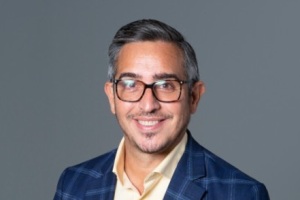
At a time when the pharmaceutical industry faces increasing complexity and scrutiny, Javier Deida, Country Lead of Pfizer Puerto Rico, is spearheading a quietly transformative effort on the island. With a 24-year career spanning global roles in manufacturing, commercial operations, and HR, Deida brings a rare breadth of insight to a local ecosystem rich in potential yet marked by structural challenges. In this wide-ranging interview, he shares how Pfizer is evolving its presence in Puerto Rico, from expanding access to cutting-edge therapies and clinical trials to tackling the island’s critical physician shortage, while fostering a spirit of collaboration that sets the territory apart.
How has your professional journey informed your leadership at Pfizer Puerto Rico and your contributions to the island’s broader healthcare ecosystem?
My career began across several industries before I joined Pfizer in 2001. While completing my undergraduate degree in chemical engineering, I interned at Nabisco in New Jersey, which gave me my first exposure to corporate life. After graduating, I returned to Puerto Rico and worked at Sunoco’s refinery in Yabucoa until its closure, after which I joined DuPont in agricultural chemicals, focusing on organic synthesis. It was there that I realised I was more drawn to strategic and organisational challenges than purely technical work. This led me to pursue an MBA abroad and ultimately apply to Pfizer, where I began my journey in manufacturing at the company’s original site in Brooklyn.
Following the completion of my MBA, I transitioned into commercial roles and spent 18 years at Pfizer’s global headquarters in New York. Over that time, I held positions across marketing, sales, business development, portfolio and P&L management, gaining a comprehensive view of the business. In 2018, I relocated to Puerto Rico to lead our commercial operations on the island, and more recently, I was asked to head a global HR project commissioned by Pfizer’s President, a role that added further depth to my understanding of leadership and organisational design. This diverse background has shaped how I lead today: with a strong grasp of both operational detail and broader strategic context, and a consistent focus on delivering tangible value to patients.
Beyond Pfizer, I also serve as a board member of the Pharmaceutical Industry Association of Puerto Rico (PIA), a position I previously held and resumed last December. At the start of the year, the board undertook a strategic realignment, resulting in a renewed framework titled Improving Health Outcomes (IHO). I sponsor one of its principal workstreams, Enhancing Healthcare Delivery, which addresses four critical areas: first, the shortage of medical specialists on the island; second, the need to harness Puerto Rico’s growing role in clinical research; third, increasing awareness among physicians and patients about evolving healthcare legislation such as the Inflation Reduction Act (IRA); and finally, improving stakeholder understanding of the Medicaid Drug Rebate Program (MDRP), particularly its supplemental rebate mechanisms. In previous MDRP implementations, a lack of awareness created friction and confusion, so this year we are prioritising stakeholder education and alignment to ensure the system is better positioned to serve patients effectively.
What role does Puerto Rico play in Pfizer’s current strategy, and how are you aligning local operations with the company’s evolving global focus?
Puerto Rico has long held strategic importance for Pfizer, historically serving as a key manufacturing base, particularly for solid oral and parenteral products. However, as the company’s global portfolio has shifted towards more specialised therapies, that industrial footprint has transformed. Many of the legacy sites are now part of Viatris, a spin-off managing established products, while Pfizer has progressively pivoted towards a more commercially focused presence on the island.
Today, our operations are centred around a distributed field force supported by a regional hub encompassing marketing, finance, and supply chain functions, many of which extend support beyond Puerto Rico to Latin America and select global operations. As we prepare to introduce new products from our pipeline, the focus is firmly on market preparation: understanding local access dynamics, identifying unmet needs, and positioning ourselves to deliver meaningful solutions.
Our therapeutic priorities mirror those of the US, with key areas in primary care ‒ including cardiovascular disease, migraine, and an expanding vaccines portfolio ‒ alongside speciality care segments such as inflammation and immunology, oncology, rare diseases, and hospital-based treatments. While the portfolio itself is consistent, market access remains locally nuanced, shaped by the specificities of Puerto Rico’s Medicare, Medicaid, and managed care structures.
Which areas of innovation are you most eager to introduce in Puerto Rico, and where do you see the greatest potential for impact?
What I find most compelling is the opportunity to bring forward therapies that offer meaningful advances, particularly in areas where treatment options remain scarce. The industry has moved beyond the era of “me-too” medicines; regulators no longer approve drugs that simply replicate existing solutions, and patients expect more. At Pfizer, our focus is firmly on developing differentiated therapies that can address significant gaps in care.
In Puerto Rico, that ambition translates into a strong commitment across several high-need therapeutic areas. Cardiovascular disease remains a core priority, and obesity ‒ a condition with serious and growing implications for the local population ‒ is another space where we are actively looking to contribute. Beyond these, we are expanding our efforts in rare diseases, which often affect small patient populations but carry immense unmet needs. Conditions such as amyotrophic lateral sclerosis (ALS) and Duchenne muscular dystrophy illustrate the complexity and risk inherent in this work, yet they also highlight the urgency. Some of our programmes, such as those in sickle cell disease, have not progressed due to clinical data, but our resolve has not diminished. Our goal is to introduce therapies that can truly shift the standard of care and bring additional tools to patients who have few, if any, alternatives.
What market access challenges are unique to Puerto Rico, and how do they shape Pfizer’s approach to ensuring patient access to innovation?
Operating under the US managed care framework, Puerto Rico shares many structural similarities with the mainland, but with notable differences that materially impact access. The most significant of these is the disparity in federal funding. As a US territory rather than a state, Puerto Rico receives lower levels of support for Medicare and Medicaid, creating persistent constraints around coverage and reimbursement for innovative therapies.. This requires us to engage with local stakeholders to find solutions for our patients.
The commercial landscape presents a different set of dynamics. While the mainland is served by large national insurers, Puerto Rico’s market is dominated by a handful of local payers, most notably MCS (Medical Card System), Triple-S Salud (SSS), and First Medical Health Plan. These organisations cover the vast majority of the island’s commercially insured population, requiring market access strategies to be negotiated locally and tailored to their distinct operational and contractual frameworks.
Although there is a general understanding of the value that innovation brings, the key challenge lies in creating a framework that makes it economically feasible. While list prices are set at the US level, the effective cost of access in Puerto Rico is shaped through local rebate negotiations.. Our focus, therefore, is not only to champion innovation but also to ensure it reaches patients through thoughtful, sustainable engagement with both public and private payers.
How is Pfizer working to deliver more holistic support to patients beyond providing medicines?
Pfizer’s mission has always centred on improving patients’ lives, and today that means looking beyond the medicine itself to offer a more integrated, human-centred approach. This is something I care deeply about; hearing directly from people whose lives have been transformed by our therapies reminds me that our work extends far beyond the clinical.
Our patient assistance programmes help eligible individuals access innovative treatments, in some cases free of charge. Beyond affordability, we have developed tailored support models, particularly in oncology, that guide patients through what can often be a fragmented system. Dedicated resources help secure medication access and approvals, while also assisting in coordinating care across the broader healthcare ecosystem.
We’ve also launched PfizerForAll, a platform that connects patients with healthcare professionals for consultations and, when needed, routes them into relevant support and affordability programmes. The goal is to streamline access and simplify what can be an overwhelming experience, where the path from diagnosis to treatment is rarely straightforward.
In these more complex therapeutic spaces, we have colleagues who specialise in navigating access and reimbursement challenges ‒ field access liaisons, reimbursement specialists, and others ‒ who work directly with providers and insurers to ensure continuity of care. The focus is not only on delivering the medicine, but on making the entire treatment journey as seamless and supported as possible.
What makes Puerto Rico a compelling location for clinical trials, and how is Pfizer working to position the island more prominently within its global R&D network?
Puerto Rico offers a strong foundation for clinical research, combining demographic diversity with technical expertise and supportive infrastructure. At Pfizer, this has become a priority area, and I currently sponsor a cross-functional workstream within PIA focused on expanding the island’s role in trials.
We are working with the Puerto Rico Consortium for Clinical Investigation (PRCCI) to raise awareness at the global level not only of the island’s capabilities and incentives, but also of its established centres of excellence. Although no industry headquarters are based locally, we aim to ensure Puerto Rico is top of mind when global teams select trial sites. We’ve seen encouraging momentum, with several Pfizer studies already underway and increased interest across the sector. The pandemic reinforced the importance of diverse enrolment, not only for equity but for accelerating regulatory outcomes. Puerto Rico is well-positioned to meet that need, and we are working to make sure its potential is fully recognised.
How is Puerto Rico confronting the island’s physician shortage, and what role is the pharmaceutical industry playing in that response?
The shortage of physicians in Puerto Rico is a long-standing and increasingly urgent issue, one that PIA recognised several years ago through a commissioned study, later confirmed by the Fiscal Oversight Board. As part of a workstream I lead within PIA, we are working across multiple fronts to address the problem in a structured and sustainable way.
A key priority is expanding local fellowship opportunities. Puerto Rico produces outstanding medical graduates, yet many are forced to leave for training elsewhere due to limited residency slots. Too often, they do not return. By supporting hospitals and academic institutions in scaling fellowship programmes, we hope to improve retention by creating stronger pathways for physicians to train and remain on the island.
Incentive schemes also have a role to play, such as the proposed four percent tax incentive for physicians. However, prior efforts in this area suffered from poor implementation and lacked the mechanisms needed to deliver lasting impact. We are now exploring ways to work with the government and other stakeholders to ensure that future measures are better structured, monitored, and tied to meaningful outcomes. At the same time, we are exploring new care models to ease the burden on physicians. Encouraging the formation of medical groups can help distribute the administrative workload, while potentially expanding the roles of nurse practitioners and physician assistants offers a way to strengthen follow-up care and improve continuity for patients.
What stands out most in Puerto Rico is the spirit of collaboration across the healthcare ecosystem. Since moving here from New York, I’ve been genuinely impressed by how companies, even competitors, come together around shared goals. That collective mindset is one of the island’s greatest strengths, and I believe it will be instrumental in shaping effective, long-term solutions to this challenge.
How do you navigate local challenges and maintain momentum as Pfizer adapts to a post-pandemic landscape?
Pfizer offers a strong framework of empowerment and support that enables country leaders like me to address both commercial priorities and patient needs with agility. We have access to substantial resources from the US, which we tailor to fit the Puerto Rican context, and I consistently feel that the organisation values and prioritises our local challenges.
For example, I recently visited New York to raise concerns around inefficiencies in our vaccine systems, issues that were burdening our field teams with administrative tasks rather than allowing them to focus on delivering value to patients and physicians. Once I outlined the operational impact, senior leadership responded immediately and decisively. This level of responsiveness underscores a culture of trust and collaboration that empowers us to act quickly and effectively, staying aligned with our broader mission to advance care delivery.
After more than two decades at Pfizer, what continues to drive your engagement, and what message would you share with international readers about your experience in Puerto Rico?
I never anticipated a 24-year tenure at Pfizer, but the breadth of experiences has kept me engaged. I began in manufacturing and later transitioned through nearly every function on the commercial side. Each role has offered something new to learn, and I’ve never felt stagnant. This current position, initially intended to last three years, has extended to seven, partly due to the pandemic and a subsequent two-year HR project. The complexity of the role is considerable, but I find it both stimulating and purposeful.
What sustains my passion is Pfizer’s deeply ingrained patient-centric culture. Every decision is anchored in meaningful impact, and that clarity of purpose is energising. In Puerto Rico, what distinguishes the ecosystem is the spirit of collaboration across the entire industry. Unlike in other markets where companies often work in isolation, here we consistently unite around shared goals for the benefit of patients. It’s a model of collective problem-solving I didn’t witness during my time in Europe or the US, and one I believe could be replicated elsewhere.
At PIA, I’m particularly proud of how closely our strategic priorities align with the real challenges on the ground. While the pharmaceutical industry is often subject to misperceptions, our shared objective remains clear: improving lives. In Puerto Rico, that mission is tangible, from speciality pharmacies that go the extra mile to local pharmacists who know their patients personally. It is this culture of close connection and shared purpose that continues to inspire me, and one I hope others take note of.