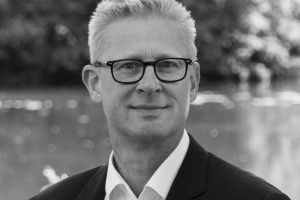
Jakob Nielsen, CEO of Healthcare Denmark, discusses how Denmark has strengthened its role in global health diplomacy and life sciences since 2021. Nielsen highlights the country’s focus on strategic international partnerships, digitalisation, and patient-centric healthcare reform, positioning Denmark as a transparent and collaborative partner in addressing shared healthcare challenges.
Could you start by providing an update on how the Danish healthcare landscape has evolved over the past four years since you were last interviews in 2021?
Many things have changed since 2021. One key observation is that international collaboration in healthcare has not diminished; if anything, it has grown in importance. The life science industry has also expanded significantly in Denmark. For instance, we are currently undergoing the most substantial transformation of our healthcare system in the past two decades. This transformation mirrors challenges seen across all OECD countries: the rise of chronic illnesses, demographic shifts, workforce shortages, and exponential demand for healthcare services.
What is interesting is that there is growing international interest in Denmark, particularly because of our ability to achieve high-quality healthcare outcomes at relatively moderate cost. For example, in Newsweek’s latest ranking of the top 100 hospitals globally, two Danish public hospitals made the top 20 with Aarhus University Hospital at number six and Rigshospitalet at number 19. This is remarkable given our small population of six million and healthcare expenditure just around 10 percent of GDP. It demonstrates that we manage to deliver a lot of value for the investment. Denmark can be seen as a sort of healthcare “research studio” or case study, not to be copied directly, but to be learned from and adapted.
Whether it is through our hospital systems, our regulators, or private institutions, we do not claim to have all the answers. However, we believe we have some of them, and we are eager to collaborate to find the rest. This is central to our national DNA. Being a small country means we can only thrive through international cooperation, and our role at Healthcare Denmark is to facilitate that collaboration between the Danish healthcare ecosystem and international stakeholders.
Why is healthcare such a strategic area for international collaboration?
The idea is that healthcare is a universal topic. This is unlike other sectors, such as energy and infrastructure, where opinions might diverge significantly. Every country wants to improve healthcare for its population. While there might be differences in methods, the fundamental objective is shared across borders.
This makes healthcare an ideal topic for building diplomatic relations, fostering political dialogue, and enhancing trade, particularly as life sciences now account for almost 25 percent of Denmark’s total exports. This figure is not about volume, but about value as it relates to generating high-skilled jobs and producing high-value exports.
We cannot compete on labour costs, so we must compete through knowledge. This is why the life science sector is so important to Denmark. Our overarching guiding document is the Life Science Strategy Toward 2030 which was developed by four ministries: the Ministries for Industry, Business and Financial Affairs, Interior and Health, Foreign Affairs, and Higher Education and Science. It is a cross-cutting strategy designed to achieve the dual goals of improving healthcare while also driving economic growth through innovation and research.
This third iteration of the Life Science Strategy places even greater emphasis on the international dimension. This applies to research, to hospital systems, and to industry. Especially in a post-COVID world, the need for international cooperation has grown. COVID placed limits on mobility and personal interaction, which made international collaboration more difficult. Now, with those barriers removed and new geopolitical shifts emerging, international dialogue is more important than ever.
What are the specific countries or regions that Denmark is particularly interested in for establishing healthcare partnerships?
We currently focus on eight key countries. In Europe, these are the United Kingdom, France, Germany, and Norway. Overseas, we prioritise the US, Canada, South Korea, and Japan. In addition, we maintain what we call “Strategic Sector Cooperation” with five countries: China, India, Brazil, Mexico, and Vietnam. So in total, we work with 13 countries through formal frameworks.
These collaborations are centred around both healthcare systems and healthcare industries. A health diplomacy agreement means there is a formal, government-to-government understanding to collaborate in areas such as digitalisation, chronic disease management, hospital systems, and more. Ministers from both countries typically sign such agreements to outline key focus areas for joint effort.
What are the healthcare areas of focus for these international collaborations?
The healthcare focus areas do vary slightly by country, depending on the needs and priorities of each nation. However, there are overarching themes that are common across these partnerships such as managing chronic diseases, advancing digital healthcare, and optimising hospital infrastructure.
Then there are also more specialised topics where Denmark believes it has particular strengths and something to offer. One example is diabetes, where we have both strong public policy approaches and private sector expertise. Mental health is another growing priority. It is a government-level focus in Denmark, and we are actively looking for international partners for knowledge exchange and joint development.
Digitalisation remains a major theme as well, especially in the context of European collaborations such as efforts to build a European Health Data Space.
These are areas where we not only see political interest from our ministries, but also strong engagement from our broader healthcare ecosystem. That alignment allows us to bring stakeholders together across sectors—public and private, national and international—to develop real solutions. That is essentially the purpose of health diplomacy in the Danish context.
What role does Healthcare Denmark play in developing these international collaboration frameworks?
We are not a direct actor ourselves. Our role is as an interlocutor. We work on behalf of our partners and do not act independently. Essentially, our function is to bring stakeholders together across various healthcare topics. Therefore, we do not make decisions or represent ourselves. It is the ministries, private industry, the Confederation of Danish Industry, and other partners who take the lead roles. We simply help facilitate those connections and collaborations.
For example, we are currently organising an official EU conference. Our task is to gather perspectives and, based on the Danish position in collaboration with our partners, design a programme that addresses the objectives of the EU life science strategy. The key goal is determining how life sciences in the EU can become a winning sector by enhancing our competitiveness in the area. Denmark is a strong life science nation, and our single ambition is to see a robust life science industry across the EU. We want to help contribute to that outcome.
Where do you see areas for improvement in order to improve European competitiveness, and what role can Denmark play in helping shape a strong EU life science strategy?
There are several key challenges. One of the most critical is access to capital. There is a pressing need for broader and deeper capital markets, particularly for biotech. Another area is the uptake of new innovations. We need faster and better processes for integrating innovations into the healthcare system. Additionally, reducing regulatory complexity is essential. We must find ways to deregulate intelligently in ways that continue to protect and safeguard patients, but also encourage faster access to new solutions.
The core aim remains delivering better healthcare while maintaining safety and rights for patients. We believe this can be achieved, it just requires smarter regulation and thoughtful innovation. That is also where the role of Denmark’s upcoming EU presidency and leadership within the Union can be very impactful in creating shared understanding of these challenges and working toward joint solutions. Although Denmark cannot do this alone, we certainly have a voice.
We hope to contribute ideas and elements that reflect our deep respect for other countries’ cultures and realities. Of course, a country with a population of six million has a different context than one with 60 million. But there are still aspects of the Danish model that may be applicable in a broader European setting. That is what we are advocating for.
While we Danes are often very self-critical and constantly thinking about how we can do things better, what we consistently hear from international stakeholders tells a different story. For example, I recently spoke with a hospital CEO who told me, in his words, “you are world champions.”
I believe that comes partly from our size. As a small country, we have no choice but to work together. Otherwise, we simply would not be able to get things done. In larger countries, the dynamics are different and shaped by different histories and systems. But I still believe some of the elements from Denmark, particularly around cooperation and transparency, could be valuable in a broader European context.
There is broad international recognition of the need for multi-stakeholder cooperation to tackle today’s complex healthcare challenges. Organisations such as the World Health Organization have issued clear guidelines and recommendations emphasising the importance of collaborative approaches, and the European Union has similarly highlighted the need for stronger and more effective public bodies to support these efforts. This is not merely a Danish perspective, but part of a wider global conversation. The encouraging part is that there is consensus on the value of cooperation, which provides a strong starting point. Once that shared understanding is in place, we can begin meaningful dialogue about how to transform it into concrete instruments and actions—finding common ground and progressing together.
What message would you like to send on behalf of Denmark to the international life science and healthcare community about Denmark’s and the benefits it can offer?
I believe Denmark is quite unique in that there is a broad alignment. We have a shared understanding across sectors, including the government, healthcare providers, academia, and industry, that international collaboration is essential. If you come to Denmark, it is relatively easy to gain access to key stakeholders in all of these areas. I think that is fairly unique.
There is also a high level of transparency in Denmark. The system is easy to understand, and the processes are not overly bureaucratic. In addition, there is a unity among stakeholders that allows things to move forward more efficiently.
So I would highlight four key strengths that Denmark offers to international partners: transparency, clarity of rules, ease of access to stakeholders, and unity of purpose. These are valuable for foreign governments, health authorities, industry leaders, and investors alike. Investors, for example, are particularly drawn to environments with a high degree of regulatory certainty and transparency. No investor wants to deal with unpredictability, especially in today’s volatile global context.
While Denmark is not big on offering large tax breaks or financial incentives, we are strong on the fundamentals. The principles of trust, stability, clarity are the Danish way of going about things.