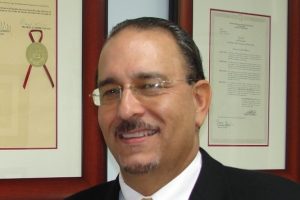
Ivan Lugo, co-founder and board member of Puerto Rico’s Life Science Air Cargo Community, offers valuable insights into recent developments within the island’s logistics sector, particularly the formation of the industry organization. He discusses key advancements within the community, including the creation of a comprehensive cargo data platform and the critical role collaboration plays in driving innovation and growth. Lugo also outlines the initiative's future goals, such as certification efforts and educational programs, all designed to strengthen Puerto Rico’s position in the global logistics industry.
As we begin 2025, what have been some of the most significant developments in Puerto Rico’s logistics industry in recent months?
The biggest news for Puerto Rican logistics has been the reauthorization of the transshipment DOT waiver which we received in January. In April 2020, Puerto Rico became the only U.S. location to receive this waiver which allows for international cargo and passenger transfers at three airports. This waiver has now been extended until 2027 which is a huge achievement for the island.
Additionally, thanks to the funding provided by the Secretary of Economic Development and Commerce to INDUNIV, between November and December of 2024, seven companies were successfully certified with the CEIV Pharma cold chain certification from the International Air Transport Association (IATA). After a year of stakeholder collaboration, we were able to achieve this milestone and also requested that Luis Muñoz Marín Airport be recognized as a CEIV Pharma Cold Chain certified airport. These seven certified companies now work with the airport, and it is exciting to see local companies, such as GMD, Prime Air, ETH, Cesar Castillo, and Isla Frio, be included alongside major players like Expeditors and American Airlines, who also received the CEIV Certification. For example, GMD is the Airport ground cargo handler, Prime Air operates as a freight forwarder with cold chain warehousing, while ETH provides both freight forwarding and warehousing services. Cesar Castillo, a major distributor of pharmaceutical products on the island, also operates cold chain warehouses, and Isla Frio has built state-of-the-art cold chain warehouses for both food and pharmaceuticals.
Looking ahead, we are entering the second round of certifications with funding from the Department of Economic Development and Commerce for four additional companies—Magic Transport, Droguerías Betances, DSB and the Air Group. We hope to continue this certification process and expand it to more companies in the future.
We are focusing on Luis Muñoz Marín Airport for now, but we also plan to extend this certification to Aguadilla/Borinquen Airport and Ponce Airport, both of which are part of the transshipment hubs. Although the ground handlers and transport companies are different at these airports, we aim to begin certifying companies operating there as well with the goal of creating a comprehensive network of certified companies across all cargo hubs in Puerto Rico.
Could you elaborate on the process behind achieving the transshipment DOT waiver and what steps were involved in securing this milestone?
The process of securing the transshipment DOT waiver began in 2015, when the Office of the Resident Commissioner started working on the opportunity with Jerry Lectora, a key figure who had his own private business in Puerto Rico and the Dominican Republic. He played a crucial role in justifying the transshipment waiver. He reached out to INDUNIV who organize the supply chain and logistics group, which included companies like Johnson & Johnson, Amgen, BMS and AbbVie among others, in support of the transshipment waiver strategy.. .
The Office of the Resident Commissioner, led by Jennifer Gonzalez at the time, moved the process forward and legislation was introduced to get the waiver approved. In April 2020, the waiver was granted, but the pandemic hit shortly afterward which slowed things down. Despite this setback, the waiver had to be reauthorized every two years and it was the Office of the Governor, under the leadership of Manolo Cidre, Secretary of Economic Development, and Resident Commissioner Jennifer Gonzalez, who secured these reauthorizations.
This January, the reauthorization was successfully completed under the new Secretary of Economic Development & Commerce Sebastian Negron Rochard and now the governor Jenniffer Gonzalez, who fully understands the potential benefits of transshipment for Puerto Rico, has included it in the government’s platform. Recently, there was a roundtable discussion involving various industry sectors on how to increase transshipment opportunities for Puerto Rico.
Can you explain the concept of transshipment and how this new area of focus could impact the potential development of Puerto Rico’s logistics industry?
Transshipment is a critical concept that many people may not fully understand, especially when it comes to its impact on Puerto Rico’s logistics industry. In April 2020, the U.S. Department of Transportation (USDOT) granted Puerto Rico a significant exemption, allowing licensed foreign air carriers to engage in specific passenger and cargo transfer operations at the island’s three international airports: Luis Muñoz Marín International Airport (SJU), Rafael Hernández International Airport (BQN), and Mercedita International Airport (PSE). This exemption, initially valid for two years, was renewed in January 2025 and is now effective until January 8, 2027. Due to the Pandemic progress in the utilization of the waiver was delayed.
This waiver enables Puerto Rico to function as a strategic transshipment hub, facilitating the movement of international air cargo and passengers. Notably, Puerto Rico is the only U.S. territory with an exemption applicable to both international air cargo and passenger transfers, distinguishing it from other regions like Alaska, Hawaii, Guam, and the Northern Mariana Islands, which have similar exemptions but limited to cargo.
Under this exemption, licensed foreign air carriers are authorized to:
- Transfer Operations: Move cargo and passengers between their own aircraft, provided both flights originate or terminate in the carrier’s home country.
- Aircraft Modifications: Adjust the type or number of aircraft used for transporting cargo and passengers in Puerto Rico, ensuring that outbound transportation continues from the carrier’s homeland and inbound transportation returns to it.
- Traffic Commingling: Combine cargo and passenger traffic in foreign aircraft with domestic traffic, excluding cabotage (the transport of goods or passengers between two points within the same country by a foreign carrier).
- Interline Transfers with U.S. Carriers: Unload cargo and passengers in Puerto Rico for transfer to U.S. carriers, facilitating onward travel to destinations within the United States or other countries, and vice versa.
- Interline Transfers with Foreign Carriers: Transfer passengers and cargo to other foreign carriers in Puerto Rico for further travel to third countries, and accept transfers from other foreign carriers arriving from third countries.
This strategic initiative aims to position Puerto Rico as a competitive international air transshipment hub, leveraging its geographical location to enhance connectivity between the U.S., Latin America, Europe, and beyond.
Currently, most of Puerto Rico’s cargo is sent to the U.S. for further distribution due to the constraints of the Jones Act. This waiver creates tremendous opportunities for Puerto Rico’s logistics industry. Many airlines currently fly over Puerto Rico, but they do not stop. d. With the new transshipment waiver, we can attract airlines to make technical stops, drop cargo for added value activity and pick up cargo to new destinations.
This waiver opens up a significant opportunity for Puerto Rico, especially considering its position as the largest pharmaceutical hub in the Americas. Currently, Puerto Rico exports to 120 countries around the world and is the largest exporter of any other US States, followed by Indiana with half of PR exports. PR’s pharmaceutical industry contributes nearly a third of the island’s GDP with 70% of the island’s exports coming from pharmaceuticals and medical devices. This volume of exports presents a huge potential for growth and with the government’s focus on leveraging this transshipment opportunity, Puerto Rico is well-positioned to capitalize on its strategic location and become a more important player in global logistics.
Where do you believe Puerto Rico currently stands in terms of recognition for its logistics strengths and what steps do you hope to take to improve this recognition moving forward?
Puerto Rico is making strides in gaining recognition for its logistics strengths and we are actively working on strategies with the government to promote reshoring—bringing foreign manufacturers back to the U.S. and Puerto Rico. The island has a significant advantage in this area because we have the global regulatory knowledge, talent, infrastructure, incentives, and a robust supply chain that can support logistics to anywhere in the world.
One of the key reports we are focusing on is the “U.S. Bioscience Economy: Driving Economic Growth and Opportunity in States and Regions.” This report, produced by the Biotechnology Innovation Organization (BIO) and the Council of State Bioscience Associations, highlights Puerto Rico’s strengths in bioscience which includes pharmaceuticals, medical devices, agricultural biotechnology, and medical research. Notably, the global bioscience industrycontinue to grow at a remarkable pace, second only to semiconductors and AI industries.
Puerto Rico stands out as the only U.S. jurisdiction with a highly skilled workforce in all four areas of bioscience. According to this report, Puerto Rico is one-third above the national average in terms of highly specialized employment in these fields. This is a significant achievement, especially when compared to other states in the U.S. It highlights how competitive Puerto Rico is, particularly in pharmaceuticals and medical devices which continue to grow on the island. This skilled talent not only makes Puerto Rico a competitive player within the U.S. but also strengthens its position on the global stage.
Moving forward, we aim to build on these strengths and continue positioning Puerto Rico as a leading logistics and bioscience hub by leveraging our highly skilled workforce, world-class infrastructure, and strategic location.
In your opinion, what factors have contributed to Puerto Rico’s unique competitiveness in the bioscience segment and how does this play into the broader logistics landscape?
Puerto Rico’s unique competitiveness in the bioscience segment is a result of decades of development in the industry. The island’s journey began in the 1950s with the refining industry, followed by the growth of medical devices, electronics, and pharmaceuticals in the 1960s and 1970s. By 1992, the arrival of Amgen brought molecular biotechnology to Puerto Rico, and more recently in 2021, Cytoimmune introduced gene and cell therapy development and manufacturing.. Over the years, Puerto Rico has continued to evolve and sophisticate its bioscience sector, thriving in a highly regulated environment. This regulatory expertise is crucial, as Puerto Rico exports to 120 countries—an impressive feat that no other region in the world can claim.
Our capabilities have also expanded with advancements in key technologies, such as cold chain logistics. Some of our pharma companies operates logiatics hub in Puerto Rico, where they redistribute products after significant transformations to the world. This expertise allows Puerto Rico to serve as a strategic hub for the redistribution of products to other regions, such as South America , Middle East, Asia and Europe, particularly through our transshipment opportunities. Puerto Rico’s logistics infrastructure, combined with the growth of the pharmaceutical sector, positions the island as an essential link in global supply chains.
Education also plays a vital role in strengthening Puerto Rico’s logistics sector. The creation of the Puerto Rico Life Science and Air Cargo Community has helped build relationships and promote education in logistics. Programs at the University of Puerto Rico in Bayamón, Mayagüez, amd other private institutions are focused on training the next generation of professionals in supply chain and logistics. We are continuously refining these programs to ensure that they meet the industry’s needs and we are working closely with the Department of Economic Development to advance these educational efforts. This initiative has already started, and we expect it to have a significant impact on the future of Puerto Rico’s logistics and bioscience sectors.
How do you view Puerto Rico’s potential to serve as a strategically important hub for both the global industry and the United States?
Puerto Rico is already an important hub for the U.S. supply of critical medicines. One key example of our importance is reshoring which is critical for national security. Puerto Rico supplies a substantial portion of the U.S. pharmaceutical needs, especially during crises like pandemics or other emergencies. The island is always ready with factories producing branded and generic products, as well as supporting contract manufacturing operations.
What sets Puerto Rico apart is its preparedness and resilience. Our facilities are well-equipped to maintain operations—even under challenging circumstances. For example, after Hurricane Maria in 2017, Puerto Rico was up and running in just a couple of weeks with many critical processes operating despite the devastating impact of the storm. This ability to establish effective business continuity plans that’s allows for the speed recover without affecting the supply to needed medicines to patients around the world, Furthermore, the government has strengthened contingency and continuity strategies, ensuring that the island is prepared for any unforeseen events.
As a member of the Board of Directors of the PR Life Science Air Cargo Community and Executive Director of INDUNIV Biosciences Cluster, , can you share your perspective on the significance of the recently established Air Cargo Community and what are your hopes for what this initiative can achieve in the future?
The Air Cargo Community took about three years to establish, but it was officially launched on 2024 The community is now in the process of incorporation as a non-for-profit organization. However, Thanks to the economic support of the Secretary of Economic Development and Commerce and the Board of Directors, with the sponsorship of Aerostar (SJU Airport Operator), several key elements have already been implemented.
One major accomplishment is the creation of a comprehensive database, developed by Rotate, a company hired by the Department of Economic Development. This database tracks air cargo movement through Puerto Rico, including data on which airlines land here and how much cargo is moved in and out of the island. With this information, we can better understand how cargo moves globally and how Puerto Rico fits into that network. This data platform is crucial to promote Puerto Rico opportunities to airlines. .
The community has grown significantly since its inception with over 100 members from various strategic sectors, in the Life Science Supply and logistic chain. . The community has been instrumental in supporting the INDUNIV facilitated CEIV Pharma Cold Chain certification and continue committed t in strengthening the Island logistic sector. .
With the personal commitment of the Governor of Puerto Rico and the unwavering support of the Secretary of Economic Development and Commerce, alongside the Community Board of Directors, we are optimistic about the future. As we implement the strategies currently underway, we anticipate that new airlines will seize the opportunities presented by the PR Transshipment Hub. At the heart of these efforts is collaboration—bringing together all sectors to drive growth and innovation. This unified approach will be key to ensuring the growth and sustainable success of the Air Cargo Community.