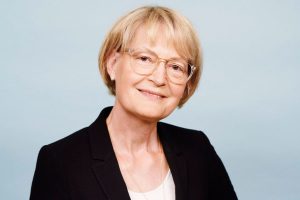
Ida Sofie Jensen, CEO of Lif, Denmark’s pharmaceutical industry association, discusses the country’s bold Life Science Strategy and the ongoing healthcare reform shaping its future. She explores how Denmark is aligning innovation, access, and health system sustainability through coordinated policymaking, a new Healthcare Innovation Index, and strengthened partnerships between industry and government. Jensen also highlights the importance of anchoring medicines at the heart of patient care and outlines Denmark’s potential to serve as a model for European competitiveness in life sciences.
Could you begin by outlining some of the key developments in the Danish life science ecosystem and strategic focus areas Lif has prioritised over the past few years?
Let me highlight a few key developments. First, Lif has introduced a new strategy built around three focus areas: life sciences, access to innovation, and what we call “outside-in” – ensuring a robust healthcare sector. Since we last spoke in 2021, the government has also launched a new national Life Science Strategy, which we believe is a major step forward. For the first time, it takes a holistic view of the entire ecosystem, from early research and development through to access and patient treatment.
Another key milestone is that production is now fully included in the national strategy. This wasn’t the case five years ago. At the time, there was a perception that Denmark couldn’t be a production country, based on outdated comparisons to low-cost manufacturing. But pharmaceutical production is different. It’s high-tech, capital-intensive, highly regulated, and built for the long term. Once you’ve made the investment, you don’t move it. And Denmark has shown it can be a great environment for this kind of production, particularly when combined with our green energy infrastructure and commitment to sustainability.
We’re also seeing more focus on modernising distribution, not just within the industry but within hospitals. Like many European countries, Denmark faces a dual demographic challenge: an ageing population driving higher healthcare demand, and a shrinking younger workforce to support it. That means we need to think differently about labour-saving technologies and smarter systems that can ease pressure on the healthcare system.
Another major step forward has been the inclusion of access to medicine in the value chain. In previous strategies, the focus stopped at R&D and early development. Now, access, sales, and marketing are recognised as integral to the full lifecycle of innovation. This is vital because life sciences must be the bridge between scientific research and real-world patient benefit. It’s not enough to generate breakthrough discoveries. We need systems that ensure patients can access those innovations.
To support this, we’ve proposed the creation of an Innovation Index, which will help measure how well Denmark performs when it comes to adopting new treatments. This matters deeply as the life sciences sector, especially the pharmaceutical industry, is a pillar of the Danish economy. The industry is driving one of the strongest trade surpluses in Europe, largely through the export of medicines. If we benefit economically from innovation, we must also be willing to invest in bringing it into the healthcare system for patients.
Finally, data is another crucial area being considered by Lif and the greater ecosystem. Denmark has world-class health data, and we are working to establish a national data hub to provide a single point of access. Legislation to support this initiative is currently being prepared and is expected to pass with backing from the government and a broad coalition of political parties, just as they supported the Life Science Strategy itself.
Could you elaborate on what the aim of this innovation index you have mentioned? Overall, how would you assess the country’s performance in improving timely and equitable access to innovative medicines?
We’ve only just begun implementing the innovation index, but we now have a political agreement in place to move forward. The government has committed to establishing a Healthcare Innovation Index that will provide an overview of which new treatment types and technologies are actually being accessed in the system. The goal is to track invention, access, and the speed at which new medicines are adopted. That’s why we’re developing clear indicators to measure progress across these dimensions.
One major focus area will be advanced therapies, which pose new challenges for traditional decision-making structures. The Danish Medicines Council, which is approaching its tenth anniversary, has built a strong health technology assessment (HTA) framework grounded in classical clinical research which utilizes randomised, double-blinded studies, and robust data. But ATMPs often come with single-arm studies and far less documentation. Although there are good reasons for this, it still presents a challenge to the system.
These therapies promise something fundamentally different: a potential cure. In most of healthcare, we manage conditions rather than cure them. Surgery can be curative, but most treatments are not. So when a therapy offers a cure, especially for severe conditions affecting young patients, it forces a rethink. What is the value of a cure? What price are we willing to pay? How do we assess it fairly when the data doesn’t fit our usual frameworks?
Despite these challenges, Denmark has managed to approve several ATMPs through the Medicines Council. Even with limited data, the results have been ground-breaking. In many cases, patients have no other treatment options – only social support or palliative care. So both clinicians and patients are eager to act when a meaningful option becomes available.
The new Life Science Strategy also supports this direction by looking at the full value chain: from clinical research and the national Genomic Centre to faster access, the innovation index, and more efficient ethical review processes. Ethics committees had become something of a bottleneck, as they are the entry point for most clinical research in Denmark. Now, with expanded capacity and a commitment to timely approvals, we’re ensuring that Denmark can remain competitive. This is not by lowering costs, but by delivering speed and efficiency.
Ultimately, if we want to attract cutting-edge research and innovation, we need to be able to promise that the first patient can be enrolled within a reliable timeframe. That’s how we stay competitive on the global stage. And the innovation index is one of the tools that will help us track whether we’re living up to that promise.
As you mentioned, ATMPs pose both opportunities and challenges for healthcare systems. What are the most pressing issues around pricing and access for these therapies, and what solutions might be viable?
One of the first challenges with ATMPs is the level of documentation and evidence. How do you prove that a treatment is safe? And beyond safety, how confident can we be that it will actually deliver the intended effect? The evidence base for many of these therapies is far more limited than we’re used to, especially as many are supported by single-arm studies rather than traditional double-blinded trials. This creates inherent uncertainty and risk, both clinically and financially.
Many ATMPs also target rare or highly specific conditions, such as orphan diseases or niche subgroups within areas like haematology. The smaller the patient population, the harder it is to generate robust evidence, and the higher the financial risk.
Pricing is another core issue. These therapies are often priced for their potential lifelong benefit, yet hospitals operate on annual budgets. So when you’re asked to pay a very high one-off cost for a treatment that may or may not work, it creates tension in the system.
Take, for example, a treatment for children who are progressively losing their sight. If it works, it gives them the chance to live a normal, independent life. The societal and economic benefits are enormous, not just for the individual, but for their families who might otherwise be pulled out of the workforce. We call these “dynamic savings”. Meaning gains that ripple out beyond the health budget.
But there are also serious risks. Some of these therapies are so intense that patients may suffer severe side effects, or in some cases, even die from the treatment itself. That’s why we’ve introduced what we call “alternative agreements”, or risk-sharing models. Under these agreements, if the treatment doesn’t work, there’s no payment. The outcome is measured against specific clinical criteria, which provides reassurance for public hospitals and decision-makers.
We’re also seeing a shift in how value is measured. ATMPs often deliver significant gains in quality-adjusted life years (QALYS) of six, seven, or even ten years of life without side effects. In contrast to traditional treatments that deliver small, incremental improvements, these therapies are transformative. In this context, the QALY model really proves its worth.
While many ATMPs are initially approved as third- or fourth-line therapies, we’re already seeing them move forward in treatment protocols as second-line, and even first-line options. The clinical results are simply too strong to ignore.
Finally, real-world evidence is a key part of the equation. In Denmark, there’s a strong willingness among both industry and clinicians to establish protocols that allow for close monitoring and data collection post-approval. It’s a kind of collaboration we all hope for in healthcare, and in the case of these breakthrough treatments, it’s actually happening. We’re working closely with the industry to track and understand outcomes in real time, which is essential to ensuring long-term access and sustainability.
From a boarder perspective, how would you compare the European Union’s evolving life science strategy with Denmark’s national approach? In your view, where does the EU stand in terms of overall international competitiveness?
What we’re seeing right now in Europe is a lack of coordination, and it’s creating real challenges. On the one hand, the EU is pushing for a stronger, more competitive life sciences sector. But at the same time, we have proposals, like those from the Directorate-General for Health and Food Safety (DG SANTE), that suggest cutting patent protections to improve access. These conflicting agendas send mixed signals to industry.
The problem lies in how siloed the system is. You have DG SANTE handling healthcare, the Directorate-General Enterprise and Industry (DG ENTR) focused on business and competitiveness, Directorate-General for Environment (DG ENV) managing environmental regulation, and other directorates looking at foreign affairs. But they’re not coordinated. In Denmark, by contrast, we take a more integrated approach. This ensures that health, industry, and environment work together toward common goals.
For example, DG SANTE may push for greater access by proposing reduced data or patent protection. But if you ask DG ENTR whether they want companies to move their operations out of Europe, the answer is an emphatic no. They want to keep life sciences companies in Europe because they drive jobs, exports, and innovation.
The environmental side also creates further tension. Under the proposed “fourth pathway” for wastewater treatment, only two industries – life sciences and cosmetics – would be responsible for the full cost of pharmaceutical residues in city wastewater. But if you look at the actual sources of pollution, there are many others. This approach effectively becomes a targeted tax on one of Europe’s most innovative sectors.
All of this increases the cost of developing, producing, and selling medicines in Europe, especially when compared to the US. It’s no surprise that companies choose to base their research, clinical trials, and even manufacturing in the US. It’s easier, faster, and often more commercially viable.
Add to that the fragmented nature of Europe’s healthcare systems. Even after EMA approval, each member state decides for itself whether, and when, it will reimburse a medicine. In some countries, that can take four months. In others, it could be four years. There’s no unified process and no harmonised timeline.
So while the EU might be a single market in theory, when it comes to healthcare, it’s still 27 different systems with different languages, payment models, and levels of investment. That makes it incredibly hard to scale innovation across borders.
The consequences are clear. Today, 47 percent of all new innovative medicines come from the US, while just 25 percent originate in the EU. 25 years ago, the numbers were reversed. We’re losing ground. European competitiveness is slipping, and that’s not just my opinion. It’s clearly laid out in the recent Draghi report on European competitiveness.
Everyone knows what the problem is: Europe is no longer competing effectively. Now the question is whether we’re willing to act decisively to reverse that trend.
What concrete steps do you believe are necessary to enhance Europe’s competitiveness as a destination for life sciences and pharmaceutical innovation?
The first and most important step is coordination. Europe urgently needs a comprehensive life science strategy that spans the entire value chain. This means not just research and clinical trials, but also manufacturing, market access, and pricing. Right now, the focus is too fragmented. On one hand, there’s concern about medicine shortages and calls for greater security of supply. On the other, instead of working collaboratively with industry to solve these issues, the response is often to increase regulatory pressure, reduce patent protection, or raise new barriers.
We should be rolling out the red carpet, not more red tape. Europe should be saying: “We want you here. How can we help you invest?” We need a partnership approach that supports the life science sector as a vital contributor to Europe’s economic and healthcare future.
The contrast with the US is clear. When the American president talks about tariffs, it’s not just about trade – it’s about bringing industry and manufacturing back to the US. Their goal is to strengthen domestic capabilities. The US already has a major advantage in research, but what they do exceptionally well is translating that research into innovation, clinical trials, and commercial success. That’s where Europe is falling behind.
Europe is still strong in early-stage science, but we lose competitiveness in the later stages of the value chain. Once breakthroughs happen, companies often move operations to the US because it’s easier, faster, and more predictable to bring innovations to market there.
That’s why we need a coordinated European strategy. Right now, different parts of the EU are pulling in different directions. Take regulations on per- and polyfluoroalkyl substances (PFAS), for example. From an environmental standpoint, we agree that PFAS should be phased out. But if you remove them without a viable alternative, you risk shutting down essential pharmaceutical manufacturing. Instead, we need a phased, coordinated approach. One that balances environmental goals with the continued ability to produce life-saving medicines.
There are signs of progress. I’ve heard that under the Polish presidency, the Economic and Financial Affairs Council (ECOFIN), Europe’s finance ministers, is starting to take a more active role in ensuring policy coordination across sectors. That’s a step in the right direction.
Finally, we have to address the regulatory burden. Europe is governed by a vast framework of regulations, many of which were created for good reasons and have improved life across the continent. But in some areas, the cost and complexity are simply too high, especially compared to the US. We need to focus on competitiveness and find smarter ways to solve problems, not just introduce new rules for the sake of it.
What unique contributions, be it best practices, structural strengths, or policy approaches, can Denmark offer to the broader European landscape?
Denmark can absolutely serve as a role model for Europe when it comes to coordination and dialogue across sectors. One of the most valuable aspects of our national life science strategy is that it is jointly owned by four ministries: health, business, foreign affairs, and education. That kind of inter-ministerial coordination simply doesn’t exist at the EU level but it’s exactly what Europe needs. Encouragingly, this is now starting to be recognised in Brussels.
Our Life Science Council also brings together all the key stakeholders across the value chain – industry, universities, hospitals, and patient organisations – creating a true platform for collaboration. This kind of structured, inclusive governance is something Denmark does well, and it has made a real difference in aligning efforts around a shared strategy.
Another area where Denmark can offer inspiration is in our approach to regulation. Our system is known for being relatively unbureaucratic. We use what we call “framework management”, which means steering through broad goals and principles rather than micro-managing through detailed, prescriptive rules. It’s a more efficient way of working that allows professionals to focus on outcomes, rather than compliance for its own sake.
Of course, we do have regulations as we rightly should. But we also understand the importance of avoiding arbitrary rules and excessive red tape. In Denmark, we trust institutions and authorities to make sound decisions. We don’t believe that one isolated case should set the standard for everyone, which too often becomes the default approach in the EU.
We also have a strong tradition of respectful and constructive partnerships between industry and government. Some might question whether this creates risk of undue influence, but in Denmark we know where the boundaries are. The relationship is based on mutual respect, clear rules, and a shared commitment to progress.
What we offer Europe is a more holistic and pragmatic way of thinking. If you want to build a competitive life sciences ecosystem, you must look at the full value chain from early research through to patient access, and you must approach it as a partnership. Denmark’s accessibility, our ability to find common ground, and our culture of trust and negotiation. Those are structural strengths we bring to the European table.
And yes, perhaps it comes from our farming roots. We’re used to finding practical solutions and making deals that work for everyone. That mindset is part of our history, and I believe it’s a strength that Europe can learn from.
Locally, the upcoming healthcare reform has generated substantial discussion. Could you provide an overview of its primary objectives and what it seeks to address within the current system?
In Denmark, we’ve long held the principle that everyone should have equal access to high-quality healthcare, no matter where they live. But we’re also facing growing pressure on our welfare system, particularly in light of increased defence spending and broader economic demands. That’s why the upcoming healthcare reform is so important. It aims to ensure a system that remains equitable and high-performing in the years to come.
Denmark has a strong track record when it comes to healthcare restructuring. Over the past 15 years, we’ve significantly reorganised our hospital system. We’ve gone from over 100 local hospitals to just 22 highly specialised ones. That may not sound extraordinary at first, but compared to many European countries where local hospitals remain deeply rooted in communities, it’s a major achievement.
While small hospitals might feel locally essential, they often lack the resources and expertise to provide modern, multidisciplinary care. Today, effective treatment requires coordinated input from a range of specialists, especially for complex conditions like cancer. You need diagnostic teams, surgical expertise, pathology, oncology, and advanced pharmaceutical knowledge all working together. This level of care simply isn’t possible in small, generalist hospitals.
We used to have one doctor to take an X-ray, another for delivering babies, someone else for broken bones, but no one equipped to handle heart disease, hormonal disorders, or cancer. Now, with our centralised system, we’ve built specialist hospitals with the critical mass needed to support multidisciplinary teams. It’s a model that trades shorter travel distances for much higher quality of care.
The results speak for themselves. Denmark used to lag behind Sweden and Norway in cancer outcomes. Today, we’re closing that gap. A clear example of this success is breast cancer. In 2010, only about 50 percent of Danish women survived more than five years post-diagnosis. Today, that figure has climbed to 97 percent. That’s thanks not only to better medicines, but also to a structured approach consisting of early screening, fast diagnosis, and centralised, specialised treatment under what we call the “cancer treatment package.”
This reform is about continuing that evolution. Its aim is to make sure the healthcare system is built for the challenges ahead, including demographic shifts, more complex treatments, and the need for system-wide efficiency without sacrificing quality or equity.
One of the reform’s perceived goals is to reinforce primary care by redistributing resources from specialised hospital settings. Is this an accurate characterization?
No, I wouldn’t say that’s entirely accurate. Still, I can see where the perception comes from. The idea isn’t to take away from specialised care but rather to complement it. The centralisation of hospital services in Denmark has brought us 22 highly specialised, state-of-the-art hospitals. But with that specialisation, we’ve lost something: proximity. Many illnesses don’t require highly specialised treatment, and by focusing so much on hospitals, we may have overlooked the importance of general practice. People are now travelling longer distances for care that often doesn’t require hospital-level intervention. And when they do enter the system, there’s a risk they’ll be overtreated simply because of the setting. So, yes, it makes sense to rebalance, strengthen the primary care sector, and bring care closer to where people live.
That’s why the top priority of the reform is to elevate primary care. We’ve learned a lot from our cancer treatment pathway model, particularly around structured, timely car. Now, we need to apply that thinking to general practice. At the moment, there’s too much variation in how GPs operate, resulting in too much uncertainty for patients. What we need is a kind of specialisation within general care for a more consistent, modernised system.
Part of this includes the government’s plan to increase the number of general practitioner positions from 3500 to 5000. A lot of them will be in what we call “nære sundhedstilbud”, or local healthcare centres. These will effectively replace the old local hospitals that were closed when services were centralised. The aim is to make general care more available and accessible without compromising quality.
But this isn’t about returning to the old model of the lone family doctor. These new centres must be modern, digital, and team-based. You might first speak with a nurse instead of going straight to a doctor, and diagnostics will be much more advanced than what’s available today. With access to radiology, pathology, and other tools, these centres will be able to determine whether a condition really needs hospital-level treatment or if it can be managed locally.
In short, this reform is not about taking resources from specialist hospitals. It’s about expanding capacity, improving access, and ensuring that people receive the right care at the right level. It’s about creating something in between the home and the hospital. A stronger, more accessible primary care system that complements, rather than competes with, specialist care.
How might such a shift affect the accessibility and quality of care?
One of the key issues we’re confronting is whether all treatment currently delivered in specialised hospitals truly belongs there. Take migraines, for example. It’s a complex condition, but not every migraine case requires treatment in a highly specialised headache clinic. Some patients may need that level of care, but many don’t.
In cases like this, access to innovative medicines becomes an issue. Many of these treatments are currently designated as “hospital-only,” which limits who can prescribe them and where patients can receive care. This might help control costs, but it also creates unnecessary barriers for patients. When we know these new treatments are effective, well-tolerated, and safe, shouldn’t we allow them to be accessed more locally and closer to the patient?
So part of the reform is about unlocking that access. It’s about enabling more treatments to be managed in primary care settings where appropriate. There’s potential to shift more treatment locally without compromising quality.
What we’re doing now is learning from the cancer treatment model. In cancer care, we have structured treatment packages that lay out a clear pathway for diagnosis and care, with specific deadlines and standardised procedures. Now, we’re applying the same approach to other areas like chronic diseases, palliative care, and more. These treatment pathways ensure that patients receive timely, consistent care, and they give GPs and local healthcare providers the guidance they need so they’re not starting from scratch with every case.
That’s the real opportunity in this reform: to build capacity in the primary care sector, not just by adding staff or locations, but by equipping the system with the tools, processes, and clinical clarity to deliver high-quality care closer to home.
What other priority areas within the reform do you see brining meaningful impacts?
One very positive and important part of the reform is the focus on mental health. Denmark now has a 10-year plan for psychiatry, and I believe this will have a meaningful impact not just in Denmark, but as part of a broader global shift. Mental illness is on the rise everywhere, particularly among young people.
One of the criticisms of the current system is that mental health services have historically been managed through the social sector. Decisions about treatment often involved psychologists and schools rather than healthcare professionals. That needs to change. Mental health must be firmly reintegrated into the healthcare system, where patients can receive the appropriate level of care based on clinical need.
It’s also about capacity. We urgently need more mental health professionals, more resources, and shorter waiting times. At the moment, the waiting lists are unacceptably long. That’s not just a healthcare issue, but a social and economic problem as well. When a child or a young adult is struggling with mental illness and can’t go to school or participate in daily life, it affects the whole family. Parents may have to stay home from work, and the overall impact on well-being and productivity is enormous.
If we want to sustain our welfare system in Denmark, we need people to be active, engaged, and contributing. That includes addressing mental health early and effectively. The psychiatry plan is, in my view, one of the most important pillars of the reform. It’s telling that more than one-third of all general practitioner consultations in Denmark today are related to mental health. That alone shows how critical it is to get this right.
Finally, would you like to share a message on behalf of Lif’s members regarding this moment of transformation across Denmark’s healthcare and life science ecosystem?
I’m very confident about where we are today with the Life Science Strategy. It’s the strongest we’ve ever had and there is real political will behind it to ensure it becomes a success. This is a crucial industry for Denmark, and the ambition is to keep it here and create the best possible framework conditions for companies to thrive.
As we move through this period of structural change, it’s essential that medicines remain central to that journey. The dialogue between the industry and the healthcare system must stay open and constructive. This cannot become an arms-length relationship, or a process happening behind closed doors. We’ve built a solid tradition of cooperation, particularly through institutions like the Medicines Council, and it’s something we need to protect.
Of course, the Council is under pressure, especially when it comes to cost and resource constraints. That’s why it’s critical to recognise that innovation is not a luxury, but a necessity. Sometimes progress comes in small, incremental steps. Other times, it’s a leap to a new paradigm. Either way, Denmark must remain a country that values innovation, with a healthcare system that’s ready to adopt the most effective, safest, and most patient-centred treatments available.
No patient journey should be considered complete without medicines being part of it. As an industry, we want to be a partner in shaping that journey. This means working together with all access bodies, whether that’s the Medicines Council or the councils overseeing general practice.
We continue to support the seven principles set by the Danish Parliament over a decade ago: equal and easy access to innovation, decisions grounded in professional – not just financial – considerations, and the ability to provide care across all regions. Perhaps most importantly, the seventh principle reminds us that even when a treatment isn’t standard, we must still consider the needs of individual patients and ensure access when it matters most.