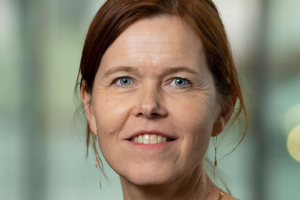
Helene Probst, Health Director, Danish Regions, outlines Denmark’s healthcare reform as a major shift from hospital-centric care to a primary care-focused system, driven by workforce shortages and an ageing population. Key changes include redistributing responsibilities to regions, creating health councils, and redefining the GP role to better serve local and chronic care needs. Probst goes on to highlight how the reform is both structural and cultural, aiming for a more integrated, patient-centred system.
At the end of last year, Denmark’s Ministry of Interior and Health announced the proposal of a new healthcare reform, “Health Close to You.” What were the considerations in the Danish healthcare ecosystems that made such an initiative necessary?
In Denmark, we have had two major commissions over the past five years. The Resilience Commission which analysed the robustness of the health sector, and the Healthcare Structure Commission looking at the structural sustainability. Both have come to the same clear conclusion: our most pressing future challenge is the lack of healthcare personnel. This has now been firmly acknowledged across the system and there is a broad consensus that a reform of our health care system is needed.
At the same time, we are facing a critical demographic shift. Our 80+ population is set to rise significantly in the coming years, while the number of younger people entering the workforce will not keep pace. That means we must be prepared to deliver high-quality health services with fewer people. This is a trend that most other European countries are also facing.
Both commissions also concluded that we have focused far too much on hospital-based care and not nearly enough on primary healthcare services. Based on these insights, there is consensus that a significant restructuring of our healthcare system is necessary. Therefore, the reform aims to reorient the system to emphasise and strengthen the primary health care system.
Could you briefly walk us through the key aims of Denmark’s proposed healthcare reform, “Healthcare Close to You”?
It is a comprehensive reform of the health sector in Denmark with several key elements. First, it is about shifting focus from hospitals to primary health care services and reforming how we provide primary healthcare services and how general practitioners (GPs) operate. The overarching goal is to move care closer to where people live.
Secondly there is a huge focus on equity and a key focus is a redistribution of medical doctors from urban to more rural areas.
Thirdly the reform is also aiming to improve coherence in patient pathways. One element is the shift of tasks currently handled by municipalities, such as the emergency nurse team and part of rehabilitation, will be shifted from municipalities to the regional level to help achieve this.
Historically, the focus has been too strong on highly specialised hospital services, particularly in the capital and large cities. As a result, we are struggling to attract doctors to peripheral areas. That needs to change.
In addition, the reform includes a strong emphasis on chronic disease management. Much like we have long had structured pathways for cancer care, we will now introduce packages for chronic diseases. We are also moving towards better integration of mental and physical healthcare, an area that has traditionally been siloed.
Finally, one of the most significant structural changes is the decision to merge two regions. The Capital Region, which has seen relative success in attracting medical professionals, will merge with Region Zealand, a region facing a higher disease burden and ongoing difficulties with staffing. In particular, more remote areas of Zealand have struggled to maintain consistent medical coverage, often requiring doctors from elsewhere to travel periodically to keep the hospital functioning. The merger is intended to address these imbalances by redistributing both resources and opportunities more equitably across the new, unified region.
How do the proposed structural changes and long-term strategies reflect the broader goals of Danish healthcare?
One of our longstanding challenges has been the divide between regional and municipal responsibilities. Regions have traditionally worked with standards for quality and clinical guidelines, trying to ensure consistency across hospitals. In contrast, municipalities have more discretion in how they provide services, unless guided by national legislation. This has led to significant variation between municipalities, complicating healthcare planning.
For example, a single hospital might need to coordinate with four different municipalities, each offering different services. The reform aims to create a more coherent experience for patients. Whether they are being treated by a municipality or a region, it should feel like a seamless journey.
To achieve that, several tasks currently managed by municipalities will be transferred to regional responsibility. These include temporary care beds for post-hospital recovery, emergency nurse teams, parts of rehabilitation services, and patient-oriented preventive care.
The National Health Authority has described which services will be transferred, and an economic analysis and negotiation has determined how much funding will move from municipalities to regions. Planning will take place next year, and by 2027, these changes should be fully implemented.
What challenges can be anticipated from this shift of responsibilities between municipalities and regions, and what strategies are in place to improve cooperation moving forward?
The big challenge now is ensuring these newly transferred services are integrated properly within the regional system. It is not enough to move responsibility, we must also ensure these services align with existing ones and deliver on the reform’s promise of greater coherence. Even with these changes, municipalities will continue to provide many healthcare services. So, part of our task is to maintain strong collaboration and ensure that municipal providers still have access to resources like emergency nurse teams.
Therefore, one of the most strategic aspects of the reform is the creation of health councils across the country. While we are moving to four broader health regions, we will also establish 17 health councils as standing committees under the regional authorities.
What is new and significant is that these councils will include politicians from both regional and municipal levels. Each council will focus on a specific catchment population area and will be headed by the regional representatives but include municipal voices as well.
They will be responsible for producing a local primary healthcare plan and will receive dedicated funding to do so. These plans must align with national and regional health policies but also be tailored to local population needs.
What kind of responsibilities will these new health councils have in terms of planning and service delivery?
They will play a crucial role in Danish healthcare. In addition to planning for primary healthcare services, they will also be responsible for ensuring hospital services are delivered as close to the population as possible. We are foreseeing hospitals with a focus on advising and assisting the health care professionals at primary health care level. Importantly, they will help bridge the divide between primary care and hospital services.
Today, more than half the population in Denmark visits a hospital each year. That is a sign of success in one sense, but it also suggests that some of these services might be better delivered elsewhere – perhaps closer to home or through GPs.
To make that happen, hospitals need to become more proactive. Instead of waiting for patients to arrive, they should support primary care more directly. For example, if a GP needs specialist advice, that support should be readily accessible. Or if a patient is recovering in a temporary care facility after hospital discharge, there should be mechanisms in place to avoid unnecessary readmissions.
The new health councils will be responsible for ensuring that hospitals are actively engaged with what is happening at the primary healthcare level. Their mandate is to create stronger coordination and a more collaborative, patient-centred system.
How can the Danish healthcare system ensure effective communication and continuity of care between hospitals, primary care settings, and now, additional health councils?
Denmark has a strong digital infrastructure, such as our centralised electronic health record. We also maintain extensive patient data at the hospital level. However, one of the key problems is that communication between sectors remains underdeveloped. This is particularly challenging between the regions and the municipalities. Currently, it is not possible for professionals in the municipalities to see what is happening at the regional level, and vice versa.
This results in a lack of shared insight and continuity. For example, when a patient is discharged from hospital, the nurse responsible at the municipal level often has no visibility into what occurred during their admission. Sometimes there might be a note, but they do not have access to the full e-journal. As a result, patients often find themselves repeating their medical histories over and over again to each new healthcare worker they meet. This is clearly not optimal, and it is an area that still requires significant improvement.
Written information needs to be more consistent, but there is also a need for better systems that enable timely advice and support. Let us take the example of an elderly person experiencing an acute episode at home. Paramedics may arrive, but how do we ensure that the person can receive treatment in their own home? That requires infrastructure such as video consultations, seamless access to hospital expertise, and other support structures which are not yet adequately in place.
That said, Denmark excels in creating coordinated pathways that ensure patients can move swiftly and efficiently through the layers of the healthcare system. For example, emergency care for life-threatening conditions is extremely well coordinated. If someone suffers a heart attack, diagnosis begins in the ambulance, and the patient is swiftly referred to a highly specialised unit at one of our major hospitals, which is already prepared to receive them by the time they arrive. Cancer care is similarly well structured. These are examples of advanced healthcare planning that Denmark has done very well.
However, the picture is quite different when we look at care for elderly patients with multiple chronic diseases. Their care is fragmented. It is not that they lack access to professionals, in fact, they see the GP, emergency nurses, paramedics, hospital staff, and potentially many more. This issue is there is little coordination across these touchpoints. The ambition of the reform is precisely to change that. Ensuring that one hand knows what the other is doing, and care can be delivered in a joined-up way.
Ideally, we want to treat more people at home, where they can receive high-quality services without unnecessary hospital admissions. Many elderly patients come into hospital for short stays that are neither beneficial for them nor for the health system. A well-coordinated home care approach would be better for everyone.
The challenge seems to be greatest when a patient’s situation does not follow a clearly defined clinical pathway. What is your take on this?
That is why the reform focuses so strongly on chronic disease, multi-morbidity, and medical care for elderly patients. Together with mental health these are the areas where fragmentation is most acute.
In Denmark we currently have a ten-year plan for improvement of mental health services, which although is not officially part of the healthcare reform, aligns closely with its overarching goals. This strategy was launched by the Danish Health Authority three years ago and is now fully funded by the government. It seeks to transform the delivery of mental health services by moving away from underfunded, isolated and fragmented care, aiming for improved quality and integrated care. Additionally with the healthsector reform mental health services are now integrated with general health care provision and with a clear aim to ensure that mental health provision will be delivered with the same quality as for other disease areas like cancer care.
With the reform we will have more specialists in the areas where we have challenges today. In the future we will have substantially more GPs, but also more specialists in psychiatry for both adults and children and specialists in elderly care. Although it is a key part of the reform, this is not just about increasing the number of healthcare professionals. It is also about shifting the system’s focus back toward strong, locally grounded primary care that has well defined pathways and protocols which will help ensure all patients have equal access to quality care without falling through the cracks.
How is the structure of primary care services going to change in order to reflect this population-based thinking?
Currently, GP services are structured around a fee-for-service model that has been negotiated nationally between the GP association and the regions. This model is rigid and does not allow for flexible adaptation to local health needs. Regardless of location, whether in the capital or in a high-burden area, GPs have had the same number of patients and provided the same set of services. That needs to change.
Going forward, the National Health Authority will define what the core tasks of a GP should be. Based on this, we will restructure how GP services are financed and delivered. It is a major reform. We will also need to consider how hospitals can support GPs more effectively. GPs are already extremely busy, so we cannot simply keep adding tasks. We must identify which tasks can be shifted elsewhere.
With the change in our population and thereby also disease patterns we have seen the need for GPs to take more responsibility of patients with chronic illnesses, psychiatric conditions, and to oversee follow-up for patients discharged from hospital – for example, after cancer treatment. But this also means that GPs should not be expected to manage every aspect of care.
Some services may be better delivered by others. Musculoskeletal issues could be handled by physiotherapists. Routine services like childhood immunisations or monitoring of healthy pregnancies might not always need a GP. Nurses and midwives could play a larger role in those areas. It is not easy, but that is the discussion we need to have.
The National Health Authority will lead a technical process to define the future scope of GP tasks. All stakeholders will be invited to participate in shaping that plan.
Looking ahead, what do you see as the most important factors for success in this restructuring and transition from hospital-centric to primary care-focused healthcare?
If I had to narrow it down to just a few key components, I would say first and foremost this is fundamentally a cultural change, not just a structural one. It is not only a health sector reform, but also a transformation of how we think about and deliver services.
As I mentioned earlier, this builds on the work of the Structure Commission on robustness. Part of that work revealed that we sometimes provide unnecessary services or services that could be delivered more efficiently. Medical training tends to focus on adding more diagnostics and more advanced treatment interventions. But we have not always been taught to ask whether what we are offering actually adds value for the patient.
So this reform also calls for a new mindset within medicine. We must start asking, “what are the services we do not need to provide? How can we reduce unnecessary care while still delivering high quality?”
From my perspective, the reform of primary healthcare is the single most important success factor. How we structure and deliver care at the primary level will determine whether the reform achieves its goals. Redistribution of the medical workforce is also essential. Doctors need to be located where the burden of disease is highest, and that is not always the case today.
This means we need to rethink the entire patient pathway. At present, patients with common problems are often funnelled into hospital care by default. We need systems that guide them to the appropriate level of care from the outset. That means fully using the potential of the primary healthcare system, including allied professionals.
Finally, we need to embrace a population health approach. The health system, and particularly doctors, must move from focusing solely on the individual in front of them to also thinking about the broader needs of the community they serve. A GP should be asking, “what are the common illnesses affecting my patients? How can I intervene at the population level to improve health outcomes?”
This shift toward population-based thinking is a cultural change and it will take time, but it is essential for the reform to succeed.
What final message would you like to deliver regarding the future of Danish healthcare?
We have discussed the health sector reform, and it is clear that there are many components involved. Some elements are already defined, but many others remain uncertain. For example, when it comes to reforming general practice, we do not yet have a clear picture of how it will unfold. It is something that must be developed collaboratively.
Nonetheless, I remain optimistic. We have seen, in the past, that successful reform is possible. Denmark, for instance, has had notable achievements in areas such as cancer care. The way we managed to reform the delivery of cancer services has been a real success. Similarly, our approach to planning specialised hospital services has been exceptionally effective. I do not believe there are many other countries that have managed to plan so comprehensively for specialised care.
These achievements did not come easily. They required extensive dialogue and sustained effort. So I am hopeful because we have succeeded in restructuring before, and I believe we can do it again. However, it will undoubtedly demand hard work and ongoing dialogue.