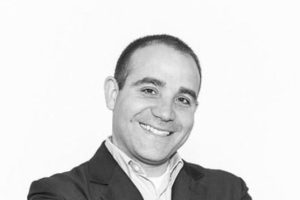
Glenn Robertelli, CEO of RI Bio, is shaping Rhode Island into a rising life sciences hub through strategic partnerships, innovative programs, and support for early-stage biotech. Despite the state’s small size, Rhode Island ranks fourth nationally in NIH funding and is a top ten leader in bioscience patents and medical device design. Inspired by Kendall Square in the early days of biotech, Robertelli sees the state as fertile ground for emerging ideas and translational research, with growth driven by smaller, agile companies. He invites innovators, investors, and companies to join him on this road less traveled, where opportunity and collaboration are creating a new frontier in life sciences.
How did you approach your first year leading RI Bio, and what were your key priorities?
I am probably not the traditional head of an industry trade organization like RI Bio, but I believe my background offers significant value to the ecosystem at this stage of development. My first year with Rhode Island Bio was really dictated by our membership and what I call the friends of Rhode Island Bio.
Rhode Island Bio is an industry trade organization and membership organization that spans the entire spectrum from major companies like Johnson & Johnson, Amgen, and Vertex, all the way down to individual start-up founders and professors emerging from universities like Brown University and URI. One of the first initiatives I undertook was sending a comprehensive survey to our members. I wanted to understand what would truly excite and benefit the members and the broader ecosystem, and the response to that survey has really shaped my mission throughout 2025.
The top three priorities that emerged were particularly telling. The first was networking and social events. People in the life science community genuinely want opportunities to connect and bring the ecosystem together. Second was start-up and entrepreneurial support, which reflects Rhode Island’s current position. Rhode Island’s ecosystem resembles Kendall Square in the late 1980s and early 1990s, with many interesting smaller ideas and concepts emerging from translational research at local universities. While we do have established companies like Amgen, Vertex, and Organogenesis, most of our growth will likely come from smaller organizations. The third priority was workshops and educational programming for themes around neuroscience, neurotech, and bringing biotech and medtech together through combination products.
These findings have defined my focus for leading RI BIO, and what I find particularly rewarding is that everyone in Rhode Island wants to help build the ecosystem. People who had been building this foundation long before I joined had done so through purely volunteer efforts. I regularly have people approach me asking how they can get involved and contribute. It creates an excellent environment for building upon the foundation established by the previous executive director.
For international readers who may not be familiar with Rhode Island’s life sciences landscape, how would you characterize the current ecosystem?
Providence, the capital of Rhode Island, is about a 60-minute drive from Boston and offers strong foundational elements.
It is a beautiful city with excellent educational institutions including Brown University, University of Rhode Island, and Providence College. According to the latest 2024 biotechnology report, despite Rhode Island’s small size, the state ranks fourth in NIH funding nationally, ninth in bioscience patents, and tenth in medical device design and manufacturing. It also maintains a concentrated position in biomanufacturing. These rankings demonstrate that while small, Rhode Island is indeed mighty in the life sciences sector.
Currently, there are 6,300 life science positions in Rhode Island. The average salary in life sciences is 73 percent higher than salaries outside the life sciences sector within the state. However, these numbers do not capture the large contingent of individuals who live in Rhode Island but work in Massachusetts. Many of my board members are Rhode Island residents who work in Kendall Square, the Seaport, or the greater Boston area, contributing to the regional ecosystem.
From a Rhode Island Bio perspective, I am here to advance life sciences, whether that occurs in Rhode Island, New England, or globally. It is a small community, and we must do better. If I can contribute to that improvement, I am pleased to do so.
What gaps or missing elements in the local life science ecosystem is RI Bio working to address for its members?
The industry and state have always needed to work together at a policy level to make life sciences thrive. As everyone understands, life science is not a fast-developing marketplace. You need to invest for the long term and maintain a strategic perspective.
Before I joined RI Bio, there was an initiative at the state level to establish an economic development organization specifically for life sciences. This organization, the Rhode Island Life Science Hub, came online within the last 12 to 18 months. It received USD 45 million in funding from the state budget, representing an excellent first investment by the state to focus on the early-stage ecosystem.
Of that USD 45 million, USD 10 million is invested in bringing the first shared laboratory space in Rhode Island online in downtown Providence. This facility, called Ocean State Labs, is scheduled to come online in late 2025 or early 2026. It will offer a combination of shared and private benches managed by Portal Innovations, a Chicago-based organization that also operates locations across the US, including Boston. The facility is located on Brown University property, which allows early-stage start-ups that might otherwise relocate to Kendall Square for laboratory space to remain within the regional ecosystem.
From an RI Bio perspective, the Rhode Island Life Science Hub has been an outstanding partner in building the ecosystem. We have collaborated on the BIO 2025 conference, organized our own social and educational events around BIO 2025, and work closely together to cultivate the ecosystem as we identify high-value, high-risk, high-reward targets emerging from universities.
Given the challenging biotech funding climate and federal uncertainty around programs like SBIR and STTR, what state-backed policies or programs are supporting early-stage biotechs in Rhode Island?
In 2025, there has been some analysis paralysis with changing federal rules, which affects the entire investment community across individual angels, angel groups, and venture capital firms. The advantage in Rhode Island is that of the USD 45 million the state allocated for the early-stage ecosystem, USD 35 million is distributed across different programs. Some focus on attracting small and medium-sized life science companies to the state, while others invest in innovations emerging from within the state.
Multiple grant programs are available that existing start-ups or future start-ups can apply for through the Rhode Island Life Science Hub. Additionally, if you are a smaller or medium-sized organization in life sciences looking to build your presence in Rhode Island, you can take advantage of everything from Ocean State Labs to entrepreneurial programs through RI Bio.
For example, Veintech, an Australian medical device company, received non-dilutive funding to establish Rhode Island as their US headquarters. They are building a team here, and I am collaborating with them on events to facilitate their growth. Other organizations that are not yet formally established will participate in my entrepreneur-in-residence program, and they have also received grants to form companies. These represent truly impressive technologies emerging from local universities.
As everyone in life sciences knows, not every company will survive. However, jointly, the Rhode Island Life Science Hub and RI Bio are working to provide pathways that can improve the success rate from low single digits. If we can increase that rate by even a few percentage points, the ecosystem in Rhode Island and the Northeast will be significantly stronger in ten years.
Beyond laboratory space, what systemic issues have prevented Rhode Island companies from scaling up, and how are you addressing these challenges?
Regarding systemic issues that have prevented companies from scaling in Rhode Island, I believe know-how, experience, and the ability to build teams around technologies represent the most critical factors. While technology is important, having the right team is often even more crucial. This is a principle that we see resonating with investors as part of their decision making.
One initiative I am developing with the Rhode Island Life Science Hub is an entrepreneur-in-residence program. Unlike traditional programs at MIT or other institutions, this program pairs early-stage ideas through established start-ups that may have completed their Series A with entrepreneurs who have previous experience. It operates as a matchmaking process where I identify key challenges for each organization.
For companies that are further along, having completed preclinical studies and preparing for Series B fundraising while needing management maturation, I pair them with individuals who have navigated that process before. These are entrepreneurs who have built companies from the ground up, raised Series A and B rounds, and taken companies public, so they understand the maturation process from idea to commercial organization.
On the other end of the spectrum are organizations spinning out of laboratories today that have not yet formed companies but need expertise to determine market viability, reimbursement models, and competitive landscapes. The pairing occurs on a one-to-one basis because the hope is that after six to nine months, both sides will see value in working together and can build a team. This could result in the entrepreneur-in-residence becoming the first CEO or key executive to guide the early-stage idea through seed investment to Series A.
This program is currently a pilot with five companies, each presenting unique challenges. The entrepreneurs-in-residence are selected based on specific needs. For example, some are technology-savvy in machine learning, hardware, and software development, while others focus on fundraising strategy and execution.
How do you see the state positioning itself to attract investors and build the teams needed to turn promising technologies into successful life sciences companies?
Rhode Island’s ranking as fourth in the nation for NIH funding is indeed robust. NIH funding typically flows to universities, and there are excellent opportunities to leverage translational work emerging from this research. In the Massachusetts area, everything focuses on return on investment from angel investors and venture capital perspectives. Rhode Island, being less than 60 minutes from Kendall Square, remains somewhat off the beaten path for investors and expertise.
For investors seeking high-value investments, Rhode Island, like other smaller states, presents excellent opportunities. Brown University conducts outstanding translational work and maintains a technology transfer office, Brown Technology Innovations, that rivals those at Harvard and MIT. I work closely with them to identify potential innovations suitable for company formation.
For experienced operators or entrepreneurs, there are excellent opportunities to identify early-stage technologies and become involved. My personal opinion is that life sciences is inherently challenging. If you are working on something, there are likely individuals who have tackled similar but not identical challenges. If the challenges are identical, it may not represent a sound financial or time investment.
The fact remains that excellent technologies need teams built around them. Technology is only part of the solution; the team represents the other critical component. Execution is extremely difficult, and taking something from the bench or laboratory through to commercial product is not easy. If it were, we would see far more successes in the life sciences industry.
Given the uncertainty and ups and downs in the American economy, are you seeing any hesitation from members and the greater ecosystem to commit funding and continue investing?
From a life science community standpoint, everyone is invested in growing the ecosystem for life sciences in Rhode Island and New England generally. The challenge, similar to what exists in Massachusetts at state and individual voter levels, is that money must be allocated toward the life science ecosystem.
The original USD 45 million investment for the Rhode Island Life Science Hub represents a three-year commitment. This is an excellent investment, but as we all understand, life science requires long-term strategy and investment. At the conclusion of this investment at the end of 2026, there must be follow-on investment to maximize the initial commitment.
Biotech companies easily require 10 years to progress from bench to commercialization in favourable scenarios, sometimes much longer. Medical devices, if fortunate, require five years. This necessitates longer-term strategic thinking, and RI Bio and Rhode Island Life Science Hub are working together to make this happen.
From an industry standpoint, companies like Vertex, Organogenesis, and Amgen want to see expansion of the life science ecosystem. My members at RI Bio include organizations not even located in the state, like Johnson & Johnson and Bristol Myers Squibb, because they are interested in understanding patient needs and patient advocacy group activities.
While we are encountering headwinds in 2025, particularly with changes at the grant level with NIH grants and reauthorization of SBIR and STTR causing analysis paralysis in early-stage investment, I believe 2026 will bring renewed opportunity. As people recognize that these shifts will not cause dramatic impact, there will be significant opportunities for small companies to grow and large companies to continue thriving.
How do operational costs in Rhode Island compare to Massachusetts, and what advantages might this present for entrepreneurs and larger corporations?
Regarding operational costs, the 2024 biotechnology report indicated that the average annual salary in life sciences in Rhode Island was USD 125,000, which I estimate is significantly less than Massachusetts levels. While Massachusetts is an excellent place to live and operate a life science company, there are challenges. It is very difficult to relocate someone from another state to Massachusetts to join your team.
Rhode Island and Massachusetts share a border, and the cost of living, housing, and office space are all lower in Rhode Island. I envision that in 10 to 15 years, similar to how Kendall Square transformed from parking lots to one of the most densely packed biotech and medtech hubs in the country and possibly the world, Rhode Island has similar potential. There are excellent development opportunities for large companies to either grow or relocate there.
For larger corporations, I believe this represents a longer-term strategy that needs implementation at the state level in partnership with the Rhode Island Life Science Hub and RI Bio. If an organization were large enough to seek land for biomanufacturing or corporate headquarters, it would likely prove more cost-effective than alternatives.
On the biomanufacturing side, companies would probably need to build facilities from the ground up. Organogenesis recently acquired an existing building in Smithfield, Rhode Island, for biomanufacturing two product lines. Amgen operates biomanufacturing in South Kingston, Rhode Island.
From a longer-term perspective, companies tend to locate where there are direct flights. As TF Green Airport expands, this becomes increasingly important. Boston now has direct flights to Ireland and other European locations, which influences location decisions.
Rhode Island needs to consider international routes. If you are a Spanish company and there is a direct route between Spain and Rhode Island, that makes operations considerably easier than flying into Logan and traveling another 60 minutes.
The opportunities exist because Rhode Island was historically strong in jewellery making, textile manufacturing, and fabric production. Over time, these industries relocated to lower-cost locations, leaving interesting commercial and industrial real estate suitable for redevelopment.
You mentioned upcoming international travel to Japan. What drives this international outreach, and what conversations are you hoping to have in markets like Japan?
Most of my work occurs within the US at the federal policy and advocacy level in Washington, DC, and at the state level. However, from an international standpoint, I am committed to advancing life sciences broadly. If that involves helping life science companies in Japan or elsewhere, I am pleased to serve as a resource. If they choose to locate in the New England area, there are excellent opportunities, including non-dilutive grants for relocating to the Rhode Island ecosystem.
Once companies establish themselves here, my role is to add value without asking for anything in return. I only ask that in five or 10 years, they become the next Vertex, the next Alnylam, the next Insulet. It is fundamentally about helping the ecosystem grow, whether regionally in New England or globally.
What final message would you like to share with our international audience?
For international readers interested in the Rhode Island ecosystem, I encourage them to reach out directly. I am here to be helpful and add value without requesting anything in return. It is a small ecosystem, and we need to perform better for the general public and individual patients, whether in the United States, Europe, or Asia. There are significant challenges regarding health, wellness, and longevity, and working together will create better outcomes for everyone.