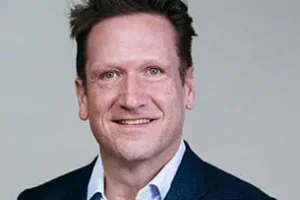
After years abroad, Radiometer’s President and CEO, Francis Van Parys, returned to Europe to lead one of Denmark’s most historic MedTech companies into its next chapter. In this interview, he discusses how Radiometer is redefining its role, moving beyond instrumentation to become a driver of time-sensitive clinical decisions through digital innovation, workflow integration, and global expansion.
What motivated your move to Radiometer, and how have you adapted to leading a company with such a distinct Danish heritage?
Following more than five years in Asia with Cytiva – formerly part of GE Healthcare Life Sciences and acquired by Danaher in 2020 – I began to feel it was time to return closer to home. Around that time, the opportunity to lead Radiometer presented itself. For me, this represented a rare and compelling chance to humbly take the helm of an iconic Danish company with over seven decades of MedTech innovation behind it. The ability to shape its next chapter was both professionally and personally meaningful.
What made the role particularly attractive was Radiometer’s focus on acute care, where clinicians are required to make critical decisions under intense time pressure. The direct connection to patient outcomes, and the fact that our solutions support care for 24 million patients each year, brings a deep sense of responsibility, one that resonated strongly with me.
Although I am Belgian and have spent much of my career in global settings, including in London and across Asia, Denmark offered something distinct. It combines a proud national identity with a remarkably open mindset, particularly when it comes to welcoming global perspectives. The country’s world-class academic institutions, highly capable life sciences sector, and collaborative business environment have made the transition both smooth and enriching. I have felt genuinely welcomed into this ecosystem, and it has been a privilege to join a community so committed to leadership and innovation in healthcare.
How would you characterise Radiometer’s position when you took over, and how have you sought to evolve its strategic direction?
When I joined Radiometer, it was just over a year after the height of the COVID-19 pandemic, a period that not only brought extraordinary demand for our solutions but also placed unprecedented pressure on global operations, revealing constraints across not just Radiometer, but the entire healthcare industry. The organisation was navigating supply chain disruptions and component shortages, all of which tested our ability to meet customer expectations. Much of the immediate work to stabilise operations and expand capacity was already underway when I joined, and I felt the time had come to start to look outward again.
We needed to shift from a predominantly product-centred approach to one that placed patients and clinical decision-makers at the core of our thinking. That meant realigning the leadership structure to strengthen commercial focus, while also revitalising our innovation model, both in terms of physical product development and digital capabilities. Unlike hardware, digital platforms offer the ability to scale quickly and deliver differentiated value to customers in ways that transcend traditional instrumentation.
Given our deep integration into high-acuity settings like intensive care units and emergency departments, we began asking what more we could do to support clinicians faced with urgent, high-stakes decisions. This led us to prioritise areas such as parameter expansion and the development of clinical decision support tools, technologies that can help reduce diagnostic uncertainty and improve time-critical outcomes. We must remember that behind every result is a person waiting for answers, and that is ultimately where our focus lies: enabling clinicians to make better decisions, faster, in the moments that matter most.
Where does Radiometer currently stand on the global stage, and which regions are most central to your future growth ambitions?
Radiometer is anchored in its Danish heritage, but our reach is undeniably global. Wherever acute care or critical care is delivered, there is a clear need for our solutions. We are present in more than 130 countries, have leading positions across many mature markets, particularly in Europe, Japan, and China, and our global footprint and deep local engagement presents tremendous opportunity to expand our impact.
In the US, we’re supporting healthcare professionals with timely diagnostics in a system under mounting pressure. In China, our long-standing presence continues through local manufacturing and digital transformation, keeping us aligned with evolving clinical needs. Across Southeast Asia and India, we’re expanding access by bringing solutions closer to caregivers in rapidly growing healthcare markets. In the Middle East, particularly Saudi Arabia, we’re partnering with healthcare leaders who are making bold investments to modernize care delivery.
Global expansion, however, does not mean a uniform approach. Each market requires its own strategy tailored to local needs. My time in Asia has shaped the way I view market diversity. While the diagnostic landscape may differ from previous sectors I’ve worked in, many of the insights from that experience are highly transferable – particularly around building local capabilities, understanding regulatory environments, and establishing trusted partnerships with healthcare providers. These learnings continue to inform our efforts to build a more agile, localised, and sustainable global presence.
How do you adapt Radiometer’s diagnostic offering to meet the varying demands of global healthcare systems while staying close to patients and clinicians?
While healthcare systems vary significantly from one country to another, the underlying clinical imperative remains constant: blood gas testing is a critical tool in acute care settings, regardless of geography. The challenge lies in delivering solutions that meet that universal need while adapting to the distinct operational, economic, and regulatory conditions of each market.
In high-throughput environments like large US emergency departments, testing volumes can reach several hundred per day. By contrast, in lower-resource or rural settings, that same volume may be spread over weeks or months. Our portfolio is designed to flex across this spectrum, ensuring that hospitals and clinics regardless of scale, can access appropriate, reliable diagnostics.
Digital integration adds another layer of complexity. While our middleware solutions are a key differentiator in point-of-care connectivity, they are not deployed uniformly. Integration must reflect the digital maturity of each healthcare system, local data protection rules, and the specific IT frameworks of our partners. We adapt our platforms accordingly, ensuring they are not only compliant but also genuinely useful to frontline clinicians.
In parallel, economic and geopolitical trends are prompting a shift toward more localised approaches. In China, for example, we are actively exploring solutions developed in and for the domestic market, including local manufacturing. India is moving in a similar direction, and we expect this emphasis on regional relevance to grow. The goal is to strike the right balance between standardization, which is crucial for quality and scalability, and customisation, which ensures our solutions are contextually appropriate and sustainable.
Ultimately, our commitment to patient and customer centricity is not a one-size-fits-all exercise. It is about designing systems, whether diagnostic platforms or digital tools, that fit the reality on the ground, while upholding the clinical performance that patients and clinicians rely on.
In what ways is Radiometer integrating digital and AI-powered technologies to enhance point-of-care diagnostics?
With hospitals facing mounting pressures like rising patient volumes, an ageing population, and persistent staff shortages, there is a growing need to streamline workflows and deliver care more efficiently, when and where needed. At Radiometer, we see digital solutions not as adjuncts, but as integral to how we respond to these systemic challenges.
One area where we are already making a tangible impact is in triage. Tools like TriageGO are designed to support frontline staff by helping them assess and prioritise patients more quickly and consistently. In settings where nursing resources are stretched, such tools can reduce variability, standardise care, and relieve pressure on emergency departments.
A second area is clinical decision support, where we are exploring ways to extract actionable insights from diagnostic data. For example, when certain blood panel patterns reliably point toward a particular condition, digital tools can help clinicians identify those signals earlier. This remains a more complex space, both technically and clinically, but one we believe holds significant long-term promise.
A third pillar of our digital strategy is point-of-care IT. Our digital platform, AQURE, integrates multiple devices, across manufacturers, into a single centralised system. This allows hospitals to manage their analysers, optimize workflows and ensure that everyone using the analyser is only used by those who are certified to use it. One interface creates operational coherence in increasingly complex and time pressed care environments.
Together, these initiatives reflect our broader ambition: to move beyond instruments and deliver connected solutions that enable faster, more confident clinical decisions at the point of impact.
How is sustainability influencing your business strategy, and what steps has Radiometer taken to embed environmental responsibility across operations?
Sustainability is no longer a peripheral concern; it is increasingly shaping both customer expectations and procurement criteria, particularly in healthcare. At Radiometer, we see this not simply as a regulatory obligation, but as an opportunity to rethink how we operate and how we innovate. It is a principle we are embedding across the organisation.
Aligned with Danaher’s broader commitment to achieve carbon neutrality by 2050, we have set specific goals at Radiometer and are already delivering results. Since 2021, we have reduced our Scope 1 and 2 carbon emissions by more than 50 percent, focusing on energy efficiency projects, facility upgrades and transitioning to clean energy sources. We’ve transitioned to bio-based packaging material for all cold chain shipments, ensuring reliable temperature control while enabling reuse and reducing environmental waste.
But our sustainability efforts extend well beyond carbon metrics. They also include building inclusive, globally minded teams and engaging our supply chain as active partners in sustainable transformation. We see ourselves as part of a broader ecosystem, where meaningful change depends on collaboration as much as internal progress.
Crucially, sustainability is also becoming part of how we approach product development. In a business where instruments and consumables are core to the offering, we want to rethink design to reduce waste and help hospitals manage resources more responsibly. These considerations will be built into the development process from the outset; not as an afterthought, but as a driver of innovation. It challenges our teams to move beyond the expected and to design smarter, more future-ready solutions that serve both clinical and environmental priorities.
How is Radiometer engaging with Denmark’s life sciences ecosystem, and what role does the local environment play in supporting innovation and collaboration?
Strengthening Radiometer’s connection to the Danish life sciences ecosystem has been a clear focus since I took on this role. One recent step in that direction was joining Their Majesties King Frederik X and Queen Mary on a state visit to France earlier this year. The delegation brought together 55 Danish companies and was hosted by President Emmanuel Macron. It provided a valuable platform to demonstrate how we at Radiometer are contributing to smarter, more resilient hospital systems, and equally, it allowed me to connect with key actors across the healthcare sector.
Traditionally, many companies, including ours, have operated with a “not invented here” mindset. But today, innovation is happening both within and beyond company walls. Collaboration, co-development, and open innovation are essential. Denmark is one of the few places in Europe where this is not just encouraged but structurally supported. The country has a clearly defined life sciences strategy, underpinned by close coordination between the Ministry of Health and the Ministry for Industry, Business and Financial Affairs. When I recently met with Minister Morten Bødskov, I was struck by how aligned the public and private sectors are, not only in language but in shared intent.
For Radiometer, this has already led to new connections with tech startups and innovation hubs, many of which are looking to partner with larger, more established players. We recognise that we cannot, and should not, innovate in isolation. Denmark’s strong academic institutions, access to robust healthcare data, and well-developed hospital infrastructure make it an ideal environment for collaborative innovation. While we are still early in this journey, the foundation is solid, and the energy is there.
Though Radiometer is global in scope, nearly 2,000 of our employees are based in Denmark, and we are committed to making the most of the opportunities this environment offers. The Danish model which is rooted in transparency, dialogue, and strategic alignment, may not be directly transferable to larger countries, but it can serve as a reference point. With Denmark now holding the presidency of the European Union, there is a real opportunity to extend this collaborative spirit across borders, particularly at a time when deeper European coordination is both needed and possible.
What does the next chapter look like for Radiometer, and what key developments are you aiming for in the near term?
There are certain fundamentals we must continue to deliver on, ongoing innovation across our existing product lines and sustained growth in strategic markets. These are baseline expectations. But beyond that, we feel a broader responsibility. Radiometer operates in acute care with a strong link to non-communicable diseases – conditions such as heart disease, diabetes, lung disease, and sepsis – that collectively claim over 41 million lives each year. At the same time, healthcare systems are under growing strain: fewer resources, overburdened hospitals, and increased patient volumes.
Within this landscape, our mission is to help address the challenge of time. In acute care, critical decisions must often be made in minutes. Our role is to equip clinicians with tools that enable them to make these decisions with greater speed, accuracy, and confidence. That requires more than reliable instruments; it demands solutions that integrate seamlessly into clinical workflows, offer consistent quality, and provide meaningful context at the point of impact.
This is no longer just about test parameters or hardware, it is about empowering decision-making through a holistic ecosystem. Whether through expanding our clinical parameters, offering digital decision support, or enhancing system-level integration, we are focused on enabling faster, more standardised, and more informed care across geographies. Digital solutions are already central to how we differentiate ourselves, and that role will only expand. Our core platforms will remain essential, they generate the clinical data on which everything else is built, but it is the intelligence layered on top that will truly shape the future of Radiometer.
I recently visited a hospital in Paris as part of a tender renewal process. Of the two hours spent with the customer, only a fraction was dedicated to discussing our products. The vast majority of the conversation focused on how we help optimise workflows, minimise analytical errors, reduce sample confusion, and improve consistency through our digital capabilities. That shift in emphasis says a lot about how our value proposition is perceived, and where the market is heading.
We are not simply a blood gas testing company, nor solely a point-of-care player. We are a critical enabler of time-sensitive clinical decisions, supporting healthcare systems to operate more efficiently and serve patients more effectively.
Is there a final message you would like to share with Radiometer’s partners, customers, or the broader healthcare community?
At the heart of our work is a deep commitment to supporting critically ill patients, individuals who often find themselves in life-threatening and emotionally charged situations. The clinicians caring for them operate under significant pressure, focused solely on delivering the best possible outcomes. Our role is to provide them with tools that make that care as fast, accurate, and effective as possible.
This is the responsibility we carry, and one we approach with genuine seriousness. It is not only about delivering high-performance instruments or digital solutions, it is about ensuring that each decision made at the point of care is grounded in speed, reliability, and clinical confidence. That is the purpose we have served for decades, and it is the foundation on which we will continue to build, because in acute care, every second matters.