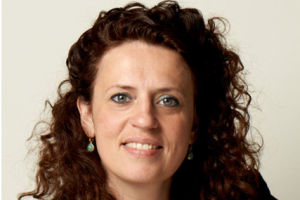
As Denmark’s life science sector matures into a globally engaged, innovation-led ecosystem, the Danish Life Science Cluster has emerged as a central neutral coordinating force, aligning regional strengths, shaping strategic direction, and enabling collaborative transformation across sectors. In this interview, Director Diana Arsovic Nielsen, CEO of the Cluster, reflects on the cluster’s evolution, the development of the Lighthouse model, and Denmark’s contribution to shaping both European frameworks and global partnerships.
How did the Danish Life Science Cluster define its mission and strategic direction in its early years?
In its early years, the Danish Life Science Cluster was established with the task of building a cohesive national identity and defining its role within Denmark’s broader life science framework. It was formed through the merger of five regional clusters, and its initial goal was to create a unified strategy that would support Denmark’s 2021 Life Science Strategy. Now, with the new Life Science Strategy Toward 2030, the cluster is helping set priorities for the next five years. Positioned at the crossroads of social and environmental sustainability, the cluster champions both healthcare equity and more efficient use of resources within the health system, aligning with the challenges in Denmark’s healthcare system.
The transition from regional to national also required balancing local priorities with the need to project a unified Danish life science brand internationally. While regional stakeholders understandably focused on securing investment for their areas, Denmark’s small market size meant a more consolidated approach was necessary. The cluster’s role became about building shared tools, fostering alignment, and encouraging collaboration across different organisations and regions, helping to create an ecosystem that could support the healthcare system and collectively engage with international investors, partners, and talent.
Shifting to a national-level cluster marked a big change in Denmark’s strategy. Traditionally, clusters were tied to specific cities or regions, but for a country the size of Denmark, this approach limited our global competitiveness. By uniting the national cluster, we created a platform that allowed us to engage more effectively on a larger scale while still strengthening our local ecosystem. Importantly, our cluster includes not just pharmaceuticals, but also medtech, healthtech, and welfare technology. So everything from smart-home solutions to assistive devices. These sectors rely on access to patient data, real-world testing environments, and integration into healthcare systems. With Denmark’s public healthcare system, which is governed by strict procurement channels, one of our ongoing challenges is ensuring that innovative companies, particularly in emerging tech, can navigate the system and scale their solutions quickly and effectively.
How does the cluster support early-stage companies in navigating regulation, validating solutions, and scaling sustainably?
To help early-stage companies grow in a structured way, we developed a growth framework based on a “ladder” that maps out the journey from identifying a validated need to scaling a successful business. This progression involves proving the need, proving the technology, demonstrating the concept in real-world settings, and designing sustainable business and reimbursement models. Each step on the ladder represents a different challenge, especially in a sector driven by regulation and long development cycles. Instead of expecting companies to jump all the steps at once, we celebrate progress at every level, recognising that even a small step forward often takes a lot of effort and resources.
Two critical factors are key to this progress: access to funding and access to new partners. Many start-ups find themselves relying on a small group of advisors or clinical collaborators, which can limit their ability to secure the broader expertise they need to tackle challenges like regulatory clearance, health economics, or international market entry. The Lighthouse model addresses this by creating a shared language, connecting companies with the right partners across different fields, and cutting down on inefficiencies.
The results have been promising. In our first cohort of 42 projects, more than half advanced by two steps on the growth ladder, with some even doubling their revenue. Today, over 700 companies and 365 financial partners are involved with the platform. The model’s success has also caught the attention of the World Health Organisation (WHO), with whom we’ve signed a Memorandum of Understanding to explore how it can be applied across Europe. At its heart, this is about transforming health systems through structured, collaborative partnerships. We believe sustainable innovation can only thrive when all stakeholders commit to shared responsibility and a long-term vision.
What is the Lighthouse Life Science model, and how has it reshaped the Danish approach to health innovation?
The Lighthouse Life Science model was introduced as a response to the persistent issue of short-term, unscalable pilot projects that didn’t create lasting systemic value. It was designed to be a long-term, mission-driven platform that fosters deep, ongoing collaboration across sectors. Launched three years ago with a focus on obesity, it reframed the issue as not just a healthcare challenge but a broader societal concern. One that needed coordinated efforts in prevention, early detection, and cross-sector engagement.
The model’s governance was established from the top down, with political and municipal leadership embedded in a cross-sector steering group, which I have the privilege of chairing. While the cluster doesn’t directly fund individual initiatives, we play a key role in coordinating strategy and facilitating knowledge sharing to ensure alignment across all activities. With over 75 active projects, the platform encourages iterative development, where failure is seen as part of the process, and continuous learning is prioritised.
From the beginning, the model included a diverse group of stakeholders, including pension funds, insurance providers, and employers. All entities that recognised the long-term value of investing in public health. The focus was on both early detection and prevention, and therefore, it attracted a more diverse group of companies. Because of the broad, diverse group of actors, the Lighthouse model successfully reframed health prevention as a shared investment rather than a public cost, creating a new, sustainable, and outcome-oriented approach to innovation.
How is Denmark’s Lighthouse Life Science model being shared internationally, and what can other countries learn from it?
While Denmark’s Lighthouse Life Science model has gained increasing international attention, calling it a model ready for export would be a bit misleading. These kinds of initiatives are deeply rooted in the specific national context, and in Denmark’s case, they are built on a foundation of societal trust that can’t just be replicated elsewhere. That said, what we can offer are valuable insights, particularly on building cross-sector governance structures, fostering collaboration that extends beyond individual project cycles, and creating platforms that keep public and private stakeholders aligned for the long term. One of our important findings is that you need a neutral partner to facilitate the lighthouse and make sure you get insights from all corners of the ecosystem. And that role is the Danish Life Science Cluster playing I both the Lighthouse Life Science model and in other innovative collaborations.
The real value of the Lighthouse model lies not in trying to export a one-size-fits-all template, but in contributing to the development of flexible frameworks that can be adapted to local conditions. What we advocate for is stronger financial structures, supported by multiple funding sources rather than relying on a single investment stream. When a project is backed by just one government grant or donor, its continuity is often fragile. Sustainable innovation in healthcare needs financial and operational durability to withstand the ups and downs of political and economic shifts. This is not about making small improvements to consumer services; we’re talking about systems that have a direct impact on people’s lives. The Lighthouse model isn’t something to simply replicate, it’s a tool that invites others to rethink how health innovation ecosystems can be built and sustained over time.
Having launched the Life Science Strategy 2030, what are the impacts of this innovation for the Danish Life Science Cluster and its member companies?
The Life Science Strategy 2030 has had a broad impact, stretching well beyond just pharmaceutical companies to include medtech, healthtech, and welfare technology sectors. What really sets this strategy apart is the inclusive process behind its creation, bringing together industry associations, academic institutions, and public stakeholders right from the start. This collaborative approach has helped ensure the strategy addresses the ecosystem’s shared challenges, with a strong focus on improving access to data, knowledge, and more flexible, risk-tolerant funding.
But it’s not just about laying the groundwork. The strategy also proposes practical improvements, like making it easier for companies to scale up, enhancing collaboration in procurement, and setting clearer pathways for innovation within the public sector. While some elements like a unified interface for public-private partnerships are still being developed, there’s a stronger emphasis on accelerating adoption and scaling than in past policy efforts. However, for the strategy to work, it has to align with Denmark’s healthcare reform, which is crucial for creating the right conditions to bring new solutions into the public system.
For many companies, the real challenge isn’t product development, it’s navigating public procurement processes, which tend to prioritize cost over innovation. This has led to frustration, especially as companies that have invested heavily in co-developing solutions with users often find themselves excluded from tenders.
The cluster plays a key role in bridging the gap between innovation and institutional change. A big part of this is recognising the difference in risk tolerance and urgency between public bodies and private companies. Public institutions can afford gradual change, but for early-stage firms, the stakes are much higher. Making sure the strategy leads to real opportunities and access is crucial to keeping trust and momentum alive across the entire ecosystem.
What structural reforms are most needed to help Danish life science startups move from pilot to scale?
For Danish life science startups to succeed, it takes more than just funding; we need to systemic changes across several areas. First and foremost, innovations need to be grounded in clearly defined, well-substantiated challenges. Too often, these challenges are framed too narrowly or lack sufficient evidence, which fails to account for the complexity of patient or citizen pathways, as well as the misaligned incentives within the public sector. For example, preventive solutions might reduce long-term costs, but they’re often outside the scope of those expected to implement them.
Startups also need to show more than just technical viability. Health solutions usually work within broader service models, so it’s important not only to validate the technology but also to prove its role within these wider care structures. This requires access to real-world environments and reliable data, yet many pilot projects rely on anecdotal feedback, which doesn’t meet the documentation standards needed for scaling or public procurement.
Innovation often clashes with existing financing and reimbursement structures. Disruptive models typically create value across multiple institutions, but public tenders remain focused on siloed, price-driven frameworks. To bridge this gap, startups need to propose alternative payment models and engage with decision-makers early on, which is a complex and resource-intensive process. At the same time, Denmark’s small market size and linguistic specificity require startups to think internationally from the beginning. Most companies start in English or expand into nearby Nordic markets, and the cluster helps with this by providing early exposure to international health systems and regulatory contexts. This outward focus has become one of Denmark’s strengths.
Finally, access to specialised talent continues to be a major challenge. Many companies struggle with shortages in key skills, and while the national strategy acknowledges this, its measures to attract foreign talent or help professionals transition from other sectors could be stronger. That said, the strategy is still closely aligned with industry needs, as it’s been shaped through consistent and meaningful engagement with stakeholders.
How is Denmark aligning its national priorities with the broader ambition of creating an EU life science strategy?
Denmark has been actively shaping the European conversation around key issues like health data governance and regulatory alignment. While these discussions often move slowly and face challenges, we’ve intentionally positioned ourselves not just as a model of what’s possible, but also as a key contributor to shaping future EU strategy. We’ve hosted numerous delegations from the European Commission, showcasing how Denmark balances economic growth with public health value creation. Our aim isn’t just to be seen as a success story to be copied, but to help influence EU standards and frameworks from within. By sharing our experiences and advocating for best practices, Denmark is working to elevate the entire EU’s approach to life sciences.
At the same time, we’re mindful of the changing global market dynamics. For example, while the US remains a major destination for Danish exports due to its large market and clearer regulatory environment, many of our companies start their international journeys in nearby European markets like Germany, the UK, and the greater Nordics. In fact, navigating the US FDA can sometimes be more straightforward than dealing with Europe’s fragmented approval systems. This highlights the urgent need for a unified European life science strategy. Though its formalisation may be delayed due to ongoing geopolitical challenges, the discussions are already moving forward, and Denmark is playing an active role in helping shape it.
What strategic directions will shape the Danish Life Science Cluster’s evolution over the next five years?
Looking ahead, the Danish Life Science Cluster has set out four strategic priorities to strengthen its role as a national ecosystem integrator and elevate Denmark’s position in global health innovation.
Our first priority is always to create collaboration and partnerships that support development, implementation and scaling health innovation. With growing resource constraints, technology must be part of the solution. This initiative directly supports the goals of the Danish Health Reform by focusing on the coordination and alignment of test environments across sectors. Our approach to innovation goes beyond technology – it’s about creating solutions that work in practice and across the full spectrum of the healthcare system: hospitals, municipalities, general practice, and civil society.
The second priority is to enhance the financial infrastructure supporting the sector. Historically dependent on public funding, the cluster model needs to evolve to encourage greater private investment. With over 1,100 domestic funding bodies, many startups still rely on soft capital well beyond their early stages.
The cluster now aims to connect actors across the entire investment spectrum, from public grants to philanthropic funds to institutional capital, while building investor confidence. This is especially important given the inherent volatility and slow pace in the sector and in health innovation as a whole due to the need for documentation and regulation in the market. By facilitating knowledge-sharing at each stage of funding, the goal is to create a more informed and resilient financial ecosystem.
The third priority focuses on scaling the use of citizen-generated health data. While Denmark’s national infrastructure for public healthcare data is maturing, patient-reported outcomes and sensor-based insights are still underused. These are key to moving towards quality-driven reimbursement models and ensuring that innovation delivers measurable patient benefits. The cluster plans to advance modern, technology-enabled models for capturing, validating, and applying this data in a meaningful way. This also includes framing and investigating the potential to scale the European Health Data Space across Europe.
Finally, the cluster plans to expand the Lighthouse model into a more robust platform for systemic health transformation. Originally conceived as a mission-driven initiative, the Lighthouse will evolve into a broader framework for long-term partnerships. The goal is to embed collaborative innovation more deeply within the public health system, creating a platform for national impact that is not only repeatable but also exportable in principle.
Together, these four priorities of financial growth, citizen data use, testbed infrastructure, and expanded partnerships lay out a clear roadmap for the cluster’s evolution and Denmark’s broader ambitions in life science.
What message would you share with international stakeholders about Denmark’s life sciences ecosystem?
Denmark offers a unique and cohesive environment for innovation, built on a high level of trust among stakeholders, a unified public healthcare system, and a compact scale that makes the country a perfect “living laboratory.” This combination provides an ideal platform for international partners looking to test, refine, and adapt new health solutions in a system that is both responsive and collaborative.
What sets Denmark apart is its strong tradition of user-centred design and inclusive innovation. From public institutions to industry players, stakeholders regularly involve patients and citizens in shaping solutions, fostering a culture that values holistic thinking and cross-sector collaboration. This ecosystem approach, embedded in both policy and practice, allows innovation to flow more smoothly across different domains and disciplines.
While Denmark doesn’t claim to have all the answers, what it does offer is a rare openness to dialogue, co-creation, and experimentation. It’s a place where ideas can be tested and challenged in real-world conditions, supported by a collective commitment to learning and evolving. For international actors looking not just for a market, but for a partner in building the future of healthcare, Denmark extends a clear invitation: come and collaborate.