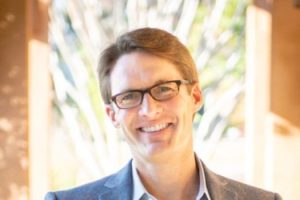
Chris Peetz, co-founder and CEO of Mirum Pharmaceuticals, reflects on the company’s journey from rescuing overlooked rare disease programs to building a growing global pharmaceutical company. He discusses Mirum’s expanding commercial portfolio, pipeline momentum, and disciplined acquisition strategy, while emphasizing the importance of patient-centered execution in rare disease. Peetz also shares how Mirum’s mission-driven culture continues to shape its growth and long-term ambitions.
Please start by introducing yourself and share how your career path led you into entrepreneurship and ultimately to co-founding Mirum?
I have been in biotech in the Bay Area for a while, and I originally came into the industry from the business side. I started my career as a banker and dove in with different biotech companies, including Abgenix before it was acquired by Amgen, and Onyx, where I saw all different aspects of the business. That time at Onyx was an incredibly formative experience and training ground for me, including global commercialization, product acquisitions, and company building. From there, I made the decision to move into smaller companies. That included time at a small private biotech called Jennerex in liver cancer, which was acquired by a Korean group, and Tobira in liver fibrosis, which was acquired by Allergan.
One of Mirum’s founding investors was Frazier Life Sciences, which has a company creation model where they work closely with entrepreneurs to start new companies. They invited me to lead a search focused on overlooked rare or liver disease programs. I spent a little over a year looking through large pharma pipelines to understand what had been deprioritized or underappreciated. That process ultimately led to the creation of Mirum.
The core idea originated with one of our co-founders and now the chairman of our board, Mike Grey, who has a remarkable story. Mike had previously founded a company called Lumena, which he sold to Shire. Within that company were maralixibat (now LIVMARLI®) and volixibat. After selling Lumena, Mike continued to follow these programs, largely through patient advocacy efforts. He and others helped support natural history research and patient communities in Alagille syndrome (ALGS) and progressive familial intrahepatic cholestasis (PFIC).
Mike tells the story of attending an Alagille syndrome event where he met families whose children had been treated in the clinical studies. He saw firsthand the impact maralixibat had on those children and families. At the same time, he learned that Shire was planning to shut the program down because they did not see the promise in it. That disconnect was really the spark for Mirum.
The data and patient experience pointed to meaningful benefit, but it had been deprioritized by a large company. Mike did not have a team to take it forward, so we combined forces to kick it off. From there, we raised capital, acquired the assets from Shire, and set out to develop these therapies, get them approved, and bring them to patients who needed them.
Mirum has established itself as a specialized player in rare diseases, with three commercial therapies on the market. Could you walk us through these assets and describe the impact they are having on patients and families today?
From the beginnings of the company, we’ve been able to do a lot by advancing our own programs and acquiring new medicines and product candidates along the way.
LIVMARLI is really the cornerstone of the portfolio, both in terms of impact and as a growth driver. It’s approved for cholestatic pruritus in ALGS and PFIC, and it has now been approved in many countries around the globe. We commercialize it ourselves in North America and Western Europe, and leverage partnerships around the globe. A key partner in Japan recently got approved for both indications.
For families affected by ALGS and PFIC, the burden of cholestasis can be significant, with reduced bile flow leading to bile acid buildup and debilitating symptoms like itch and fatigue. You hear stories of parents going into their child’s bedroom in the morning and finding blood on the sheets because their child has been scratching relentlessly overnight trying to get relief from an itch that feels like it’s coming from underneath their skin. It’s quite a terrifying set of symptoms for families to deal with. In severe cases, liver transplants have been a treatment option to manage these symptoms.
What we see with LIVMARLI are meaningful effects across the clinical data generated to date. By lowering excess bile acid levels, the drug targets the underlying driver of the symptoms. Depending on the dataset, up to 80% of patients experience clinically meaningful improvements in itch, and these improvements were also correlated with decreases in serum bile acids. For many patients, liver transplant may no longer be necessary as a treatment option. We are now seeing signals in natural history studies suggesting a reduction in liver transplants for cholestatic pruritus across ALGS and PFIC more broadly because patients have an effective therapy available. This medicine really is a key contributor to Mirum’s impact for patients.
Our other two commercial medicines are also important treatment options. CHOLBAM® and CTEXLI® are approved for bile acid synthesis disorders, which are caused by genetic variants that disrupt normal bile acid production and lead to toxic buildup of abnormal intermediates. Both products are the only approved treatment options for these rare conditions.
Since acquiring these therapies, we have focused on improving awareness and diagnosis of these rare diseases, so patients who may be affected can be accurately identified and appropriately treated. This is a common thread across rare disease. By supporting disease awareness, genetic testing, and diagnostic pathways, we have seen more patients diagnosed and treated with these therapies.
LIVMARLI’s potential expanded indication represents an important development for the franchise. What impact do you expect this expansion to have for patients and for the company?
With LIVMARLI already approved for cholestatic pruritus in ALGS and PFIC, we have seen a treatment experience that can be rapid and transformational. There are many other very rare causes of cholestasis with similar bile acid build up that drives the pruritus or itch and fatigue in patients.
We started getting inbound requests from physicians asking for access to LIVMARLI for patients with other rare forms of cholestasis. That led to conversations with the FDA about how we could study a diverse set of conditions that have the commonality of elevated bile acids and pruritus through the EXPAND study. We structured it to be a basket study for these less common, ultra-rare settings that do not have approved treatment options and are difficult to find enough patients to study on their own. It’s really unique from both a development and regulatory perspective.
Similarly, CTEXLI received FDA approval last year. Could you explain what this milestone means for the product?
CTEXLI has a very interesting backstory. The active compound, chenodiol, was previously approved for gallstones, but over time it stopped being used for that indication. The original sponsor of chenodiol ultimately decided that cerebrotendinous xanthomatosis (CTX) was too small of a market and withdrew the product. Travere Therapeutics later stepped in to reintroduce it, and then spent several years developing the clinical evidence needed to get an FDA approval specifically for CTX. We acquired the program from Travere while that study was still ongoing. We helped bring the program across the finish line, building on the work that Travere had been doing.
Before that, the product was technically available through medical necessity determination, but everything was passive. There was no way to help support diagnosis and get patients onto therapy in a systematic way, but the FDA approval changed that.
Mirum has grown through a series of acquisitions, most recently with the acquisition of Bluejay Therapeutics. How does this approach shape your portfolio strategy, and how do you assess which opportunities are the right strategic fit?
External sourcing is really part of who we are. It’s how the company started, and it plays to our strengths. In my eyes, we have one of the best commercial teams in the business – creative, passionate, and very targeted at what they do. That makes us well-suited to taking externally sourced assets and unlocking their full potential. The Bluejay acquisition and the asset brelovitug are a good example of how we approach these opportunities.
We are very focused on medicines that tend to be overlooked by big pharma because they do not meet the threshold of being expected multi-billion-dollar products. These are often high-impact medicines where there is a misunderstanding of the patient population, the demand, or the real-world disease burden.
Before the acquisition, we had followed Bluejay for a couple of years. The brelovitug data was always very compelling and seeing a 100 percent response rate in any setting gets your attention. This is especially true in hepatitis delta where patients face very poor liver outcomes. Still, one of the big questions was simply how many patients are there? That is where we felt we had a different point of view. As a team that understands patient finding, referral patterns, and treatment dynamics in rare liver disease, we believed the opportunity could be more substantial than previously understood. This creates a mutually beneficial opportunity for both Mirum and Bluejay, and most importantly, for the patient community.
One thing we think has been misunderstood in hepatitis delta is testing. In the US, testing is risk-based, meaning not every patient with hepatitis B is automatically tested for delta. We believe that leads to significant underdiagnosis. We have seen this play out in Europe, where they adopted new guidelines for automatic reflex testing. For example, in Spain, we are seeing early data that suggests once testing becomes routine, more cases will be identified than previously thought.
As we bring the brelovitug program into Mirum and move it through the final stages of development, we are not only thinking about potential approval, but also how to change the testing paradigm in the US because with improved diagnosis, assuming there is an approved therapy, there is a chance to create a significant impact for patients.
Turning to the pipeline, where do you see the most significant growth opportunities for Mirum over the next few years?
The next 18 months are packed. The next program up is volixibat, which has a potentially pivotal readout for cholestatic pruritus in primary sclerosing cholangitis (PSC) expected in the second quarter of this year. This is an indication that is in need of new therapies. It is also a space that has not had clarity on endpoints, so we have discussed with the FDA to use symptomatic burden as an endpoint for a possible approval, giving us a unique path forward. We believe we are well positioned to potentially be the first and only medicine approved in this setting.
That will be followed by the Bluejay program, with phase three data for brelovitug in hepatitis delta virus in the second half of this year. This is another indication with no approved therapies in the US and most other countries today. While there are other agents in development, we are convinced that brelovitug has the strongest overall profile of all the candidates.
As we move into 2027, we have three additional data readouts planned that year, two of which are potentially pivotal. One is volixibat for cholestatic pruritus in primary biliary cholangitis (PBC), which is another large cholestatic indication. We also have the EXPAND study for LIVMARLI, the basket trial I mentioned for cholestatic pruritus in a range of ultra-rare cholestatic conditions. In addition, we have a phase two program in Fragile X syndrome (FXS), another area with no approved therapies and a very promising earlier-stage opportunity.
Zooming out for a moment and putting everything we have going on in context for Mirum, it really comes back to the LIVMARLI experience, getting that first approval, and seeing the impact it has had on patients. Finding opportunities, bringing game-changing medicines forward, and building a legacy around getting important therapies approved is what personally drives me and is at the core of what we are building at Mirum.
Mirum has been steadily building an international presence to also serve patients beyond the US, which can often be a hurdle for rare disease players. Could you share how that journey has unfolded so far?
There are two main drivers behind the success of our international commercialization efforts. The first is simply that these medicines matter. We market LIVMARLI internationally, which is an important standard-of-care medicine and an example of how we approach global organization.
The second driver is how we do this as a small company and take a non-traditional approach to building our organization. We have stayed very targeted in where our people are and we leverage distributor partners and outsource services wherever we can. That allows us to avoid building a large footprint that is hard to support in rare disease given the size of these patient populations. We have been able to this with a passionate group of people who are deeply connected to the product and to the mission.
Mirum clearly places a strong emphasis on a patient-centered commercial approach. Why is this especially critical in rare diseases, and how does that philosophy shape how Mirum supports patients and families?
This comes down to the why behind what we do. One of the very first things we did as a company was set up meetings with patient groups. We started in October 2018, and the following month was the big annual liver disease meeting in the US—AASLD. We met with the leaders of the Alagille Alliance and the PFIC Network and had our first introduction to what maralixibat represented for this patient community. In particular, the head of the Alagille Alliance has a daughter who had participated in one of the maralixibat studies. We were able to hear a firsthand account of what life was like before and after treatment, and her journey to find care and people who knew and understood the disease.
There is often deficiency in support and understanding for these rare conditions. Hearing what access to a new medicine could do flipped a switch for us. What initially felt like a cool startup and an entrepreneurial opportunity quickly became a mission.
Ultimately, what we are trying to do is bring truly game-changing medicines to patients with limited to no options. It all comes back to supporting disease awareness and diagnostic education to help ensure patients are appropriately identified. There is a big gap there, and that is exactly where companies like Mirum can and should step in.
Looking to the near term, what are the key priorities and milestones you are focused on over the next few years?
We have a lot of great things on our plate, so execution is top of mind. Between volixibat, brelovitug, and the potential LIVMARLI EXPAND indications, we have some mission-driven priorities in front of us.
In parallel, we are not done building the company and making acquisitions. Bringing new medicines forward is the reason Mirum exists. While we are very focused on executing what we have in hand, we are also actively looking at opportunities to add to the pipeline. We want to be thinking about what comes after volixibat and brelovitug and how we continue to build momentum over the long term.
Having built Mirum from the ground up, how do you go about building a culture that reflects the company’s mission-driven mindset?
It’s really important to me that the team has the same level of care and excitement about what they are working on. We are lucky at Mirum because we have medicines that make that easy. Talking about patient stories, getting these treatments approved, and supporting finding patients and diagnosis is the motivation for the team.
On the culture side, we spend a lot of time reinforcing that. We share stories from conferences and patient interactions because that is the fuel for people at Mirum. We go to the extent of naming all our conference rooms after patients. Outside each room, there is a short description of their story, and inside the room is an illustration of that patient as a superhero, serving as a reminder of why we are here.
We also talk a lot about our company values, which are Care, Be Real, Get It Done, and Have Fun, Seriously. Those values really set the tone and there is a real effort to keep that culture. For me, if you can stay connected to the programs and to the patients behind them, that’s a great driver for everybody.
What final message would you like to share on behalf of Mirum?
Mirum is in a really exciting place and at another inflection point. Commercially, we are seeing real traction with LIVMARLI, CHOLBAM, and CTEXLI. We are also moving standards of care, helping to find and diagnose those who have long been underserved, and making a real difference for patients and their families.
With our pipeline over the next 18 months, it’s a busy yet energizing time. I believe that in two years, Mirum will be having an even greater impact than we are today.