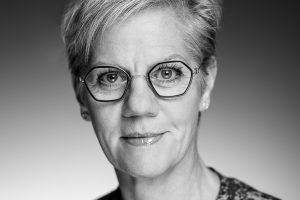
Since stepping into the role of Chair of the Danish Medicines Council in early 2025, Birgitte Klindt Poulsen has been navigating the delicate balance between accelerating patient access to innovation and maintaining the rigour of independent, evidence-based evaluation. In this interview, she shares how the Council is adapting to a surge in applications, embracing real-world evidence, advancing European collaboration, and preparing for the growing complexity of personalised and advanced therapies.
What have been your early reflections since stepping into the role of Chair of the Danish Medicines Council, and how are you shaping its strategic direction?
I officially assumed the role of Chair of the Danish Medicines Council in February of this year, following a long-standing involvement with the organisation. I joined as a regular member in January 2017 and most recently served as Vice-Chair, which provided a strong basis for stepping into this position. That continuity has been invaluable as it has allowed me to approach the Chairmanship not as a starting point, but as a continuation of a journey already deeply rooted in the Council’s values and operations.
The mandate of the Council is one I consider both essential and increasingly complex. At its core, our mission is to ensure that Danish patients can access innovative treatments swiftly, but always based on independent, evidence-based evaluations and within the boundaries of cost-effectiveness. The real challenge lies in maintaining this balance, between acting with the necessary speed to serve patients and applying the analytical depth required to safeguard both clinical and economic soundness. That equilibrium is foundational to our credibility and to the trust placed in us by stakeholders across the healthcare ecosystem.
One of my immediate focuses has been contributing to the formulation of our 2025-2027 strategy, a process that I found particularly meaningful given the weight of the decisions that lie ahead. The strategy reaffirms our role in helping the healthcare system navigate increasingly urgent prioritisation demands. Although Denmark is often regarded as a country with strong public health infrastructure, our resources, like those of any system, are finite. We must therefore take seriously our responsibility to guide resource allocation in a way that delivers the greatest value across disease areas and care levels. As a Council, we see ourselves not merely as assessors of medicines, but as contributors to a more equitable and sustainable model of healthcare delivery, one that serves patients both efficiently and fairly.
How does the 2025–2027 strategy reinforce the Council’s mission, and what new priorities are being introduced?
Our newly launched 2025-2027 strategy reaffirms our commitment to providing timely, evidence-based recommendations for new medicines, balancing the need for rapid patient access with the rigour of independent clinical and economic evaluation. While speed is important, decisions must remain firmly grounded in a thorough assessment of efficacy, safety, and cost-effectiveness. A central priority is strengthening our health technology assessment (HTA) capabilities, both domestically and through our active role in the European Union’s HTA framework. As Denmark assumes the EU presidency, we are committed to deepening collaboration on joint clinical assessments while continuing to address national-level policy, organisational, and economic factors.
Equally important is the need to enhance post-recommendation follow-up. Clinical trial populations rarely mirror Danish patients, so we are investing in more data-driven mechanisms to ensure that our decisions translate into real-world value. Finally, transparency remains essential. We aim to be a clearer, more visible voice in public discussions around prioritisation, ensuring that our decisions, and the reasoning behind them, are accessible and trusted by all stakeholders.
In what ways is the Council advancing the integration of real-world evidence into its decision-making processes?
Denmark possesses a solid foundation for the integration of real-world evidence (RWE), with high-quality healthcare data and strong systems for patient follow-up. Yet despite these advantages, we recognise that our use of RWE remains limited. Unlocking its full potential will require a more concerted effort to strengthen collaboration, not only among domestic clinical and data stakeholders, but also across the Nordic region and the broader European landscape. This objective is already embedded within our current strategic agenda and will be a key area of focus in the coming year.
One of the primary challenges lies in scale. As a relatively small country, Denmark often lacks the patient numbers required to produce robust, timely evidence in areas such as rare diseases or narrowly defined indications. With many of today’s new therapies targeting increasingly specific populations, it becomes clear that national data alone are often insufficient. To address this, we are actively pursuing international collaboration to build more comprehensive datasets. In doing so, we aim to ensure that our assessments not only remain methodologically sound but also reflect the realities of clinical practice, ultimately supporting more informed and effective healthcare decision-making.
How is the Danish Medicines Council contributing to improved access to ATMPs in Denmark’s evolving healthcare landscape?
We see it as both our responsibility and ambition to support access to advanced therapy medicinal products (ATMPs), which are increasingly relevant to Denmark’s future healthcare model. While we evaluate ATMPs under the same rigorous process as any other medicine approved for the Danish market, their complexity often calls for additional consideration. These therapies are typically introduced with limited clinical data, short follow-up periods, and high price tags, factors that make independent evaluation both more difficult and more important.
To navigate these challenges, we work closely with partners such as Amgros and pharmaceutical companies to develop market entry agreements and explore alternative pricing models, particularly those involving risk sharing. This approach allows us to manage uncertainty, financially and clinically, by ensuring that costs are aligned with actual outcomes and that patients are not exposed to undue risk when evidence is still emerging. The risks tied to side effects can be as unclear as those related to efficacy, which reinforces the need for caution.
Our role in bringing ATMPs into use has become more active in recent years, and this effort depends on strong, sustained collaboration. We engage not only with industry but also with academia, clinicians, and patient organisations to ensure decisions are well-informed and broadly understood. While it is not always possible to achieve full consensus, maintaining a transparent, respectful dialogue remains central to our work. That spirit of openness, deeply embedded in the Danish healthcare system, is something we value and are committed to preserving.
How is the EU HTA regulation influencing the Danish Medicines Council’s work, and what contribution can Denmark make at the European level?
The implementation of the EU Health Technology Assessment (HTA) regulation is already having a tangible impact on the work of the Danish Medicines Council. Our secretariat has been actively engaged from the outset and is currently participating in joint clinical assessments for new medicines. From an early stage, we recognised the strategic importance of contributing to this evolving framework and made it a priority to ensure Denmark plays an active role in shaping its direction.
Looking ahead, we see this integration as an opportunity to improve both the efficiency and quality of our assessments. Earlier access to shared data and closer methodological alignment across member states will support more robust evaluations, while still allowing national authorities to address local economic, organisational, and policy considerations. The goal is not to replace national assessments, but to enhance them through collaboration.
With Denmark now assuming the EU presidency in this area, we are well positioned to share our experience and contribute constructively. Our approach ensures that recommendations are not only evidence-based but also implementable in day-to-day clinical practice. The involvement of those directly delivering and receiving care is essential to making our work relevant and usable. Ultimately, our contribution at the European level must remain rooted in that same principle: evaluations that are rigorous, transparent, and able to support meaningful outcomes across diverse healthcare systems.
Looking ahead, what are the main areas of focus for the Council, and what message would you like to share with healthcare stakeholders?
Over the next one to three years, one of our central challenges will be ensuring that healthcare prioritisation remains both rigorous and responsive to shifting needs. As more patients are treated closer to home and within the primary care sector, the Danish Medicines Council must support this transition by equipping general practitioners with evidence-based guidance that is both clear and clinically actionable. Our role in this evolving structure is not only to assess new therapies, but also to help shape care pathways that are safe, effective, and economically sustainable.
At the same time, we are seeing a substantial increase in the number and complexity of applications. Last year, submissions to the Council rose by 60 percent, a trend we expect to continue. This places growing demands on our processes and compels us to work more efficiently, refine our methodologies, and explore the selective integration of artificial intelligence where it can add value without compromising the integrity of our assessments. As the therapeutic landscape becomes more specialized ‒ driven by innovations targeting rare diseases and genetically defined subgroups ‒ we must continue demonstrating that we can evaluate these treatments with the same depth and independence as any other.
Crucially, we must remain transparent in both our decisions and our reasoning. Independence ‒ whether from political pressure or commercial influence ‒ is not just a principle but a prerequisite for trust. Our evaluations must be swift when possible, but never rushed; thorough, but never opaque. Above all, our responsibility is to ensure that decisions are driven by robust evidence. As I often remind myself and my colleagues: we must base our recommendations on data, not on hope.