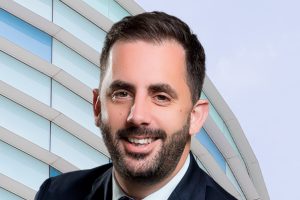
Baptiste de Clarens lays out how Sanofi is leveraging its innovative vaccine pipeline, including high-dose flu vaccines and RSV monoclonal antibodies, to drive growth in the GCC region. Despite challenges like vaccine scepticism in adult immunisation, the company is focused on strengthening vaccination infrastructure and public health awareness. de Clarens also touches on how Sanofi is actively localizing vaccine manufacturing as part of Saudi Arabia's Vision 2030, and how a culturally sensitive leadership style is a pivotal component of management success in the Greater Gulf.
You have had a dynamic, globe-spanning career with Sanofi, and less than a year ago, you took on the role of General Manager for Vaccines in the Greater Gulf region. What made this the right moment in your career to embrace this new opportunity in the Middle East?
Going a few years back, I previously held a General Manager role in Korea and then transitioned to a global leadership position in Lyon, France where I was responsible for strategy and long-term investments. During that time, I played a part in Sanofi’s acquisition of the mRNA platform and focused on our flu franchise, which is not only our largest vaccine franchise but also the second largest across the company. After successfully completing that project, I started asking myself, “What is next for me in my career?” It was at that moment when this exciting opportunity in the Greater Gulf was presented to me.
What really excited me about the change was how this region is now emerging as a key area of focus for Sanofi. The Gulf used to be more about executing global strategies, but now it is evolving into one of the company’s priority markets and is playing an active role in shaping our global strategy. This shift, combined with the chance to write a new growth story, made it the right move for me.
The region has been successful in the past, but it operated with a more conservative investment approach. Now, we have access to new tools and resources that were not fully utilized before, which I find extremely exciting. Looking ahead, I envision significant growth for Sanofi in this region.
Together with my team, we are going to transform the region, the organization, and our overall presence here. Vaccines, and Sanofi as a whole, have so much value to offer in the Greater Gulf. That is why I am so energized by this role.
From both a people and organizational perspective, what have been your key takeaways during your first eight months in the region?
When I first arrived in the region, my very first meeting was a negotiation with Saudi customers. What I expected to be a brief conversation ended up stretching over four hours. That moment made me realize that I had so much to learn from this experience. I have worked in various cultural settings, but that first negotiation showed me how different this new cultural context would be, and how much I stood to gain from it.
While business principles may be universal, the way you conduct business varies greatly depending on the culture. For example, when I moved to Korea, I thought I understood Asia, having worked in the region before. But Korea proved to be a completely new learning curve for me. It was humbling to realize how much I still had to discover. Similarly, coming into the Greater Gulf, I knew there would be a lot to learn, but I also brought with me a wealth of experience to contribute.
The most exciting part of this role is the human element—discovering new ways of interacting with customers and positioning our value proposition. What is valued here might differ from what is valued elsewhere, and it is crucial to be sensitive to these cultural nuances when doing business.
That first negotiation set the tone for how unique this assignment would be. I have also noticed that the pace of decision-making here is different. In Asia, for instance, decisions follow a very structured process, whereas in this region, it is not always clear when a decision will be made. However, once a decision is made, things move very quickly. The key is to remain patient and stay consistently engaged because nothing is finalized until it is truly done.
Adapting to this new environment is what excites me the most. I am not coming in thinking I have all the answers. There are things I will have to figure out along the way, but that is what makes the journey all the more rewarding.
Sanofi already holds a strong position in the region, particularly in pediatric vaccines, as well as those for meningitis and influenza. You have mentioned ambitious plans for growth, what are expected to be the main drivers behind this projected surge given your established presence?
The main driver behind our growth is undoubtedly our innovative pipeline. We already have a strong market presence, particularly in pediatric vaccines, but our upcoming product launches are set to fuel significant expansion. One of the most exciting products is our high-dose flu vaccine, the first differentiated flu vaccine in the region. In Saudi Arabia, it has already been recognized as the best product with a preferential recommendation from health authorities. We are seeing fast adoption of these innovations, which is a great sign for future growth.
Another key product is the RSV monoclonal antibody, which we are on the verge of launching in Saudi Arabia this year, and potentially in Kuwait and the UAE as well. Although supply was limited when it launched last year, we successfully introduced it in markets like the US, Spain, and France. The Greater Gulf region will be next in line, showing strong interest in the product. This kind of rapid uptake reflects how we are growing today and how we plan to grow tomorrow.
Our broader growth strategy is aligned with Sanofi’s “Big 12” initiative, where the company is heavily investing in 12 major projects with blockbuster potential. Our role in the region is to support these investments and ensure their successful introduction into the region, making it a top priority for us.
In addition to having great products, the key to success is building a strong, capable team. One of the things that excites me most about the Greater Gulf is the diversity within our teams. We have an incredible mix of nationalities and experiences, more so than any other team I have worked with. This diversity is a real catalyst for growth because it brings fresh perspectives on how to bring these innovations to market effectively.
As we continue to strengthen our team and attract new talent, the Greater Gulf’s status as a key market provides us with a unique opportunity. Not only are we drawing in talent from around the world but we are also in a position to export talent to Sanofi’s global operations. Having been a global leader, I have seen how emerging market talents are now playing key roles in global strategy. The Middle East has been playing a similar role, and we intend to continue to contribute in enriching our global talent pipeline.
Could you give us a clearer picture of vaccine adoption trends in the region, including challenges like vaccine skepticism?
The region, particularly Saudi Arabia, is quite polarized when it comes to vaccine uptake. On one hand, Saudi Arabia is among the best globally in terms of pediatric vaccination, with some of the highest immunization rates in the world. There is a strong understanding of the value of vaccination, driven in part by the unique health risks associated with the large number of pilgrims visiting the country every year. The constant influx of travelers highlights the threat of infectious diseases, fostering a deep appreciation for the importance of vaccines.
However, when we look at adult immunization rates, particularly for flu and even COVID-19, there is room for improvement. While the pandemic response in the region was outstanding, the baseline annual vaccination rates for the elderly and other vulnerable populations remain lower than ideal. This is a global challenge, but it is especially relevant here.
The opportunity lies in not only embracing innovation and adopting the latest vaccines quickly, which the region has done well, but also in building a more robust immunization infrastructure for adults. This is crucial as more vaccines targeting older populations are developed, such as those for RSV and pneumococcal diseases. As a public health partner, Sanofi aims to contribute to strengthening this infrastructure and supporting adult vaccination efforts, particularly in countries like Saudi Arabia.
With vaccines gaining significant attention during the COVID-19 pandemic, how do you ensure that the momentum behind vaccination programs is sustained now that we are a few years removed from the height of the pandemic? Are there concerns that public focus may be waning?
Sustaining momentum for vaccination programs post-COVID requires a collective effort. Health authorities, manufacturers, and public education all play vital roles. During the pandemic, we saw that with the right resources and infrastructure, achieving near 100% immunization rates is possible. The challenge now is ensuring sustained awareness and ongoing commitment to immunization practices, especially as the immediate threat of COVID fades.
While everyone understands the importance of vaccinating babies and children, it is equally crucial to prioritize regular vaccinations for older adults, who are among the most vulnerable. COVID proved that widespread immunization can be achieved, but moving forward, we must continue investing in public health initiatives to maintain that level of focus, not just from Sanofi, but in partnership with public health stakeholders.
Sanofi is at the forefront of vaccine innovation, including mRNA projects across its portfolio. How ready do you believe the healthcare ecosystem in the Greater Gulf is to adopt these next-generation vaccine solutions?
At Sanofi, our priority is delivering great science. We are deeply invested in generating insights to ensure that any new product we bring to market offers significant, incremental value—whether by being best in class or first in class. This approach is central to our decision-making. If, at any point, we determine that a product may not meet these high standards, we focus our investments elsewhere. With our pipeline, particularly the 12 key projects we are working on, the goal is to consistently deliver meaningful health improvements.
In the context of the Greater Gulf region, we have seen that when great science is paired with clear data, adoption happens quickly. The recent launch of one of our monoclonal antibodies is a prime example. Initially, there were some questions about its potential, but once the data was in, showing an 80% to 90% reduction in infant hospitalizations, the response from the market was immediate and enthusiastic.
The key is having strong proof points. To further support this, I believe the opportunity lies in generating data earlier and involving countries in this region in global trials. This way, we can ensure that new products are developed with the region’s specific healthcare needs in mind, paving the way for faster adoption of next-generation vaccine solutions.
How crucial is it for clinical data related to new vaccine innovations to be localized and relevant to the populations in the Gulf in order to ensure smooth market access and widespread adoption?
It is absolutely essential for clinical data to be localized to the populations in this region. This is where we need to step up and influence the company’s broader strategy, advocating for more investment in the region to facilitate faster decision-making. Historically, the Greater Gulf may not have been as prominent in vaccine trials as markets like the U.S. or China, but now that we are part of Sanofi’s key market organization, we have a stronger voice and a greater role to play.
Our CEO’s upcoming visit to Saudi Arabia later this year highlights the growing importance of the region within the company. It is an exciting transformation, though we should not underestimate the challenges that come with it. However, the vision is clear, and the opportunities are significant. Now it is about executing on that vision, ensuring we showcase the value and potential that the region represents within Sanofi’s global strategy. This is the next key step in our journey of transformation.
The Greater Gulf is embracing digital transformation and AI across various sectors. How do these regional ambitions align with Sanofi’s own digitalization strategy?
Our CEO is a strong advocate for artificial intelligence and while the pharmaceutical industry has not traditionally been at the forefront of AI innovation, the potential it holds is immense. AI can be applied across various areas such as drug discovery, biologic manufacturing, and overall innovation processes, creating endless possibilities for advancements in the field.
At Sanofi, we are already leapfrogging competitors by integrating AI in ways that enhance decision-making. We have made AI accessible to every employee, allowing for faster and sharper decisions across all levels of the company. This will undoubtedly give us a competitive edge and also presents a valuable opportunity for collaboration within the region.
There is a clear appetite for AI here in the Greater Gulf, with significant investments being directed towards it. As AI becomes more integrated into healthcare, Sanofi is in a prime position to contribute to and benefit from this regional transformation. The alignment between the region’s ambitions and our digitalization strategy is certainly an exciting area of potential growth.
Sanofi’s partnership with Arabio in Saudi Arabia has been instrumental in localizing vaccine manufacturing in the Kingdom. What impact has this initiative had so far, and what are the long-term implications for Sanofi’s footprint in the region?
We began localizing our manufacturing operations in Saudi Arabia with packaging about four or five years ago. Since then, we have been supporting the country’s broader localization vision, particularly through Vision 2030, which is focused on attracting investments to achieve autonomy in healthcare manufacturing.
Sanofi has been at the forefront of this effort by localizing vaccine manufacturing in the Kingdom. Initially, we focused on packaging, but we have since expanded our efforts. Our General Medicines division has made significant progress, such as the insulin announcement over a year ago. In vaccines, we are now partnering with the Public Investment Fund (PIF), Lifera, and our local partner Arabio, with a very ambitious localization agenda that includes seven vaccines and filling operations. This partnership is a starting point that brings tremendous opportunities, not just for Saudi Arabia, but also for Sanofi and the broader population.
Localization is a major priority for the Kingdom, and we are proud to be early adopters, responding positively to this ambition. However, such investments take time, and it’s important to recognize that building an ecosystem for local manufacturing is not an overnight process. It requires a long-term vision, and we clearly see that the region has this vision, with strong support to enable its realization.
The gradual investment from simpler operations to fully integrated manufacturing is key. While it takes time, we are excited to be part of this transformation and confident in our ability to lead in this area. This is not something we are offering to just any region. Only a few places in the world have the scale and infrastructure necessary to support such efforts, and Saudi Arabia is one of them. This is part of what makes the region so attractive and why I find this opportunity to join as General Manager particularly exciting.
Having worked across multiple continents—including Asia, Europe, and now the Middle East—what advice would you offer to young professionals about stepping out of their comfort zones and embracing international career opportunities?
My main advice to young professionals is to embrace international career opportunities as early as possible. Stepping out of your comfort zone and working abroad can be a game-changer for both personal and professional growth. From my own experience, I’ve seen how much value you get from immersing yourself in different cultures, working environments, and challenges. Moving to a new country can be tough initially, but the rewards far outweigh the difficulties.
Taking those opportunities early in your career is crucial. When you are younger, it’s easier to adapt, and you likely have fewer personal commitments, such as a family or established roots. Moving later in life is doable but comes with more complications, such as relocating a family, schooling for kids, and adjusting to new environments. The earlier you embrace these international experiences, the easier and more enriching it becomes over time.
Additionally, diversity of experiences is key to accelerating your career. I started in finance but have since moved through various roles in business operations, regional commercial leadership, and global strategy. By not limiting yourself to one field or one geography, you equip yourself with a broader understanding and skill set. Geographic mobility not only builds resilience and adaptability but also gives you an edge in understanding how different markets work and interact in today’s interconnected world.
Ultimately, if you want to make impactful decisions and play a significant role in a global organization, you need to understand the nuances of different cultures, markets, and ways of doing business. International experiences offer this in a way that no other career path can, and they set you up for leadership roles that require a global perspective.