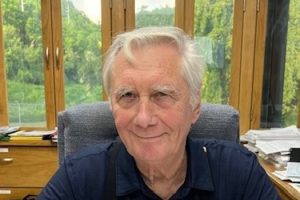
Arthur Deboeck is a chemical engineer with more than 50 years of expertise in the domain of drug delivery systems, having pioneered innovations such as the first extended-release once-a-day drug exempt from food effect. He founded his own company in Puerto Rico (Galephar) in 1986, focusing on R&D for difficult to formulate pharmaceutical products. His work centres on solving difficult drug delivery challenges, emphasizing control over formulation, manufacturing and packaging to improve patient outcomes.
To start, could you tell us a bit about your background and what brought you to the pharmaceutical industry?
I am a chemical engineer with a specialization in polymers and coatings, but I found my passion in galenic pharmacy, the art of transforming a bulk of active ingredient into a precise medicine. My expertise developed in two areas: oral drug delivery and pulmonary delivery. In 1986, following a failed technology transfer to a Puerto Rico company, I decided to start my own company here, marking my real entry into the pharmaceutical world.
By 1990, we had a deal with Biovail, and in 1995, we achieved a major milestone with the US approval of Tiazac®, the first once a day Diltiazem without a food effect. This was a significant milestone because we were the first to develop an extended-release medication that had no food effect, a major issue with such formulations.
However, after the sale of the product and facilities to BioVail, I stepped away from manufacturing, as my true focus has always been on the development of innovative pharmaceutical products. Our business model involves developing, manufacturing, and licensing approved products to marketing companies. I witnessed firsthand how BioVail struggled with the manufacture of the products we developed and had to come back for assistance. Over time, we decided to retain manufacturing in-house to maintain full control and expertise, particularly for complex drug products. We have also realized that packaging, often overlooked, is a critical part of the process, as it is where many problems can arise that directly impact the patient. As a result, we have integrated packaging into our operations. We focus exclusively on challenging projects—those that others have tried and/or failed. Solving these complex problems and developing innovative solutions is where we excel, and it is this drive to tackle difficult-to-manufacture products that is the source of our motivation.
How do you see Puerto Rico’s pharmaceutical sector evolving, particularly in its shift from manufacturing to innovation and R&D? What is needed for this transition to succeed?
While there is a strong desire for innovation in Puerto Rico, there is a significant gap between aspiration and reality. Local universities are not producing the calibre of professionals needed for true R&D advancement. The education system often focuses more on passing exams than fostering deep, research-driven thinking. In contrast, universities in places like Belgium demand a rigorous, multi-year commitment to PhD programmes, which then results in higher-quality research and critical thinking. For Puerto Rico to succeed in innovation, it needs to overhaul its educational system to cultivate the talent that can drive scientific progress. Without this foundational change, true innovation will remain out of reach.
Do you see any specific benefits to having a company based in Puerto Rico, especially in terms of taxes, regulations, or other factors?
One of the biggest advantages is the access to the US market. We have direct access to US regulatory frameworks, such as the FDA, which is a huge benefit. From a business perspective, Puerto Rico is strategically positioned to work within the US framework, which is a significant advantage, particularly in terms of exports and market access.
What about Latin American countries, do you see similar advantages or challenges there?
The challenges in Latin America vary by country. Brazil, for example, can be quite difficult due to issues like corruption and regulatory obstacles, which can jeopardise investments. Mexico, on the other hand, is the most straightforward and reliable market in the region. While there are still challenges, such as unexpected changes in market conditions, it is generally more manageable compared to other Latin American countries.
You have chosen not to have a public-facing website. Is there a reason behind that?
Our work is deeply scientific and requires intense focus. We do not want distractions from things like marketing or unnecessary public attention. The complexity of what we do means we need to dedicate our energy to actual work, not just showcasing it. I strongly believe this choice is one of the reasons we have been able to achieve what we have.
You have clearly got a lot of passion for what you do. Have you ever thought about passing on your expertise locally, perhaps mentoring or sharing knowledge here in Puerto Rico?
I am trying, but the reality is that R&D in Puerto Rico, and anywhere, requires significant resources—particularly funding. You need capital to turn ideas into reality. We are spending more than a million dollars a month on development alone. Beyond that, there is the constant challenge of navigating complex regulatory processes like patents, FDA approval, and serialization. Unlike established manufacturers, we have to reinvent the wheel for each and every new formulation, which means more work and ongoing compliance. It is a huge commitment, and many companies struggle to meet these demands, which is why we must be selective about what we take on.
Are you still primarily focused on oral and pulmonary drug delivery with your five products, or are you working on other areas as well?
In addition to oral and pulmonary drug delivery, we also focus on organic synthesis, which became necessary when external synthesis attempts for our products failed. This led us also to collaborate with the University of Puerto Rico, the University of Brussels, and also one of our own products, which I began developing in 1978, was only just approved in March 2024—after 45 years of persistence. We have also an abuse deterrent technology that can be applied to schedule products such as opioids and psychotherapeutics.
Innovation requires patience, and although the US culture often expects rapid results, true innovation takes time. As Einstein said, invention demands “a lot of sweat and a little bit of intelligence,” emphasizing that success comes from hard work, resilience, and dedication, rather than intelligence alone.
Do you export your products, and how many markets do you license them to?
We mainly export to the US, Canada, and Mexico. However, it is important to note that even though Puerto Rico is geographically part of North America, it is not part of the North American trade agreement. This complicates business issued in Puerto Rico.
Do you have any other projects or developments in your pipeline?
We have a few interesting developments. One of our standout products had a food effect, which we have successfully resolved. Interestingly, although we are one of the smallest manufacturers on the island, it is the largest manufacturing company in the world, Sun Pharma, that sells the product in the US. Additionally, we are launching a new immediate-release oxycodone with abuse-deterrent technology—something no one else has. The product, named RoxyBond, prevents misuse: even if someone tries to tamper with it, it will not have any effect. It is a breakthrough in opioid safety.
What are your goals for the next five years, and what do you hope to leave as a legacy?
My goal is to grow the company significantly. One of the other bigger goals is to find the right people—talented, driven individuals who understand the importance of research and development.
The difference in mindset also presents hurdles. The US has a “direct reward” mentality, where people expect immediate compensation for their work. In contrast, R&D requires patience, and it is difficult to reconcile those two approaches. This creates a tension between the quick returns that investors demand and the long-term, unpredictable nature of R&D. It is a major issue because when you need results on a tight timeline, it is difficult to do ground-breaking science, which is why big pharma is shifting away from internal R&D.
Instead of innovating, they are mostly acquiring products from smaller pharmaceutical companies. That is how the big players are operating now—buying up pipelines and licensing technologies, which looks good for their books in the short term but may be problematic in the long run. I believe in the value of innovation and doing the work from the ground up.
What is your perspective on the biotech ecosystem here?
Is hard to find the right partners or collaborators locally, which is one of the reasons I have had to work so independently. It could be frustrating, but it also means that the potential for growth is huge—if the right infrastructure and talent were available, we could create a much more dynamic ecosystem here.
What message would you like to leave with our readers?
We are a Puerto Rican-based drug delivery company that is dedicated to research and innovation. We have already expanded from just two employees to a team of 150. We are also in the process of acquiring Bristol Myers & Squibb (BMS) facilities in Humacao, which will significantly enhance our capabilities. Everything we do, from our drug delivery innovations to manufacturing, is rooted in Puerto Rico, and we are proud of that.