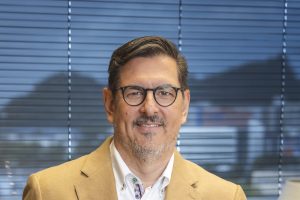
Antonio Medina, CEO of Convergent Strategies, shares insights into Puerto Rico's evolving economic landscape and the critical role his consultancy plays in driving growth and innovation across industries. He reflects on his experience guiding the island out of bankruptcy as a member of the Financial Oversight Board and discusses key opportunities in manufacturing, infrastructure, and digitalization. Medina also highlights Puerto Rico's competitive advantages, the importance of fiscal responsibility, and his vision for expanding Convergent Strategies’ global footprint while contributing to a prosperous future for the island.
Could you begin by telling us what Convergent Strategies is and what specific niche the consultancy aimed to fulfil when it was founded?
I am the President and Founder of Convergent Strategies, an advisory firm dedicated to helping companies in the Puerto Rico market grow and expand their reach. Our main focus is to improve a company’s financial performance, either by increasing revenue through growth strategies or by reducing costs. We operate in both financial and operational spaces, meaning we analyze the numbers and provide actionable recommendations on the engineering and operational side.
We also specialize in Puerto Rico’s unique tax and grants programs. The island offers incentives such as tax credits for research and development, as well as cash grants for machinery and equipment. We assist companies in navigating these opportunities and securing grants through the Department of Economic Development.
What are some of the key projects Convergent Strategies is currently working on?
While we do not exclusively focus on the pharmaceutical sector, we have worked with pharma clients. For instance, we assisted a life sciences company with third-party manufacturing in Puerto Rico. Our role was to develop financial models that demonstrated how they could optimize operations and reduce tax rates by leveraging Puerto Rico’s tax laws.
In another project, a major aerospace company hired us to analyze their cost profile, as their costs were increasing faster than their revenues. We identified multiple cost-reduction initiatives and were subsequently engaged to help implement several of them. This helped the company stabilize their cost growth and achieve a more balanced financial profile.
We are also involved in real estate projects for companies seeking new operational sites. I have personally contributed to the development of manufacturing facilities for companies such as Merck, Lufthansa, Honeywell, and GE. Today, most of these projects are brownfield developments due to limited greenfield opportunities. One notable exception was our work with Lufthansa, where we transformed an airport parking lot into a large maintenance, repair, and overhaul hangar capable of servicing five Airbus A320 airplanes simultaneously.
Could you explain some of the key incentives that make Puerto Rico so attractive as a potential hub for industry and innovation?
Puerto Rico has long been a significant hub for the life sciences industry, with a history of manufacturing spanning over 70 years. In the 1960s, the island saw a boom in chemical production of APIs. By the 1970s and 1980s, manufacturing and packaging operations began expanding significantly, driven by tax policies that incentivized headcount-heavy facilities. In the years since, Puerto Rico has evolved into a sophisticated manufacturing hub, particularly for biotechnology. Companies like AbbVie and Amgen have major operations here, with Amgen operating one of its largest facilities globally on the island.
Beyond life sciences, Puerto Rico has diversified into other high-tech sectors like aerospace, cybersecurity, and various emerging technologies. This growth is supported by a highly skilled workforce and a strong educational system. Being a part of the US, Puerto Rico benefits from US legal systems and regulations, including oversight from agencies like the FDA and FAA. However, Puerto Rico also maintains its own independent tax jurisdiction, which offers significant financial incentives. Companies can negotiate tax grants and benefits through the Department of Economic Development, and these taxes are paid to Puerto Rico’s Treasury, separate from the federal tax obligations in the mainland US. This unique combination of US regulatory standards and favorable local tax policies makes Puerto Rico an attractive destination for industry and innovation.
From your perspective, what are the next steps Puerto Rico needs to take on its R&D and innovation journey to evolve beyond its historical focus on manufacturing?
The world has changed significantly over the past 50 years. While traditional manufacturing remains important, the ability to export ideas and intellectual property has become increasingly critical. In today’s economy, R&D and the export of services are essential for maintaining a diversified and resilient economy.
I believe that manufacturing should remain a core strength for Puerto Rico. Currently, the life sciences industry alone accounts for about 30% of the island’s GDP, while manufacturing overall contributes around 50%. To sustain and grow the economy, Puerto Rico should focus on leveraging its manufacturing expertise and vertically integrating into process development and intellectual property creation. This means fostering environments where innovation, process design, and product development can thrive alongside traditional manufacturing.
By enhancing our capabilities in R&D and intellectual property, Puerto Rico can move beyond simply being a manufacturing hub to become a center for innovation and high-value services. This approach will help diversify our economy and ensure long-term economic growth while maintaining our established strengths in manufacturing.
Having previously served on Puerto Rico’s Financial Advisory Board, what is your assessment of the island’s economic fundamentals as we look towards 2025?
I served on the Financial Oversight Board of Puerto Rico for three years, from 2020 to 2023. I was nominated by Speaker Pelosi and appointed by President Trump. When I joined, Puerto Rico was still in the middle of its bankruptcy process, which began in 2016. The resolution was delayed due to significant setbacks, like Hurricane Maria. During my tenure, completing the bankruptcy process became a priority, and we successfully resolved the Commonwealth’s bankruptcy. This resulted in a reduction of Puerto Rico’s debt from about $72 billion to approximately $35 billion.
We also reduced the debt service from over 25% of the island’s budget to less than 7%. One aspect I am particularly proud of is that we accomplished this while protecting the pensions of government employees. It was like playing three-dimensional chess, balancing all the moving parts, but the outcome was worth it. Exiting bankruptcy restored access to financial markets and laid a foundation for economic growth.
Another positive factor for the economy has been the influx of federal funds for reconstruction due to the hurricanes and the pandemic. As a result, Puerto Rico is experiencing a construction boom—now you see cranes and projects all over the island. This is a dramatic shift from a decade ago when the economy had essentially come to a halt.
Being part of this process was one of the most important accomplishments of my life. More importantly, it benefits the people of Puerto Rico and future generations by fundamentally improving the island’s relationship with financial markets and setting the stage for long-term stability and growth.
What can Puerto Rico realistically expect from the second term of President Trump, particularly in terms of economic policy and support for the island?
Since President Trump has previously served, we already have an idea of his economic policies. Regardless of political positions, the American people voted for Trump because many believed his approach would drive economic growth in the US. All of the leading financial and economic publications and the markets have reflected this sentiment, showing that people felt Trump’s policies would benefit the economy.
Some of Trump’s policies focus on protecting local US industries, which can be challenging for international partners like Mexico, China, or Canada. However, for Puerto Rico, there is a silver lining. As a US territory where residents are American citizens, we fall within the framework of US policymaking. Our laws are US laws, and if new policies encourage the return of manufacturing to the US, Puerto Rico is well-positioned to benefit.
Given our long-standing experience in manufacturing—especially in the life sciences sector—Puerto Rico offers an ideal environment to support these initiatives. We have the infrastructure, expertise, and a proven track record in areas like manufacturing, export services, and technology. This positions Puerto Rico as a competitive option for any efforts to reshore industries and bolster economic growth within the US.
How do you see Puerto Rico’s role within the broader context of the national strategy for creating American jobs?
Puerto Rico plays an important role in contributing to the broader national strategy for creating American jobs. To ensure we fulfill this potential, it is essential to maintain balanced budgets and implement fiscally responsible policies. Puerto Rico recently emerged from bankruptcy, which was primarily caused by excessive borrowing and unsustainable debt. For years, successive administrations increased the debt burden to a point where it could no longer be managed. This led to the need for the PROMESA law to restructure our financial situation.
Now that we are past that phase, it is crucial to continue on a path of fiscal responsibility and focus on organic economic growth. One of the key elements of Puerto Rico’s restructuring that still needs to be resolved is the bankruptcy of the Puerto Rico Electric Power Authority (PREPA). Interestingly, PREPA was the first government entity to enter bankruptcy, and it remains the most complex to resolve due to the competing interests involved.
During my time on the Financial Oversight Board, I worked on the plan of adjustment for PREPA. The bondholders, who are owed approximately $9 billion, are pushing hard against significant reductions to their debt. There have been multiple court cases, and bondholders have won in the Supreme Court and the Circuit Court. This has led to a highly contested adjustment process.
In this situation, three primary stakeholders must be considered: bondholders, pensioners, and consumers. Bondholders are creditors who expect to recover their investments. Pensioners, who are former employees relying on their retirement funds, also need protection. My position has always been that pensions must be preserved. Finally, consumers—including businesses and individuals—depend on affordable electricity. If too much is paid to bondholders, energy costs could increase significantly, impacting economic growth.
To move forward, resolving PREPA’s bankruptcy is essential. The current plan of adjustment is already in bankruptcy court, and the judge has called for additional mediation sessions to reach a consensus. During my tenure, I participated in many mediation sessions, and I know that a consensual deal is far easier to implement than one imposed by the court.
Ultimately, balancing the needs of bondholders, pensioners, and consumers is critical for Puerto Rico’s economic future. Successfully resolving this issue will stabilize the energy sector, support economic growth, and strengthen Puerto Rico’s role in creating jobs within the broader American economy.
High infrastructure costs, particularly in electricity and water, have been a constant challenge in Puerto Rico. How do you view these barriers to the island’s economic growth?
In the short term, resolving high infrastructure costs—especially for electricity and water—is one of the most critical factors for driving economic growth. However, what is interesting is how many companies in the industrial sector have already tackled this challenge on their own. I have worked on projects with alternative energy providers, and many companies have installed solar farms, co-generation facilities, and other independent energy solutions. For example, organizations like AbbVie, CooperVision, and Coca-Cola have their own power generation systems.
This trend is widespread. When I talk to industry leaders, they often say they cannot wait for the government to resolve energy costs. Instead, they have taken proactive steps to secure their energy needs and stabilize their costs. I even have a client with a facility that is part of a larger industrial complex. This complex operates independently of the power grid, thanks to its own generating facility, and is also independent of the water supply, as it uses wells.
This shift towards self-reliance has been happening for the past 15 years, especially since petroleum costs began to rise. Companies are essentially creating their own microgrids to manage costs and ensure stability. This trend is not unique to Puerto Rico—it is a global phenomenon. Island economies like Singapore, Hawaii, and the Dominican Republic face similar challenges. Unlike continental locations, such as Kansas, where states are interconnected through large grids, islands must often rely on their own infrastructure.
Due to all these considerations, resilience is key. Puerto Rico has learned a lot about resilience, especially following major hurricanes like Maria. The way we design buildings and processes now reflects this experience. Many companies can quickly resume operations after a disaster, while others, who were initially less prepared, have adapted and improved their resilience over time.
Ultimately, while high infrastructure costs remain a challenge, Puerto Rico’s industrial sector has shown that innovative and proactive solutions can mitigate these barriers and support continued economic growth.
One of Convergent Strategies’ goals is to help companies become more competitive. In your view, in which areas are Puerto Rican companies the most competitive, and where do they face the most challenges?
I believe Puerto Rico remains one of the most competitive jurisdictions in the life sciences industry. We still host some of the major global players. The industry has evolved over the years, and while company names have changed due to mergers and acquisitions, the core capabilities remain strong. For instance, when I began my career, we had companies like Pfizer, Merck, Schering-Plough and American Home Products. Today, we still have Merck on the island but they merged with Schering-Plough while Pfizer acquired American Home Products and their local operations have been spun-off to Viatris, while some of the Merck legacy facilities continue operating under other companies such as Boehringer Ingelheim.
This evolution is natural, and it underscores the need for Puerto Rico to adapt to changing market dynamics. Both the private sector and the government must lead this change by staying attuned to global trends. Companies like Medtronic, Sartorius, Copan, Eli Lilly, Bristol-Myers Squibb, AbbVie, and Amgen—one of the largest biotechnology operations here—demonstrate that Puerto Rico has the expertise to drive growth and innovation well into the 21st century.
However, our most significant challenge remains infrastructure, particularly energy. We need to resolve the bankruptcy of the power company and stabilize the electrical grid to ensure low-cost, reliable energy. This should be a top priority for the new administration taking office in January. The incoming governor has already announced the appointment of an energy Zar, and the Fiscal Oversight Board, of which I was a member, is also taking a more active role in restructuring the grid.
There are approximately $17 billion in federal funds allocated for this effort, though only about 10% has been deployed so far. Effective coordination is key to making progress. With the ongoing bankruptcy court process for the power company’s plan of adjustment, I am optimistic that within the next two to four years, we will see a resolution to Puerto Rico’s energy crisis.
Once that happens, we can truly turn the page and move forward. The successful resolution of the Commonwealth’s bankruptcy and the lessons learned about fiscal responsibility have laid the groundwork for a more stable economic future. If we stay on this path, we can ensure that Puerto Rico remains competitive and prosperous in the long run.
With clients across various industries, what are the biggest challenges you see your clients facing, and how do you assist them in overcoming these obstacles?
Our largest client is Accenture, for whom we serve as a local partner in Puerto Rico. We collaborate on a wide range of projects, including business development initiatives in both the commercial and government sectors. Our company supports Accenture by providing human capital and contributing to various strategic efforts. While Accenture keeps us busy, we also have a diverse portfolio of clients that we serve directly.
The challenges our clients face generally fall into a few key categories. Many seek our help with securing grants, such as cash grants for machinery and equipment. Others need assistance managing R&D tax credits, which is a significant area for us. We handle R&D credit programs for several clients, helping them navigate and maximize the benefits of these incentives. Real estate is another area where we offer expertise, whether clients are acquiring new facilities, identifying properties with specific characteristics, or optimizing their asset strategy by divesting unnecessary assets.
Ultimately, the common thread in our work is financial optimization with an operational focus. We help companies refine their business development and growth strategies, improve cost efficiency, and optimize their tax positions. Additionally, we sometimes manage PMOs (Program Management Offices) to ensure successful project execution. Our role is to provide strategic insights that balance financial performance and operational efficiency.
Could you provide more details on the parameters and objectives of Puerto Rico’s R&D programs and how they align with the island’s broader economic goals?
Puerto Rico has a robust and aggressive R&D credit program. If an activity qualifies as research and development, companies can receive a 50% tax credit on their R&D expenses, covering both payroll and capital expenditures. This is significant—if a company spends $20 million annually on R&D, including personnel and capital investments, they can potentially get $10 million back from the government each year.
An important aspect of these credits is that they are marketable. Not all companies have tax liabilities to offset, but industries like construction, banking, and insurance typically do. These businesses can purchase R&D credits at 80% to 90% of their face value, making these credits a valuable source of recurring income for companies engaged in R&D. This system allows businesses to reinvest in their operations, fostering innovation and growth.
I am proud of the diverse range of clients we have helped secure these credits. For instance, we obtained the first-ever R&D credits for a cybersecurity technology project. We have also supported clients working in clinical research and the development of 3D printing materials.
The key to success in these programs is authenticity. I believe in presenting genuine R&D activities to the government. It is rewarding to visit a client’s site, see their impressive R&D work, and help them access the incentives they deserve. Whether a client is conducting basic research, clinical trials, or software development, we ensure that their activities are correctly classified and eligible for credits.
These R&D incentives align with Puerto Rico’s broader economic goals by encouraging innovation, attracting investment, and promoting high-value industries. By supporting R&D, Puerto Rico can diversify its economy, enhance its competitiveness, and continue to be a hub for technological advancement and intellectual property development.
Looking ahead, where would you like to see Convergent Strategies in five years?
I am proud to say that overall we have been experiencing significant growth. In fact, when I was serving as a pro-bono member of the Financial Oversight Board, the company had to slow down operations to avoid any potential conflicts of interest. During that time, we maintained several clients but were careful to ensure that none of our activities intersected with government work.
Looking forward, I see tremendous opportunities for Convergent Strategies in Puerto Rico and beyond. Accenture remains a key partner, and as they have expanded significantly in Puerto Rico, we have grown alongside them. On the advisory and strategy side, especially with large corporations, my favorite projects are those where clients ask us to help shape their growth strategies. This work is not limited to Puerto Rico—we have experience in Latin America, Europe, and the mainland US.
In line with the goal of exporting services and participating in the global economy, my aspiration for the next five years is to expand our international footprint. While we have a solid reputation in Puerto Rico, we are a relatively young company with significant potential for global growth. I would like Convergent Strategies to be recognized internationally as a trusted partner for strategic growth and financial optimization.
On a personal note, what motivates you in your professional journey and drives your passion for this work?
My family is the core of my motivation. I am deeply connected to my children, and providing them with a better future is incredibly important to me. My professional journey has always been about contributing to the well-being of Puerto Rico, and I believe these efforts also create a better future for the next generation.
I have been fortunate to play a role in significant initiatives, such as the growth of the aerospace industry during my time at the Puerto Rican Industrial Development Company and stabilizing the life sciences sector after changes in tax policies. Serving on the Financial Oversight Board and helping guide Puerto Rico out of bankruptcy was one of the most impactful experiences of my career.
Ultimately, what drives me is the desire to create a stronger, more resilient Puerto Rico for my children and their generation. It is all connected—every effort to improve the economy and support industry growth helps build a brighter future for the people of Puerto Rico.
Finally, what message would you like to send to the international community on behalf of Puerto Rico?
Puerto Rico is ready and eager to expand its industrial footprint and strengthen its position in the global economy. With financial stability now in place, we have the foundation to drive significant growth. The government, led by dedicated officials like Secretary Cidre, is working hard to create an environment that attracts investment and fosters job creation.
We are looking to bring in high-quality, well-paying jobs that combine intellectual development with skilled labor. Puerto Rico offers unique advantages as a US jurisdiction with a talented workforce, advanced infrastructure, and attractive incentives for businesses.
To the international community, I say take a fresh look at Puerto Rico. If you have heard of us in the past but have not considered us recently, now is the time. There are great opportunities for growth here, and we would be delighted to help you explore how Puerto Rico can be a part of your success story.