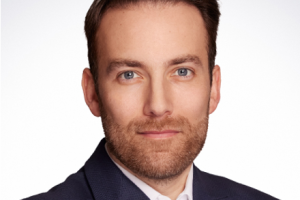
Andreas Lysandropoulos, Senior Vice President and Global Therapeutic Area Head for Neuroscience at Parexel, shares his insights on the evolving landscape of clinical development for neurological conditions. In this interview, he highlights the importance of localised patient engagement, the role of advocacy in building urgency around diseases like Alzheimer’s, and the need for strategic policy support to improve access and outcomes in neuroscience.
Could you share a brief overview of your professional journey and what ultimately led you to join Parexel?
I began my career in Athens, Greece where I studied medicine. I had always wanted to see more of the world, so I moved to Switzerland to train as a neurologist with a special focus on multiple sclerosis and neuroimmunology. I trained in general neurology and worked in the lab at the University Hospital of Lausanne. Later, I moved to Brussels, initially planning to stay for just a year to study electrophysiology before moving to the US. However, I was offered a leadership role as head of the neuroimmunology unit at the University Hospital of Brussels.
Over time, I became increasingly involved with the pharmaceutical industry through my work as a principal investigator in clinical trials, participating in advisory boards, and presenting at conferences. Many people in pharma encouraged me to consider a career in the industry which eventually led me to join Sanofi Genzyme as a European MD in the multiple sclerosis franchise. A few years later, I moved to Ipsen as Global Director of Neuroscience. While based in Brussels, I also spent time working from Ipsen’s R&D offices in Cambridge, Massachusetts before being promoted to Head of Medical Affairs for Neuroscience.
Eventually, Parexel approached me. I had worked with them before, both as an investigator and a sponsor, and I saw it as a great opportunity. For someone who has treated patients and run clinical trials, Parexel offers a unique 360-degree view of neurology and psychiatry development. As head of the neuroscience franchise, I have the chance to collaborate with experts from around the world—not just highly qualified medical doctors, but also specialists in regulatory affairs, market access, feasibility, and biostatistics—and to be part of the full development journey of new therapies from start to finish.
Having worked both in the pharmaceutical industry and now within a leading CRO, how would you describe the evolution of the role and relevance of CROs over time?
The role of CROs has certainly evolved significantly over the years. A couple of decades ago, CROs were primarily seen as the operational arm of drug development only responsible for running clinical trials. That work remains critical, and in fact, poor execution is still one of the main reasons development programs fail, even when the underlying strategy is sound. However, today CROs are increasingly involved in strategic decision-making, not just implementation.
This shift is especially relevant because biotech companies now play such a central role in drug development. Many of these organizations do not always have the full internal capabilities to design and execute a program from start to finish. This creates a space where CROs can bring real value by collaborating closely with passionate teams to turn innovative concepts into successful clinical programs.
What makes this work particularly exciting at a large CRO like Parexel is the cross-pollination that happens across therapeutic areas. We work on a wide range of indications, and our internal subject matter experts—whether in regulatory, biostatistics, or feasibility—often collaborate across different fields. This creates a kind of osmosis, where lessons learned in one therapeutic area, like oncology, can be applied in another, like neuroscience.
For example, there is growing interest in neuroscience around adaptive trial designs and biomarker-driven development. While these approaches are well established in oncology, they are still relatively new in neuroscience. By leveraging internal expertise from other areas, CROs can help clients bring that innovation into their development strategy, ultimately improving the likelihood of success.
Could you provide an overview of Parexel’s client base and the types of neuroscience projects and therapeutic areas you are currently focused on?
At Parexel, we work with both biotech and large pharmaceutical companies. Some of our relationships with big pharma are longstanding and deeply rooted. Even though the models of collaboration may evolve over time based on shifting needs, the connection remains strong and our expertise continues to be a valuable asset. At the same time, biotech now is a very significant part of our business and where our subject matter experts make outstanding impact while adapting their ways of working to achieve excellence and precision in execution.
In neuroscience, we cover the full spectrum—neurology and psychiatry—but there are certain areas where we are seeing particular momentum. Alzheimer’s disease is one such area, especially with the recent breakthroughs in disease-modifying therapies. Parkinson’s disease is also attracting significant interest, as we are finally approaching the possibility of treatments that target the underlying pathology, rather than just managing symptoms. Despite what some may think, the unmet need in Parkinson’s is still very high.
Multiple sclerosis (MS) is entering a new phase as well. Cell-therapies are being tested and there is also an exciting shift toward exploring neurorepair, network restoration, and remyelination. This is opening up new opportunities for development.
Another major focus area is rare neurological diseases, such as ALS, Huntington’s disease, and various neuromuscular disorders with genetic origins. This space is evolving rapidly, driven by recent approvals that have energized the scientific community and by the increasing role of advanced modalities like cell and gene therapies. At Parexel, we have established Centers of Excellence for both Rare Diseases and Cell and Gene Therapies to support this growing need.
While I deeply value the strategic and scientific side of our work, execution remains key. You can have the best insights and designs, but if you fail to recruit on time, manage the budget, collect reliable data, or create a product that cannot meet regulatory or payer requirements, the program will ultimately fall short. Our breadth of experience across neuroscience and beyond allows us to continuously learn and share best practices across teams, avoiding silos and ensuring quality execution from start to finish.
The neuroscience field has seen renewed momentum in recent years following decades of limited success. What do you believe has changed, and what lessons has the field collectively learned from previous challenges?
I want to start by saying that in drug development, nothing is truly wasted. Across all therapeutic areas, progress is often shaped by a series of failures. These setbacks help us build knowledge, and with time, that accumulated understanding brings us closer to success. This is especially true in neuroscience, where conditions like Alzheimer’s disease present added complexity.
One of the biggest challenges in neuroscience has been the lack of validated biomarkers, imprecise clinical outcome measures, and the multifactorial nature of many diseases, which we do not yet fully understand. However, I believe the recent approvals in Alzheimer’s have significantly pushed the field forward and we now have target validation. While some may argue this is just a step along the way, it is still an important milestone.
We have also improved patient selection. Trials are increasingly focused on early-stage Alzheimer’s patients with confirmed amyloid pathology, which allows for greater precision. There are even ongoing efforts to reach asymptomatic individuals, thanks to advances in PET imaging and blood biomarkers. While PET scans have been a big leap forward, they are expensive and not widely accessible. That is why the continued development and validation of blood-based biomarkers is such a critical step. These could eventually be used not just in research, but also in everyday clinical practice.
Another important lesson concerns the design of clinical trials. In Alzheimer’s research, extremely strict eligibility criteria have led to screening failure rates of up to 80 percent. We are now discussing how to make these criteria more inclusive without losing scientific rigor. The goal is to maintain precision in defining the study population while improving feasibility and patient access.
Overall, the field has learned valuable lessons about targets, trial design, and diagnostics that are beginning to yield tangible progress after years of difficulty and limited success.
Recruitment continues to be a persistent hurdle in clinical development. What are some of the key challenges specific to neuroscience how does that impact the trial design strategy?
Recruitment is certainly one of the most critical and persistent challenges in neuroscience clinical trials, and it goes far beyond simply finding patients who meet eligibility criteria. The early stages of a condition like Alzheimer’s, it is often a confusing, emotional, and traumatic time for both the patient and their family. Understanding what a clinical trial entails, navigating the logistics of travel to sites, and dealing with the day-to-day burden of participation can be overwhelming. . Even when people do get closer to research, trials may not seem appealing. They may not fully understand how research works, or they may be deterred by complicated logistics. In my view, this is one of the biggest obstacles we face today, not just in Alzheimer’s, but across many neurological conditions.
Furthermore, we also need to consider the broader landscape. According to reports from Alzheimer’s Disease International, a large proportion of people with cognitive impairment remain undiagnosed. Many general practitioners still view dementia as a normal part of aging, and patients and caregivers often lack access to research opportunities. Stigma and a lack of awareness continue to be major barriers.
This is where experienced CROs like Parexel can make a real difference. We understand how to engage patients and caregivers in a meaningful way. We know how to explain the process, how to maintain communication, how to create a positive experience for patients before, during, and after the trial. Too often, there is an assumption that enthusiasm for a promising new asset or scientific breakthrough will naturally drive participation. But the reality is that in Phase II and III trials, recruitment and retention require proactive, thoughtful strategies.
This challenge does not stop at development. Even after approval, we must ensure that patients have access to the right diagnosis, the right biomarkers, and the right treatment infrastructure. And we cannot forget underserved populations. In many communities with high prevalence of conditions like dementia, there is still a critical need for awareness, information, and access to care and research. Addressing these gaps is essential for both successful development and equitable healthcare delivery.
Are there particular countries or regions that are demonstrating greater success in patient recruitment through national initiatives, advocacy groups, or other strategic efforts?
It’s not so much about specific countries outperforming others, but rather, success often depends on localized factors within regions. Areas with higher income levels, stronger healthcare infrastructure, and better public awareness about clinical research generally see more effective recruitment. But even within a single country, there can be major discrepancies in how trials perform.
That’s why national-level initiatives, while important, are not always enough. Many assume that a broad awareness campaign will drive patients to clinical trial sites, but in practice, this is rarely effective—especially in neuroscience, where conditions like Alzheimer’s still carry significant stigma and are deeply intertwined with cultural perceptions of aging and illness.
The real key is to go local. Tailoring outreach to specific communities through language, culture, and trusted messengers is essential. It means working closely with local advocacy groups, healthcare providers, and community leaders who understand the nuances of the population and can help build trust and awareness. This local, grassroots approach often proves far more effective than broad, top-down strategies.
Adaptive clinical trial designs are becoming increasingly important, especially in complex diseases such as Alzheimer’s. Could you explain the value of this approach and how it is changing the way trials are conducted?
Experience from other therapeutic areas has clearly shown that adaptive trial designs offer significant advantages when well-rationalized and properly executed. First and foremost, they introduce flexibility into the development process. Based on interim data, you can make informed decisions about how to proceed, whether it’s adjusting dosing, refining your study population, or even dropping or adding treatment arms. This ability to adapt in real time makes the entire process more efficient.
There is also a strong ethical component. With adaptive designs, you can potentially reduce the number of patients exposed to ineffective treatments and focus your resources on more promising avenues. This is especially valuable in complex, high-need areas like Alzheimer’s, where patients and families are already facing a heavy burden.
From a resource perspective, this approach helps optimize timelines and budgets, which is critical in today’s environment. Particularly for biotech companies that may have only one lead asset, the stakes are incredibly high. A well-designed adaptive trial can mean the difference between timely success and the loss of years of investment. It allows these companies to de-risk their development programs without compromising scientific integrity.
That said, there is still some apprehension, especially in neuroscience, because many organizations lack experience with adaptive designs. Unlike in oncology for instance where adaptive and basket trials are more common, neuroscience has traditionally been more conservative. This is where cross-functional expertise becomes essential. At Parexel, we often draw on our experience from other therapeutic areas to support sponsors in designing robust, efficient trials that still meet regulatory standards.
Take basket trials as an example. These are particularly attractive when you want to test a compound across multiple indications and then scale back or double down based on what you learn. But again, the setup is everything. If you don’t get the design right from the beginning, the trial may end up being more complex, more expensive, and ultimately unsuccessful. That’s why it is crucial to work with partners who have both the strategic insight and operational expertise to make these innovative trial designs work.
What is your view on the potential of digital and emerging technologies, particularly artificial intelligence, to transform the neuroscience clinical trial landscape?
This is a relatively new era, but progress is moving very quickly, and we need to be ready. AI in particular has the potential to transform the neuroscience clinical trial landscape at multiple stages, from early discovery to late-stage development.
In the preclinical and early clinical phases, AI and machine learning can significantly accelerate the development of biomarkers and the identification of high-impact targets. These tools can analyze vast datasets to uncover patterns and insights that would take humans much longer to find, helping to guide more focused and informed development strategies.
When we move into clinical research, AI continues to play a key role in increasing efficiency. One particularly exciting area is the concept of “digital twins”—virtual models of patients created using real-world data. These models can be used to simulate control arms in trials, reducing the need for placebo groups and allowing for smaller, faster, and potentially more ethical studies.
AI is also changing how we approach patient enrichment strategies. One of the biggest challenges in neuroscience is that disease progression can be highly unpredictable, unlike in oncology where outcomes are often more immediate and measurable. AI-powered tools can help identify patients who are at higher risk of disease progression, based on real-world data and previous clinical trials, making trials more targeted and efficient.
Beyond AI, the broader digital space also holds enormous promise. For example, wearables and other remote monitoring technologies are enabling continuous, real-world data collection from patients with neurological conditions. These tools provide a more comprehensive picture of disease progression and treatment effects, often with less burden on the patient.
That said, one of the key factors moving forward will be regulatory alignment. It’s not just about developing or adopting these technologies, it’s also about ensuring that regulatory bodies are prepared to assess and validate the data they generate. The future of neuroscience trials will depend not just on technological innovation, but also on how quickly and effectively we can integrate those innovations into the clinical development framework.
How would you characterize the current state of engagement between the biopharma industry and regulators when it comes to the approval and market access journey after clinical trials? What changes would you like to see to foster more proactive and constructive collaboration?
The engagement is certainly evolving, and that evolution is necessary given the growing complexity of neuroscience drug development. Regulatory bodies are increasingly open to dialogue, but there is still significant room for improvement when it comes to fostering truly proactive and collaborative engagement throughout the development and market access journey.
At the heart of this issue is the need to demonstrate real, meaningful benefit for people living with neurological conditions. That requires not only rigorous science, but also a willingness to think differently. Traditional clinical endpoints may not always capture the full picture of patient benefit in neuroscience. This is why I believe we need to take calculated risks and start thinking outside the box early in development. Regulators can play a key role by offering clearer guidance on the development and validation of alternative assessments that better reflect patient outcomes.
Another critical piece is biomarker development. Biomarkers are essential for showing both tangible patient benefit and potential disease modification. Without them, it’s much harder to build a compelling case for regulatory approval and, later, reimbursement. Accelerating biomarker validation must be a shared priority between industry and regulators.
In parallel, we need to start preparing for long-term evidence generation much earlier. Ideally by the end of phase one. Far too often, companies wait until late in development to begin thinking about post-approval evidence needs, including real-world data. By that point, it’s difficult to go back and shape a program that supports a robust access and reimbursement strategy. A clear, early plan that integrates regulatory and market access perspectives can make a significant difference, and this requires close, ongoing alignment with regulators.
To do that effectively, it’s critical to understand how regulators think and what kind of data they need to see. This is where working with experts who have direct regulatory experience, such as former agency professionals, is invaluable. At Parexel, we continue to draw on that foundation. Being a company founded as a regulatory consultancy, we have deep expertise in navigating these conversations and shaping programs with both scientific rigor and regulatory insight.
Looking ahead, I would also like to see stronger global alignment between regulatory bodies. The world is interconnected, yet we still often see disjointed processes between major agencies. A more unified approach that still respects necessary differences could reduce unproductive barriers and accelerate access to innovation.
Lastly, better data sharing across the scientific community is essential. Today, a great deal of valuable data remains siloed, slowing progress for everyone. If we can find secure, collaborative ways to share data, while maintaining the necessary protections, we can collectively move faster and more efficiently toward solutions that truly benefit patients.
From a broader healthcare policy perspective, how critical is it that governments assign strategic priority to diseases like Alzheimer’s in terms of system-level support?
It is absolutely essential. When we talk about access, it is important to have a dialogue with experts and to understand the differences between health systems and market dynamics. That is of course a key part of the process. However, pushing for better outcomes is equally critical, because in the end, all this investment and effort is about demonstrating benefit for patients. Therefore, I would also say this is very much a matter of education and communication.
Something I often raise when it comes to conversations around neuroscience is that we have not yet created the same sense of urgency that exists in other areas, like oncology. Today, everyone understands that cancer must be treated quickly because the consequences of the disease are serious. But with neurological conditions, many people still believe that these are simply part of the aging process, and that the mortality is not immediately threatening. That mindset affects everyone, including those working in regulatory and access bodies, and it is simply misguided.
This is why the mobilization of advocacy groups is so important in helping to build this much-needed sense of urgency. We all know that a dementia pandemic is coming. It is inevitable, and the time to act is now.
So, I believe that on one side, we need technical expertise in strategy, data generation, and pricing to support access. But we also need the right engagement to create an environment where we can clearly highlight the unmet need, what patients are losing, and what access to treatment can offer.
Looking ahead, what gives you the greatest sense of optimism in the neuroscience space today? Conversely, what concerns you most as we move into the next phase of Alzheimer’s care?
What gives me optimism is the people working in this field are the patients, caregivers, and scientists who are relentless and never give up. They are stubborn in the best way possible, and I truly believe that their persistence is starting to pay off. When I want to remind myself of what is possible, I often think of multiple sclerosis. It is a great example of progress in neurology. We went from only corticosteroids to more than 20 approved treatments today that have completely changed the patient journey. That shows us that solutions in neuroscience are possible.
Of course, setbacks do happen. Sometimes after a failure, investment slows down or shifts to areas that are seen as easier. But if we truly understand the urgency of addressing these conditions, we will keep pushing forward. Failures are part of the process, and they are often necessary to make real progress.
As for concerns, I will share something I heard recently during a summit in Brussels organized by the European Academy of Neurology and the European Brain Council. The theme was Brain Health for a Resilient Europe, but the message applies globally. Someone said that brain health is a precondition for a resilient world. I found that very powerful. It means that by treating brain conditions, we are helping people maintain their cognitive and mental abilities, which are essential for making good decisions and moving societies forward.
There is also the broader social and economic impact. Many of these conditions are chronic, and a large part of the working population is pulled away from their own lives to take on caregiver roles. This caregiver burden is becoming a crisis in many parts of the world. It is another reason why addressing these conditions should be a clear global priority.