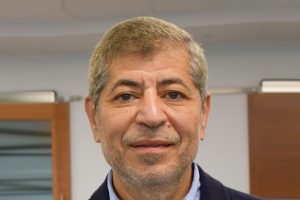
CTI EMEA Managing Director Alaa Assem is a physician, ophthalmologist and MBA holder with over 30 years of experience in pharma and clinical research organisations. Since joining CTI, he has strengthened the company’s presence in the Middle East, focusing on rare disease, gene and cell therapy, oncology, and transplantation. CTI combines global expertise with local depth, delivering complex trials in challenging patient populations and building long-term research infrastructure.
Could you begin by introducing yourself and CTI to our international audience?
I am a physician by training, originally an ophthalmologist. After completing my Master’s in ophthalmology and practising for several years, I transitioned into the pharmaceutical industry, holding roles at Sandoz, Eli Lilly, Wyeth and Pfizer. Over time, this developed into more than 30 years of experience across pharmaceutical and CRO environments, primarily within medical affairs, clinical research, and regulatory and government affairs.
I joined the CRO industry in 2011 through Clinart, where we set out to build a strong regional platform. At the time, we identified a clear gap in the market and worked deliberately to establish a credible and sustainable regional presence. In 2020, CTI acquired Clinart, and since then we have been fully integrated into the organisation.
Today, CTI is a global, mid-sized CRO that remains privately owned. This is something we take great pride in, particularly as we are among the oldest mid-sized CROs still privately held, with our founders actively involved in the business. The company was founded in 1999 by Tim Schroeder and Lynn Fallon, and that founder-led mind-set continues to shape how we operate.
For a mid-sized CRO, CTI has one of the largest geographical footprints in the industry, with operations spanning more than 60+ countries across five regions: North America, Europe, the Middle East and Africa, Latin America, and Asia-Pacific. This breadth gives us a genuinely unique position, particularly as many top- global CROs do not maintain the same level of presence in regions such as the Middle East and Africa. .
From a capability perspective, we provide fully customisable clinical trial solutions. While we operate as a full-service CRO, we have also expanded beyond traditional models by establishing our own laboratories in the US and Europe, as well as operating a dedicated research site in the US. At our size, combining this service breadth with such a wide geographical reach is relatively uncommon.
Our strategic focus is on critically ill and difficult-to-treat patient populations where unmet need remains high. These are typically populations where patient numbers are small, patients are geographically dispersed, identification is challenging, and treatment pathways are complex. This focus has become a core part of our identity, as it allows us to deliver solutions that genuinely impact patient lives.
Today, rare disease accounts for more than 75 percent of our work, with over half of those studies involving gene and cell therapy. While rare disease is often viewed as a niche area for many CROs, for us it represents the core of our business. Globally, CTI has contributed to more than 200 drug approvals, including over 50 in cell and gene therapy. Our ambition is to continue working in complex disease areas, supporting innovation, and helping bring advanced therapies to patients with the highest unmet medical needs.
Not many CROs maintain presence in this region. What was the strategic rationale for establishing operations here?
The decision aligns perfectly with our strategic focus. Our founder and CEO understand that the high prevalence of rare diseases and genetic disorders in the Middle East makes the region both clinically important and commercially attractive. At the same time, the area presents substantial business opportunities.
Rare disease patients are often dispersed and exceptionally difficult to locate, with significant cross-border activity required to identify them. Having teams on the ground who understand these complexities has been essential. Maintaining a strong presence in the Middle East aligns perfectly with our strategic focus on rare disease and gene and cell therapy, giving us an edge over other CROs and reinforcing our position in these specialised areas. We are consistently invited to participate in rare disease and advanced therapy studies. Rather than pursuing very large trials, we focus on therapeutic areas and patient populations where we can continue to build deep expertise – rare disease, gene and cell therapy, oncology, and transplantation – all fitting the same strategic criteria.
These patients require truly multidisciplinary teams, deep expertise, complex logistics, and long-term follow-up. Paediatric involvement is significant, with more than half – and sometimes up to 75 percent – of our trials focusing on paediatric indications. Working with families involves managing consent, explaining procedures, and arranging cross-border travel. In many cases, we transport families from one country to another, establishing central hubs and bringing patients to centres of excellence rather than opening sites in every location.
The work goes far beyond medicine alone. Logistics play a substantial role, from drug supply and sample exportation to equipment, customs, and navigating cultural considerations. Local presence and a deep understanding of each country’s regulations are absolutely critical to ensure trials run smoothly and effectively.
With your extensive experience in the sector and region, how would you describe the rare disease clinical research ecosystem?
The Middle East and Africa is profoundly diverse economically, culturally, geographically, and linguistically, ranging from countries with very high GDP and advanced standards to countries with larger populations but still developing economically.
Regarding rare disease, prevalence is unfortunately very high across the region due to cultural and geographical factors. You have distinct ethnic populations, secluded tribal and Bedouin communities, and exceptionally high levels of consanguineous marriages. Disease patterns remain within families and perpetuate.
What has changed substantially is that there is now exceptionally high focus on genomics, particularly in Gulf countries. Genomic projects aim to understand patterns, identify pockets and trends within families. Substantial effort now focuses on premarital counselling and genetic counselling to identify potential issues and provide guidance.
Clinical research across the region has experienced a tremendous surge over the last five years. Previously, substantial scepticism existed. This has completely changed. Clinical research has become strategic – integral to national visions in Saudi Arabia and the United Arab Emirates. They want to embed innovation and research into the system. This represents a tremendous shift and has driven regulations that foster this environment.
Saudi Arabia exemplifies this transformation. In the last five years, we now see phase I units, and gene therapy studies. This was inconceivable 10 years ago. COVID was transformational. It drove countries to think critically about needing innovation domestically.
You mentioned the Gulf – which countries specifically?
Definitely Saudi Arabia, the UAE, and Qatar. Qatar has developed substantially, although it is smaller with fewer sites. Other countries in the region are following suit. Oman represents a strong research environment with significant expertise, though its infrastructure is still developing. Nevertheless, sites there are excellent for rare disease studies.
In the UAE, Abu Dhabi and the Department of Health are driving innovation across the country. Saudi Arabia has seen tremendous progress Its infrastructure has always been strong – sites like King Faisal Specialist Hospital have functioned as research centres for decades. More recently, the country has elevated its approach: in 2023, the regulatory authority introduced orphan drug designation, a first in the region. They are also launching a Breakthrough Innovation Pathway, which requires commitment to conduct early phase studies locally and accelerate market access and approval.
Phase I capabilities, which were not possible in the past, are now emerging as a recent development. After Saudi Arabia and Abu Dhabi, Jordan is notable for well-established regulations, though it is a small country with limited market potential, similar to Lebanon. Egypt a large potential county for clinical research , but unfortunately current legislation , does not permit phase I or early phase trials for foreign sponsors, limiting participation to later-stage studies(Phase 3 /4 ).
Saudi Arabia and Abu Dhabi lead in regulatory infrastructure, and timelines have improved dramatically. Five years ago, approvals in Saudi Arabia could take nine to twelve months. Today, “start-up” approvals can be completed in four to five months, sometimes even faster for products which address a critical illness and unmet medical need.
You mentioned the Saudi FDA’s new pathways. Do you have experience or feedback on the UAE’s new regulatory body, given rare disease and gene therapy are top priorities?
The Emirates Drug Establishment (EDE) is still relatively new, but we see its priorities aligning closely with those of other established regulatory bodies – focusing on accelerating product approvals and designating breakthrough treatments. The Saudi FDA, by contrast, has been in place for many years and has built a strong track record. We fully expect the UAE authority to follow a similar path, and having a unified national regulatory body is an excellent step forward.Regulatory bodies in both countries are exceptionally open for consultation and pre-submission meetings, which is critically important for early phase biotech companies still exploring the market, gene and cell therapy studies with substantial logistics, this helps to build confidence that region can deliver.
We are still in that early phase. The more confidence builds, the more it will attract additional sponsors and early phase complex studies .
How have you witnessed sponsor confidence developing, and where can you deliver greatest impact?
There is clearly substantial interest in the region. Many countries are actively promoting themselves – for example, the Saudi FDA /UAE DOH regularly attends International conferences such as BIO US to promote country vision and capabilities – and we are seeing growing interest from biotech companies exploring opportunities here. Yet some hesitancy remains. There is often a gap between perception and reality, and many visitors are genuinely impressed because their expectations were initially low, it is very important to encourage sponsors to come and visit the sites, this helps tremendously to change perception
Our role is to help sponsors gain confidence that we can navigate these countries effectively. We are building real depth of expertise in gene and cell therapy, but the practical numbers are still small – the number of studies conducted and sites engaged can often be counted on one hand. Expertise only comes with delivery: having patients enrolled, studies approved, sites activated, and patients recruited and treated. These projects are highly complex, requiring close collaboration among sponsors, regulators, sites, and CROs. The level of detail and logistics involved is immense.
Across the region, there are outstanding medical experts with deep disease knowledge and patient care experience. What is sometimes missing, however, is clinical trial experience and dedicated research staff at the sites. This gap – insufficient support teams for principal investigators – requires investment. As more projects are successfully delivered, confidence naturally grows.
When sponsors engage directly with regulators or principal investigators at leading sites like KFSH , KAIMRC, SSMC, Cleveland AD , it helps build trust. This represents an investment. Every emerging market followed a similar path: Eastern Europe, for instance, started with limited infrastructure, but countries like Poland and the Czech Republic are now global leaders. Sponsors invested, and large pharmaceutical companies played a key role in driving that growth – the Middle East is on the same trajectory.
Who do you see possessing greatest potential in terms of partners and sponsors investing – biotechs, international sponsors, local entities?
Globally, biotech is currently driving the pace of innovation. This presents unique challenges, because biotech companies are often small, resource-constrained, and concentrated in US hubs. They focus on developing products to progress through clinical phases, achieve approval, or eventually partner with large pharma for marketing. Naturally, this means they proceed with caution, and when they work with a CRO, they rely on the CRO not just for execution, but for strategic guidance. Investors also play a significant role in shaping decisions. Biotech is the innovation engine, even though many products eventually transfer to large pharmaceutical companies during later phases.
Large pharma, meanwhile, maintains a substantial presence and remains a major force. Companies such as AstraZeneca, Novartis, and Roche hold extensive gene therapy and innovation portfolios. They are highly motivated to build markets, which involves engaging in clinical trials and implementing market access programmes.
Another important aspect is generating real-world evidence. Clinical trials are only the first step; there are still gaps in building disease registries and making data readily available to identify patients. If national databases existed, patient identification would be far more efficient. Additionally, long-term follow-up and health economic outcomes research are essential to demonstrate the true impact of these exceptionally expensive treatments on patients and healthcare systems.
What would you tell international biotechs worldwide who may not understand the region – what are the advantages of investing here?
The primary factor is the tremendous potential the region offers. Large patient populations exist due to the high prevalence of rare diseases and genetic disorders, making it a compelling destination for sponsors. Clinical sites are exceptionally well-established, and medical infrastructure is strong, with highly specialised centres of excellence across all countries. Cell and gene therapy capabilities are developing rapidly, backed by substantial interest and motivation.
Equally important is the commitment we see from countries, regulatory bodies, and sites. People are genuinely interested in engaging, which facilitates patient recruitment, follow-up, and overall trial execution.
Infrastructure, technology, and language also provide significant advantages. Across these countries, English is the operational language, and patient-facing materials need only be translated into Arabic. International sponsors can access medical records and review case report forms in English, simplifying communication. This contrasts with regions such as Asia, where local translation requirements for every country add complexity.
When you combine advanced technology, accessible patients, well-prepared sites, robust regulatory frameworks, and, critically, experienced local teams, the result is a highly supportive environment for complex clinical trials. Within this environment, CTI is uniquely positioned to deliver results. With a long-standing on-ground presence and deep regional expertise, we have spent 25 years witnessing and supporting the evolution of clinical research in the Middle East. Over this time, we have built strong connections with networks and sites, enhanced local capacity, and gained insights that cannot be acquired overnight.
Sponsors should partner with CTI because of this combination of experience and presence. We possess genuine ground knowledge and understand the nuances of working across countries with diverse regulatory, cultural, and logistical requirements. We bring experts from our global CTI organisation into regional support for trials, covering all operational aspects. This expertise, combined with trust, confidence, and a proven track record, provides sponsors with tangible value.
Moreover, we are not simply another CRO handling rare disease, advanced therapy, cell and gene therapy, or oncology – these are our core areas of focus. Our teams have delivered complex trials in these patient populations repeatedly, ensuring high standards in patient care, follow-up, and operational excellence. This focus, embedded in a company with global reach and local depth, positions CTI uniquely both within the region and internationally.
Looking ahead to 2026, what excites you most, and what are CTI’s strategic priorities?
What excites me most is where this is all leading. We are genuinely at the beginning of an evolution – opening up the region and attracting investment in advanced therapies. We expect to see increasing activity as confidence grows and expertise deepens in breakthrough treatments.
The environment here is exceptionally dynamic, and diligence is key. As a CRO, we act as the crucial link between local sites and sponsors, building trust while executing complex studies. These are genuinely exciting times, as we bring more trials to the region, deliver results, and help establish a lasting research ecosystem.
The MEA region is full of potential. Our current focus is on Saudi Arabia, the Gulf countries, the UAE, and Turkey, though significant opportunities exist in North Africa, Egypt, Sub-Saharan Africa, and South Africa. Globally, our attention remains on patient populations with high unmet needs – particularly in rare disease and genetic disorders, where most patients currently have no treatment. Delivering innovation here has a profound impact.
Equally important is building internal capabilities. We are continuously improving operational efficiency, leveraging innovation, artificial intelligence, and technology to enhance processes, accelerate timelines, and maintain quality. In such a highly regulated environment, where our work directly affects patient lives, quality remains paramount.
At the foundation of everything are people. Our business is built on them. Our vision prioritises people first – ensuring proper training, retaining key talent, and fostering development. Internally and externally, we continue expanding geographically and exploring new ways to reach patients, while strengthening capabilities in these highly specialised areas.
What sustains our motivation is witnessing real advancement. Five years ago, if you had asked whether we could conduct phase I trials in the region, I would have said it was impossible. Today, we are actively discussing these trials with sites, regulators, and all stakeholders. Sponsors’ interest continues to grow, though there is still substantial work to do.
Ultimately, when these foundations are in place, we pass the baton to the next generation. We are building something genuinely meaningful, and the excitement around this ongoing evolution is tremendous.