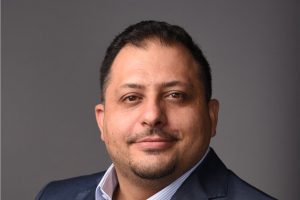
Adeeb Al Attar leads Genpharm at a point where rare and advanced therapies in the Middle East face a more exacting test. Scale and ambition are no longer enough. What matters now is execution, credibility, and the ability to move innovation through complex healthcare systems without losing focus. In this interview, he explains how Genpharm has been shaped around early diagnosis, long-term partnerships, and a strong internal culture, offering a pragmatic view of how patient access is built in practice rather than theory.
What shaped your journey at Genpharm, and how do you define your mandate as Managing Director today?
I joined Genpharm at its inception in 2012, driven by a desire to work with purpose in life sciences. I hold a Bachelor of Science in Biology from Notre Dame University-Louaize and an Executive MBA from the University of Warwick, which strengthened my leadership and strategic perspective as Genpharm matured. From the outset, I aligned closely with the founders, Karim Smaira and Kamel Ghammachi, around a clear ambition to build a specialised regional partner focused on rare diseases.
Those early years were formative. We established durable partnerships with leading global pharmaceutical and biotechnology companies and progressively built depth across rare and genetic diseases, including advanced therapies such as gene therapy. As the science advanced, our mission evolved with it. Gene therapy may not always constitute a cure, but it brings meaningful innovation to patients with serious unmet needs, and that progress remains central to why we exist. I took on the role of Managing Director in January 2025 with a clear mandate. We must remain anchored in rare diseases, continuing to support patient communities and improve access where unmet needs persist. At the same time, we must protect and strengthen the culture that defines us. We are a people-focused organisation, and that shared sense of purpose underpins our ability to deliver. Growth and new ventures matter, but they must be pursued in a way that reinforces our values and the long-term mission that has guided Genpharm from the beginning.
How does the majority investment by Abdul Latif Jameel Health shape Genpharm’s next phase, both in terms of strategy and culture?
The majority investment by Abdul Latif Jameel Health marks an important moment for Genpharm, but it is best understood as a continuation of our trajectory rather than a shift in direction. Abdul Latif Jameel is a long-established, diversified global group, and its healthcare arm brings scale, long-term commitment, and international reach. What mattered most to us, however, was the strong alignment in values. There is a shared emphasis on people, on long-term partnerships, and on investing in areas such as early diagnostics and access to care, well before this transaction took place.
Strategically, the partnership strengthens our ability to deliver on the growth path already in place. It reinforces our position across the region while giving us the backing to think more selectively about expansion into new geographies over time. Our priorities remain clear. Rare diseases stay at the core of our strategy, with gene and cell therapies continuing to anchor our portfolio, reflecting both unmet medical need and the capabilities we have built over many years.
Alongside this focus, we are deliberately exploring adjacencies where innovation can translate into tangible value. In oncology, our interest lies in targeted, niche areas rather than broad, highly competitive segments, always guided by whether we can address a genuine unmet need. In parallel, we plan to enter medical technologies from 2026, with a focus on areas such as advanced imaging, artificial intelligence-enabled diagnostics, robotics, and specialised surgical equipment. The criterion is straightforward. If a technology is globally approved, not yet available in our region, and the healthcare system is ready to adopt it, then it is an area where we believe we can contribute meaningfully. As we move into this next chapter, our priority is disciplined growth, pursued in a way that preserves the culture and sense of purpose that define us.
How do you assess the Middle East as a region for rare and advanced therapies, and where do you see the most meaningful opportunities to improve access?
The transformation over the past decade has been significant. Around 2015 or 2016, treatment options for rare diseases in the region were limited, largely confined to enzyme replacement and metabolic therapies, while gene and genetic-based treatments were still emerging globally. At that stage, there was little practical reason to pursue deep genetic characterisation, because targeted therapies were not yet available. As biotechnology advanced, that logic shifted, and healthcare systems across the region began to respond.
What stands out today is the scale and pace of institutional investment. National genomics initiatives have emerged that simply did not exist ten years ago. Saudi Arabia’s Human Genome Program, the Emirati Genome Programme in the UAE, and Qatar’s genome efforts, supported by institutions such as Sidra Medicine and Hamad Medical Corporation, are building population-level genetic datasets and strengthening local capability for precision medicine. Other Gulf countries are following the same path by investing in genetics and sequencing centres, creating a far more robust foundation for early diagnosis and targeted intervention.
Data remains an area where work is ongoing, but the direction is clear. Historically, the region relied heavily on international epidemiological data, which often fails to reflect local realities, particularly given high rates of consanguinity. Conditions such as sickle cell disease and thalassaemia are far more prevalent across parts of the Middle East than in Western markets and are endemic in some populations. Building accurate local epidemiological and genomic evidence takes time, but disease registries and sequencing programmes are increasingly closing that gap, often through closer collaboration between healthcare systems and industry.
From our perspective, this combination of government commitment, expanding infrastructure, and improving data maturity creates a compelling environment for advanced therapies. Our role is to translate that momentum into access by supporting earlier diagnosis, aligning local evidence with therapeutic innovation, and ensuring that patients can reach these treatments at the point where they can deliver the greatest impact.
How is Genpharm’s portfolio structured, and how do you ensure focus while addressing a broad range of rare and genetic diseases?
Our portfolio is deliberately structured around advanced therapies, with rare diseases and gene-based innovation at its core. We operate through two complementary units, dermatology and rare diseases, and within rare diseases we concentrate on a limited number of areas where we have built real depth and execution capability. These include neurology and neuromuscular disorders, metabolic diseases, and endocrinology. In neurology and neuromuscular conditions, we work with partners such as Sarepta Therapeutics, PTC Therapeutics, and argenx. In metabolic diseases, Ultragenyx addresses areas of particularly high unmet need, while in endocrinology our collaboration with Rhythm Pharmaceuticals in genetic obesity reflects the same targeted approach. Our dermatology activities, including partnerships with LEO Pharma, complement this structure without diluting its focus. The broader evolution of the field, including the emergence of topical gene therapies such as those developed by Krystal Biotech for dystrophic epidermolysis bullosa, reinforces the importance of staying selective rather than expanding indiscriminately.
This portfolio strategy is inseparable from how we think about access and outcomes. One of the clearest examples is Duchenne muscular dystrophy, where we invested early in disease awareness and education, working closely with clinicians and patient communities to improve recognition and referral. We combined that effort with access to genetic testing, and over time this approach significantly reduced the age at diagnosis. That shift matters, because outcomes with disease-modifying therapies are closely linked to how early treatment begins.
We have applied the same principle across other conditions where timing is decisive. In spinal muscular atrophy type one, early diagnosis, ideally through newborn screening, can determine whether a child achieves meaningful motor milestones. In metachromatic leukodystrophy, eligibility for gene therapy depends heavily on disease stage, with the therapeutic window narrowing once progression is established. More broadly, we are seeing earlier diagnosis across metabolic and neurological conditions, supported by newborn screening programmes and closer attention to family history. In rare diseases, early diagnosis is not a secondary consideration. It is the foundation that determines whether patients can access these therapies at all, and it remains central to how we structure our portfolio and our work across the region.
How do you define Genpharm’s role in strengthening the rare disease ecosystem and expanding access to advanced therapies across the region?
Our role has been clear from day one and remains deliberately structured around serving patients with rare diseases by connecting global innovation with local healthcare systems. The region carries a high burden of unmet need, yet it is often underestimated externally. In practice, the clinical capability, healthcare infrastructure, and regulatory frameworks are far more mature than is commonly assumed, and we have seen consistently that they can accommodate complex and advanced therapies when approached in the right way.
Where we add value is in making that readiness tangible. We work with innovative biotechnology companies to show that there are credible, compliant pathways to bring their assets into the region and reach patients who need them, while at the same time aligning closely with health authorities to ensure those pathways reflect national priorities and long-term sustainability. This requires an ability to operate comfortably on both sides, understanding how regulators are evolving and how smaller, innovation-driven biotechs think about resources, risk, and execution. Our contribution is to align these perspectives, absorb the complexity, and deliver locally, so that innovation translates into real and timely patient access rather than remaining theoretical.
From your experience, how do international biotechs perceive the Middle East today, and what still requires clarification or education?
We see two realities in parallel. Some biotechnology companies, particularly those working in clearly defined rare disease areas, already recognise the relevance of the region because local data increasingly makes unmet need visible. In those cases, the discussion is relatively straightforward. For others, there is still a need to explain how the landscape works, how healthcare systems operate, and how to approach market entry in a way that is both credible and sustainable. This is where our role has evolved, especially as regulatory reform across the region has reshaped expectations around engagement and timing.
Saudi Arabia is a good illustration of that shift. The SFDA has reached a high level of regulatory maturity and now positions itself less as a gatekeeper and more as a collaborative partner, open to early dialogue when patient burden is clear. Similar signals have emerged elsewhere, including in the United Arab Emirates, which moved early on gene therapy approvals. The practical implication is that there is no single route to market. Strategies need to be adapted country by country, using tools such as orphan designation, expedited pathways, or reliance mechanisms where prior approval already exists. Our role is to help biotechs navigate that complexity and build a compliant, realistic approach from the earliest stages.
The same discipline underpins how we choose partners. We cannot, and do not, work with everyone. From the early days, our filter has been consistent. We start with unmet need, assess whether an asset genuinely serves patients, and determine whether we have the capability to deliver it properly in the region. That focus remains intact as we continue to prioritise rare diseases and gene-based therapies, while preparing for selective expansion into niche oncology and medical technologies from 2026. The objective is not breadth for its own sake, but focus, because maintaining a clear identity and execution discipline is what allows opportunity to translate into real impact.
How do you approach leadership from within Genpharm, and what culture are you focused on sustaining as the organisation grows?
From the outset, we have been deliberate about culture, because it is one of the most important assets we have. Genpharm is a people-centric organisation by design, not by rhetoric. As a small to medium-sized enterprise, we have the ability to invest closely in our teams, and we see that as a responsibility. We place strong emphasis on development, supported by a dedicated people and culture function led by long-standing experience in leadership and talent development. The message to our teams is clear. This is not a transactional relationship. For the organisation to work over time, there needs to be alignment between personal purpose and our collective mission.
As we grow, the challenge is to protect that culture while scaling the capabilities the business requires. Our ambition is not simply to have a presence across markets, but to deepen our roots in each of them as healthcare systems evolve. That means continuing to strengthen areas such as market access, regulatory affairs, and compliance, which are critical to execution and credibility in our field. Compliance, in particular, is non-negotiable, and we continue to invest in it as the organisation expands. Ultimately, sustainable growth only works if it is anchored in people, purpose, and culture, and that remains the foundation for how we lead and how we build Genpharm going forward.
How do you define Genpharm’s priorities as you look toward 2026, and what perspective would you share with potential partners?
Our priorities over the next phase are centred on disciplined, midterm growth rather than distant ambition. That growth will come through a balanced mix of organic expansion in the markets where we are already established, the addition of carefully selected new partnerships, and a measured approach to geographic expansion. While we continue to build across the Middle East, North Africa, and Turkey, we are also exploring opportunities beyond the region where it makes strategic sense, including through joint ventures. The objective is to evolve beyond a purely regional profile while preserving focus, coherence, and execution discipline.
When it comes to partnerships, our position is straightforward and consistent. We do not pursue short-term or transactional arrangements. Every partnership we enter is intended to be long term, to create a durable presence, and to leave a meaningful footprint in the markets we serve. For biopharma and medtech companies looking for a partner that is prepared to commit over time, align strategically, and build patiently, we are ready to engage. We bring deep regional understanding, strong execution capability, and a clear sense of purpose, and we expect partnerships to be built on the same foundations.