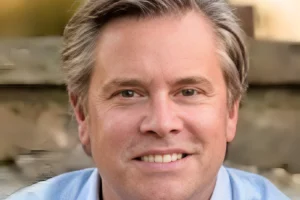
Craig Martin, CEO of the Orphan Therapeutics Accelerator (OTXL), discusses the urgent need for a new business model to rescue abandoned clinical-stage programs in the rare disease sector. He details OTXL’s innovative non-profit model, which leverages a collaborative network of partners and unique tax-exempt incentives to liberate stranded assets from for-profit pipelines. By solving what he characterizes as an economic challenge rather than a scientific problem, Martin and his team are creating a sustainable pathway to bridge the gap between clinical development and commercial access for patients in need.
You have spent over two decades in the life sciences, often seeing the rare disease space used as a proving ground for new technologies. What was the specific market need or shift you witnessed that ultimately led to the birth of the Orphan Therapeutics Accelerator?
I have spent the last 20-plus years working in biotech and life sciences, and much of that involved consulting with emerging-stage firms introducing new modalities to the marketplace. Historically, the way it worked was that the first indication a company would pursue was often a rare disease with a smaller population. The opportunity for expedited review and small trial sizes served as a significant incentive for companies to make rare disease a proving ground. Through that work, I became deeply involved in the rare disease community, where I observed that patient groups or individual caregivers are often the early drug developers; they are the ones funding the research and moving it to the point where an academic researcher might become an investigator.
We saw great progress for a time, particularly with cell and gene therapy since so many rare diseases are genetic. Things were moving in a positive direction until they were not. In late 2020, I stepped in as interim CEO of Global Genes and was in that role until the end of 2022. During that period, we saw a precipitous decline in the investment going into rare diseases. Even companies with a long legacy in the market began to pull back. I saw a number of programmes I was familiar with – for treatments I knew were helping children in trials – being shelved or de-prioritised because companies were running up against funding challenges or shifting strategic priorities.
Even after I stepped out of that role, I couldn’t let it go. I realised that the failure to advance these programmes was not a science problem but a math problem. What was needed was a new business model that would enable therapies to move forward at the scale and urgency of need. I wanted to focus specifically on clinical-stage programmes because there is a reasonable understanding of the safety profile and you can see signs of potential efficacy. There is also a much shorter runway between that stage of development and the potential for regulatory approval and commercial access for these therapies.
OTXL utilizes a non-profit model that relies heavily on a collaborative network of partners. How does this partnership structure function in practice, and what incentives does it provide for for-profit biotechs to contribute their assets?
When I started to envision the model for the Orphan Therapeutics Accelerator, I spoke with hundreds of people across industry, finance, and academia to help shape it. It became obvious that a traditional for-profit model was not going to work and that a collaborative network of partners willing to operate differently was required. We set OTXL up as a non-profit because, even though we are industry veterans and we operate like a biotech, we felt it was important to have incentives that would liberate programmes sitting in pipelines.
As a tax-exempt organisation, a biotech that contributes an asset to us can write off the tax basis or fair market value of that asset up front. Furthermore, we can offer a sliding scale to write off up to 10 years of net sales revenue if we are successful in commercialising the therapy. This is vital because it creates an incentive for them to be rewarded for their original innovation, while allowing us to reduce our upfront costs and obtain assets without being burdened by a massive initial payment. Similarly, we leverage our non-profit status to develop relationships with CROs and CDMOs that work with us on a deferred or reduced-cost basis during clinical development. They are rewarded when we reach the finish line of approval and commercialisation. A networked approach is critical because these development costs are often precisely what keep these programmes from moving forward.
How do you approach the sourcing and assessment of these de-prioritised assets? How do you pick up the treasure while balancing patient need against the requirement for ultimate commercial viability?
We are quite fortunate because, through our collective networks and those of our advisors and board, we have a clear line of sight into a number of programmes. It was not particularly hard to find them, unfortunately, given the state of the market. We often have a head start on vetting because our team members might serve on the boards of these companies or have been familiar with the assets through prior involvement.
However, as we progressed, we realised that to do this at scale, we needed a more efficient way of conducting due diligence. This led us to initiate a couple of AI-based pilots about two years ago. The goal was to take an asset, ingest the data room and all relevant information, and compare it against competitive marketplace data sets. This allows us to generate a compelling and accurate profile of an asset much more quickly, without needing a massive business development or diligence team.
Another reason for this approach is our desire to attract non-traditional investors. A typical VC firm might have a bunch of PhDs on staff to evaluate a programme, but a family office, an Impact Fund, or a donor-advised fund does not typically have those resources. We felt we could surface information that would make it more feasible for them to evaluate the relative risk and benefit of these programmes. It helps us match-make between shelf programmes and partners who want to move them forward.
Does the non-profit status of the accelerator translate into a different approach to pricing and patient access once a therapy reaches the market?
It is important to emphasise that while we want to provide access to more treatments, we also want to prove that there is a viable business model for making these therapies commercially available. Fundraising around every single treatment is not a sustainable strategy. Our approach is to work with partners to bring late-stage development costs down, which helps affect the pricing, but that takes time. In the meantime, we have to approach it from the standpoint of a sustainable market price that allows for access without jeopardising the organisation or the asset’s availability.
Because we are a non-profit, we can be much more transparent about how and why we are pricing a therapy. This is something we are doing sooner than expected through our partnership with Fondazione Telethon to commercialise a specific gene therapy in the US. You learn quickly that for gene therapies developed over the last 20 years in the same system as for-profit companies, there is not always an immediate opportunity to slash costs. However, our model allows us to operate in a cost-plus manner. We apply a sustainable margin, but it is not designed to optimise profitability or recoup the costs of failed trials from other areas of the business. We set up a commercial subsidiary, Orphan Therapies, specifically to commercialise these treatments in a very efficient manner, without the burden of R&D costs that a traditional biotech might carry.
The partnership with Fondazione Telethon for the US commercialisation of their gene therapy is a significant milestone. How does this collaboration serve as a template for future treatments in your pipeline?
This is an exciting opportunity to be part of a truly groundbreaking approach. Fondazione Telethon helped originate that therapy decades ago. It ended up back in their hands, and they were committed enough to complete development and submit it for approval in the US themselves. That is not a model we have seen done before. They wanted to explore commercialisation in the US with another mission-aligned non-profit.
As we set up the commercial infrastructure for this therapy, we are doing it with an eye towards being able to repeat it. We are establishing frameworks for modality-specific commercialisation. In this instance, we are dealing with an ex vivo lenti-gene modified cell therapy, which has a very complex and individualised route to market. If we can solve for that, we can solve for almost anything from a commercial framework perspective. We are lining up partners who want to scale with us so that we are not rebuilding the same infrastructure or a new team every time a similar therapy comes on board. We can simply leverage existing capabilities to keep costs down and operate efficiently.
While your model is modality agnostic, a large portion of your investigated assets are cell and gene therapies. Why has this specific area become such a focal point for the accelerator?
When we started investigating these shelved therapies, we found that the vast majority of them were cell and gene therapies. This led us to focus more specifically on that area as one of high unmet need and high potential. These therapies can be very effective in treating ultra-rare diseases. If you look at the rare disease landscape, there are the more prevalent rare diseases that meet the investment thresholds of VCs or biopharma. Then there is a band of diseases falling below a few thousand patients but above a few hundred. That is our focus.
There are other efforts focused on N of one or ultra-rare cases, which often require different solutions. We began our conversations with the American Society of Gene & Cell Therapy (ASGCT) in March of last year, and we both arrived at the same conclusion regarding what is required to get these therapies to patients. This led to the CGT Exchange Partnership. We want to take these shelved therapies, list them, and expose them to alternative investors. By the end of the year, we plan to tokenize these assets to make them investable on a fractional or portfolio basis. This will open up opportunities for a much broader array of potential funders to move these therapies into a commercial setting.
AI seems to be a cornerstone of your efficiency model. Beyond due diligence, how do you see AI shaping the broader drug development and regulatory landscape in the next few years?
There are all types of AI applications that could have transformative effects, from way upstream in drug discovery to downstream in evaluating assets. It can save immense time in clinical development planning. We have already seen the FDA signal a desire to shift towards AI-based drug evaluation, and AI-generated regulatory submissions are going to become much more common.
This doesn’t mean we won’t need humans to help shape and develop these things, but it saves an incredible amount of time in the upfront process. In the world of rare disease, that time translates directly into earlier access for patients. The majority of rare diseases affect children, and many of those conditions have significant neurodegenerative components. These are devastating diseases where time is of the essence. Anything we can do to leverage AI to speed up the process of development and approval is something we must pursue responsibly. We should be figuring out where AI as it exists today can be leveraged right now to address these problems.
As you look toward the next three years, what are the primary ambitions for the accelerator, and what is your final message to the healthcare community regarding the future of rare disease?
This year, we will demonstrate a new commercial model with our work on our current gene therapy asset, and we will soon be announcing our first clinical-stage programme. We will begin the process of proving out a different model for advancing these clinical-stage programmes, sometimes directly out of academic medical institutions. Through the CGT Exchange, we will demonstrate how to reshape the marketplace and create a new class of assets that attract investors focused on both value and societal impact.
Ultimately, we are not going to get there without multi-stakeholder collaboration. We need government and regulators to be adaptive and consistent. The FDA has suggested they recognise that rare and ultra-rare treatments must be approached differently, but now the action needs to align with that messaging. From an industry perspective, we need to rethink the ethical obligation of good science. When the science is there, what is the obligation to get it to patients who may not represent the most lucrative market, but for whom the benefit is transformative? We also need different conversations with payers, getting them involved further upstream. As a non-profit, we can be a proving ground for different pricing models. Our current systems were not designed for these therapies, and those processes are taking longer than the science to catch up. Engaging stakeholders earlier and creatively is going to be required if we are to get where we need to be.