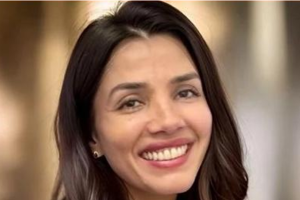
Nasha Fitter, a tech entrepreneur and CEO of the FOXG1 Research Foundation, discusses the radical shift in drug development led by a new generation of sophisticated parent-entrepreneurs. Following her daughter’s diagnosis with the ultra-rare neurodevelopmental disorder FOXG1 syndrome, Fitter co-founded the FOXG1 Research Foundation and Citizen Health. Her mission: to not only develop a foundation-led gene therapy but also to create a platform that supports families throughout their care journey while gathering essential health data. She details the Foundation's aim to bring a gene therapy to market at a fraction of the cost of traditional biopharma and explores how high-fidelity natural history data is identifying better endpoints and de-risking the entire rare disease sector.
Could you begin by introducing yourself and sharing your daughter’s rare disease journey, and how that experience led you to become involved in the rare disease space?
By professional background, I am a tech entrepreneur. I was running a company when my daughter, Amara, began having seizures at seven months old. Luckily, our diagnostic journey was relatively short. FOXG1 was already on the epilepsy panel at the time, so we received the genetic diagnosis just three months later. I am happy to say Amara recently celebrated her 10th birthday, but that initial diagnosis was overwhelming.
At the time, all I knew of FOXG1 syndrome was what I learned in those first meetings: a total lack of movement and speech, severe intellectual disability, and a lifetime of epilepsy. It took me several months just to process the sadness of that reality. However, as I began to process the diagnosis, I started learning about gene therapy. I came across a study in PubMed where a scientist had experimented with FOXG1 gene therapy and had shown success. As an entrepreneur, that was all I needed to know. If it were possible, then we were going to do something about it.
At that point, I was lucky enough to meet other families with children affected by FOXG1 who were just as passionate about taking action, and together, we built the foundation.
Could you provide an overview of the FOXG1 Research Foundation, its mission, and the advancement of its gene therapy program?
It has been an incredible journey. When we started, almost nothing was known about the syndrome. We began by creating mouse models and cell lines just to understand the gene’s function in the body. From there, we tested various modalities—antisense oligonucleotides, CRISPR, and different genetic therapies—on our models. This transition from basic science to understanding our patient population is actually what led to the creation of Citizen Health.
The turning point was when our scientific progress and clinical data converged. We saw very positive results from gene replacement therapy experiments in mice, which changed the game. We began taking that data out of academia and partnered with Charles River, building a team within our foundation that functions like a true biotech. Curing a mouse and curing a human are two very different things, and few people know how to bridge that gap. We had to build the infrastructure to translate academic data into something ready for human trials through our FRF-001 program.
Initially, I thought the foundation’s role was simply to de-risk the disease. I assumed that if we built the models, conducted initial therapy tests, and established a natural history study, there would be a line of biopharma companies eager to take it forward. That simply didn’t happen. Instead, I saw biopharma companies shelving ultra-rare programs during every financial downturn to prioritize more lucrative diseases. It became clear that if we wanted a solution for our children in their lifetimes, we had to see it through ourselves.
The traditional economics of this space are broken. The CEO of Biogen recently noted they spent USD 800 million on a rare form of ALS affecting only 300 patients. The math just doesn’t work, and as a foundation, we cannot raise that kind of capital. We had to approach this like entrepreneurs, going back to first principles to determine what in drug development is essential versus nice to have. We are now looking at completing our clinical trials and receiving a Biologics License Application (BLA) for under USD 22 million. If we succeed, we will have proven a new way to develop gene therapies for ultra-rare diseases.
This will be a critical year for the foundation. Our Investigational New Drug (IND) received FDA clearance to begin clinical trials, and we have already secured Fast Track and Orphan Drug designations. We are now scheduling a Type D meeting with the FDA to discuss our clinical plan. Our goal is a one-and-done trial without a placebo—grounded in rigorous safety and efficacy data—to reach an approved therapy.
Patient- and parent-led drug development has become an increasingly important force in rare diseases. From your perspective, what is driving this shift, and what does it mean for the future of therapeutic innovation?
As the rate of genetic diagnosis increases, we are seeing a new generation of sophisticated parents and patients enter this space. These are people who receive a diagnosis and refuse to wait for industry to take its time finding a cure. This is a core shift in patient advocacy as groups today are building highly sophisticated teams that can often move faster and more efficiently than large pharmaceutical companies. We are seeing this with Allyson Berent’s work in Angelman syndrome and TESS Research Foundation for SLC13A5. It is a new paradigm in drug development.
We need better funding mechanisms for these parent-led initiatives, whether they choose to operate as nonprofits like our foundation or start companies to move the work forward. Who is going to be more motivated than the parent of a child? You will do more for your child than you will ever do for yourself. In drug development, when the going gets tough—and it always does—a parent doesn’t just shelve the program and move on to something easier. You figure out a solution.
There were so many points where we would have dropped the FOXG1 program if we were a traditional company. But because it was for our children, we had to get creative and find a way through the difficulties. I believe we are witnessing a whole new paradigm of entrepreneurship where families are the primary drivers of innovation for ultra-rare diseases. It is a future I am very excited by.
Gene therapies are often described as the next frontier in rare disease treatment. How do you see their role evolving, and what potential do they hold for addressing previously untreatable conditions?
I believe more companies should invest in rare monogenic conditions because, in the context of a scientific experiment, our development of FRF-001 is the perfect guinea pig. To be successful in science, you need to isolate the variable, and a monogenic disease with a small patient population is a beautiful variable for testing genetic therapies. The lessons learned from these independent genes will eventually help us solve much larger, more complex conditions.
Consider Alzheimer’s. It is incredibly difficult to cure because over 50 genes are implicated. However, we are beginning to break down and understand those genes thanks to the work of monogenic, ultra-rare communities. Gene therapies are the future because patients want curative treatments—not me-too drugs or small-molecule bandages. We want to address the root cause of the conditions. My daughter is on a plethora of epilepsy drugs, which are all terrible. They have terrible side effects and they aren’t even that effective. Currently, I have to give her one pill for epilepsy, another for behavioral issues, and another for GI problems. Gene therapy allows us to go to the root and fix the gene.
I am incredibly excited about the future of CRISPR and the new capsids being developed. Ultra-rare monogenic communities are at the forefront of this work, paving the way for personalized medicine. We have talked about personalized medicine as an industry for a long time, but the way most companies are structured is simply not set up for small patient numbers. Their processes are too siloed and lack the cross-functionality needed for this type of work.
The work we are doing is forcing a rethink of these structures. If companies want to attack diseases with smaller groups of people sharing the same genotypes and phenotypes, they have to change. This is the only way we will achieve true personalized medicine, which is ultimately where we want to be as a human race.
Turning to Citizen Health, could you describe your role as a co-founder and explain the platform’s purpose in aggregating and structuring patient health data?
The rise of genetic testing has brought more professionals, parents, and patients themselves into this space to apply their expertise toward making a difference. As a tech entrepreneur, I saw two glaring needs: first, I needed better tools to manage Amara’s day-to-day care. In between doctor visits, families are managing care minute-to-minute, and the current approach for most rare communities is just posting a question on Facebook and hoping for a response. It’s anecdotal and unsystematic.
Second, as we were developing our own drug, we needed to understand baseline patient symptoms. Trying to do that research through traditional academia is inefficient and expensive. It became obvious that we needed a platform where rare disease patients could collect their medical records and other data to both help families manage daily life and provide a more efficient way to gather clinical data for drug development.
Our FOXG1 program is a perfect example. It is entirely based on the Citizen data set. Our primary and secondary endpoints, the information we submitted to the FDA, and our request to proceed without a placebo are all supported by Citizen data. You can say we are eating our own dog food by using the platform, which has saved us millions of dollars and years of time, providing a level of data that was otherwise unattainable.
I’ve been incredibly fortunate to build this with partners like Farid Vij, Deven McGraw, and David Fisch. Today, Citizen supports a plethora of conditions, from neurodevelopmental disorders to cardiology and cancer, which only makes the platform richer.
Ultimately, our greatest asset is trust. Many of our team members are rare disease patients or caregivers themselves, which means we are building alongside our users. We consistently choose the patient’s interest over traditional corporate incentives. We want to be the trustworthy company where families feel comfortable sharing their medical records and personal details, knowing they are contributing to a platform that helps all rare diseases learn from one another.
In what ways can Citizen Health help accelerate to research and drug development?
The exciting part of Citizen is that because families are so deeply engaged, we are able to collect incredibly rich datasets. Aside from medical record data, we also run polls to gather further natural history data, where we see a very high response rate because the families know that information is fueling better insights for their own care. This creates a de-identified, high-fidelity map of disease progression for ultra-rare conditions that would otherwise be impossible to understand.
A perfect example comes from our FOXG1 work. In most neurodevelopmental conditions, the assumption is that seizures will be the primary endpoint. We had assumed that as well. However, after analyzing the Citizen dataset across 100 patients over 10 years, we realized that seizure frequency was too inconsistent at certain ages to be a reliable metric. Conversely, we saw that motor function was remarkably consistent and provided a very strong baseline.
If we had only conducted a small, prospective natural history study, we would never have identified motor function as our primary endpoint. You can have an incredible drug, but if you fail your primary endpoint, the drug won’t get approved. This is how we support clinical programs for both small biotechs and large pharmaceutical companies—the clinical work is just as important as the science.
If you are trying to treat an ultra-rare disease, you have to think about the end goal from day one. You want a single-arm trial because you are never going to fill a placebo-controlled study for these populations. If you are forced into a traditional Phase 1 through 3 structure, that’s an extra USD 50 million to 60 million, which is a cost that often makes a program economically unviable.
To avoid the placebo, you must have a rock-solid natural history baseline. When you see movement in your trial, you compare it against that data to prove efficacy. That is how Citizen accelerates drug development. To me, it’s a perfect circle. Rare disease families need help day-to-day, but ultimately, they need treatments. I can provide the best care in the world for Amara, but her quality of life won’t truly change until we find a treatment. Citizen allows both of those needs to exist in a very beautiful way.
How is Citizen Health currently leveraging artificial intelligence within the platform?
The recent eruption of AI platforms has been a massive advantage for us. We already have hundreds of thousands of medical record pages and thousands of rare disease patients on Citizen. Because we have built deep trust with these communities, we are now in a position to utilize AI to provide immediate, actionable help to families.
For myself, I am now managing Amara’s care almost exclusively through Citizen. All of her medical records flow directly into the platform. We just launched a feature that allows me to record a doctor’s appointment and it automatically uploads and integrates that conversation with her existing records. Day-to-day, I update the AI feature with Amara’s specific data—her activity, her GI health, her seizure activity—the AI then provides real-time care advice.
Where we are going with Citizen is using AI to help families make the best next decision. Whether that is navigating daily care or connecting with other families who share similar challenges, it is incredibly exciting. My sincere hope is that we can help thousands of families the same way this technology has honestly helped mine.
Looking ahead, what are your key priorities for both the FOXG1 Research Foundation and Citizen Health over the next few years?
When I look at the rare disease community, I don’t see a significant difference between a FOXG1 patient and someone with Angelman syndrome or another condition. We are all swimming in the same sea, having been given incredibly difficult diagnoses, and we are all tackling them in different ways.
My primary ambition for the Foundation is to establish a model that other foundations and companies can follow. I am currently working with several small biotechs to share how we’ve made our processes more efficient. I hope we are setting a new economic paradigm for how to develop drugs for ultra-rare diseases. Our current gene replacement therapy is the best modality to help the largest number of FOXG1 patients today, but it is only our first. As science improves, I hope to see more gene therapy programs to follow.
For Citizen, my hope is that we live up to our dream of being the partner for every rare disease family. We want to be the guide that helps each family find their perfect next step and connects them to exactly what they need. As families navigate the darkness of these conditions, I want Citizen to be the beacon of light that truly guides them through.
What final message would you like to share with the rare disease community?
To any rare disease patient or family, I want to say that I know it is hard, but do not give up. Keep going, and do not take no for an answer. Go back to first principles. I spoke with a patient today who said their geneticist hadn’t even mentioned gene therapy as a possibility. Your geneticist may not mention it and your neurologist may not mention it, but you have to take control and advocate for yourself.
It is incredibly difficult, but the good news is that so many of us have already paved the path. I have received invaluable guidance from those who came before me like the Rett Syndrome Research Trust, the Foundation for Angelman Syndrome, and so many others. Now, I am helping guide new foundations in turn. It is all about giving back.
My ultimate advice is to keep pushing. Only you can truly drive your own disease toward a cure and force the world to take notice of your work. We are all here for you. There is no community tighter than the rare disease community, and no one is going to turn their back when you ask for help.