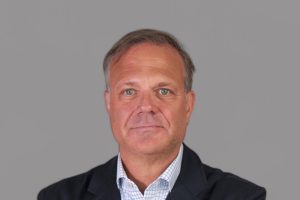
John Hess, Senior Vice President, Americas at Chiesi Global Rare Diseases, reflects on his career journey and the evolution of Chiesi’s dedicated rare disease organisation. In this interview, he discusses the strategic rationale behind establishing Chiesi Global Rare Diseases, the critical role of the US within the global strategy, and how the company is building a differentiated portfolio through both internal innovation and external partnerships. Hess also shares his perspective on patient advocacy, the diagnostic odyssey, and the broader policy and ecosystem factors shaping the future of rare disease care.
Could you begin by outlining your career journey and the experiences that ultimately led you to Chiesi?
I began my career in 1994, at Roberts Pharmaceuticals, which was ultimately acquired by Shire Pharmaceuticals. In 1996, I joined Daiichi Pharmaceuticals as a charter member of the oncology commercial team. At the time, we were preparing to launch what was then considered a breakthrough chemotherapeutic agent for colorectal cancer, Camptosar.
I spent the majority of my career at Daiichi Sankyo, nearly 19 years in total, holding a variety of leadership roles in the commercial organisation. In 2012, I relocated from the West Coast where I was an Area Business Director, to the New Jersey Headquarters to lead the oncology commercial organisation. This coincided with Daiichi Sankyo’s acquisition of Plexxikon and the launch of Zelboraf, a breakthrough oral therapy for BRAF-positive metastatic melanoma. At that point in time, it was truly a life-changing therapy for patients and a defining moment in my career.
After leaving Daiichi Sankyo in 2015, I joined ApoPharma, a rare disease company based in Toronto Canada and was responsible for the commercial operations in the Americas Region.
Fast forward to 2019, Chiesi had been in discussions with ApoPharma to acquire the global rights to Ferriprox via an asset acquisition. I joined Chiesi upon the closure of the deal to lead the North American Region. That transaction closed in January 2020 and marked the foundation of Chiesi Global Rare Diseases in the US and Canada. This included enhanced R&D capabilities , with the addition of approximately 40 R&D colleagues based in Toronto.
Looking back over the years, it has been an incredible journey with Chiesi Global Rare Diseases. Moving from a single-asset company in the US into an organisation with significant ambition in rare diseases globally.
What was the rationale behind the launch of Chiesi Global Rare Diseases, and how does this dedicated organisation reflect Chiesi’s broader purpose and long-term vision?
Chiesi Global Rare Diseases was launched in February 2020 by Giacomo Chiesi who established the business unit and continues to lead it today. His vision was very much centered on addressing unmet needs within a global rare disease community with a particular focus on building a meaningful footprint in the US.
The parent company, Chiesi Farmaceutici, is a global biopharmaceutical company with a long history. We recently celebrated our 90th anniversary, and for nine decades the organisation has been rooted in innovation and discovery focused on areas of unmet medical need. One aspect of Chiesi that is not always widely known, but is deeply important to how we operate, is our strong commitment to create shared value for the society as a whole. In 2018, we became a Benefit Corporation, formally embedding our commitment to social and environmental responsibility into our by-laws. The following year, we pursued B Corp certification for the first time, using it as a framework to measure, monitor, and enhance our sustainability performance. Our mission in rare diseases aligns naturally with the B Corp ethos of serving underserved communities.
That designation reflects a broader philosophy around societal responsibility, alongside environmental considerations. When you apply that lens to rare diseases, there is a very natural alignment. Rare disease patients are often underserved, and even in a market like the US where innovation and access are seen as best in class, there remains a significant level of unmet need. Our Benefit Corporation status, and the responsibility that comes with it, has created a strong connective thread throughout the entire corporation and continues to shape the long-term vision for Chiesi Global Rare Diseases.
How does the US fit within Chiesi Global Rare Diseases’ overall strategy?
A strategic decision was made to establish Chiesi Global Rare Diseases as a standalone business unit, with full functional leadership across R&D, medical, commercial, and corporate functions, operating in close coordination with the global parent company. Importantly, the choice to set its global headquarters in Boston, Massachusetts was very intentional.
Boston is a major hub for research and development, academic medicine, patient advocacy, and rare disease expertise. It also offers access to a deep pool of specialised talent and an active innovation ecosystem. For a company that has been headquartered in Parma, Italy for more than 90 years, placing the global headquarters of a new business unit in Boston represented a meaningful shift. It reflected the recognition that long-term success in rare diseases requires a strong and credible presence in the US.
From a business development perspective, proximity to innovation was another important factor. The density of opportunity, partnerships, and scientific dialogue at our doorstep has been critical as we continue to expand the portfolio.
The growth we have experienced in the US has been exceptional. We entered the market in 2020 with a single approved asset, Ferriprox, which was already commercially available in the US as well as several international markets. Today, we have eight approved rare disease products on the market in the US, with a ninth in late-stage development. That rate of expansion has been both rapid and exponential. Managing that level of growth requires maintaining focus and speed while continuing to build the organisation in a thoughtful and sustainable way. Strategically, the US has been, and will remain, central to how Chiesi Global Rare Diseases evolves globally.
How is Chiesi Rare’s current portfolio reflected in the US market today, and what can be expected from the organisation’s upcoming pipeline?
Chiesi Global Rare Diseases is currently structured around three strategic areas. The first is All Inborn Errors of Metabolism (AIM). This group focuses on core metabolic conditions such as Fabry disease and alpha-mannosidosis, which sit at the heart of inborn errors of metabolism.
The second area is our Endometabolic strategic area, which covers conditions including lipodystrophy, homozygous familial hypercholesterolaemia (HoFH) and acromegaly. The third strategic area we refer to as HIDO, which serves as a broader category encompassing rare haematology, immunology, dermatology, and ophthalmology.
Each of these strategic areas has its own dedicated leadership and infrastructure which allows teams to remain highly focused on the specific needs of their patient populations. At the same time, they work closely together across the business unit to maximize their impact. That balance of specialisation and coordination has proven to be very effective and enables us to tailor our approach in a way that is truly patient-centred.
Looking ahead, we also have a product in late-stage development with ongoing discussions with the FDA. This programme is for Leber’s Hereditary Optic Neuropathy (LHON). The therapy is already available in Europe, and we are very hopeful that we will be able to bring it to patients in the US. LHON is a devastating condition, typically affecting individuals in their twenties, leading to rapid loss of central vision and progression to what is effectively clinical blindness. Depending on the outcome of our regulatory discussions, we believe this programme has the potential to offer new hope to patients who currently have very limited options.
Chiesi has a strong history of internal R&D alongside the successful integration of externally sourced innovation through licensing. As a European company that established a dedicated rare disease organisation less than a decade ago, how have these capabilities helped define Chiesi’s value proposition and strengthen its recognition in the rare disease space?
We started out as a relatively unknown player in rare disease. If you fast forward to today, you can look at a range of different metrics that show a strong growth trajectory in the space. However, the ones I take most seriously are patient-driven metrics and our ability to consistently deliver meaningful advances for underserved communities.
Our approach to both development and acquisition has been central to that progress. The acquisition of Amryt Pharma roughly two and half years ago is a good example. It was a very significant transaction by Chiesi’s standards and allowed us to expand our portfolio without losing momentum in the market. That deal brought three marketed products and one late-stage asset which we ultimately worked through the regulatory process and successfully secured approval for. That therapy has represented a major advance in epidermolysis bullosa, a devastating dermatological rare disease.
Culturally, we place strong emphasis on continuous optimisation. It is one thing to focus on the future, but it is equally important to constantly reassess what we are doing today and look for ways to improve. That mindset extends directly into how we think about growth and portfolio expansion.
As a 90-year-old diverse company, we also have inherent advantages when it comes to business development. We have the structural, financial, and organisational bandwidth to pursue opportunities across a wide range of deal types. Importantly, we also have the ability to operationalise what we acquire. With a global footprint and a significant presence in the US, we are well positioned to integrate assets effectively and deliver on their potential.
We have experience across the full spectrum, from early development, mid-stage and commercial deals to full company acquisitions. That breadth of experience has given us a level of confidence and comfort with ambiguity. While that is not unique to Chiesi, it is a meaningful advantage and one that has helped define our value proposition and strengthen our credibility.
Based on your experience, what do you see as the most important success factors when launching rare disease therapies, particularly in complex and highly specialised care settings?
Listening to patients is absolutely fundamental. This is about embedding that mindset across the organisation and ensuring we have the ability to tailor our development plans, pre-commercial activities, commercial strategies, and post-launch support based on direct patient feedback.
Across our portfolio, even within the same strategic areas, every product requires its own strategy and set of tactics to genuinely support patients and help them achieve the best possible quality of life. There is not a one-fits-all commercial template in rare disease. Rather when we think about where to focus our efforts, we deliberately step back and ask ourselves what we have heard, what do we still need to understand, and how we can operationalise those insights in a way that allows us to help patients as meaningfully and as quickly as possible.
Commercialisation in rare disease is also highly specialised. Care is often initially concentrated in a small number of centres of excellence, typically led by KOLs who are deeply experienced in the disease area. Over time, as awareness grows and treatment becomes more established, care follows a hub-and-spoke model with patients increasingly managed in the community. That transition requires a high degree of agility. At times, the team is supporting clinicians who may treat a patient with a particular rare disease once in their entire career. The goal is to equipe them with the confidence and knowledge to manage that patient effectively.
Ultimately, success in rare disease launches comes down to flexibility and adaptability. There is no single strategy, function, or tactic that works in isolation. Instead, it is a collage of activities and a collective effort across the organisation. When brought together, it allows you to deliver meaningful impact in complex and highly specialised care settings.
In the US, policy discussions around pricing and sustainable innovation are increasingly prominent. Beyond pricing, what additional factors do you believe are critical to consider in order to support innovation and patient impact in rare diseases?
Regardless of where you sit within the stakeholder landscape, whether on the policy side, the industry side, or within the patient and provider community, there has to be a willingness to step back and adopt an equity mindset. That perspective is essential in rare disease.
There are around 10,000 known rare diseases, approximately 75 percent of which affect children, and only about 5 percent currently have approved treatments. That reality alone captures the scale of unmet need and should underpin how policy discussions are framed. These policy decisions inevitably influence industry behaviour, and progress depends on collaboration across the ecosystem to better support patients who are still being left behind.
Investing in high-quality innovation is critical. Not just innovation for its own sake, but innovation that is meaningful, robust, and capable of delivering real patient impact. The innovation cycle is accelerating, and we are constantly looking at where new opportunities exist to reach patients who currently have no options. One area with significant potential is collaboration around real-world data collection. While I do not have a single definitive solution, there is a real opportunity to build policy frameworks that support the collection and use of real-world evidence to inform decision-making.
Developing therapies in rare diseases is inherently challenging. Patient populations are small, clinical trial enrolment is difficult, and there is often significant heterogeneity even within a single diagnosis. Policymakers and regulators largely recognise this, but there is still room to do more. Creating mechanisms that allow real-world data to complement traditional clinical development could help address some of these challenges.
There is simply no way to apply the same frameworks used for large population diseases to conditions that affect one in a million people. Innovation is moving quickly, driven by advances in technology and science. That pace is both exciting and full of promise. But to sustain quality innovation in rare disease, there must be a clear understanding of the risks and complexities involved. This is a difficult space in which to develop medicines, and without an equity-based approach across stakeholders, patients will continue to be left behind.
To what extent does Chiesi Rare operate as a trusted partner in rare disease, and how do non-commercial initiatives contribute to supporting patient communities?
It plays a pivotal role in almost everything we do. I am extremely proud of our patient advocacy team because they are just as critical internally as they are externally. Many members of that team are parents of children with rare diseases themselves, and they bring a deeply purpose-driven mindset and a real sense of humility to our work. That perspective is grounding and influences how we approach decisions every single day.
Externally, we work with more than 30 patient advocacy organisations. Some are umbrella groups, such as NORD and the EveryLife Foundation, while many others are disease-specific organisations. These relationships are instrumental, not only in informing our internal decision-making, but also in shaping how we are perceived by patients and families. They help ensure that what we do is genuinely aligned with community needs.
Patient services are another critical component. Living with a rare disease is challenging enough, and anything we can do to help patients live fuller lives is worth the investment. Our patient services teams support access to medicines, work with insurers, and help navigate issues such as in home care, within the allowable regulatory and legal framework in the US. Reducing friction in that journey can make a meaningful difference for patients and caregivers.
We also take a long-term view when it comes to our non-commercial initiatives. That includes building educational tools to help communities better understand their diseases. For example, we partner with organisations like the National Alliance on Mental Illness (NAMI). The psychological impact of rare diseases on patients and families is often under-recognised, yet it is a significant part of the overall burden.
Another important area is helping patients understand their condition in accessible, non-technical language. The genetic and scientific complexity of many rare diseases can be overwhelming, and finding ways to explain these conditions clearly empowers patients to make informed decisions about their care.
All these initiatives are incredibly rewarding, and it reinforces the belief that to be successful in rare disease, one has to take a holistic, equity-driven approach.
The diagnostic odyssey remains one of the greatest barriers faced by rare disease patients. How important are stakeholder collaboration and patient education in improving this early stage of the patient journey?
The diagnostic odyssey is one of the most difficult parts of the rare disease journey for patients and families. The most recent data suggests that it can take anywhere from five to seven years for someone to receive a definitive diagnosis. When you step back and look at the reasons, they are understandable but no less frustrating. Many rare diseases are clinically heterogeneous, and even within the same condition patients can present with very non-specific symptoms. As a result, misdiagnosis is common.
One area that has evolved is access to genetic testing. Testing has become more widely available, and the quality and specificity of those tests has improved significantly. That progress is encouraging, but time remains the one commodity patients simply do not have. Spending five to seven years moving between clinicians, researching symptoms, and trying to understand what is happening is an excruciating experience. For families, that time must feel glacial.
From my perspective, there is a real opportunity for stakeholders to work together to improve this. Even incremental progress would matter a lot to patients. If we could reduce time to diagnosis by 20 per cent over the next five years, or by 50 per cent over the next decade, that would be transformative. Earlier diagnosis can have clear clinical benefits, especially in progressive diseases where damage may not be reversible. Beyond that, there is a profound societal benefit in reducing the emotional and psychological burden patients and caregivers carry during years of uncertainty.
Positively, we often see this dynamic change once a therapy reaches late-stage development or is approved. As disease education increases and awareness grows that a treatment option exists, diagnosis rates accelerate. Patients learn about the disease, clinicians begin to recognise it more readily, and the path to diagnosis shortens. That is why stakeholder collaboration and patient education are so critical. Improving the diagnostic journey is not just about medicine, it is about information, awareness, and working collectively to ensure patients are identified and supported earlier in their journey.
Looking forward, what developments or areas of progress within Chiesi Global Rare Diseases are you most excited for?
These are genuinely exciting times for Chiesi Global Rare Diseases. Over the next two to three years, our core strategic priority is to become a true point of reference for the rare disease community and to continue strengthening Chiesi’s recognition as a trusted, go-to partner in this space.
A major focus is the continued development of transformative therapies. Partnerships play a critical role in that ambition. Most recently, we entered into a collaboration with Arbor Therapeutics to develop novel gene-editing therapies. That collaboration is extremely exciting for the organisation and we believe it has significant long-term potential. In parallel, we are working with partners such as Aliada and Key2brain on technologies designed to enable large molecules to cross the blood–brain barrier. In many rare diseases, systemic treatment is possible through enzyme replacement, but central nervous system symptoms remain a serious challenge because proteins cannot easily penetrate the blood–brain barrier. Advancing innovation in this area could be truly transformative for patients.
Beyond R&D, we continue to actively explore business development opportunities. We have demonstrated that we can move quickly, which is essential in this space. We can assess the value of an asset efficiently, first and foremost in terms of patient impact, and then in terms of its strategic fit for the organisation. We are also comfortable navigating the unique complexities which vary from opportunity to opportunity, and we have built strong capabilities around stewardship once an asset is brought into the organisation.
At the root of all of this requires an entrepreneurial mindset. That founder’s mentality is what brought us to where we are today, and it is something we are very intentional about preserving. We want our teams to continue pushing forward, challenging assumptions, and working creatively to develop new solutions for patients.
More broadly, it is an exciting time for rare diseases development as a whole. The pace of innovation is accelerating, and the next two to three years will come quickly. Our focus is on maintaining momentum, keeping the right tempo, and ensuring we remain focused on what matters most: delivering meaningful impact for patients and families living with rare diseases.
What message would you like to share with the rare disease community on behalf of Chiesi?
Chiesi Global Rare Diseases is deeply committed to every single patient and it truly sits at the heart of what we do. We believe in, and work towards, a future where care is more human, treatments are more accessible, and no one is left behind.
The unmet need in rare diseases is a reality we confront every day. It is what drives our sense of purpose and responsibility. We care deeply about helping to create a healthier and more hopeful world, one person and one community at a time, by working alongside patients, families, and the broader rare disease ecosystem to deliver meaningful and lasting impact.