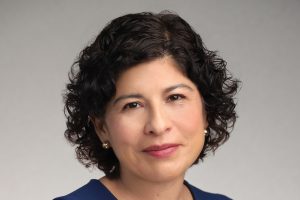
Adriana Herrera, CEO of Pierre Fabre Pharmaceuticals Inc, discusses Pierre Fabre’s dedicated expansion into the US market and the unique strategies guiding its next phase of growth. Drawing on more than two decades of leadership experience across global biopharma organizations, Herrera reflects on building a purpose-driven organization, establishing credibility beyond Pierre Fabre’s dermo-cosmetics offering, and leveraging innovative therapies to care for patients in oncology and rare disease.
Could you start by sharing a brief overview of the career journey that ultimately led you to Pierre Fabre?
I have been in the industry for more than 25 years, and over that time I have built a very diverse set of experiences, leading teams across both large organizations and smaller companies. When I look back, what has consistently guided my career choices is not just the roles themselves, but the purpose behind them. For me, every decision has been grounded in a very personal motivation: having a meaningful impact on patients’ lives. That purpose has always shaped how I approach my work.
What really attracted me to Pierre Fabre Pharmaceuticals Inc (PFP) was that same sense of purpose. As I got to know the organization, what stood out to me was how deeply its values are embedded in everything it does. We have a core belief that every time we care for a single person, we make the whole world better. Within the US organization that philosophy is something we have fully embraced. Patient centricity is often talked about in our industry, but at Pierre Fabre it serves as a North Star.
Having come from senior roles at other well-established organizations, what excited you most about joining Pierre Fabre at a moment when it was only beginning its pharmaceutical journey in the US?
It really felt like the right opportunity at the right time. As I mentioned earlier, what made this opportunity so compelling was who Pierre Fabre is and what it represents in terms of its values. That alignment was important to me. There was also a strong attraction to the asset Pierre Fabre was preparing to bring to the US, which made the opportunity feel both meaningful and concrete.
In my previous role at Kite Pharma, I joined very deliberately because of my interest in cell therapy. That experience was incredibly formative, and it gave me the chance to work on something truly transformative for patients. What appealed to me about this next step with PFP was the ability to take what I had learned and apply it in a new context to support both the development and eventual commercialization of a novel cell therapy in the US.
Ultimately, it was a combination of timing, the chance to step into a leadership role with real responsibility, and the fact that the opportunity aligned so closely with my values and prior experience.
As CEO of Pierre Fabre Pharmaceuticals Inc, you have been tasked with establishing the organization following the decision to separate the pharma business from dermo-cosmetics in the US. Why was it so important to distinguish the two businesses in the market?
From a US perspective, Pierre Fabre has historically not been very well known. When I joined, I often found myself explaining who we are and what we do, and what our broader ambitions are. Part of that complexity comes from the fact that the group has two distinct businesses: dermo-cosmetics and pharmaceuticals. Globally, those two businesses are relatively equally balanced with very strong roots on the dermo-cosmetics side.
As Pierre Fabre defined its new strategic plan, it identified China and the US as tier-one priority markets. There has already been an established pharma presence in China, whereas the US represents a newer yet key focus. That distinction matters because these are markets driven by innovation, and Pierre Fabre has a strong track record of innovation on the consumer and dermo-cosmetics side that it now wants to fully replicate within pharmaceuticals.
From my perspective, there is a significant level of focus and investment going into building an internal pipeline and transforming the pharma arm into one that is truly R&D-driven. When you talk about that kind of transformation, the US naturally becomes central to that strategy not only because it’s the largest pharmaceutical market, but because it has historically been a global driver of innovation.
There is also a talent dimension to this. The US offers access to some of the most experienced, resilient, and innovative talent profiles in the industry. Creating a clearly defined pharmaceutical organization allows us to attract that talent, build credibility in the market, and position PFP in a way that reflects both our scientific ambition and commitment to innovation.
Pierre Fabre has a long heritage in dermatology and this new pharmaceutical strategy increasingly centers on precision oncology and rare disease. How are these areas balanced within Pierre Fabre’s US operations?
In the US, the dermo-cosmetics business is managed separately from pharmaceuticals. While we share office space and certain services, the two businesses have distinct leadership because they operate under very different business models. In a market as complex and opportunity rich as the US, this decision was made to ensure that each business has dedicated leadership who can maximize opportunity.
Any prescription-based dermatology products sit squarely within the pharmaceutical organization. This allows us to maintain our dermatology expertise while building a portfolio that reflects our ambitions in highly specialized, innovation-driven therapeutic areas. It’s not about choosing one over the other, but rather ensuring that each area is positioned for long-term growth and impact.
What does Pierre Fabre Pharmaceutical’s Inc’s portfolio offering consist of today, and what future outlook can be expected?
In the US, we are still very much in the early stages of building our pharmaceutical footprint. Today, our portfolio includes one legacy product that is a pediatric treatment for hemangiomas which Pierre Fabre has been commercializing in the US for some time.
However, the primary focus going forward is a highly innovative allogeneic cell therapy developed by Atara Biotherapeutics. Over the past three years, Pierre Fabre has steadily deepened its involvement in this asset, first by acquiring European commercialization rights with the product launched nearly two years ago. In December 2023, Pierre Fabre then expanded the partnership to include worldwide rights, which also covers manufacturing, clinical development, and commercialization in the US.
That expansion was a key driver behind my decision to join PFP. Pierre Fabre was looking for someone with significant cell therapy experience who could help build the US organization from the ground up and position Pierre Fabre for future growth through additional business development opportunities.
From a portfolio perspective, our approach is very focused and deliberate. The immediate priority is execution, ensuring that we successfully advance and commercialize this cell therapy. At the same time, the broader organization is actively building its pipeline through internal R&D and in-licensing of early-stage assets with global rights. Many of these programs are centered on precision oncology, with particular focus on areas like melanoma and lung cancer.
At the same time, we are also engaged in external business development to continue strengthening the pipeline, both with earlier-stage programs and with more advanced assets that could support future commercial expansion in the US.
Regarding rare disease, EBVALLO, which received the International Prix Galien for Best Product for a Rare Disease, is now in the US registration process. What impact do you expect this ultra-rare therapy to have for US patients once approved?
When it comes to rare diseases, everything starts with unmet patient need, and that is very much the case for EBVALLO. This therapy is designed for a group of patients with extremely limited options. These patients have undergone a solid organ or stem cell transplant and then develop EBV+ post-transplant lymphoproliferative disease, a rapidly progressing lymphoma driven by the Epstein–Barr virus.
For patients who progress after first-line therapy, the outlook is particularly poor. Treatment options are extremely limited, and survival can be limited to a matter of months or even weeks. This is an area of very high unmet need with very complicated patient journeys. EBVALLO has the potential to become the first and only approved therapy for these patients after progression on standard first-line treatment.
From a regulatory standpoint, we are currently in active discussions with the FDA. The Prescription Drug User Fee Act (PDUFA) date is January 10, 2026, and our teams at PFP and our partners at Atara are fully focused on advancing the registration process toward that goal.
As an experienced commercial executive, what do you see as critical success factors as you set the stage for future commercial rollouts?
One of the most important success factors is the talent profile and the people you bring into the organization. It’s essential to have individuals who are highly experienced, but also agile. That combination is not always easy to find. You want people who have done this before, but who are not tied to doing it the same way again. That mindset is especially important as we think about future launches.
From a market access perspective, it’s no longer enough to focus solely on the clinical data or on how that data is communicated to physicians. Patient access requires a much broader lens. It means fully incorporating the patient perspective and ensuring that market access considerations are embedded early in the development lifecycle and not treated as an afterthought.
Today, any successful commercial strategy must be grounded in a strong market access strategy. The two cannot be separated. In the past, there may have been a perception that market access was less critical in areas such as rare disease, oncology compared to specialty medicines. We now clearly see that this is not the case.
How are you working to establish Pierre Fabre Pharmaceutical’s identity as a credible player beyond its dermo-cosmetics reputation?
What is really unique about PFP and the broader Pierre Fabre Group is its ownership structure. Pierre Fabre is privately owned by a public interest foundation based in Castres, which is highly unusual in our industry. That structure allows the organization to take a long-term view when it comes to strategy, portfolio development, and investment decisions.
This is something that resonates strongly as we engage with stakeholders in the US. There is a real curiosity among physicians and partners about how decisions are made within the foundation model and what that means in practice. We have even facilitated direct engagement between clinicians and the foundation itself which helps build trust. What consistently comes through is that our strategy is not driven by short-term commercial interests. They are value-led decisions that have been built over decades and are deeply embedded in how we work.
Equally important has been the way our purpose and values resonate internally. As we build the US organization, we are attracting people who want to align themselves with a company that truly leads with purpose. In a competitive US market, that has become an important differentiator and a key part of how we are establishing PFP as a credible and distinct pharmaceutical player.
To what extent do you hope that the US can be a source of scientific innovation and potential strategic collaborations for the greater organization of Pierre Fabre?
Partnership goes alongside purpose and patient centricity as one of our defining principles and is a core part of how Pierre Fabre operates. And when we think about the US healthcare ecosystem, partnership is especially critical. It’s an incredibly complex environment, and success here requires close collaboration across stakeholders. From development to access and commercialization, partnering is essential to ensuring that the strategies and programs we put in place are relevant and grounded in real-world needs.
The US itself is also a powerful engine for innovation. There is an exceptional depth of scientific talent and a long-standing legacy of discovery, both within academia and across the industry. That makes it a natural place for Pierre Fabre to look for scientific innovation and strategic collaboration opportunities. Now that we have established a foothold in the US, we are working closely with our headquarters teams to help identify opportunities across the ecosystem. This includes supporting development plans for in-house assets, as well as identifying external opportunities to strengthen and expand the pipeline. I see my role very much as a conduit between the US ecosystem and the broader Pierre Fabre organization, helping to connect innovation, talent, and partnerships back into the global strategy.
As you go about building Pierre Fabre Pharmaceuticals’ presence in the US, how are you ensuring that the business remains genuinely patient-centric?
From the start, it was important to me that patient centricity was built into how we set up the organization. One of my very first hires was my Head of Patient Affairs, and I intentionally brought all patient-related activities under that one role. In many companies, the patient perspective is spread across different functions. Patient support might sit under market access, clinical trial engagement under R&D, and patient communications under marketing. That often leads to a fragmented view, and it’s not always clear how the patient voice is being represented. For me, it was very important from a structural perspective that the patient voice needs to be present in every discussion.
We are a small team, but we have people who are deeply committed to this work. They partner closely with patient advocacy organizations and approach those relationships with a mindset of listening and learning. We do not go into these conversations thinking we know best but start by asking what matters most to patients and co-create from there. When I had the opportunity to build an organization from the ground up, the vision was always to make patient centricity foundational, and not something measured by one-off initiatives and ROIs. ,
How are you cultivating talent in the growing US organization and translating Pierre Fabre’s “We Care Movement” into the daily reality of operations?
I was very pleased to see the We Care movement introduced by the headquarters team, because the care component is what I see as a real differentiator for Pierre Fabre. That idea that every time we care for a single person, we make the whole world better has been part of Pierre Fabre for a long time. For me, the We Care movement feels like a natural evolution of that approach, and as I have gotten to know the organization more deeply, it has really resonated with how we are building PFP here in the US.
When you look at Pierre Fabre’s ownership structure, its history, and its values, there is a genuine sense that the company cares about its employees, its partners, and the people it serves. And that attitude is reflected in how decisions are made. In our interactions with headquarters, whether we are discussing the realities of the US market or the people we are bringing into the organization, there is a real interest in understanding how things are being done and a desire to support the teams on the ground. That sense of care is embedded in how the organization operates, and that makes it easy to lean into as we build the new business in the US.
How would you describe your own leadership philosophy, and how do you hope to bring your unique perspective to Pierre Fabre Pharmaceuticals during this transformative moment?
I hope my team can see me as being very purpose driven. Being able to work in parts of this industry where there is a real opportunity to make a meaningful impact for patients is extremely important to me. At the same time, I see myself as a combination of a people leader and a business leader. I genuinely believe that the best outcomes for both patients and the business come through people. That means hiring the right individuals, empowering them, supporting them, and giving them the space to do their best work. If you get that part right, a lot of the rest follows.
When I think about what I would ultimately want my legacy to be in building PFP in the US, it’s about creating a place where people can look back and say this was a great company to be part of. I would want PFP to be a place where people can do impactful work, grow professionally, and genuinely enjoy the experience.
When Eric Ducournau attended the opening of the new Secaucus office in June, he emphasized the US as one of Pierre Fabre’s priority geographies. From your perspective, what does success look like over the next several years?
Success really starts with the portfolio. In the near term, that means a very strong focus on execution as we approach the PDUFA for EBVALLO and delivering a successful launch and commercialization in the US. At the same time, we are thinking beyond a single asset. We are very focused on continuing to expand the portfolio over the next few years, both by advancing the early-stage pipeline and through opportunities that can strengthen the business longer term. Over the next three years or so, that balance between strong execution today and thoughtful portfolio building for the future is where a lot of our attention is going.
From an organizational perspective, PFP is a relatively young company in the US. We are continuing to establish how we work, the culture we want to build, and the talent we need to support our ambitions. Making sure we invest the right time and energy into those foundations is just as important because that is ultimately what will enable long-term success.
What final message would you like to share with the healthcare and life sciences community about Pierre Fabre Pharmaceuticals Inc as a new partner in the ecosystem?
The main point I would share is that Pierre Fabre Pharmaceuticals Inc is making a very strong, long-term commitment to the US market. While we may be new to the ecosystem here, we are building the organization with experienced people who are deeply motivated to contribute in a meaningful way.
At the same time, our focus is very clearly on bringing truly innovative therapies to US patients in areas of high unmet need. EBVALLO is a good example of that ambition as it addresses a life-threatening condition in post-transplant patients where options are extremely limited, and we are excited to prove ourselves there. We see ourselves as a committed partner in the healthcare ecosystem with a central purpose to make the world a better place through each patient that we care for.