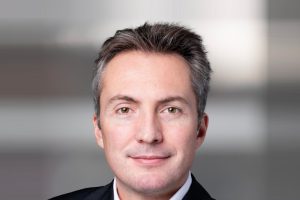
Alberto Santagostino, CEO of AGC Biologics, discusses how the company is positioning itself in an increasingly regionalized CDMO market, the strategic value of its global manufacturing footprint, and the role of technical expertise and long-term partnerships in supporting advanced biologics and cell and gene therapy programs. Santagostino goes on to share his perspective on what clients expect from the CDMO of the future and why expertise, reliability, and simplicity are becoming the most important differentiators in the sector.
You have surpassed one year into your role as CEO. Looking back, what were your first impressions of AGC Biologics when you arrived to head up the company?
What struck me almost immediately after joining AGC Biologics was the quality of the frontline talent. The capabilities of people on the shop floor, the technical teams, and the commercial teams who are doing the work every day are top notch. That was not something I necessarily expected at first, but when I was able to observe the substance of the organization firsthand, I found that the expertise was on par with, or even stronger than, what you find at some of the biggest names in this sector.
I can say this with confidence because before this role, I was not only an executive at Lonza, but also a longtime consultant. Over the course of my career, I have visited more than 35 manufacturing sites and conducted countless Gemba walks and performance transformations. That exposure gives you a very clear benchmark for what strong operational talent really looks like.
What explains this is how AGC Biologics was built. The company is essentially a collection of highly specialized CDMOs brought together over time. For example, Biomeva in Germany was widely regarded as one of the best microbial CDMOs in the world. Our Milan site, formerly MolMed, has supported 12 commercial cell and gene product approvals (and growing by the day), which is exceptional by any standard. That site also has a remarkable history as being the first in the world to successfully treat a patient with a lentiviral therapy in the late 1990s. Furthermore, CMC Biologics, which also eventually became part of AGC, was one of the pioneers of single-use manufacturing technologies back in the early 2000s.
When you step back, what you really see is not a single organization trying to compete on scale alone, but a string of pearls made up of highly effective, niche leaders. Together those capabilities help ensure our customers’ products are developed with the highest quality and safety measures to effectively reach the marketplace and patients.
What is AGC Biologics’ CDMO market footprint and how does the US fit within the company’s global operations?
If we start with the market itself, the CDMO landscape is clearly becoming more regional. Historically, both drug substance and drug product manufacturing were global businesses with very little reason to think regionally. Raw materials could be sourced from anywhere in the world, and decisions were largely driven by quality, reliability, cost, and efficiency rather than geography.
However, that has changed quite significantly over the past few years with two forces primarily driving this shift. The first is supply chain reliability shaped directly by the disruptions we all experienced during COVID. The second is policy and geopolitical considerations, particularly those emerging in the US which have made cross-border and cross-regional supply chains more complex and, in some cases, less reliable.
As a result, the market is now organizing itself around a small number of macro-regions. I would describe four in particular. North America, led by the US. Europe, with its closely aligned neighboring countries. China, which increasingly functions as a region in itself. And then the Asia-Pacific region more broadly, which you can further subdivide into areas like Japan, Korea, Taiwan, and Australia, and separately India and Southeast Asia. At a high level, these four regions capture the direction of consolidation.
What works very well for AGC Biologics is that we already have a meaningful presence across all of these regions. If you look at microbial manufacturing, we have capacity in Seattle, Copenhagen, Heidelberg, and Chiba in Japan. In mammalian manufacturing, we operate in Seattle, Copenhagen, and soon, Yokohama. For cell and gene therapy (CGT), we have capabilities in Milan and Yokohama. This global but regionally distributed footprint means that even before my time, the company was well positioned to support regionalized supply chains.
This is a very different reality from the old business model where most production was concentrated in a single geography like South Korea, China, Switzerland, or Singapore. Having mainstream capacity located in the major regions is becoming essential to how customers are building their strategy, and we are seeing clear confirmation of this from market demands. For example, our Seattle site has seen incoming customer inquiries roughly double over the past year. More customers are asking for dual-region supply strategies, and we are increasingly able to offer manufacturing across two regions to support resilience and continuity. That aligns very well with what I see as the new normal, where pharmaceutical production is no longer purely global, but increasingly regional.
Within that context, our US footprint is absolutely essential and the Seattle site is a cornerstone of our network. It currently supports five commercial products, has recently passed a routine FDA inspection, and plays a central role in our strategy to be present and reliable in every major region of the world.
Speaking specifically about the US, the current administration is increasingly calling for the onshoring of biopharma manufacturing activities. As we see the industry players themselves also committing to expanding their own manufacturing capabilities in the country, do you expect there to be any major shifts in CDMO demand or client expectations?
I think we will really need to look five years ahead to understand how all of these announced capacity expansions ultimately play out. For now, what we clearly see is an increase in demand for US-based manufacturing capacity. Both CDMOs like AGC with existing infrastructure and companies that are building their own facilities are responding to a stronger push toward onshoring production. At the same time, we are also observing the mirror image of that trend. For non-US demand, there is often a clear expectation that supply should also be non-US based. So rather than a simple shift in one direction, this is already in line with the broader regionalization trend.
If you take a step back and look at the numbers, the tensions that led to this decision become obvious. The US represents roughly 50 percent of global demand, but only about 25 percent of installed manufacturing capacity. That creates pressure to repatriate capacity, and that pressure translates into competition for available CDMO space and new capacity build-out. Looking at other regions, Europe is more balanced, with approximately 25 to 30 percent of both demand and capacity. Asia is similarly balanced, although with some important nuances. For example, Korea has a significant concentration of capacity while China has installed large amounts of capacity. These markets might be feeling some competitive pressure as supply chains are redirected toward the US.
While it is still too early to predict what the new steady state will look like, we can say with confidence that demand for US manufacturing capacity is increasing significantly.
What sorts of clients does AGC Biologics serve today and can you walk through the company’s full scope of service offering?
AGC Biologics is an expert CDMO, and our track record really speaks for itself. Today, we have supported more than 250 clients, we have worked on over 400 projects, and we currently have close to 30 commercial products in operation. If you compare how many commercial products we support and how many projects we have executed, we actually surpass other CDMOs with larger revenue. While some larger players focus on a smaller number of very large, stainless-steel-based contracts, our expertise is much broader.
We have also successfully passed more than 90 regulatory inspections across agencies including the FDA, EMA, PMDA, and others. That history makes it very clear that we are a trusted partner for regulators and a reliable organization when it comes to taking products from early development all the way through to commercial manufacturing.
If we look at specific modalities, in CGT we are probably the market leader. We currently support 12 commercial CGT products, while the next closest CDMO only has four or five. In microbial manufacturing, we are also extremely strong. We have seven commercial microbial products across four sites and have worked on more than 100 microbial projects overall. In plasmid manufacturing, we are again very well established. During COVID, we supported one of the two mRNA vaccines by supplying plasmid under extreme time pressure and complexity. That experience speaks to both our technical capability and our execution.
In mammalian manufacturing, we are as strong as any other leading CDMO player in the market. Where we really differentiate is in complexity. We were among the first to work with bispecific and trispecific antibodies. Additionally, we routinely manufacture highly potent and cytotoxic molecules, such as T-cell activators, as well as very delicate proteins like coagulation factors. We also have strong expertise in perfusion processes. For a standard immunoglobulin G (IgG) there might not be much of a difference across providers, but when the molecule or the process becomes complex, we believe we have a clear advantage.
One final point that is not always widely known is our installed capacity. Outside of China, AGC has the largest installed single-use mammalian bioreactor capacity in the world. And that does not include our Yokohama facility, where construction is running about eight weeks ahead of schedule and meant to come online at the end of 2026.
With biopharma and manufacturing technologies quickly evolving, how do you plan to ensure that AGC Biologics stays ahead of the curve while still meeting clients where they are?
I think the first thing is to separate hype from real value. Take AI for example. There is clearly a lot of potential there, but today it only creates value when it is applied in very specific areas. Otherwise, it risks becoming an expensive investment with limited return. For us, we are using AI where it makes sense, such as in deviation management, deviation analysis, trending, and drafting. We are not applying it broadly across everything, but very deliberately where it can actually improve performance and decision-making.
At the same time, we are on a broader digitalization journey. Different parts of the business are at different stages, but the direction is very clear. Our goal is to become paperless over time, and we are actively moving in that direction. We believe that all data and information should be fully digital and exchanged with our customers in a way that is much simpler, secure, and more effective than what exists today.
When it comes to manufacturing technology, this is where we stay grounded in what truly matters. Technologies like process analytical technology, continuous manufacturing, and perfusion are all areas where we have capabilities and can offer useful alternatives to our clients. But where we consistently stand out is when molecules are genuinely complex. This is part of our legacy, and we have always worked with difficult molecules rather than standard, cookie-cutter products. In those situations, our legacy of craftsmanship and technical knowledge really make a difference. For example, perfusion is one area in particular where we stand out based on our expertise.
Reflecting on the developments of sector that you have witnessed throughout your career, what does the CDMO of the future look like to you?
The best CDMO of the future is actually quite boring and uneventful, and I mean that in a positive way. It is about reliability. Nothing dramatic, nothing unexpected. It should just work.
At its core, a CDMO has to be a technical expert that is extremely competent, often even more competent than the client. It should also be easy to work with, straightforward, and collaborative to the point where it becomes almost indistinguishable from an internal technical operations organization. And, in some cases, even more efficient.
This makes sense because a CDMO can build scale across products from many different companies. That creates economies of learning and scale that individual companies simply cannot achieve. If a company tries to internalize everything, it immediately faces challenges around underutilization, capacity constraints, and fixed costs. Realistically, if you are a biopharma company today, it is almost impossible to build deep CMC expertise across all modalities like biologics, small molecules, ADCs, GCT, and mRNA at a truly proficient level. The investment required becomes unattainable for all but a handful of very large organizations.
In that context, partnering with a CDMO is a logical solution. We offer access to capability without carrying all the capital risk. We provide flexibility when capacity needs to fluctuate. We allow our clients to move faster and focus their resources where it really matters. Ultimately, CDMOs are about de-risking, accessing expertise, managing capacity volatility, and speed.
In April, AGC Biologics announced a dedicated cell and gene therapy business unit managed from a Milan-based center of excellence. What was the strategic logic behind placing this hub in Europe?
The simple answer is that AGC acquired a top player that happened to be based in Europe. It is not that there is something inherently special about Europe as a geography, but what is special is the site and its team.
This organization traces its roots back more than 30 years and was one of the first two places in the world to work with lentiviral vectors. The work originated from the San Raffaele healthcare ecosystem in Milan in the 1990s and the first patient successfully treated with this approach was treated there. Over time, that academic and clinical legacy evolved into MolMed, then into a CDMO, and ultimately into AGC’s own center of excellence. What we acquired was not a location, but decades of experience and know-how in CGT. The Milan hub simply reflects where that expertise already existed.
That said, Milan also has a strong university and scientific ecosystem that consistently produces high-quality talent, and much of that talent tends to stay in the region.
How does this cell and gene capability complement your broader global strategy given the evolving importance of regionality?
In CGT, capability itself is such a scarce resource that geography becomes much less important. For example, if you look at large-scale mammalian manufacturing, the main barrier is capital. You are talking about hundreds of millions in capital expenditure to build a facility. CGT, however, is very different. You can build a CGT facility with between USD 15 and 30 million. The building is not the challenge, but the expertise and the talent needed to run it.
We have seen enormous investment flow into CGT over the years, followed by almost the same number of withdrawals. That is not because there is too much capacity, but because there is not enough qualified capacity. The industry underestimated how difficult it is to operate these facilities at a consistently high level. Because of that scarcity, demand in CGT tends to follow expertise rather than geography. In many cases, it almost does not matter where you are located as customers will go where they can access the right know-how.
AGC Biologics positions itself as being “your friendly CDMO expert.” What does this mean in practical terms for your partners and customers?
This is something I personally brought into the company, and I am a strong believer in it. In the CDMO space, if you are not an expert, you really have no reason to exist. There are more than 90 CDMOs out there, but fewer than ten can truly support multiple modalities from early clinical development through to commercial manufacturing and say it with a straight face the way AGC can. We have passed more than 90 regulatory inspections, supported around 30 commercial products, and worked on over 400 projects. To put that into perspective, even the largest CDMO in the world has roughly 100 commercial products and around 1,200 projects in total. So yes, being an expert is essential, but it is also table stakes.
The second part is friendly, and that is where culture really matters. For many years, especially leading up to and during COVID, this was a seller’s market. Capacity was scarce, and some CDMOs became selective and rigid. Their terms were dictated, pricing was pushed, and somewhere along the way, the idea of supporting the customer got lost. Being friendly does not mean being a servant. It means being fair, available, and collaborative. Of course, we need to make a profit, but we do not believe in squeezing customers simply because the market allows it. It is about finding an equitable balance in the relationship rather than extracting maximum short-term value.
Our ownership structure helps a lot here. We are backed by a large Japanese industrial group with strong financial shoulders and a very long-term perspective. This is a company that is deeply experienced in B2B relationships, where partnerships last decades and success comes from co-design, shared optimization, and mutual reliability rather than transactional wins. That mindset carries through into how we work with customers. We are not competing with them, and we avoid conflicts of interest. With our manufacturing footprint in stable regions, and our geopolitical exposure being low, all of that removes friction and builds trust. When you put it all together, there was no better word than friendly.
Looking forward, what are your top strategic priorities for AGC Biologics in the coming years?
AGC is gaining strong traction for the simple reason that we are uncomplicated to work with, and we offer solid technology at a fair price. At the same time, customers get reliability, strong capabilities, and a business relationship that feels balanced. As a result, we are seeing growth across all the modalities we operate in.
In CGT we are already a leader, and our priority is to consolidate and extend that position. That means increasing the number of commercial programs and continuing to support the market as it matures. One of our ambitions in this space is to help overcome the cost barrier that is slowing broader adoption. For example, we can now offer lentiviral vectors at a cost of around USD 1,000 per patient, compared with the current industry range of USD 20,000 to 50,000. Innovations like this are critical if CGT are going to scale in a meaningful way.
In microbial manufacturing, we currently support seven commercial products and may well have one of the largest commercial footprints in this modality. It is an area where we have solid expertise, and we intend to continue growing and reinforcing that position. Microbial is a modality we strongly believe in.
In mammalian manufacturing, we are deploying what I believe is among the best single-use technologies in the world. Our Copenhagen site already sets a very high standard for 2,000-liter disposable systems, and the Yokohama facility coming online in 2026 will be at just as good, if not better. This will place us at the leading edge of installed mammalian technology. We also see strong potential in larger single-use formats, including 5,000-liter systems, which can increasingly compete with traditional 20,000-liter stainless steel batches on cost and flexibility.
When you combine all of this together, we will continue to expand in line with market growth, and stay focused on being a reliable, expert, and friendly partner in all the modalities we serve.
What final message would you like to share with your current partners and potential future clients?
Being your friendly CDMO expert is not just a tagline, it is a reflection of who we are. We are shifting how business is done in the sector. If we can help move the market toward a healthier, more balanced B2B model, that would benefit everyone involved. It would mean faster, better, and ultimately more affordable solutions for patients. It would also support sustainable growth for CDMOs and mean more effective outsourcing and fewer headaches for our customers.
If AGC Biologics can be the catalyst for that kind of change, I would consider that a real success. What I can promise is that I will continue to push this agenda forward with absolute determination.