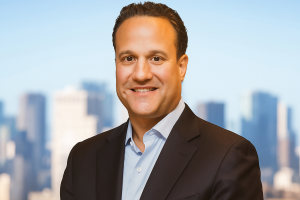
Neurvati Neurosciences is carving a distinctive path in one of medicine’s most high-risk arenas: neuroscience. In this interview, President and CEO Dr Bruce Leuchter explains how a private equity-inspired model, backed by Blackstone Life Sciences, is enabling the company to advance late-stage assets, forge global partnerships, and build a values-driven culture with long-term vision.
How does Neurvati’s model operate, and why is it particularly suited to neuroscience, a therapeutic area often regarded as high risk?
Neuroscience has always demanded significant capital, long development timelines, and a willingness to persist through uncertainty. For many years, the field suffered from a lack of investment, particularly in the 2000s and early 2010s, though in the past decade momentum has returned, even if punctuated by high-profile late-stage failures. Against this backdrop, we believed there was an opportunity to create a model designed specifically to address the unique challenges of advancing neuroscience programmes.
Our approach is to identify mid- to late-stage product candidates, typically Phase 2 or 3, from large- and mid-cap biopharma companies. These programmes require substantial resources to complete global trials but are often externalised for reasons ranging from portfolio reshaping to budget constraints. This distinguishes us from traditional venture-backed entrepreneurs, who generally focus on preclinical or early-stage assets and must repeatedly syndicate financing. With Blackstone Life Sciences as our sponsor, we are able to eliminate capital markets risk and move forward with both committed funding and operational readiness.
This partnership gives us two defining advantages. First, we can guarantee the financial resources needed to progress late-stage assets. Second, we bring a seasoned, cross-functional team that has been executing together for several years, creating synergies and a depth of expertise that allows us to demonstrate to licensors that we are fully prepared to deliver.
Equally important is our affiliate company structure, which provides flexibility. GRIN Therapeutics, our first affiliate, is advancing our investigational therapy radiprodil for GRIN-related neurodevelopmental disorder. Once the programme matures, we have several options: we may commercialise independently, collaborate with strategic partners as we have done with Angelini Pharma outside North America, or enable other commercial-stage neuroscience companies to expand their portfolios with de-risked late-stage products. In each scenario, our overarching purpose is to progress viable technologies and bring new therapies to patients.
How do you approach the question of de-risking molecules, given the well-documented late-stage failures in neuroscience?
De-risking is never a uniform process; each candidate must be evaluated on its own merits. That said, certain principles guide our thinking, and biomarkers sit at the centre of this. In recent years, as enthusiasm for neuroscience has grown, so too has the productivity of enabling technologies. Functional imaging, electrophysiological measures such as EEG and event-related potentials, quantitative EEG supported by machine learning, and the development of plasma and cerebrospinal fluid biomarkers have all enhanced our ability to characterise patients more precisely. Human genetics is a particularly powerful tool for identifying genetically predisposed populations. Enriching studies with those patients greatly increases the probability of observing a meaningful effect size.
This was our approach with GRIN Therapeutics. Radiprodil was already well understood, with extensive safety and efficacy data from previous programmes, a defined pharmacokinetic profile, and a clear dosing regimen. That gave us confidence in picking up the asset. In patients with GRIN mutations, where gain-of-function leads to hyperactive NMDA receptors, we believed targeting the GluN2B (NR2B) subunit with a negative allosteric modulator could directly address the underlying biology of the disease rather than simply managing seizures. That conviction was validated in our Phase 1b/2a Honeycomb study, where the addition of radiprodil to standard anti-seizure regimens delivered a median 86 percent reduction in seizure frequency, despite patients already being treated with an average of three other medicines.
For us, de-risking is therefore a multidimensional exercise. It involves assessing safety, pharmacokinetics, and pharmacodynamics, then integrating those findings with human genetics and biomarker evidence to build conviction. When these elements come together, we gain confidence that a molecule can have a meaningful clinical impact.
In what ways has your clinical and professional background shaped your perspective on opportunities in neuroscience?
My training in neuropsychopharmacology, coupled with experience in patient care, academia, investment banking, and now as an operator, has shaped the way I view assets. The brain is what we often call “high-rent space”; it’s behind everything we think, feel, and do. When a molecule demonstrates effect and is cooperative in terms of safety and tolerability, it often has potential far beyond the first indication pursued.
This pattern is well-established in neuroscience. A single programme may initially target one condition, but its pharmacology can later prove relevant to schizophrenia, mood disorders, bipolar disorder, pain, sleep-wake regulation, or even neuroinflammatory diseases. The recent acquisition of Karuna by Bristol Myers Squibb illustrates this point well. The initial indication was compelling, but the broader promise of muscarinic biology across neuropsychiatric disorders was a decisive factor. The long-term value of neuroscience programmes lies not only in the success of the first indication, but in the capacity to expand into multiple areas of high unmet need.
What is the significance of your partnership with Angelini for GRIN Therapeutics, and how do you envision Neurvati’s long-term strategic pathway?
From the beginning, our ambition was to design and execute a proof-of-concept study that could provide the kind of data to inspire conviction among all stakeholders, investors, strategic partners, and ultimately the broader community. Although the initial open-label trial involved only 15 patients, the findings were striking and clearly demonstrated that the drug was biologically active and delivering meaningful clinical benefit. This allowed us to raise additional capital and begin engaging with third parties. While investors recognised the potential, the prevailing macro environment created barriers that had less to do with our molecule or our organisation and more to do with market sentiment at the time. By contrast, strategic partners responded with genuine enthusiasm, which is how we came to work with Angelini.
Angelini had already shown a strong commitment to neuroscience through multiple transactions across psychiatry, neurology, and epilepsy, but just as importantly, they shared our conviction that the greatest promise lies in targeting the underlying biology of developmental epileptic encephalopathies rather than focusing exclusively on seizure control. In GRIN-NDD, gain-of-function mutations lead to hyperactivity at the NMDA receptor. By downregulating this overactivity with radiprodil, we aim not only to reduce seizures but also to impact the broader disease process. Angelini understood and embraced this differentiated approach, and that alignment was critical. For us, the partnership validated the strength of radiprodil even as an investigational therapy, the work of GRIN Therapeutics, and the broader Neurvati model. It also gave us access to Angelini’s international footprint, extending our reach well beyond North America. For a New York-based company running global studies, that global perspective is invaluable, and our investors, board, and management all saw the collaboration as a strong endorsement.
Looking to the future, we view partnerships as an important mechanism for advancing our programmes, but not the only one. Every biotech must remain open to all possibilities whether it be public market exits, licensing collaborations, and M&A. As we all know, markets and sentiment can shift rapidly, and maintaining optionality is essential. Thanks to our sponsorship from Blackstone Life Sciences, we are not forced into short-term financing cycles and can instead take a longer-term perspective. This enables us to create substantial value around our programmes and then determine the optimal path forward, whether that means positioning an affiliate for acquisition following late-stage success, or ultimately building Neurvati into a commercial-stage entity in its own right. With Blackstone’s resources, expertise, and creativity supporting us, we can think expansively about the future, always guided by what is best for the science, the organisation, and above all, the patients we serve.
From a leadership perspective, how are you shaping Neurvati’s culture and harnessing talent to strengthen the organisation?
Culture at Neurvati is rooted both in our internal values and in the resources we access through Blackstone Life Sciences. Blackstone is not simply a capital provider; it has built an organisation able to draw upon the experience of some of the most accomplished leaders in global biopharma, from scientific pioneers and clinical developers to former C-suite executives of major multinationals. This breadth of expertise is something we consult frequently, whether on preclinical, regulatory, or commercial questions, and it represents a genuine differentiator.
Within Neurvati itself, culture is defined by five values: honour, trust, partnership, vision, and passion. Honour comes first, because acting with integrity towards colleagues, stakeholders, counterparties, and regulators establishes the foundation for everything else. Trust flows from honour and is essential for effective collaboration. Partnership reflects our commitment to a “no lone wolf” policy. No matter how talented an individual may be, we believe that true progress comes from teamwork guided by trust and honour. Vision encourages ambition, creativity, and long-term thinking, while also remaining grounded in near-term execution. Finally, passion, the drive and intensity required to succeed in this field is indispensable, but it must always be channelled through the other four values to remain constructive. When all five are aligned, the organisation operates at its best.
These principles create an environment where people feel energised, motivated, and part of something larger than themselves. They have also helped us attract top-tier talent, drawn not only by our focus on GRIN Therapeutics but also by the broader opportunities our model provides. Each affiliate company has its own governance, capital, and incentive structure, enabling value attribution on a programme-by-programme basis and avoiding the concentration of risk seen in traditional biotech models where one lead asset dominates. Our structure instead allows for diversification, flexibility, and optionality, while ensuring that people are motivated by building discrete vehicles that each have clear purpose and potential.
Looking forward, I envision Neurvati becoming a genuine port of call for neuroscience companies around the world that are developing promising therapeutics and seeking alternative pathways. With best-in-class capabilities, financial sponsorship, and a values-driven culture, we aim to be the partner of choice, attracting both talent and collaborators who share our mission of sustaining success in neuroscience. In such a model, no one draws the short straw – patients, partners, and our teams all benefit.
What is your vision for Neurvati over the next two to three years, and what milestones are you prioritising?
At the highest level, our constant priority is to continue building a best-in-class team and scaling the organisation in the right way. In the immediate term, however, our energy is devoted to GRIN Therapeutics. Entering a Phase 3 programme is a milestone few companies reach, and we are preparing to do so in a disease with no approved therapies, affecting a highly morbid patient population with profound unmet need. Delivering on this commitment will demand cross-functional effort across every part of Neurvati, and we are fully committed to getting it right.
Our work with GRIN Therapeutics also extends beyond the lead indication for GRIN-related neurodevelopmental disorder. In an ongoing Phase 1b/2a basket study, we are exploring radiprodil’s targeted therapeutic potential in tuberous sclerosis complex (TSC) and focal cortical dysplasia type II (FCD II), both driven in part by overexpression of GluN2B-containing NMDA receptors. These studies will unfold over the next several years, reflecting our consistent precision approach of addressing the underlying disease biology. At the same time, we are looking ahead to what comes next, with plans to establish additional affiliate companies, potentially more than one, as momentum builds. Success with GRIN Therapeutics will naturally set the stage for additional affiliates down the line.
For GRIN Therapeutics specifically, success means delivering a transformational therapy to patients, families, and caregivers. That is the organising principle. From there, the market will help determine the optimal path for the asset. When a programme shows compelling clinical benefit, strategic interest often follows, whether in the form of partnership or acquisition. While we cannot dictate market sentiment, we can control our readiness to respond. For us, that means remaining critically minded, strategic, and adaptable so that whatever direction the market takes, we are prepared to do what is best for the asset, the organisation, and most importantly for patients.
Do you have a final message for the global life science community, your stakeholders, or potential partners?
Committing to neuroscience is critically important for our world, no matter the seat you occupy. For clinician-scientists, it is about advancing new technologies that can give patients the hope that their conditions may one day have effective treatments. For those leading clinical trials, it is essential to have options to study so that tangible outcomes can be delivered to patients, families, and caregivers. For investors, neuroscience represents large markets with significant economic and financial upside if capital is directed towards innovation. And for commercial-stage companies already dedicated to this field, purpose-driven in their pursuit of patient impact, it highlights the need for more tools, more assets, and more opportunities to strengthen their portfolios.
Some of the most pressing global health challenges involve the brain and the nervous system. Yet compared with areas such as oncology or immunology, progress in neuroscience has historically been slower, with fewer steep changes in how these diseases are managed. Our mission is to accelerate innovation, development, and delivery so that the system works more effectively and benefits every constituency. The essential point is that when novel brain therapeutics succeed, no one loses, patients, caregivers, clinicians, investors, and society as a whole all stand to gain.