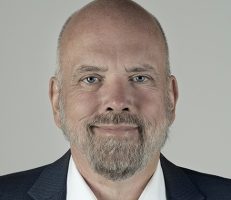
Hans Schambye brings decades of experience across academia, biotech start-ups, and industry leadership. Now CEO of Galecto – which develops small molecules for the treatment of cancer and severe liver disease – and chairman of DANISH BIO, he has led clinical development, financing, and partnerships in both Europe and the US, reflecting a career at the intersection of science and strategy in a complex global biotech landscape. Here he casts his eye over the progress that his own firm has made and assesses the prospects for biotechs in Denmark and across Europe.
Could you begin by providing an overview of your professional journey, particularly your path to Galecto and what initially attracted you to this venture?
My academic foundation encompasses both an MD and PhD, complemented by postdoctoral research at Stanford University. However, it became evident that traditional academic research, whilst intellectually stimulating, was not aligned with my professional aspirations. I am fundamentally drawn to applied research and the opportunity to witness tangible outcomes from scientific endeavours. It is exciting to engage in the collaborative spirit that characterises translational research environments.
Following my return to Denmark, I joined Novo Nordisk for eighteen months before being invited in 1999 to co-found a biotechnology venture. Since then, I have operated within the biotechnology ecosystem across various leadership capacities, initially focusing on research leadership before advancing to chief executive positions by 2005.
The Galecto opportunity emerged through a unique circumstance. Novo Holdings had established Novo Seeds, their investment arm targeting Scandinavian opportunities. Despite having a Swedish chairman, they had yet to execute any Swedish investments. They engaged me to identify promising research groups with potential pharmaceutical applications.
We conducted a systematic literature review using targeted keywords to identify twenty active research groups. Only two responded to our outreach, one of which included the professors who would later become central to Galecto’s foundation. These researchers had discovered a novel target and developed inhibitors for Galectin-3, presenting compelling scientific opportunities.
The timing proved challenging as 2008 represented one of the most difficult financing environments in recent memory, comparable to today’s market conditions but with significantly fewer active participants. It required two years to establish a viable financial structure and assemble an investor syndicate. During this period, I operated essentially as sweat equity, subsequently committing 50 percent of my time for eighteen months before securing sufficient funding to build the organisation properly.
How did you navigate the transition from academic foundation to clinical-stage biotechnology company?
We systematically built the company from its academic foundations, recruiting talent and establishing operational infrastructure. A pivotal moment came through our option agreement with Bristol-Myers Squibb (BMS), who funded our initial two clinical trials in exchange for potential acquisition rights.
Despite generating promising data from these trials, BMS ultimately declined to proceed. This decision reflected a common industry phenomenon in which the original decision-makers had transitioned to other positions, options had expired, and institutional memory had been lost. It represents a classic example of how strategic priorities can shift within large pharmaceutical organisations.
The project reverted to us, necessitating fresh fundraising efforts. With BMS having publicly declined to buy us, it makes the process particularly challenging. After eighteen months of intensive effort, we successfully assembled a syndicate of European and American investors, raising USD 83 million to advance our programme into Phase 2B development.
The 2020 IPO window provided unprecedented opportunities for biotechnology offerings. We capitalised on this environment, raising USD 160 million through our initial public offering and prior cross-over round, enabling advancement of both our lead programme and complementary pipeline assets.
Can you elaborate on the subsequent challenges and strategic pivot?
Prior to the IPO, we acquired a US-based company with complementary pipeline assets. However, we were significantly impacted by the biotech correction of 2020-2021, which resulted in substantial valuation declines. Despite producing positive clinical data from two trials, each positive announcement paradoxically resulted in approximately 20 percent share price decreases. This is of course one of the most frustrating experiences imaginable for management and investors alike.
The market dynamics in 2022 were particularly brutal. Simply maintaining market awareness of your existence resulted in selling pressure. Unfortunately, our lead programme failed in 2023 with negative data from a pulmonary fibrosis trial.
In such circumstances, standard protocol requires comprehensive personnel evaluation followed by strategic review. Our board, following our review of strategic alternatives, concluded that the best path forward involved acquiring an exciting preclinical programme and maintaining company viability. Our current funding extends only until early 2026. As such, we are clearly operating within a defined timeframe and must take decisive action.
What can you tell us about your current pipeline, particularly the Bridge Medicines’ (BRM) programme and its significance for Galecto’s strategic repositioning?
The lead compound from the BRM project, renamed GB3226, originated from Rockefeller Institute in New York, backed by renowned scientific leadership. It presents a compelling profile by simultaneously targeting two complementary pathways in AML cells. Our data suggests reduced resistance likelihood due to this dual-target approach, and we have observed enhanced preclinical potency compared to existing monotherapies.
This strategic rationale made the acquisition compelling as a foundation for rebuilding our narrative. Our pipeline also retains legacy Galectin programmes with positive clinical data, though our primary focus is fundraising to advance the BRM programme. However, there remains potential for revival when market conditions improve.
Our current focus centres on GB3226, our lead asset targeting acute myeloid leukaemia.
Could you explain the innovative aspects of your complementary targeting approach?
Our strategy encompasses two distinct targets. One represents an established, validated target with existing approved therapeutics, whilst the other belongs to an emerging drug class—Menin inhibitors. We believe this combination provides significant advantages when engaging with stakeholders, as we operate within validated territory with high efficacy expectations whilst simultaneously accessing the enhanced potency benefits of dual targeting.
This approach proves particularly compelling in AML, where resistance represents the primary clinical challenge. 80 percent of AML patients ultimately exhaust available treatment options, creating substantial unmet medical need and significant commercial opportunity.
Regarding financing strategies, how has the current investment climate affected your approach, and are you pursuing Big Pharma partnerships?
The investment climate has remained persistently negative for three consecutive years. This is an unusual duration representing the longest downturn since the 1980s specifically within biotechnology sectors. This year has witnessed only seven PIPEs raising approximately one billion dollars total, compared to 81 PIPE transactions in the previous year, which was itself considered a suboptimal year.
This hesitation among public investors naturally cascades into private markets, where we observe reduced numbers of active investors and significant fund size contractions. I anticipate substantial industry consolidation over the coming years due to insufficient risk capital availability. These challenges prove even more pronounced in Europe compared to the US.
You have mentioned the competitive dynamics between European and American markets. Could you elaborate on these differences?
The capital flight from Europe to America has been substantial. Danish pension funds, for example, have allocated approximately 50 percent of their assets to American investments, effectively exporting our risk capital. This creates an obvious competitive disadvantage for European ventures.
Interestingly, whilst everyone discusses regulatory frameworks and business conditions, the primary American advantage is simply capital access. Delaware corporate law, considered optimal in America, appears archaic compared to European corporate structures. Current market conditions would logically support public company consolidation to combine pipelines and optimise capital allocation, yet this rarely occurs due to regulatory complexities requiring shareholder approvals and extended transaction timelines.
America does not represent a more efficient business environment; it simply provides superior financing access.
What drives this capital allocation preference towards American markets?
I believe American investors demonstrate greater risk tolerance and maintain stronger conviction that adequate capital combined with competent teams can overcome technical challenges. European markets exhibit substantially more hesitation across all jurisdictions.
Cultural attitudes towards failure differ dramatically. American markets view business failures as valuable experience rather than catastrophic events. Statistical evidence supports the proposition that previously unsuccessful entrepreneurs demonstrate lower subsequent failure rates. European markets tend to interpret failure as disqualifying rather than educational.
These represent fundamentally different approaches to risk management and capital allocation.
How do you assess Denmark’s current position within biotechnology and life sciences?
Denmark has achieved significant progress compared to historical performance. Political awareness of biotechnology’s importance has increased substantially, with leadership recognising our industry’s potential to address future challenges across pharmaceuticals, bioprocessing, and biological solutions generally.
The BioInnovation Institute (BII) has dramatically simplified company formation and early-stage development compared to my previous entrepreneurial experiences. They provide comprehensive programmes including funding, entrepreneurial training, and access to expertise that would be extremely difficult to obtain independently. BII has created an impressive portfolio of companies that have collectively raised substantial capital, representing undeniable success.
Our strategic position benefits from proximity to major pharmaceutical companies, providing access to highly educated pharmaceutical professionals who can transition into biotechnology roles. This talent pool rivals what you might find in Kendall Square, with Basel representing perhaps the only comparable European environment with two major pharmaceutical anchors.
You have mentioned talent acquisition challenges. How does Denmark’s smaller population affect your ability to attract and retain international talent?
Denmark’s population approximates that of the San Francisco Bay Area. If the Bay Area operated in isolation without importing talent, it would struggle to support its biotechnology and pharmaceutical sectors. We definitely require international talent importation.
Our most effective strategy involves encouraging young Danes to find international partners, providing personal reasons for long-term residence. Many foreigners find Denmark extremely appealing once they establish roots, though you do need compelling reasons to endure multiple winters initially.
Danish society offers exceptional work-life balance, even for ambitious professionals in demanding positions. Our society has a unique characteristic of being calm, straightforward, and remarkably functional within an increasingly turbulent global environment.
Looking ahead, what are your expectations for industry developments?
Wearing my DANISH BIO chairman cap, I remain optimistic about Denmark’s upcoming EU presidency over the next six months, hoping they will implement significant changes supporting European innovation and financing. We have advocated strongly for establishing a European superfund that could attract private capital through government support, enabling venture capital and private equity investment to retain more companies domestically rather than losing them to American markets.
This occurs alongside competing priorities for military investment, creating resource allocation tensions. Southern European perspectives differ significantly from Nordic viewpoints, potentially requiring stronger coalitional commitment to secure Europe’s future competitiveness.
Generally, I believe President Trump’s approach has positively unified European resolve—providing common cause for coordinated action whilst highlighting American unreliability, necessitating European self-reliance.
Europe possesses greater population and market size than America, yet artificial trade barriers persist internally. OECD analysis suggests that internal European trade obstacles create effective tariff rates of 45 percent which is an obviously counterproductive situation. If politicians could operate as a genuine union rather than 27 individual countries, it would prove tremendously beneficial.
As we conclude, could you provide final thoughts on the Danish biotechnology landscape?
For Danish biotechnology generally, I hope both that our country will increase industry investment and that we will attract greater attention from European and American investors. Rather than attempting to relocate everything to America, investors should recognise that they can operate highly effective companies here with access to exceptional talent at more attractive valuations.