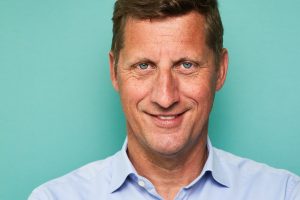
Once a quiet legacy player in dermatology, LEO Pharma is re-emerging with renewed focus and ambition under CEO Christophe Bourdon. With global leadership experience at Amgen and Alexion, Bourdon is guiding the century-old company through a bold transformation, restoring profitability, embracing external innovation, and laying the groundwork for a potential 2026 IPO. As the company repositions itself on the global stage, momentum is building both inside and outside its walls.
What motivated you to join LEO Pharma following your international leadership experience?
With French-German roots and a career spanning eight countries, including the US, I have seen first-hand how the centre of gravity for pharmaceutical innovation has shifted. The acceleration of scientific progress in the US and China is undeniable, and I felt it was time to contribute to strengthening Europe’s role in this landscape. What drew me to LEO Pharma was the opportunity to lead a company with more than a century of heritage and the ambition to remain a source of meaningful innovation in dermatology. The question that intrigued me was: how can a mid-sized European organisation continue to drive progress in a world increasingly shaped by larger players?
My professional journey began at Hoechst, a prominent German pharmaceutical company that eventually merged into Aventis and then Sanofi. Witnessing that transformation, and ultimately, the disappearance of the Hoechst legacy, left a lasting impression. It reinforced my belief in the importance of sustaining strong, innovation-driven companies in Europe. LEO, with its deep roots in Denmark and primary focus on dermatology, has both the potential and the responsibility to lead in this space. Joining the organisation at a pivotal time offered a rare and compelling challenge: to help turn that potential into long-term, sustainable impact.
How did you approach the challenge of transforming LEO Pharma’s operations and performance while preserving its long-standing identity and cultural values?
The essence of transformation, especially in a company with more than a century of history, lies in achieving the right balance. When I joined in 2022, LEO Pharma faced a pressing need for change. Our EBITDA margin stood at an unsustainable position of -17 percent that left little room for reinvestment in growth or innovation. Decisive steps were necessary to reset our cost base and define a clearer strategic path. But change for its own sake was never the goal. I made a concerted effort to understand the organisation’s DNA, what had been working, what employees valued, and where the culture drew its strength. There is a deep sense of pride in belonging to LEO, and it was important to preserve that while being honest about the urgency of the situation. The objective was to build forward, not to dismantle, and to place the company on a more stable and future-oriented trajectory.
Of course, a transformation of this scale requires more than just a strategy. It requires people to believe in it. From the start, we focused on building trust and alignment through transparency. One of the most effective changes has been the introduction of monthly one-hour town halls open to all 4,000 employees, where every question is welcome. This shift has allowed us to maintain an open dialogue and reinforce accountability while creating a shared sense of progress. Culturally, this also aligns closely with the Danish ethos of accessibility and flat hierarchy, which I value deeply. I commute by train, eat in the canteen, and stay approachable. Leadership at LEO is not about titles, but about shaping the journey together.
What strategic actions have been instrumental in restoring LEO Pharma’s profitability and positioning the company for sustainable growth?
When I joined LEO Pharma, the company was clearly in an unsustainable position. But beyond correcting numbers like EBITDA, it was essential to define a vision that would engage our 4,000 employees and restore confidence in our direction. We built a strategic framework anchored in five pillars. First, we reaffirmed our commitment to patients. With 100 million people relying on our therapies each year, our mission must remain at the heart of what we do. In terms of growth, we focused on executing in core markets, particularly in dermatology, where the global market is growing at around ten percent annually.
The second pillar is innovation. Surrounded by significantly larger players, we had to be selective in how we allocate resources. We decided to focus on areas where we have unique capabilities, specifically topical formulations, and shifted to a “search, partner, and develop” model. This new approach is exemplified by our partnership with Gilead on the STAT6 inhibitor programme. This agreement stands as one of the largest preclinical deals in the industry, with USD 250 million upfront, and potential total value exceeding USD 1.7 billion.
Third, we addressed cost efficiency by nearshoring operations from Denmark to countries like Poland and India, reducing headcount from 6,000 to 4,000, and moving towards an EBITDA margin of 15 to 18 percent, which is what we guide for 2025. The fourth pillar involves strengthening our business development and scientific scouting functions to support ongoing external innovation. And finally, we placed renewed emphasis on organisational alignment and culture. In fact, our most recent employee engagement survey recorded the highest scores since 2020. These results reinforce that the transformation is not only delivering financially, but also inspiring the people behind it. Above all, our goal is to shape a company that makes disciplined decisions with the long term in mind.
What is LEO Pharma aiming to achieve with its DKK five billion (approx. USD 580 million) business development and M&A allocation, and how are opportunities being prioritised?
Dermatology continues to be one of the most compelling areas in medicine, with the market growing at a rate of approximately ten percent per year. This is driven not only by expanding awareness and under-penetration in better-known conditions like psoriasis and atopic dermatitis, but more significantly by the vast number of dermatological diseases. In dermatology, many conditions are rare or poorly understood, and still lack approved therapies. This complexity is precisely where LEO Pharma, with our singular focus and longstanding expertise, is uniquely positioned to lead. To that end, we have strengthened our leadership team with seasoned dermatology professionals who help us identify high-potential areas of unmet need and shape our external innovation strategy around two core competencies: clinical diagnostic insight and scientific mechanism evaluation.
Unlike fields such as oncology, where diagnosis increasingly depends on biomarkers, dermatology remains deeply clinical, rooted in the experience and judgement of the dermatologist. It is easy to recognise a skin problem, but far more difficult to pinpoint its exact nature. That’s where our expertise becomes especially valuable. Our approach focuses on identifying compounds with strong scientific rationale and real dermatological relevance, whether in biologics, small molecules, or topicals.
While some of our investments will target broader indications, we are equally committed to rare diseases. My experience at Alexion reinforced my belief that every patient counts, and that principle remains central to our development and acquisition strategy.
With the LEO Pharma’s US business experiencing a massive growth spurt of 35 percent in 2024, how do you see the company’s global footprint evolving in the years ahead?
One of the most significant developments in recent years has been the rise of the US from a secondary market to our largest affiliate. China now follows as our second largest, and together they represent the foundation of a balanced global presence. We currently operate in 70 countries, and even amid geopolitical uncertainty and regulatory shifts, particularly in the US, we remain confident in these markets. The US will continue to lead in dermatology, and the need for ongoing innovation there remains clear.
For a company of our size, maintaining a global footprint through transformation is a conscious choice. We have stayed firmly committed to serving patients across all geographies, and not favouring one over another. Our role is to deliver innovation wherever the need exists, and that principle continues to guide our strategic decisions. Regardless of external pressures, our focus remains on ensuring global access to impactful dermatological therapies.
What is the strategic rationale behind the planned IPO in 2026, and what key milestones are you working towards to ensure LEO Pharma’s readiness for this transition?
LEO Pharma has traditionally operated as a private company, but a significant shift occurred in 2021 when the LEO Foundation welcomed Nordic Capital as a minority shareholder. This move brought not only financial backing, but also more structured governance and clearer performance expectations. Having two engaged shareholders has helped create a stronger foundation for long-term growth. This dynamic enabled us to make disciplined investments, particularly in business development, while remaining aligned on strategic priorities.
From my own experience at Amgen and Alexion, I believe that being publicly listed brings a level of operational and communicative discipline that strengthens an organisation. The IPO is not a pivot away from long-term thinking, but rather a continuation of our journey towards greater accountability, transparency, and professionalism.
We are approaching this transition methodically. Over the past year, we introduced full quarterly financial disclosures and initiated mock earnings calls. These are important steps in building the internal capabilities required of a listed company. Looking toward 2026, our focus is on three core pillars: demonstrating a credible growth trajectory, showcasing tangible innovation milestones, and establishing a profitability profile compelling enough to attract long-term investors. Our current performance trends are promising, and 2025 will be a critical year in consolidating this progress. For us, the IPO is not merely a financial event. It is a marker of readiness to operate at the highest standard, both in delivery and in how we engage with the wider market.
As CEO, what kind of leadership culture are you striving to embed at LEO Pharma during this period of transformation?
Culture is at the core of any meaningful transformation. A strategy, no matter how well-defined, will not succeed without an environment that supports ambition, accountability, and trust. What I want to establish at LEO Pharma is a culture where people feel encouraged to think beyond constraints and to dream about what we can truly deliver for patients, while also recognising the responsibility that comes with that ambition. We are a focused organisation of 4,000 people, yet we serve over 100 million patients. That scale of impact can only be achieved when everyone brings their best to the table, trusts their colleagues to do the same, and holds themselves accountable for execution.
However, vision alone is not enough. We operate in a highly competitive, fast-moving landscape that demands both speed and adaptability. Honouring our 116-year legacy is important, but we must be equally committed to shaping the next 25 years. The world has changed dramatically in recent years and continues to do so. I have seen this first-hand with the development of China since by time there in the early 1990s. That experience taught me many things, including the importance of staying externally focused and open to change. At LEO Pharma, we must remain curious, agile, and outward-looking. Only by doing so can we ensure that we continue to lead with relevance, resilience, and purpose.
As LEO Pharma looks to the future, what message would you share with the global healthcare community?
Driving innovation in medical dermatology is one of the most rewarding aspects of my career. Having spent many years in oncology, I now see the momentum building at LEO Pharma. And this momentum is being increasingly recognised by the experts I meet around the world. Hearing key opinion leaders say, “LEO is back,” reinforces that we are meeting our goals of being more agile, curious, and forward-looking. After a period of deep transformation, that validation speaks volumes about the progress we have made.
This journey has required difficult choices, but watching a company with more than a century of heritage re-emerge with renewed confidence and relevance is deeply motivating. My message is simple: success is not defined by size. It is defined by knowing where your strengths are, making focused decisions, and building a culture where everyone feels responsible for moving the organisation forward. At LEO Pharma, we are demonstrating that a mid-sized company with clarity of purpose and a committed team can have an outsized impact.