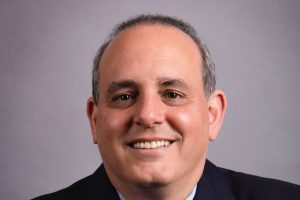
Basil Khalil, with an impressive 28-year career at FedEx, discusses the significant investments the company has been making to its infrastructure and the implementation of innovative solutions in Puerto Rico to meet the needs and complex logistics of the pharmaceutical industry. Khalil also addresses the evolving demands of the pharmaceutical sector post-pandemic, highlighting the company’s commitment to sustainability and a carbon neutral operation by 2040.
You have had an impressive 28-year career with FedEx, working in various areas of the company. What initially attracted you to FedEx, and how has your role evolved?
After college, I had opportunities to work with a few companies, but FedEx really stood out to me because of its international expansion. They were opening their divisional headquarters in Miami, and the idea of joining a company with such a global reach, interacting with different cultures and countries, was very appealing.
Over the years, what has kept me here is the way FedEx invests in its people and offers opportunities to grow and try different roles. I have had the chance to work in various departments – from finance and IT to planning & engineering before landing in operations. Currently, I have general management responsibilities for the Caribbean and Central America region as vice president of operations.
In my role in Latin America, Miami has played a key part in regional connectivity. The city has long been a gateway to Latin America, and recently, is becoming more important as a global hub. FedEx recognized this early on, and our divisional headquarters here offers fantastic connectivity. Latin America has always been a huge focus for FedEx, and my role has evolved alongside the company’s growth and the city’s expanding role on the global stage.
Your role with FedEx handles rapid, air-based shipping. Can you briefly explain the scope of your current responsibilities, particularly regarding pharmaceuticals and life sciences?
My current role as general manager covers the Caribbean and Central America region, which includes 39 countries and territories. A significant part of my responsibility is managing Puerto Rico, which is a major hub for pharmaceuticals, medical devices, and other high-value critical goods, and home to 12 of the world’s top 20 pharmaceutical companies
Puerto Rico is a key location for FedEx due to its status as the pharmaceutical hub of the Americas, and even globally. More than 45% of Puerto Rico’s GDP is driven by the pharmaceutical sector. The island has a unique combination of infrastructure and expertise, which makes it an ideal place for manufacturing high-value products like pharmaceuticals. FedEx has been operating in Puerto Rico for 45 years, and we have made substantial investments in this market to support the growing demand for rapid, secure transport of life sciences and healthcare-related goods.
In light of FedEx’s four decades of operations in Puerto Rico, with significant investments in temperature-controlled rooms, digital shipment monitoring, and certifications like CEIV, how have the company’s operations evolved over the past decade?
Over the years, we have learned a lot about the logistical needs of the region, especially for verticals like pharmaceuticals. One key lesson is the importance of reliability and redundancy. In the Caribbean, you can’t rely on a single route; you need multiple pathways to ensure consistency and reliability for customers, especially in the pharmaceutical sector where product integrity is crucial.
Puerto Rico presents unique logistical challenges due to natural events like hurricanes, earthquakes, and occasional geopolitical issues that can disrupt supply chains. That’s why we have made significant investments in infrastructure to ensure flexibility. For example, we operate out of two airports on opposite sides of the island—San Juan International (SJU) on the east and the Rafael Hernandez Airport (BQN) in Aguadilla on the west. This redundancy allows us to adapt quickly if natural disasters or disruptions impacts one area of the island, ensuring we can continue moving goods without compromising reliability or product integrity.
These investments in infrastructure, along with the use of temperature-controlled rooms and digital monitoring, have been critical in maintaining FedEx’s high standards for delivering life sciences and pharmaceuticals, which require careful handling and timely delivery.
As the pharmaceutical sector becomes increasingly competitive, with more players entering the market and a greater focus on cost efficiency, how have the demands of your partners evolved in the past five years, particularly post-pandemic?
The pharmaceutical industry has certainly become more cost-conscious, but quality remains paramount. For us, and for everyone involved in the manufacturing and distribution of pharmaceuticals, ensuring product integrity is critical. Products need to arrive on time, within strict temperature ranges, and without extreme variations. We have built the infrastructure to handle these exact needs, and we have invested heavily in temperature-controlled solutions, monitoring and intervention services that give customers the flexibility to choose the best option for their products, balancing cost with quality.
In the post-pandemic years, we have seen an increase in demand for highly specialized logistics solutions, like cold chain management for time-sensitive products such as mRNA vaccines. To meet these demands, we have continued to innovate, blending physical and digital infrastructure. We have made significant investments in new aircrafts with enhanced temperature capabilities and have expanded our facilities in San Juan and Aguadilla to improve visibility and reliability for temperature-sensitive shipments.
In 2022, we opened a state-of-the-art pharma-capable temperature-controlled room at our facility in San Juan, designed to meet the highest industry standards for flexibility and product integrity in pharmaceutical logistics. Additionally, our Ramp in Aguadilla has a dedicated area for active containers equipped with charging plugs to power multiple units simultaneously, as well as new temperature-validated trailers.
In June 2024, both of our ramps—San Juan and Aguadilla —received the CEIV Certification by IATA, a globally recognized standard that underscores our commitment to maintaining high-quality, temperature-controlled logistics solutions.
On the digital side, we have integrated cutting-edge technologies like SenseAware ID, which uses IoT to provide real-time data on speed, temperature, and other key factors throughout the shipping process. This, combined with our FedEx Surround® platform, allows us to monitor shipments continuously and intervene, if necessary, whether that means rerouting or re-icing shipments to maintain their integrity. Our goal is to provide customers with full transparency and the ability to make real-time decisions that ensure their products are delivered as needed.
While technology helps us improve efficiency and reduce human error, it is important to remember that we are a people-driven company. The relationships our couriers have with customers and the personal interactions we provide are irreplaceable. Technology will enhance our service and allow our employees to engage in more meaningful interactions, driving additional value for our customers. Ultimately, it is this combination of high-tech solutions and human touch that will continue to set us apart in the logistics industry.
How have you evolved your workforce to meet the technological advancements FedEx has embraced? Is it more about upskilling your current team, bringing in fresh talent with computer science backgrounds, or a combination of both?
At FedEx, we are incredibly proud of our low turnover rate, which speaks to the strong culture of investing in our people. It is not just about bringing in new talent, but continuously upskilling and developing our existing team members. For instance, with our CEIV Certification, we made sure that our employees truly understand the requirements of the pharmaceutical industry and what is needed to meet the high-quality standards in this sector. People at FedEx, especially in Puerto Rico, understand that the packages they handle could directly impact someone’s health or save a life, which adds a sense of purpose to their work.
Regarding talent acquisition, Puerto Rico has exceptional talent, and we find that many of the local employees are highly skilled. But it is also our responsibility as a company to keep investing in them through continuous training. We follow a philosophy called PSP—People, Service, Profit. By treating our people right, they deliver excellent customer service, which drives profits, and those profits get reinvested in our team. This cycle has worked well for us over the past 50+ years, ensuring we are always evolving and prepared for the future. We also have many development programs that help our team members adapt to new realities in the business world, and this investment in people is key to keeping up with the changing landscape.
We have spoken to local logistics players in Puerto Rico who emphasise a more personal, niche approach, something they feel larger multinationals lack. What would be your response to that, and why might pharmaceutical partners in Puerto Rico choose a global player like FedEx?
While FedEx is a large company with nearly 500,000 employees across 220 countries and territories, it is important to highlight that we live and work in these communities. Our team in Puerto Rico, for instance, is deeply embedded in the local culture. We have been in Puerto Rico for 45 years, and our team members are part of the fabric of the island. They understand the local dynamics, and they are very familiar with the pharmaceutical industry, which drives nearly half of the GDP there.
So, while we are a multinational, it is not just about being a faceless corporation. Our employees in Puerto Rico are experts in the field, and they work closely with customers every day. They are local, they know the business, and they provide the same level of personalized service that smaller companies tout. We live it, breathe it, and are constantly evolving with investments to meet the growing demands of industries like pharmaceuticals. So, when pharmaceutical companies choose FedEx, it is not just about scale—it is about the deep, personalized connections we maintain, even as a global leader.
With the increasing focus on climate change, transporting packages by air obviously comes with an environmental cost. How does FedEx address this challenge, especially when it comes to moving goods in an environmentally conscious way?
It is a critical issue, and one that we at FedEx take very seriously. We all live on this planet and have a responsibility to take care of it. That’s why we have a global target of achieving carbon-neutral operations by 2040. It is a significant challenge, but one that we felt was necessary to set out there, along with a comprehensive plan to help us reach that goal.
Part of how we are addressing this is through investments in new, more fuel-efficient aircraft, which significantly reduce carbon emissions. In fact, even though we are moving more volume than ever, we are producing fewer emissions per package thanks to these upgrades. Additionally, using our new FedEx Sustainability Insights tool, customers can measure the carbon footprint of their shipments so they can improve transparency in their sustainability reporting. Transparency is key, and holding ourselves accountable is a big part of our commitment to sustainability.
We have discussed some incredible innovations in logistics and healthcare. Do you feel FedEx’s operations in Puerto Rico have had an impact, and are colleagues in other regions learning from your experiences in this unique environment?
The beauty of operating in 220 countries and territories is that we are constantly exchanging ideas and best practices. Puerto Rico, as a pharmaceutical hub, certainly leads a lot of the innovations within the company, particularly when it comes to healthcare logistics. The technologies and processes that we develop here often set the tone for broader applications worldwide. For example, innovations in temperature-sensitive shipping or healthcare logistics are often piloted in Puerto Rico before being rolled out globally.
But it is bi-directional, too. We actively learn from other markets as well. If something works well in China, India, South Korea, or Europe, we discuss how those practices can be applied in our operations in Puerto Rico and across the Caribbean. It is an ongoing dialogue that helps elevate our capabilities and maintain consistency worldwide. Being part of a global company allows us to not only be good in Puerto Rico but also ensures that our solutions are scalable and adaptable to other markets.
Ultimately, our goal is to provide end-to-end solutions for our customers, and being an integrator gives us the ability to apply the best innovations and strategies from around the world to wherever they are needed.
Looking ahead, what key trends, innovations, or challenges do you foresee over the next five years? And in terms of the industry, what will be your top priorities?
The world will continue to change, and our focus will remain on increasing reliability, consistency, and providing more data to our customers so they can make better, more informed decisions. In the next five years, I expect we will keep expanding our infrastructure, creating more hubs and pathways. Puerto Rico, as a major node for us, will remain a strategic connection point between the Caribbean, North America, and South America. We will continue investing in that area to ensure there are multiple ways to reach markets, and that reliability remains no matter what challenges arise.
What is most important is that our customers can trust us to get their products—especially critical ones like medicines and medical devices—where they need to go, safely and on time, while maintaining the right integrity. That reliability and redundancy are going to be key as the world keeps evolving.