For medtech companies operating in the Middle East and Africa, bringing high-tech devices to market alone is no longer enough; reliability, uptime, and lifecycle performance have become just as critical.
Leading players such as Olympus Medical Systems are differentiating themselves by investing in service capability, ensuring that engineers responsible for maintaining and repairing equipment across a vast and diverse region meet consistently high standards.
A global leader in endoscopy and minimally invasive surgery, Japanese-headquartered Olympus has long known the benefit of service training, with a host of state-of-the-art training centres across North America, Europe, and APAC. In December 2025 the firm took a big leap forward within the Middle East, Türkiye & Africa (META) region with the launch of a new Service Training Centre at the Dubai Science Park.
The Centre, representing an investment of over one million dollars, provides hands-on technical training, demonstrations, and workshops for engineering partners from over 33 countries. Up to 150 engineers could receive certification from the Centre every year, helping raise and standardise service levels in MEA.
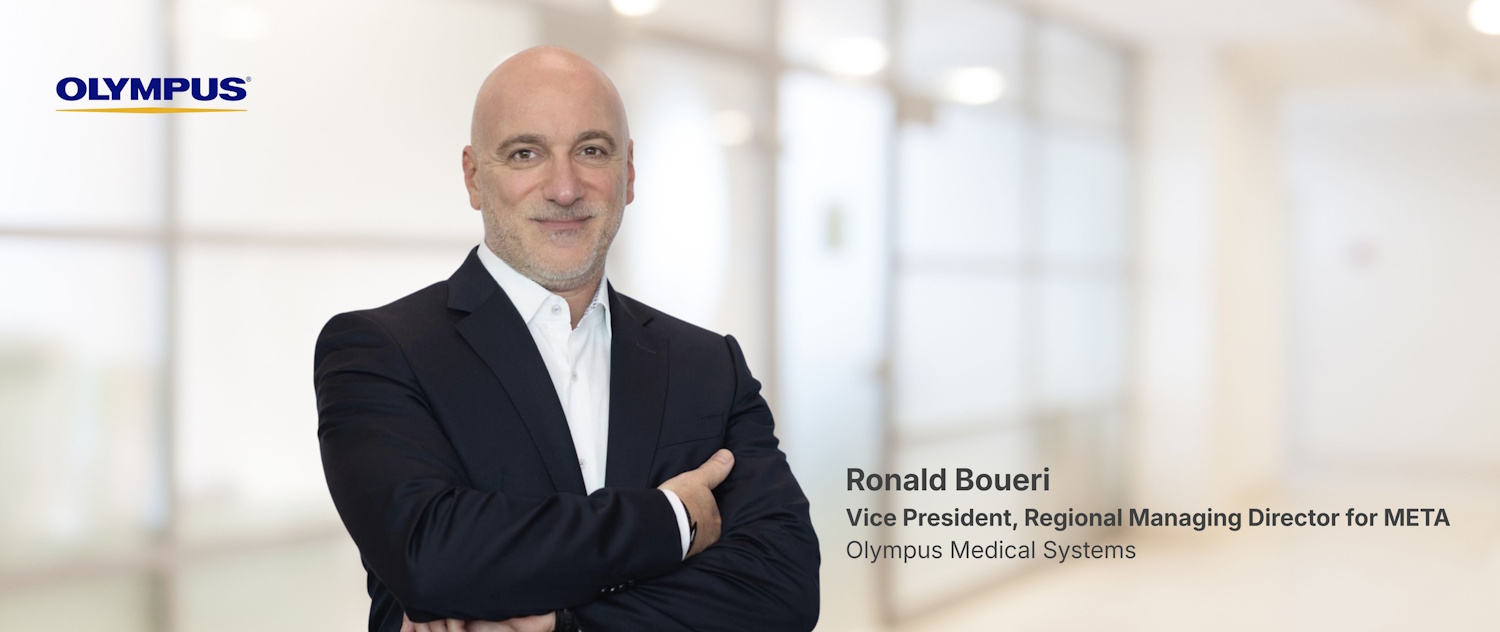
“With this investment, we’re definitely going beyond being a product provider,” explains Ronald Boueri, the company’s regional managing director for META. “What Olympus is doing is redefining what service really means. We are empowering engineers across the region not just to fix equipment, but ultimately to benefit healthcare systems and patients.”
This is especially true for complex and precise medical instruments like endoscopes, where equipment uptime, correct calibration, shorter turnaround times, and consistently high repair quality can directly impact clinical workflows and patient outcomes. As Boueri notes, “at the end of the day, these devices go into the patient’s body, so it’s critical they are repaired in a certified manner. What hospitals care about is uptime. What patients care about is safety. Our model addresses both.”
As technology evolves, so must the training that accompanies it. For Olympus, that means following a “train the trainer” model, with staff in Dubai continuously updated on new technologies and then passing that knowledge on to regional engineers. “That’s how we future-proof service capability,” says Boueri.
Dubai was a natural fit for the location of the centre and “just made sense” as a regional training hub to Boueri. This is due to the emirate’s connectivity to the rest of the region, its multilingual talent pool, and a policy environment geared towards healthcare innovation and global partnerships.
Previously, those servicing Olympus equipment in META often had to travel to Hamburg, Germany for training. Now, as Boueri notes, “the regional training hub in Dubai brings trainers and learners closer to the markets they serve, reducing travel time, costs, and visa issues while enabling more frequent, hands-on programmes and faster certification for repair licences.”
While more Olympus engineers in META will be empowered to conduct repairs on devices within their home countries, from a practical perspective, it is simply not possible for this to be the case across the entire region. As a result, Olympus operates a hybrid model: repairs in more advanced markets are conducted in situ, while others route devices to Dubai.
Looking to the future, Boueri envisions service and training becoming even more of a differentiator for Olympus in a highly competitive MEA medtech market. “We believe that markets will ultimately reward vendors who can reliably keep complex equipment available and compliant,” he says.
“Investing in local capabilities enables faster scaling of new product launches, stronger partner ecosystems, and more resilient recurring revenue models, whether through service contracts or remote monitoring.”
Boueri continues, “Over time, data generated by service activities will enable predictive maintenance and proactive support, further reducing downtime and costs. Together, these capabilities create a sustainable competitive advantage, supporting growth, customer loyalty and better clinical outcomes across the region.”



