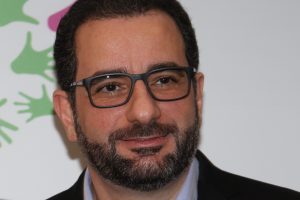
Rare diseases have long fallen through the cracks of Latin America’s health systems, but few figures have done more to change that reality than Toni Daher. What started as a father’s search for answers became Casa Hunter and, later, Casa dos Raros – a model of integrated, data-driven rare disease care that has cut diagnosis times from more than five years to just 82 days. In this interview, Daher reflects on a decade of advocacy, regulatory reform, and system redesign, and explains why Brazil now has a chance to build the world’s first truly modern ecosystem for rare diseases.
Could you start by sharing with our readers how Casa Hunter was founded and how its mission has evolved over the past decade?
I founded Casa Hunter after the long and difficult journey to obtain a diagnosis for my son, who was diagnosed in 2012 with Hunter Syndrome, a type of mucopolysaccharidosis. At that time, I knew nothing about rare diseases, and neither did most of the doctors I met. I discovered that around 98% of specialists in Brazil lacked knowledge about rare conditions. We also had no public policies or regulations to attract clinical trials or facilitate access to medicines.
That experience pushed me to create Casa Hunter to help transform the entire rare disease landscape in Brazil. From the beginning, Casa Hunter was conceived as an ecosystem, not just an assistance organisation. We work across several pillars – patient support, education, clinical and pre-clinical research, training, and public policy – everything needed to build a sustainable structure for rare diseases. More recently, we also established the first centre in the world dedicated entirely to rare diseases: Casa dos Raros.
Can you elaborate on what Casa dos Raros does?
Casa dos Raros is located in southern Brazil and has been fully operational for two and a half years. It’s a 100% philanthropic institution that has completely transformed the patient journey. In Brazil, under the public healthcare system, the average time to receive a rare disease diagnosis is around five years and four months. At Casa dos Raros, we have reduced that to just 82 days.
We not only provide diagnosis but also comprehensive care plans and ongoing management. Each patient’s full journey – from initial consultation to final treatment plan – costs only about USD 600 (around BRL 3,000). By comparison, the public system often spends BRL 50,000 (around USD 10,000) per patient without even reaching a diagnosis.
We’ve proven that the issue is not about more money for rare diseases, but about changing the model of how patients are assisted. This lesson applies not only to Brazil but to healthcare systems everywhere.
You mentioned changing the model. What were the key steps in that transformation?
We began with regulatory reform. In 2017, Casa Hunter worked with Anvisa to establish fast-track pathways for the registration of rare disease drugs and clinical trials. Dr Renato Porto, then Anvisa’s Director, played a key role in supporting two resolutions that accelerated regulatory processes.
That same year, we brought Brazil’s first gene therapy clinical trial. At the time, Anvisa had no framework for advanced therapies, so in 2018 we helped the agency design the first Latin American regulation for these treatments. Later, in 2019, we partnered with the University of Pennsylvania and Dr James Wilson, a world authority in gene therapy, to hold a workshop with Anvisa and strengthen this regulatory foundation.
Is this the same as Brazil’s National Policy for Rare Diseases?
No. The National Policy (Resolution 199) is from the Ministry of Health. What we supported at Anvisa was a regulatory resolution – equivalent to the FDA’s role – because every medicine or technology must first pass through the regulatory gate.
Once that was achieved, our focus shifted to access, which begins with diagnosis. We spearheaded legislation expanding Brazil’s newborn screening programme from six conditions to over fifty. It was approved three and a half years ago.
However, even with screening and regulation, patients still lacked specialised care centres. Over a hundred facilities could see rare disease patients, but none were designed exclusively for them. That’s why we created Casa dos Raros in Rio Grande do Sul – a fully integrated centre combining hospital care, infusions, clinical trials, training, and multidisciplinary teams working together.
The results have been so positive that we are now working with government authorities to replicate the model. The Mayor of São Paulo has already donated land for the construction of the world’s first hospital dedicated entirely to rare diseases.
The government has become increasingly supportive. Through the data we’ve collected, we are showing policymakers that the current system is inefficient – it wastes resources without providing timely or dignified care.
Our goal is to modernise both the public and private health systems, creating a sustainable model that delivers efficiency and equity. Patients should not have to wait years for answers while the system spends more and achieves less.
Given the high cost of orphan drugs, which alternative funding models – risk-sharing, pay-for-performance, or managed entry agreements – do you believe are most suitable for Brazil’s public system (SUS)?
We believe in combining all of these mechanisms rather than relying on just one. At Casa dos Raros, we collect real data on costs and outcomes. For example, the full cost per patient – including telemedicine, multidisciplinary care, diagnostic sequencing for about 40% of cases, and training of local teams – is roughly BRL 7,500 (USD 1,500).
By contrast, the public system spends about USD 10,000 per undiagnosed patient and keeps them waiting an average of five years. Our model proves that efficiency, not extra funding, is the solution. With this evidence, we’re advocating for Casa dos Raros to become a national reference model replicated across Brazil.
Have other Latin American countries shown interest in adopting this model?
Yes. Argentina and Colombia have both expressed interest, but investment remains the biggest challenge. The pilot in Porto Alegre was financed entirely with private funds, even though all patients are treated publicly. We’re the only organisation in the region operating this kind of model at scale.
We also run a project called Day Hunter, active since 2015 across five Brazilian regions. It partners with universities and hospitals to offer one day per week of multidisciplinary rare disease consultations. It helps reduce diagnosis times, but Brazil is a vast country – ultimately, each state needs at least one Casa dos Raros.
How many people in Brazil are affected by rare diseases?
About 13 million Brazilians – roughly six percent of the population – live with a rare condition. Of the more than 9,000 known rare diseases, 80% are genetic. Yet there are medicines for only around 200 of them, which means fewer than 3 percent of patients have access to drug treatments.
Even so, with multidisciplinary care and proper management, we can greatly improve the quality of life for patients and families.
Access to orphan drugs remains a major challenge. How is Casa Hunter engaging with CONITEC, the Ministry of Health, and the judiciary to make access more predictable and sustainable?
We don’t encourage judicialisation – the need to go to court to access treatments – but unfortunately, it remains necessary because equitable access still doesn’t exist. Of the 121 rare disease drugs approved by Anvisa, only 25 are incorporated into the national health system (SUS). That’s just 20%.
To address this, Casa Hunter and Febrararas (the Brazilian Federation of Rare Disease Associations) successfully advocated for a law granting civil society a formal seat on CONITEC, the national commission that decides on the incorporation of new technologies. After ten years of campaigning, we are now awaiting the final regulation to take part directly in these decisions.
The private sector also plays a growing role in rare disease coverage. How are you engaging with it to ensure equitable access and reduce litigation?
The 2014 national policy (Resolution 199) established the Ministry of Health’s responsibility to implement rare disease initiatives. Since then, Casa Hunter has worked closely with Congress and the Ministry, holding monthly public hearings with key stakeholders – including Anvisa – to maintain positive pressure for implementation.
We also founded Febrararas, now the largest rare disease federation in Latin America, bringing together 100 associations. Through this network, we maintain dialogue with lawmakers, regulators, and executives to align patient access with system sustainability.
Our advocacy is evidence-based. We show that investment in rare diseases is not a cost but a long-term saving. Brazil’s healthcare spending is split roughly 45% public and 55% private, which contradicts the idea of a “universal” system. We argue that investing in rare and genetic diseases promotes prevention – treating causes rather than consequences.
Just as genetic testing allowed Angelina Jolie to act before developing breast cancer, widespread genomic screening could help prevent chronic conditions such as diabetes, hypertension, and cancer, saving lives and reducing future costs.
Casa Hunter collaborates with governments, academia, and industry. How do you maintain independence and transparency in such partnerships?
Transparency is fundamental to our credibility. Casa Hunter has a strict code of conduct, external auditing, and compliance policies. We perform due diligence not only on our partners but also on the pharmaceutical companies that support us.
We are the only NGO in Brazil that has publicly challenged a major industry player for non-compliance – and won. We also prohibit any member of Casa Hunter’s or Casa dos Raros’ board, including myself, from receiving remuneration. All directors are volunteers, ensuring there is no conflict of interest.
This year marks the 10th edition of your flagship event. What are its key objectives, and how has the national dialogue on rare diseases evolved?
Our annual Scenario of Rare Diseases event is Latin America’s largest rare disease advocacy forum. It focuses on public policy and brings together all stakeholders – lawmakers, health officials, industry, and patient representatives – to review progress and define priorities for the coming year.
Every edition concludes with a clear action plan, outlining commitments for all participants. Many of the legislative advances of the past five years originated from this forum. We also invite international agencies such as the FDA and NICE to exchange best practices and benchmark Brazil’s progress.
How would you describe the current state of rare disease advocacy in Latin America?
Brazil remains the regional leader – both in market size and regulatory progress – followed by Colombia and Argentina. Mexico is also advancing quickly, having approved its own regulation for advanced therapies last year and joined the International Council for Harmonisation (ICH).
Strong regulation is essential for access. But the region still needs to build full ecosystems for rare diseases: regulatory frameworks, public policies, specialised care models like Casa dos Raros, and continuous professional training. Without that, we cannot provide integrated care.
On a personal note, what gives you the passion to continue this journey?
It’s the milagre do amor – the miracle of love. When you have a child with a rare disease, and when you see millions of families facing similar struggles, you realise how precious and meaningful life truly is.
Finally, what message would you like to leave our international readers?
If we want sustainable healthcare systems in the future, we must shift from treating consequences to preventing causes. We are entering the era of precision medicine, and investing in genetics and prevention is the only way forward.
The person who will live to 150 years old has already been born – but if we don’t invest in prevention, how will our systems sustain such longevity? We need to train professionals, embrace genomic technologies, and focus on quality of life, not just life expectancy.
My message to global health leaders is to think long term. Too many decisions today are made with two- or four-year political cycles in mind. We must plan for the next decades, focusing on prevention, innovation, and sustainability.
Ten years ago, Latin America only imported innovation. Now, for the first time, we are creating it. Casa dos Raros is a unique model that many countries – from Australia to Europe – aspire to replicate but have not yet achieved. I believe this model can inspire a new era of healthcare built on inclusion, science, and compassion.