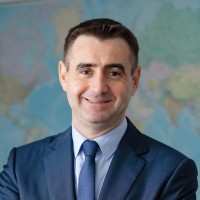
Thomas Bohn has led the Greater Geneva Bern area (GGBa) investment agency for over a decade, shaping Switzerland’s strategy to attract global life sciences firms. He focuses on quality over quantity, targeting high-potential biotech, pharma, and medtech companies and supporting their European growth through sustainable partnerships.
How has the Swiss life sciences landscape evolved since your organisation’s strategic pivot in 2020-2021?
The transformation has been both substantial and strategically deliberate. GGBa represents five cantons—Bern, Geneva, Fribourg, Neuchâtel, and Vaud—and our mandate centres on identifying optimal matches between global enterprises seeking European expansion and Switzerland’s unique value proposition. Our team of five Lausanne-based professionals, supported by twelve international colleagues, maintains a disciplined focus on quality over quantity.
A pivotal development occurred in 2022 when we established our first industry-specific role through Yassin Nahi, our London-based biomanufacturing specialist. This represents a fundamental shift from general life sciences promotion to targeted sectoral expertise. We recognised that biomanufacturing presents exceptional alignment with Switzerland’s capabilities, particularly given the sector’s increasing automation trajectory, which neutralises traditional cost disadvantage concerns.
The COVID-19 pandemic accelerated certain strategic relationships. For instance, Chinese company CanSino established operations in Geneva to leverage proximity to UN health organisations, recognising Geneva’s position as a global health governance hub. This exemplifies how companies increasingly value strategic positioning over purely economic considerations.
What investment dynamics are you observing across the region’s life sciences ecosystem?
The infrastructure sophistication continues to expand significantly. Dedicated environments such as Biopôle, Campus Biotech and the Marly Innovation Center in Fribourg provide precisely the specialised facilities that attract discerning companies. Equally critical is our network of public-private partnerships, particularly with university hospitals like CHUV, HUG and the Inselspital of Bern, which demonstrate remarkable collaboration readiness.
The most encouraging trend involves sustained reinvestment from established companies. Both indigenous Swiss firms and those we have previously supported continue expanding their operations, indicating genuine satisfaction with the ecosystem’s performance. Companies like CSL Behring in Bern, which recently announced a major expansion of its manufacturing site, and Debiopharm in Lausanne, which continues to grow its clinical development activities, exemplify this pattern. Additionally, multinational players such as Merck in Aubonne and UCB in Bulle have committed to new investments in production and R&D. This organic growth demonstrates Switzerland’s fundamental economic stability—evidenced by exceptionally low unemployment rates—and validates our positioning as a premium location for sophisticated life sciences operations.
Which sectors within life sciences demonstrate the strongest investment appetite?
Switzerland’s life sciences heritage creates natural synergies across biotech, pharmaceutical, and medtech sectors. The interconnections are fascinating—I have encountered watchmakers who observe that precision timepiece manufacturing shares technological DNA with pacemaker production. Similarly, biotechnology executives recognise parallels between the country’s traditional fermentation expertise in cheese-making and modern biotech processes.
Recent establishment patterns reveal growing interest in companies operating at the intersection of technology hardware and life sciences. For example, Argentinian company Stämm Biotech, which we facilitated through our biomanufacturing specialist, produces sophisticated systems that enhance biotech manufacturing efficiency. Although Switzerland was not initially part of their expansion strategy, they selected the region after engaging with the local ecosystem through visits to key biotech campuses and infrastructure, and by participating in Swiss Biotech Day.
How do you identify and prioritise target companies in such a competitive global market?
Our approach emphasises strategic relationship cultivation over reactive pursuit. We maintain a focused presence in the priority markets of the US, Brazil, China, France, Germany while remaining open to promising opportunities elsewhere.
Current market conditions present interesting dynamics. While the United States market faces complexity, we observe significant opportunities emerging from China. Chinese medical device company Roumai Medical exemplifies this trend. Founded by EPFL alumni, they raised USD 100 million in Series A funding and established operations in Canton Vaud, leveraging both Biopôle facilities and EPFL Innovation Park infrastructure.
Our strategy involves engaging companies before they achieve “rock star” status. For example, we cultivated relationships with Moderna from 2013, positioning ourselves for their eventual European expansion decision. Although they ultimately selected Basel for proximity to major pharmaceutical companies, this demonstrates our long-term relationship approach.
What is Switzerland’s value proposition in an increasingly cost-conscious global environment?
We explicitly position Switzerland as a premium choice rather than competing on cost metrics. Our narrative focuses on companies where Swiss advantages create genuine competitive value. If a project requires hundreds of employees from the outset or massive production facilities, we acknowledge the country may not represent optimal fit.
The productivity equation often surprises international executives. Swiss standard working hours of 42 per week versus France’s 35-hour standard essentially provides one additional working day weekly. Combined with lower social charges, minimal industrial disruption, and political stability, the total cost of ownership frequently favours Switzerland despite higher headline costs.
We deliberately avoid incentive-driven projects where cash subsidies represent primary decision factors. Instead, we target companies seeking access to talent, hospital partnerships, or research collaboration opportunities. Our value proposition centres on superior business conditions rather than financial inducements.
How are Asian markets, particularly China and Korea, reshaping your strategic focus?
Asian market dynamics have evolved dramatically. Our biomanufacturing specialist’s portfolio analysis revealed that over a third of his projects originated from Asia, with Korea representing the largest single source. Korean conglomerates are actively pursuing overseas expansion, typically establishing United States presence before European operations.
We developed a strategic partnership with Korea Bio, the Korean Biotech Association, culminating in a formal agreement providing Korean companies with soft landing programmes at EPFL. This collaboration grants direct access to EPFL laboratories and represents our relationship-driven approach to market development.
Chinese market engagement has intensified significantly. Switzerland’s unique position creates distinctive advantages, including our bilateral free trade agreement which is the only such arrangement between China and a country in mainland Europe. Geneva is operating ten weekly direct flights to China, establishing the region as exceptionally well-connected to Chinese markets.
Can you provide examples of successful reinvestment from established companies?
Incyte represents an exemplary case study, and GGBa was there from the beginning. We supported their initial establishment in 2017, and they have since expanded significantly—from their early presence to setting up European headquarters in Morges. Today, Incyte’s European HQ is growing, and their production site at Y-Parc is fully operational.
Campus Biotech exemplifies infrastructure evolution. Originally the Merck Serono campus in Geneva, it has expanded into a full-fledged innovation park that now hosts companies and start-ups, alongside specialised equipment such as a unique 7-Tesla MRI system. This infrastructure specificity enables us to target companies requiring such sophisticated capabilities.
The broader reinvestment pattern includes major multinationals focused on the production of advanced therapies —Takeda, Merck, Johnson & Johnson, and Thermo Fisher Biologics—all expanding their Swiss operations. CSL Behring in Bern continues adding production lines, while Chinese investor WuXi has successfully acquired and expanded local operations.
What role does Switzerland’s research infrastructure play in your attraction strategy?
Research connectivity represents perhaps our strongest differentiator. Rather than relying on marketing materials, we focus on facilitating direct connections with appropriate research partners. EPFL’s innovation ecosystem, combined with CSEM’s nanotechnology expertise in Neuchâtel, Fribourg’s Adolphe Merkle Institute’s cutting-edge research in soft materials, and the University of Bern’s strengths in biomedical sciences, creates unique collaboration possibilities.
Campus Biotech houses expertise in neurology, while Biopôle concentrates on oncology applications. This specialisation enables precise matching between company requirements and available resources. Recently, we supported Brainscape Medical’s establishment at Campus Biotech, where they access WYSS Centre technology within an optimal ecosystem environment.
The modular infrastructure development continues expanding. PULSE in Cheseaux-sur-Lausanne recently inaugurated 43,000 square metres of flexible life sciences space, with Thermo Fisher Biologics as the inaugural tenant. Such developments provide companies with scalable options as their operations evolve.
How do current geopolitical tensions affect international investment patterns?
United States market dynamics present complexity. The Inflation Reduction Act under the Biden administration, followed by continued domestic investment emphasis under the new administration, creates challenging conditions for European expansion. Some executives express concern about European investment given Ukraine conflict proximity, though such perspectives seem excessively cautious.
Chinese companies face different pressures. Visa restrictions and regulatory uncertainty in the United States are redirecting Chinese expansion strategies toward Europe. Switzerland’s neutral stance and positive China relationship position us advantageously for such redirected investment flows.
What strategic priorities will define your approach for 2025-2026?
Our focus remains on identifying transformational companies rather than pursuing headline-generating announcements. I am currently engaging with a Chinese enterprise operating at the intersection of biotech, quantum computing, and artificial intelligence—a combination that leverages Switzerland’s capabilities and engineering schools exceptionally well.
We continue developing targeted approaches for specific opportunities, including brownfield site redevelopment in Canton Bern. Rather than broad market advertising, we identify companies where existing infrastructure represents optimal solutions.
The game-changing potential of companies like Stämm Biotech motivates our continued focus on emerging technologies. While many observers remain unfamiliar with such enterprises, their potential for industry transformation aligns perfectly with Switzerland’s innovation ecosystem.
What message would you offer to international life sciences executives considering European expansion?
Switzerland’s approach reflects national character—efficient rather than ostentatious, substantive rather than promotional. We do not compete through aggressive marketing or unsustainable incentives. Instead, we offer what discerning companies genuinely require: sophisticated infrastructure, collaborative research partnerships, political stability, and access to global markets through our extensive trade agreement network.
Our decade-plus experience demonstrates that successful relationships develop through careful matching rather than volume pursuit. Companies that establish roots in the region typically expand their operations over time, validating both their initial decision and our selection criteria.
The life sciences sector increasingly demands the intersection of multiple capabilities including biotechnology, artificial intelligence, precision manufacturing, regulatory expertise. The country’s concentrated excellence across these domains creates unique value for companies prepared to invest in long-term success rather than short-term cost optimisation.