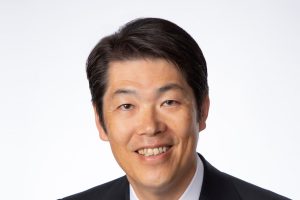
In conversation at ESMO 2024 in Barcelona, Astellas Chief Medical Officer Tadaaki Taniguchi lays out some of the company's most promising recent oncology data, his hopes around how Astellas' modality-based strategy will ultimately bring "meaningfully differentiated" therapies to patients, and why next-generation treatments stand to reshape the cancer care paradigm.
What ESMO data is Astellas most excited about sharing with the oncology community this year?
It’s hard to say which is most exciting because there’s a lot to get through! This year, in addition to sharing new data from our approved cancer therapies, we were excited to present new Phase I data from two investigational, next-generation modalities across a range of cancer types, including first-in-human Phase I data for ASP3082, the first protein degrader targeting KRAS G12D to enter clinical trials.
The data includes patients with KRAS G12D-positive advanced pancreatic, colorectal, and non-small cell lung cancer (NSCLC). The ongoing study showed that ASP3082 demonstrated dose-dependent degradation of KRAS G12D mutant protein and antitumor activity in both pancreatic ductal adenocarcinoma (PDAC) and NSCLC.
Out of the approximately 1.8 million new cases of cancer diagnosed annually in the US, 210,000 (11.6 percent) have KRAS mutations. There are currently no approved options for KRAS G12D mutations, which occur in approximately 40 percent of PDAC, 15 percent of colorectal cancer , and five percent for non-squamous NSCLC.
Additionally, we are excited to present preclinical, translational/early clinical data for ASP1570, a novel DGKζ inhibitor and our lead immuno-oncology small molecule program, in patients with locally advanced or metastatic solid tumours who had progressed or were no longer eligible to receive standard therapy.
Despite recent advances in cancer immunotherapy, approximately 80 percent of patients still do not respond, or become resistant, to currently available immuno-oncology treatments. The ASP1570 monotherapy showed early signs of clinical activity, supporting further evaluation in patients with advanced solid tumours. Among efficacy-evaluable patients, confirmed disease control rate per immune-based RECIST (response evaluation criteria in solid tumours) was 44.7 percent (17/38), including 1 patient with confirmed partial response.
The results support continued study of these investigational next-generation therapies for the treatment of various cancer types and reinforce Astellas’ commitment to making a meaningful difference to people living with advanced and hard-to-treat cancers.
Astellas has made a big move into the immuno-oncology (IO) space, shifting from an asset-based to a platform-based R&D strategy, and is now working with biotechs to secure the most innovative oncology therapies of the future. How is this strategy progressing?
Our modality-based strategy allows us to focus on novel IO modalities that activate and enhance the immune system in new ways to bring meaningfully differentiated therapies to patients.
We focus on modalities with first- or best-in-class potential that could redefine expectations of cancer care, and our toolbox includes an allogeneic cancer cell therapy platform, immune cell engagers and antibody drug conjugates, among others.
Bringing novel cancer therapies to patients is no small feat and collaborations and partnerships are an important part of our strategy to build a robust pipeline – not just in IO but across Astellas where 50 percent of our pipeline and products originate from external partnerships
In a little over a year, we have made some exciting progress, enriching our capabilities and supporting access to technology and platforms to advance CAR-T therapies through our partnerships with Poseida and Kelonia
In August 2023, we announced a strategic investment to support Poseida Therapeutics’, Inc., with a further research collaboration and license agreement announced in May 2024. The collaboration combines Xyphos’ novel and proprietary cell therapy platform with Poseida’s cutting-edge genetic editing platforms. We believe these synergies will ultimately lead to the expansion of Astellas’ portfolio and the delivery of innovative CAR-T cell therapies to cancer patients
Moreover, earlier this year, we announced a research collaboration and license agreement with Kelonia Therapeutics, combining Kelonia’s in vivo gene placement system (iGPS®) with Xyphos’ ACCELTM technology to develop cutting-edge in vivo CAR-T cell therapies
New immuno-oncology therapies covering everything from CAR-T to checkpoint inhibitors, targeted protein degradation and ADCs have the potential to change the course of cancer by targeting and eliminating unhealthy cells. What is your vision for the future of cancer treatment?
This is a time of great promise and potential in the fight against cancer. Next generation therapies are rapidly changing the outlook for patients in need and creating a future where personalised and precise medicine is the standard.
Targeted protein degradation, for example, is a relatively new concept, but is incredibly exciting because it can make ‘undruggable’ targets druggable. For instance, KRAS G12D has historically been undruggable, but with this technology, we can specifically target the mutated pocket, potentially offering better safety compared to other modalities.
We hope to significantly increase the 20 percent of patients that have strong, long-term survival rates and believe that novel IO approaches can really deliver the outcomes that matter most for these patients
Through our unique R&D strategy, Astellas is also working to integrate cell science and genetic science to develop the cell therapies of the future. Across the industry we’re seeing progress with checkpoint inhibitors, ADCs, and targeted therapies, but the future will rely on finding the right combinations. For example, combining CPI with ADCs seems to hold a lot of promise. However, managing unforeseen toxicities in these combination approaches can be challenging, which is why we have dedicated teams of safety experts focused on tracking not just ADCs but targeted therapies and other modalities.
The ultimate goal is to find new ways to cure cancer globally and we focus our R&D efforts on rising to address the unmet need in hard-to-treat cancers where few therapies exist. Ultimately, we hope to deliver therapies that address resistance, improve survival, and enhance quality of life across a broad spectrum of cancers.