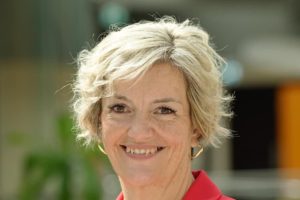
Sue Donoghue, with 29 years of experience in logistics, has been with DHL for 19 years and helped establish DHL Global Forwarding in Saudi Arabia in 2020, growing the team from 4 to 250 people. As Vice Chair of the European Chamber of Commerce in Saudi Arabia, Donoghue aims to foster European-Saudi relations and supports women in business through the Women's Committee. She has witnessed Saudi Arabia’s transformation, particularly under Vision 2030, with a focus on manufacturing, digitalization, and sustainability. Donoghue emphasizes the importance of belief in oneself and encourages aspiring leaders to take opportunities and be brave. With government support and Vision 2030, she believes the sky is the limit for Saudi Arabia’s growth and innovation.
Could you tell us a bit about your background, your role at DHL, and how your position as Vice Chair of the European Chamber of Commerce in Saudi Arabia complements your work?
I have been with DHL for 19 years, with 29 years of experience overall in the logistics industry, although my educational background is actually in psychology. I fell into logistics by chance, starting as a temporary receptionist, and I have never looked back. Over the years, I have had the opportunity to work in various roles, including in Saudi Arabia, where I first arrived in 2008 for a project. In 2017, I took on the role of Director for another project there, and by 2020, I helped set up DHL Global Forwarding in Saudi Arabia as a fully owned foreign company. We started with just four people, and now we’re a team of 250 with eight offices across the Kingdom.
You mentioned starting with just four employees and growing to 250. Could you tell us more about the operations of DHL Global Forwarding in Saudi Arabia and how the company has developed over the years?
When we first set up DHL Global Forwarding in Saudi Arabia in 2020, we began by supporting industrial projects, including a significant petrochemical venture. Initially, we operated under an agency, but as we grew, it became clear that we needed to establish ourselves as an independent entity. Today, we have a full-fledged operation with a diverse, multi-modal approach to logistics. We offer air, ocean, and rail and road freight, in addition to in-house customs clearance and warehousing services
Our operations are fully licensed, and we have our own customs clearance team. We are IATA registered and hold the AEO (Authorized Economic Operator) certification, ensuring we meet the highest standards of security and efficiency. With all the necessary infrastructure in place, we are now positioned to offer a complete logistics solution, including transit clearances. Our vision is clear: we aim to be the number one freight forwarding and logistics provider in Saudi Arabia.
And when we look at our Life Science operations, a lot has happened: Three years ago, DHL Global Forwarding did not have any infrastructure in the Life Sciences sector in the country. We relied on an agent-based model. Now, we are actively driving our First Aid brand awareness in the kingdom and are currently implementing GxP certification across all our stations in Riyadh, Dammam, and Jeddah. This certification enables us to conduct direct business with pharmaceutical companies in the country, meeting the high-quality standards and regulations required for such engagements.
The ‘x’ in GxP signifies that we cover everything from the point of manufacturing to the patient level. This includes all aspects, from collecting samples from hospitals to distribution, manufacturing, wholesale, and clinical trials. And we are also establishing a white gloves service in Saudi Arabia. This means we are not just moving pharmaceutical goods; we are getting closer to the actual products. For example, we are involved in filling boxes and packaging, not just moving pallets. This is a significant step in such a highly regulated and specialized sector.
Having arrived in Saudi Arabia in 2017, just as Vision 2030 was being launched, you have had a front-row seat to the country’s rapid transformation. What trends have you seen shaping the logistics industry, and what opportunities are emerging in this dynamic environment?
Without a doubt, Saudi Arabia is the fastest growing and most transformative market I have encountered. The scale of opportunity here is immense, particularly with the vision laid out in Vision 2030. What stands out most is the pace and determination with which decisions are made and implemented. Unlike in many other regions, where policies might take years to come to fruition, here in Saudi, changes can happen almost overnight—once a decision is made, it is actioned swiftly, and that is incredibly powerful for business.
When I first arrived, it was rare to see women in the workforce, and everything was quite segregated. I had to be accompanied by a male to enter certain places, and the work environment was very traditional. Fast forward to the present, and post-COVID, the change has been monumental. Women are now driving, working in mixed offices, and the culture has shifted significantly, with greater empowerment for women in the workplace. While there are still some more traditional views, the transformation is undeniable, and I see myself as an ambassador of this change. I always made sure to respect the local culture, and one example of this fasting with my team during Ramadan to show solidarity and understanding of the cultural and religious practices.
From a business perspective, digitalization has been a game-changer. Everything from work permits to personal documents is now handled online, which was unimaginable when I first arrived. The customs clearance process, once slow and cumbersome, has been streamlined dramatically. What used to take days now takes mere hours. The development of bonded facilities and economic zones has further positioned Saudi Arabia as a key logistics hub. The drive to be a global logistics leader is very real, and it is exciting to be part of that evolution. From a logistics standpoint, the future here looks incredibly promising, and we are seeing unprecedented opportunities to shape the industry.
Saudi Arabia has set ambitious goals to become a global logistics hub, with significant investments in manufacturing, digitalization, and infrastructure. What are some of the key elements driving this transformation, and how is DHL positioning itself to support this vision, particularly in sectors like pharma and healthcare?
Saudi Arabia is undeniably focused on becoming a major logistics hub, and this is evident in the country’s strategic initiatives, such as Vision 2030. Saudi’s aim is clear: to establish itself as the logistics gateway to the Middle East and beyond. The location of Saudi Arabia is a real advantage, offering strong connectivity to Europe, Africa, and Asia, particularly with the investments in sea and air corridors. The country’s ambition to diversify its economy away from oil is driving investments in manufacturing, including the push for ‘Saudi Made’ products and the establishment of more distribution centres. Additionally, Saudi’s efforts to attract multinational companies by offering significant benefits for setting up headquarters there are also contributing to the growth of logistics.
From a logistics perspective, the scale of Saudi’s Giga-projects, its evolving infrastructure, and the increasing focus on sustainability all present tremendous opportunities. The country’s focus on sectors like electric vehicles, pharma, and clinical trials further positions it as an attractive hub for both international investment and innovation. The economic zones, along with the drive to integrate e-vehicles and sustainable production, will also help make Saudi a global logistics leader.
How does DHL support this vision, particularly in pharma and healthcare logistics, which require high compliance and regulation?
This ties directly into our 2030 strategy, with pharma and healthcare being key focus areas. In Saudi Arabia, we’re investing in the development of GDP-certified warehouses and cold chain facilities to meet the growing demand. Maintaining the integrity of cold chain logistics is crucial for the healthcare sector, especially when it comes to vaccines and sensitive pharma products.
We collaborate closely with industry experts in packaging and cold chain solutions to ensure the seamless movement of goods. Our role is to ensure that every part of the supply chain, from storage to transportation, meets the highest standards of temperature control and regulation.
Education is also a critical aspect of our efforts – ensuring all stakeholders in the logistics supply chain, from handlers to logistics managers, are well-versed in best practices for maintaining cold chain integrity.
We are consistently trying to improve the quality of our products and equipment to find new innovative ways. A good example here is the “ThermoLiner” launched in September 2024 in Vienna. The ThermoLiner is a product that will make a difference when we start to see the shift from air to ocean freight. The ThermoLiner prevents temperature shocks, humidity shocks and container sweat. Instead of having 20 different smaller ThermoLiner per pallet, we can now have one big ThermoLiner in a container. We are currently running trials which are showing really positive results.
Saudi Arabia’s new national biotech strategy aims to attract investments in high-end innovation, biologics, and vaccines. With this push towards innovation and research, what opportunities do you see for DHL to play a key role in supporting the Kingdom’s ambitions in these areas?
At DHL, innovation is deeply embedded in our culture. We have dedicated innovation centres across the globe and an initiative called the Trend Radar, which helps us stay ahead of emerging trends. As Saudi Arabia focuses on becoming a hub for innovation, particularly in biologics, vaccines, and clinical research, we are keen to be a partner of choice. We have already been looking closely at where we need to innovate within our operations to meet these specific needs. Our life sciences team plays a crucial role in this, and we are continuously in conversations to identify potential gaps and ensure we are positioned to lead in this sector.
For example, in logistics, we are driving innovation through AI and automation. In our warehouses, we have implemented automated storage and retrieval systems, as well as automated inventory tracking, which increase both efficiency and accuracy. In terms of IoT, we are integrating temperature and shock sensors into shipments, critical for industries like pharmaceuticals where maintaining the integrity of the product is key.
We are also closely following trends in sustainability and transportation, looking at ways to make the supply chain greener and more efficient. This forward-thinking approach allows us to be agile in adapting to new needs, ensuring that we can support the growth of the biotech sector in Saudi and beyond. By aligning ourselves with the Kingdom’s ambitions, we are not only preparing for the future but actively contributing to shaping it.
Sustainability is becoming a core component of strategies across industries, including healthcare. How is DHL Global Forwarding working towards meeting its green targets, and how do you see this influencing your role in the region?
DHL is deeply committed to sustainability, We aim to reach net-zero GHG emissions by 2050, which aligns well with Saudi Arabia’s Vision 2060 for carbon neutrality. As part of this commitment, we are transitioning our fleet to electric vehicles for final-mile deliveries, though in Saudi Arabia, this requires the infrastructure to catch up. We are also exploring, sustainable aviation fuels in air freight, other alternative drives and renewable fuels in orad as well as ocean freight to ensure that our services become more sustainable.
On the ground, we are building sustainable facilities, including carbon-neutral warehouses with solar power and state-of-the-art water management as well as cooling and heating systems.
This is not just about corporate responsibility; it is a key factor in attracting talent, especially considering Saudi’s younger, sustainability-conscious population. In fact, sustainability is now at the core of DHL’s strategy for 2030. We have expanded our focus from the traditional three bottom lines to four: we want to be the employer of choice, the provider of choice, the investor of choice, and crucially, the green logistics provider of choice. This is at the heart of everything we do, and it is becoming a central topic in our discussions across all industries, including healthcare, where sustainability is also becoming a critical consideration.
As a woman in leadership and a passionate advocate for empowering women in the workforce, could you share your thoughts on the developments you have seen for women in leadership and what strategies you believe are most effective in pushing this forward?
Saudi Arabia’s Vision 2030 has made incredible strides in empowering women, with a commitment to having 30-40% women in the workforce. There is also a significant push for women in STEM education, with many women’s universities now in place. When I started in the industry in the UK 29 years ago, being a woman in operations was rare, especially in logistics, which was a predominantly male-dominated field. When I moved to Saudi, women were largely in back-office roles, but that is rapidly changing.
Today, we are incredibly proud that more than 40% of our workforce in Saudi Arabia is composed of women, and we have partnered with logistics academies where women sometimes outnumber men. There is a growing drive from the younger generation of Saudi women who are ambitious and eager to build successful careers. This is supported by Vision 2030, which is not about forcing women into leadership but about empowering them and enabling them to choose their career paths.
In our recent Women in Leadership event in Riyadh, we saw some of the most influential Saudi women leading ministries, faculties, and universities. This reflects the evolving landscape for women in leadership in Saudi. I believe this shift isn’t just about gender; it is about ensuring the right person for the job. It is exciting to see more women stepping into roles that were once unthinkable, and we are slowly moving toward a time when gender isn’t the focal point anymore—just the accomplishments.
What advice would you give to aspiring young leaders?
One thing I always say is, belief is power. Believe in yourself, be brave, and never hesitate to ask questions. Asking questions is a powerful tool for learning and growing. And when an opportunity comes your way, take it – don’t hold back. Seize it and give it your best shot.
Any final message for our audience, particularly industry leaders and government stakeholders?
We are in such an exciting time here in Saudi Arabia. All eyes are on the country, and I truly believe the sky’s the limit. We’re in a unique position, with strong government support and forward-thinking leadership. This is a moment we must embrace, and we need to make the most of it. The potential for growth, innovation, and transformation is immense. Let’s maximize it together.