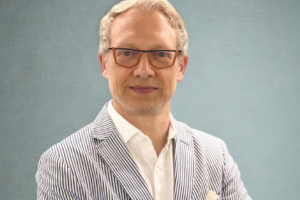
From its origins in early 20th-century Italy to its present-day role as a trusted partner to leading pharmaceutical players, MUNIT Group has carved a unique space at the intersection of engineering and drug development. With micronization at its core, the company combines proprietary technology, scientific expertise, and strategic foresight to solve some of the most complex challenges in pharmaceutical manufacturing. In this interview, CEO Stefano Martinoli shares how MUNIT is scaling its operations, embracing digital transformation, and translating decades of R&D leadership into commercial growth, all while staying anchored to its founding purpose.
What are the historical roots of MUNIT Group and how has the company evolved to address the increasing complexity of pharmaceutical manufacturing through micronization?
Our story dates back to 1918, when my grandfather left the navy to establish a company focused on building equipment for pulverising chemical substances, a forward-thinking decision that anticipated the rise of the chemical industry. This legacy of innovation continued with my father, a chemical engineer, who in the early 1960s developed our first spiral jet mill, becoming a pioneer in this technology: it delivered greater efficiency, reduced energy consumption, and significantly improved yields over traditional pulverisers. From the outset, our entrepreneurial journey has been driven by a deep commitment to innovation.
By the 1970s, my father recognised the growing relevance of this technology for the pharmaceutical industry. Micronization, the mechanical reduction of particle size of in active pharmaceutical ingredients (APIs), became increasingly vital. It enhances solubility and accelerates absorption, enabling drugs to enter the bloodstream more rapidly and deliver faster therapeutic effects that non-micronized APIs. Moreover, it reduces the amount of API required in each dose, which helps limit side effects. There is also a clear economic advantage: by expanding the compound’s volume, manufacturers can produce more units from the same quantity of material.
In 1978, Microchem was founded in Italy to offer contract micronization services. However, to better serve international markets and overcome bureaucratic barriers, We later opened another manufacturing site in Switzerland, where the pharmaceutical ecosystem offered greater efficiency and global reach. Towards the end of the 1990s, the emergence of highly potent APIs marked a shift in pharmaceutical development. These complex compounds demanded new safety protocols, prompting us to develop our own isolator systems, glove-box-style containment units adapted from nuclear technology to meet increasing HAPI demand. We were the first in our field to implement this kind of solution, and by 2001, our first isolator was fully operational. It was a natural continuation of our innovation-driven approach, adapting to new market demands while advancing the safety and precision of our services.
Today, MUNIT encompasses both Jetpharma, in Switzerland and Microchem in Italy under a unified structure. Our dual-site setup across Switzerland and Italy offers our partners an added layer of protection. By operating in two different locations, we help minimize the risk of supply interruptions caused by regulatory, geopolitical, or environmental disruptions. In addition, our customers benefit from built-in contingency planning, ensuring continuous service and reliable delivery. While micronization remains at the core of what we do, our role has evolved beyond process execution. Given the growing complexity of pharmaceutical compounds, we now solve broader challenges in particle size engineering. What we offer clients is not just a technical service, but a strategic partnership, one grounded in decades of expertise, adaptability, and a clear understanding of where value can be created across the drug development lifecycle.
How has MUNIT structured the integration of Jetpharma and Microchem, and what value does this bring to your clients?
We created MUNIT in 2017 to bring Jetpharma and Microchem under a single operational framework, enabling us to consolidate support functions ‒ such as commercial, administrative, and IT services ‒ so that both sites could remain focused on their core technical expertise. This integration has allowed us to operate more efficiently while aligning our capabilities with the increasingly complex expectations of our clients.
Today, we are advancing towards full harmonisation across both sites in terms of technology platforms, quality systems, and service offerings. This alignment supports not only internal efficiency but also broader industry trends, such as lean manufacturing and sustainability, priorities that are especially important for our blue-chip partners. For example, both sites follow the same interpretation of Good Manufacturing Practices (GMP), ensuring consistency and reliability across the board.
What truly sets us apart, however, is our mindset. We do not position ourselves as a typical service provider; we see ourselves as part of the client’s value chain. Our proposals are not just about batch size or process delivery, they are about providing strategic solutions. This level of commitment takes time to earn. Selection processes with major clients can last months or even years, but once trust is established, the relationship is often designed to last a decade or more. Ultimately, what we deliver is more than technical capability. In a value chain that stretches from API synthesis to final formulation, every delay has real-world consequences, especially for patients. This is why our clients rely on us not just for precision, but for continuity, responsiveness, and a true partnership mentality.
How have client demands evolved over time, and which types of compounds most require micronization today?
Our heritage is firmly grounded in small molecules, and while this remains our primary focus, the true commonality across the projects we handle is solubility improvements. Irrespective of therapeutic class or indication, we are typically brought in when APIs present significant bioavailability challenges. This is becoming increasingly prevalent. The new generation of high-potency APIs tends to be poorly soluble by nature, and we believe that the majority of upcoming drug applications will face solubility-related barriers.
Micronization, in this context, has become far more than a technical service, it is a strategic step in enabling absorption, therapeutic efficacy, and patient benefit. At the same time, our clients’ expectations have grown more complex. Specifications are tighter, regulatory scrutiny more rigorous, and timelines less forgiving. But this is precisely where we create value.
While standardised compounds can be processed through conventional means, new molecules often demand bespoke approaches, especially when it comes to developing and validating precise particle size distributions. In these cases, expertise and flexibility are needed to manage the risk that could impact the value chain. A delay in this phase can have serious consequences, particularly when preparing submissions to authorities such as the US FDA.
For us, these challenges represent opportunity. They allow us to apply our experience where it matters most: helping clients navigate complexity, mitigate risk, and preserve both the integrity of the value chain and the viability of their therapeutic pipeline.
Since becoming CEO, what have been the most significant transformations at MUNIT, and how have you navigated this period of evolution?
While I formally assumed the role of CEO in 2019, my journey with the group began much earlier, in 1999. The past several years have presented an exceptional combination of challenges ‒ geopolitical disruption, the COVID-19 pandemic, and heightened market competition ‒ all of which have significantly reshaped both the operating landscape and client expectations.
In this environment, the ability to adapt has become the defining aspect of innovation. While innovation is often equated with technology, we view it more broadly: it is the capacity to anticipate change, absorb complexity, and evolve in alignment with a shifting ecosystem. Without this capability, no company ‒ regardless of its heritage ‒ can remain relevant.
This mindset is particularly crucial when serving a diverse client base. Large pharmaceutical companies typically require long-term partnerships built on deep technical collaboration, regulatory rigour, and unwavering reliability. In contrast, CDMOs tend to value speed, operational efficiency, and agile execution. Each brings a different set of expectations, and meeting them requires more than technical proficiency, it demands an organisation designed to pivot without compromising quality.
Although the micronization process itself remains consistent, the priorities across the product lifecycle vary considerably, from the agility needed in early-stage development to the precision required in commercial-scale supply. Our ability to interpret these shifting demands and respond accordingly is what differentiates us. Ultimately, this adaptability is rooted in our people. As a service organisation, our knowledge base resides within our teams. It is their expertise, experience, and capacity to evolve that enable us to continue delivering value in an increasingly complex pharmaceutical landscape.
How is MUNIT positioned in today’s increasingly competitive market, and how are you strengthening your visibility, differentiation, and regulatory credibility on a global scale?
Micronization has become significantly more competitive over the past decade, but MUNIT has not only maintained its standing as a reference partner, it has reinforced it. Our clients consistently cite speed, flexibility, and technical expertise as our defining strengths, and internal benchmarking confirms we lead in these key dimensions. These qualities are especially critical in such a niche where large players, though well-funded, are often focused on other sides of the business as a whole. As a result, many turn to us when the challenges exceed the scope of generalist solutions.
What truly distinguishes us is our dual role: we are the only player in this space that both designs proprietary micronization equipment and operates it directly. While others manufacture the technology or rely on standardised systems, we tailor ours to the physical characteristics of each API. This is essential, as many pharmaceutical companies are well-versed in the chemical properties of their compounds but may not fully understand or control the physical behaviour once the material moves from synthesis into powder form. Micronization, positioned between synthesis and the galenic phase of drug development, is the critical moment when an API transitions into a finished dosage form. Managing that transition effectively is where our value lies.
We focus on highly regulated markets, those where clients not only require quality and compliance but are willing to invest in precision. While Jetpharma remains a well-known brand, we are consolidating our commercial identity under the MUNIT name to better reflect our integrated capabilities. This initiative, led by our International Marketing Manager, Brenda Hernández Fernández, is helping us to build a more cohesive global presence while communicating the full scope of our offer.
Regulatory credibility remains a cornerstone of our work. Our facilities are regularly audited by the quality assurance departments of our clients, and in the case of critical or flagship projects, these reviews often include cross-functional teams. These are not just procedural checkpoints; they are opportunities to demonstrate how deeply compliance is embedded in our operations. The trust we earn through these interactions is not based on legacy, it is built through transparency, consistency, and a clear alignment with our clients’ most stringent expectations.
What are your strategic priorities for the coming years, and how do you plan to shape MUNIT’s future trajectory?
We are entering a pivotal phase at MUNIT, one defined by the transition from a primarily R&D-driven operation to a more commercially oriented model. Our foundation is strong, rooted in a robust portfolio of early-stage compounds and a well-established R&D culture that has been consistently recognised by the market. The goal now is to accelerate the conversion of these R&D assets into commercial batches, thereby sustaining our growth through volume and scalability.
This evolution is backed by significant infrastructure investments. At Microchem, for instance, we’ve more than tripled our operational footprint ‒ from 1,200 to 3,600 square metres ‒ while at Jetpharma, we’ve acquired two additional buildings to expand GMP warehouse capacity and accommodate further growth. These steps position us to absorb increasing demand while remaining agile.
In tandem, we are pursuing a deeper organisational integration across our entities. As we grow in complexity, harmonising our quality systems and aligning operational standards has become essential, particularly in response to the lean manufacturing expectations of major pharma clients. We are also undertaking an ambitious digital transformation. This is not without challenges, given that our processes are highly tailored and resist standardisation. Off-the-shelf ERP (Enterprise Resource Planning) systems aim to streamline operations through uniformity, but in our case, every process must be customised. True digitalisation can only begin once this customisation is in place.
From a commercial perspective, our immediate objective is to translate years of accumulated R&D expertise into concrete output. Beyond that, we are preparing for entry into the US market, an important step that aligns with our broader ambitions and international footprint.
On a personal note, I remain driven by the purpose behind our work. Beyond the technical complexity and operational demands, this is a business with deep social value. We are, in our own specialised way, contributing to improving patients’ quality of life. It is a privilege to be part of that.