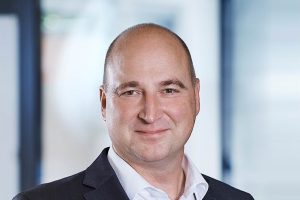
Stefan Berg, General Manager of Pharmaplan AG, offers insight into the company’s transformative journey as it becomes part of Exyte Group, a global leader in advanced engineering. Berg discusses Pharmaplan's growth strategies, the evolving landscape of pharmaceutical manufacturing, and the shift towards local production, particularly in Switzerland. He also highlights the importance of sustainable practices and digital innovation in meeting the increasingly complex needs of global pharma clients.
Last month, Exyte Group announced its acquisition of TTP Group, Pharmaplan’s parent company, marking a significant milestone in Pharmaplan’s 50-year history. Could you share more about how this acquisition came about?
We were anticipating this change for some time. To give you some background, Pharmaplan and Triplan, two distinct brands, together form a team of 1,000 engineers, architects, and scientists across Europe, including Germany, Switzerland, France, and Belgium. We were owned by a financial investor, and it was always part of the plan to hold the investment for a few years and eventually sell it. We are very pleased that we were acquired by a strategic investor—Exyte Group—because they operate in the same field on a global scale. Exyte sees value in what we bring to the table and acquiring us strengthens their market position and helps them grow further.
Exyte operates in four main business areas, of which one is bio pharma and life sciences.. As a result of the acquisition, we are significantly enhancing their life sciences unit with 1000 architect, engineers and scientists in central Europe.
Exyte’s growth agenda is called “Path to 10,” referring to their goal of reaching 10 billion euros in turnover. At present, they are at 8 billion, and the aim is for their life sciences business to contribute 1.5 billion by 2027. This acquisition is part of that growth strategy, with Exyte planning an IPO around that time.
How transformative do you anticipate this acquisition will be for Pharmaplan? What impact do you foresee on the company’s business strategy moving forward?
This acquisition is going to be a major transformation for Pharmaplan. We are transitioning from being a primarily local company, focused on Central Europe, to becoming part of a truly global organization. We will restructure and integrate in a way that maximizes efficiency and potential. The plan is to undergo a structured post-merger integration process, which could take about a year, to carefully think through what the best organizational setup will be for the future.
Our focus will shift toward how we can serve our global clients most effectively. Many of our customers are global players. They may sit in a headquarters in Basel, for instance, but they are making investments across different regions, whether in Germany, China, or elsewhere. Being part of a global company means we can offer them the consistency they are looking for—delivering on projects across various countries with shared know-how and global resources. Therefore, this integration will strengthen our ability to further compete and operate across the U.S., Europe, and Asia.
For our employees, this is also a great opportunity. Many of them are looking for global experiences, and this new structure will offer them the chance to work on projects in different regions, providing professional growth and international exposure. It is a win for both our clients and our team.
As General Manager, how are you preparing your teams for this new chapter under Exyte Group’s ownership?
First of all, this transition is not entirely unfamiliar to us. Since 2019, we have been operating as part of a global group with 25 offices around the world, so we are already accustomed to working within a global structure. Now, under Exyte’s ownership, we are becoming part of another global organization. It will be similar in many ways—maintaining regional autonomy while also having global functions and a broader organizational framework.
We are focusing on fine-tuning the details to ensure we integrate in the best way possible. There will be a change process where we organize ourselves so that everyone can benefit. Ultimately, the goal is growth. There is no need for our team to be concerned—this shift is about becoming stronger and bigger as a company.
Reflecting on our last discussion four years ago, how has Pharmaplan evolved since then? What are the most significant developments that have taken place during that time?
I am pleased to say Pharmaplan has experienced significant growth. In Switzerland, for example, we have doubled in size over the past five years, expanding from 200 to 400 employees. We have also seen substantial growth in Germany. Today, we stand as the largest pharma engineering company in Switzerland, and we are now twice the size of our next competitor. This puts us in a much stronger position than we were three years ago.
It is important to note that we are not just competing locally. We are facing international competition, with competitors based in countries like Italy, Ireland, and even the United States. Despite this, being locally strong has been a key factor in our success.
To achieve this growth, we followed a strategic agenda. We identified opportunities in the market and pursued them, which led to Pharmaplan outperforming several of our competitors. I believe our local strength combined with our long history of project delivery for our customer is one of the reasons clients trust us with large-scale projects. When a company is making a significant investment, such as a 300-million-euro project with a delivery time of three to five years, they want to work with a strong, stable organization that can deliver over the long term. Our size and capability provide that confidence to our clients.
In 2021 you explained how Pharmaplan was engaged in long-term “strategic partnerships” with 15 leading pharma companies rather than jumping from client to client. How has this model progressed?
Our strategic partnerships have continued to grow, but it is important to highlight the diversity of these collaborations. While we work with large multinational pharmaceutical companies, we also value partnerships with smaller, local CDMOs and biotech companies, as our strategy is not solely focused on size or volume. We look for partnerships that make sense, regardless of the partner’s scale. The large multinational pharma companies we work with are also very selective in their partnerships. For services like pharma engineering, they define specific strategic partners and work exclusively with them. To even receive a request for proposal, we must have these competitive master service agreements in place.
That’s why we have cultivated strong relationships with our clients through successful project deliveries over the past 25 years, and we take pride in being the preferred engineering partner for all industry leaders with research and production facilities in Switzerland… Without these agreements, we would not be considered for their projects. At the same time, we are also working with mid-sized and smaller companies that are making significant investments.
In Switzerland, we have observed a consistent interest in investments in manufacturing—both locally and abroad. What trends are you seeing in the manufacturing sector, particularly in terms of increased investment?
What we are seeing now is a resurgence in the development and production of chemical APIs returning to Europe. About 10 years ago, much of this work was taking place overseas in countries like India and China. However, now there is significant investment in chemical API production, and we are seeing it right here in Switzerland. This shift has been driven largely by the impact of COVID, which exposed vulnerabilities in global supply chains and highlighted the need to reduce dependency on countries like China.
However, while there is definitely an investment boom in API production, large-scale investments are not always happening in Switzerland. For example, Novartis is making substantial investments, but not necessarily in the country. That said, we are fortunate to have companies like Lonza, the largest CDMO, making significant global investments with a strong focus on Switzerland.
How are the technical requirements of your clients evolving, and how is Pharmaplan adapting to meet client needs?
We are highly flexible when it comes to adapting to new market demands. When a need arises, we focus on developing the necessary competencies, whether by hiring the right talent or training our current teams. We do not usually anticipate these demands, but we respond quickly by investing in the areas where they emerge. However, before we dive into innovation, it is essential to remember that the pharmaceutical industry is heavily regulated. The most important aspect remains compliance—whether it is adhering to Good Manufacturing Practices or meeting local regulations on fire protection and workplace safety. Innovation is important, but regulatory compliance still holds the highest priority.
That being said, there are clear innovations happening, especially regarding the push for paperless processes. For example, moving from paper-based qualification and validation to fully digital systems. In the future, instead of dealing with endless paperwork, companies will use well-organized, electronic systems for these activities. This shift is helping streamline the entire lifecycle of a facility by making it more efficient and manageable.
As for technology, while there has been talk about smaller, personalized production, the reality is that we are still building large-scale biotech and multi-purpose chemical API facilities. The demand for these large-scale projects remains strong. For that reason, we are increasing our capabilities in high-potency manufacturing, which requires handling very toxic substances. This means we need a highly skilled and qualified workforce to manage these projects safely. So, while innovation and digitalization are part of the evolving landscape, scaling up our expertise in traditional areas is also a significant trend.
How is the rise of virtual planning and data analytics influencing and reshaping the design process at Pharmaplan?
Virtual planning has certainly become a critical part of our design process, as it allows us to develop and refine projects digitally before moving to physical construction. It makes perfect sense to do as much as possible on the computer first because it minimizes errors and ensures precision. Using tools like Building Information Modeling (BIM) and 3D models for detailed digital planning has become standard practice. These models allow us to thoroughly plan and visualize a project before we begin work in the field.
Once we are on-site, we continue to use digital tools to verify the installation process. These tools help us confirm that everything fits as it should, further reducing the risk of error. We also incorporate dynamic simulations as part of our planning. Instead of relying on static calculations, we use these simulation tools to ensure we are designing and building the right facility from the start. This approach is now state-of-the-art across the industry and helps us deliver more efficient and accurate outcomes.
Sustainability has become a critical focus across industries, particularly in pharma manufacturing, where regulations and client expectations are increasing. How is Pharmaplan anticipating and addressing these sustainability demands?
Sustainability is something we have a significant focus on, not just through office practices, but in how we design and build facilities that save energy and resources. Every global company we work with has their own sustainability guidelines, including carbon reduction targets, and therefore everything we design for them must align with these goals. For instance, many of our clients require specific sustainability certifications which has become mandatory for us to work with them. These guidelines cover all aspects of our work from processes to infrastructure and also extend to building certifications, ensuring that facilities meet energy efficiency standards. Some clients, for example, require a LEED certification, which sets specific energy-saving criteria for the buildings we design. It can involve everything from incorporating solar energy to systems for energy recovery, and these are becoming mandatory in many projects.
Another good example of a sustainability practice is the focus on reusing existing structures rather than constructing new buildings from scratch. Often, we modify and adapt facilities to minimize waste. Additionally, in the past, more materials would have been discarded, but now, even when reusing equipment like ventilation units or reactors is more expensive, it’s encouraged because of the broader impact on sustainability. This aligns with the global standards our clients follow, emphasizing reuse and resource efficiency.
The changes in sustainability are not happening suddenly. Engineers graduating today have already been learning about environmental technologies for the past decade. The difference now is that companies have formal guidelines that must be followed, and many countries, including Switzerland, have regulations that enforce practices like energy recovery. So while the concepts of many sustainability techniques are not new, implementing them has become essential because they are now mandatory. It’s not a difficult shift for our teams since they have been trained in these methods for years.
Looking ahead, what will the future focus be for Pharmaplan, particularly in the wake of this acquisition?
One of our core principles has always been building strong, long-term partnerships. We aim to be the trusted partner for both research-based pharmaceutical companies and CDMOs. Moving forward, we will continue to support them in their technological and geographical expansions. This will vary depending on the company as their needs can be quite different.
For example, some companies are making massive investments, like Eli Lilly, which is putting billions into projects in both Europe and the U.S. These large-scale investments are a significant trend, and we will certainly play a key role in supporting these initiatives. On the other hand, we also focus on staying close to our clients through life cycle management of their facilities. This involves being on-site, modifying, and adapting facilities for new products as their needs evolve.
While we will be part of these major investments, we will also continue to act as a local partner—easy to work with and always nearby to support our clients. Both aspects are equally important to our strategy going forward.
You have been with Pharmaplan for over 20 years, which is a rare and commendable tenure. How have you kept yourself and your team energized and focused on continuous improvement over the decades?
In this role, you have to continuously earn your position—year after year. It is not enough to simply hold a title, rather, you need to consistently deliver results. That means ensuring successful project outcomes, keeping customers satisfied, and motivating your team to stay engaged and productive.
Each year presents new challenges, and you must rise to meet them. There is nothing guaranteed in this position. If you are no longer successful, you have to reassess your approach and adapt. I view it as an ongoing challenge—nothing is given, and success is never taken for granted. It is about embracing that mindset every year and continuously striving to improve.
As you look to the next two years, what are your top priorities and goals for Pharmaplan?
One of the most important targets for the next year is to ensure the success of the merger between Exyte’s life sciences division and our own. Many mergers do not go as planned, so it is critical that ours is successful. The goal is that this transition will result in a “one plus one equals three” achievement—we need to come out of this merger stronger than we went in. This is a significant task that will take several months, including a change process where we need to ensure we retain both employees and customers.
Another key priority is to create a well-organized and comfortable environment in this new setup. It is important that everyone feels at home in this new structure. Achieving that will take a lot of work behind the scenes, but it is also important that we enjoy the process. We spend many hours working together, so it should be enjoyable as well as productive. If we can achieve all of this, I will consider the merger transition a success.
Is there a final message you would like to convey to the global pharmaceutical industry on behalf of Pharmaplan as you embark on this new phase of growth?
It is crucial to have a competent partner when executing projects. We have seen many large investments that are vital to our customers, whether they are serving patients or clients, and sometimes these projects do not succeed as planned. I want to highlight that the foundation for a successful investment project is laid in the very early stages, with the right setup and a solid organization. At Pharmaplan, we are here to provide that expertise, ensuring the project is successful from the start. It is all about creating a win-win situation for everyone involved.