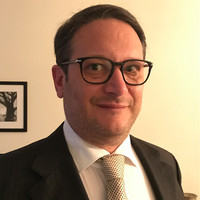
Ryad Dahmani is a leading figure in healthcare technology, driving innovation in pharmaceutical cold chain logistics and assistive healthcare solutions. As the founder of ColdChain Vision and Body Health Technologies, he demonstrates strategic agility in seizing emerging market opportunities. His ventures blend regulatory precision with cutting-edge product development, meeting real healthcare needs through technological innovation.
It has been nearly nine years since our last conversation. How has ColdChain Vision evolved throughout this transformative period?
Our strategic development has centred upon building a robust global client portfolio around our core offering—a USB data logger engineered for optimal simplicity whilst maintaining exceptional precision standards. We have deliberately pursued a value engineering approach, combining cost-effective manufacturing with uncompromising quality specifications. Our temperature sensors, sourced from Silicon Labs, deliver auto-calibrated accuracy to 0.01 degrees, representing industry-leading precision in this market segment.
Currently, we are preparing to launch complementary technologies including Bluetooth-enabled wireless logging capabilities, anticipated by year-end, alongside RFID wireless tag solutions. This represents a natural evolution from our earlier exploration of electromagnetic ink technologies, which, whilst innovative, lacked the market readiness we require for commercial deployment.
The TempInspect product has been your flagship offering. How has the commercialisation journey unfolded across your target markets?
Market penetration presented considerable challenges initially, as pharmaceutical industry incumbents demonstrated predictable preference for established players such as SensiTech and other market leaders with longer operational histories. However, we have successfully established meaningful client relationships across Brazil, Switzerland, Lithuania, and several Middle Eastern markets.
Our breakthrough strategy involved demonstrating superior value propositions through direct engagement, though I must acknowledge that building market confidence as an emerging entity requires substantial persistence and consistent service excellence.
You have also developed Body Health Technologies, focused on assistive healthcare solutions. How does this strategic diversification align with your overall business philosophy?
Body Health Technologies represents a natural extension of our core competency in identifying unaddressed healthcare challenges and developing technological solutions. We have developed and patented a portable toilet assistance device designed to provide dignity and independence for individuals with mobility limitations—elderly users, those recovering from injuries, or persons with permanent mobility challenges.
This foldable, remote-controlled system addresses a significant market gap. Unlike existing fixed installations, our solution offers complete portability, enabling use across multiple environments—private residences, hotels, healthcare facilities, and temporary accommodations. The market opportunity is substantial. Brazil alone represents over 30 million individuals with accessibility requirements from a population exceeding 200 million.
Managing two distinct technology ventures across different market segments presents unique strategic challenges. How do you optimise resource allocation and maintain focus?
My operational philosophy centres upon sequential focus rather than parallel development. When launching any product, I commit fully to establishing market presence and distribution networks before advancing to subsequent initiatives. This prevents resource dilution and ensures each venture receives the strategic attention required for success.
Currently, Body Health Technologies commands primary focus due to its exceptional volume potential and broader market accessibility. We are finalising production partnerships in China, following our established model of maximising cost efficiency whilst maintaining quality standards—production costs in Switzerland would render the product commercially unviable at approximately ten times our target manufacturing expense.
How did the COVID-19 pandemic impact your cold chain operations, and what opportunities did this create?
The pandemic catalysed significant demand expansion for our logging solutions, whilst simultaneously opening diversification opportunities. ColdChain Vision successfully entered adjacent markets, supplying oximeters, thermometers, and critically needed PPE. We became a primary supplier for hospitals and pharmacies in Lugano when local availability approached zero.
Our strategic advantage emerged from rapid market assessment and agile supply chain development. We established a local pharmacy as our distribution hub, enabling us to fulfill 100,000 mask orders within a single day whilst developing lasting relationships with healthcare facilities across France and Portugal. This crisis response demonstrated our operational flexibility and created cross-selling opportunities for our core logging technologies.
What trends do you observe in pharmaceutical cold chain requirements, and how are you positioning to capitalise upon these developments?
Regulatory expansion represents the most significant trend, with requirements extending beyond traditional 2-8 degree vaccine parameters to encompass broader temperature ranges—12 to 28 degrees for various pharmaceutical products. This regulatory evolution substantially expands our addressable market.
Additionally, high-value pharmaceutical products—those valued in millions—require enhanced monitoring capabilities including real-time GPS tracking and advanced data analytics. Our product roadmap incorporates these capabilities whilst maintaining our core value proposition of accessible, precise monitoring solutions.
The food industry similarly demonstrates increasing adoption of cold chain monitoring, representing substantial market expansion beyond our traditional pharmaceutical focus.
Your global operational model spans Switzerland, Brazil, China, and Middle Eastern markets. How do you manage this geographical complexity?
Our approach prioritises strategic partnership development over direct market entry. I invest considerable effort in identifying and cultivating distribution partners across target geographies, enabling local market expertise whilst maintaining central quality and service standards.
This model proves particularly effective for our emerging Body Health Technologies platform, where regulatory requirements vary significantly across jurisdictions. Switzerland offers streamlined approval processes, whilst Brazil requires more extensive regulatory navigation. Our distribution partnerships provide essential local expertise for these varied regulatory environments.
Sustainability considerations increasingly influence pharmaceutical supply chains. How does this impact your operations?
We have implemented a comprehensive device lifecycle management programme, offering buyback and refurbishment services for our single-use data loggers. This circular economy approach resonates strongly with clients facing increasing sustainability scrutiny whilst creating additional revenue streams through device refurbishment and reprogramming services.
Looking ahead three years, what strategic objectives guide your planning?
Body Health Technologies represents our primary growth focus, given its exceptional market potential and scalability. Once we establish robust distribution networks for this platform, we will evaluate subsequent innovation opportunities.
Our revenue trajectory demonstrates consistent growth—currently reaching several million annually—and we anticipate this growth pattern continuing as market penetration deepens and product portfolio expansion occurs.
What strategic insights would you offer entrepreneurs considering healthcare technology ventures?
Client-centric innovation represents the fundamental success factor. I derive the most valuable insights through direct client engagement, understanding precisely how our solutions address specific operational challenges. My objective is to function as the solution to client problems—the aspirin for their headache, as I characterise it.
Successful market entry requires persistence and disciplined focus. Direct engagement through cold calling and email outreach remains essential—typically, five to ten positive responses emerge from every hundred contacts. This reality demands substantial dedication and systematic approach.
Most importantly, maintain strategic patience. I evaluate numerous opportunities but commit only to concepts with exceptional potential and clear market need. Not every opportunity merits pursuit—strategic selectivity proves essential for sustainable growth.
How do you characterise your leadership philosophy and organisational culture?
Collaborative leadership delivers superior outcomes. I do not possess expertise across every domain, so encouraging diverse perspectives and ideas strengthens our strategic capabilities. Hierarchical decision-making limits innovation potential—our most effective solutions emerge through team collaboration rather than executive mandate.
Accessibility and responsiveness define our client service standards. I maintain availability virtually around the clock, ensuring client issues receive immediate attention. This service philosophy differentiates our offerings in competitive markets where responsiveness often proves more valuable than marginal product advantages.