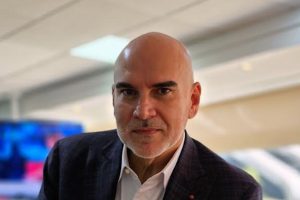
Rogerio Frabetti, General Manager of Biogen Brazil discusses the organisation's strategic transformation as it expands beyond its neuroscience heritage into immunology whilst maintaining leadership in rare diseases. He articulates Brazil's elevation to a top-tier global market, outlines ambitious growth trajectories in Alzheimer's disease and lupus, and addresses the complexities of patient access through innovative value-based care models and comprehensive patient support programmes that extend far beyond pharmaceutical intervention.
The recent strategic transformation at Biogen has emphasised focus and impact. How is this global repositioning influencing Brazil’s strategic priorities and operational footprint?
Brazil has emerged as significantly more relevant within Biogen’s global portfolio. We now constitute part of the G7 group of affiliates, which represents not merely elevated contributions to global turnover, but strategic positioning based on markets we shall enter over the next three to five years. The Brazilian affiliate’s importance will be substantially amplified during this period compared to its historical position.
We are entering highly competitive, premium market segments – lupus, Alzheimer’s disease, and renal diseases – armed with assets characterised by substantial innovation in immunology. This represents a deliberate diversification beyond our traditional neuroscience focus. The expectations surrounding the Brazilian affiliate are considerable, as we rank among the top five markets across all these emerging therapeutic areas. This development carries implications not solely for Biogen Brazil’s prominence, but will fundamentally impact Latin America’s strategic relevance within the organisation.
Where do you identify the most substantial growth opportunities for Biogen Brazil?
Alzheimer’s disease unequivocally represents our most significant growth opportunity. We possess an exceptionally compelling pipeline featuring genuinely disruptive scientific innovation. Lupus constitutes the second major growth frontier.
However, it is essential to acknowledge that we remain a formidable rare disease powerhouse – this represents our domain of expertise and dominance. We have important products approaching launch that address significant unmet medical needs within rare diseases, the majority within neuroscience, though others extend beyond this traditional focus.
What does the recent approval of the first treatment for Friedreich’s ataxia signify for Biogen Brazil’s commitment to rare diseases and patient access?
This constitutes an extraordinary achievement, particularly for the patient community. Brazil harbours approximately 1,500 to 1,800 patients suffering from Friedreich’s ataxia without any therapeutic options whatsoever. Biogen is providing these individuals with a meaningful alternative to improve quality of life – a development celebrated extensively across the medical community.
Brazil ranks among the top three global markets for ataxia, and we are navigating certain access challenges despite product availability. We are evaluating submission to CONITEC at the beginning of next year, which will effectively transform outcomes for the majority of these patients. This is a devastating disease, and our intervention will dramatically alter quality of life and prognoses for these individuals in the coming years. Clinical trials demonstrate that earlier and sustained treatment correlates directly with improved prognostic outcomes and life expectancy. This represents a profoundly important asset for Biogen.
How is Biogen Brazil adapting its negotiation and evidence generation strategies with CONITEC and the Ministry of Health to accelerate the incorporation of these innovations?
We face considerable challenges regarding access in Brazil. CONITEC functions as an important technical agency, though we anticipate improvements in its technical capabilities. Beyond approvals, we must accelerate incorporation into Ministry of Health programmes, as patients experience excessive delays in accessing approved and incorporated products. This remains a domestic systemic issue we are addressing collaboratively with Interfarma to reform these processes.
Regarding access philosophy, Biogen firmly believes that providing innovative medicines alone proves insufficient. We must deliver the optimal patient treatment experience. Companies can – and Biogen does – offer substantially more than pharmaceutical products, ensuring patients receive comprehensive support: complete treatment protocols, systematic follow-up, physiotherapy, phonoaudiology examinations, and all interventions necessary to secure optimal clinical outcomes. For us, the innovative drug represents merely one component of this continuum. Patient care programmes make the definitive difference, and Biogen is an organisation resolutely focused on delivering value far beyond the pill.
Risk-sharing agreements have gained prominence in markets like the Gulf Cooperation Council countries. How viable are such value-based models in Brazil, and what strategies is Biogen pursuing in this regard?
Risk-sharing represents one possible dimension of innovative access management approaches. The Ministry of Health is conducting comprehensive evaluation of these mechanisms, with draft legislation currently under review that recognises risk-sharing as one component of the broader patient care journey services spectrum.
We view this as a viable option depending upon the therapeutic product, though the paramount objective remains ensuring superior clinical outcomes. Risk-sharing need not constitute the exclusive pathway. Alternative mechanisms exist – various indices and datasets can be leveraged to generate robust real-world evidence. This represents our strategic perspective on the matter.
Are you developing data generation and clinical engagement infrastructure to support these initiatives?
The patient support programmes we incorporate into Ministry of Health contracts and CONITEC submissions create exceptional opportunities for systematic patient evaluation and documentation. The benefits for all stakeholders – payers, industry, physicians, patients, and government – prove substantial.
When we establish visibility across the complete treatment journey, we can identify optimal patient profiles, determine therapeutic value propositions, and conduct negotiations that are significantly more productive and evidence-based. For Biogen Brazil, this represents a critical strategy launching in early next year. We shall incorporate into all contracts – both public and private sectors – the provision of not merely innovative medicines but comprehensive service packages ensuring optimal outcomes and patient experiences.
Biogen’s acquisition of Human Immunology Biosciences represents a significant expansion into immunology. What potential impact might this have on your Brazilian portfolio and future growth plans?
Biogen has constructed a substantial heritage in neuroscience. We transformed multiple sclerosis globally. We are changing outcomes for patients with spinal muscular atrophy. We shall likely alter the natural history of ataxia. This constitutes our legacy and DNA.
Immunology represents the new frontier Biogen is decisively entering with completely disruptive molecules. Whilst we possessed historical immunology experience – including through multiple sclerosis and products subsequently licensed to third parties – we now recognise that our current pipeline and recent acquisitions are fundamentally differentiated from existing products and alternatives within the immunology market.
In light of Biogen’s global shift in Alzheimer’s therapies, how prepared are physicians and stakeholders in Brazil for next-generation hybrid treatments?
We are in a phase of intensive knowledge creation, investing substantially in medical education. The most significant challenge we confront regarding Alzheimer’s disease is early diagnosis – this makes the definitive difference. We must educate physicians, families, and patients that at the first signs of disease, they must immediately pursue diagnostic examinations. This represents a critical barrier and an essential concept requiring broad dissemination. It constitutes a fundamental prerequisite for the success of emerging molecules entering this segment.
Additionally, we must prepare reference centres. Historically, patients consulting neurologists presented in mid or late-stage disease. As we advance the diagnostic paradigm, current specialist capacity will prove inadequate to address patient needs. The neurology society must become fully engaged in managing these patients, and generalists require comprehensive preparation to identify early-stage Alzheimer’s disease. These represent significant challenges.
Nevertheless, I remain wholly convinced that anti-amyloid therapies, and subsequently anti-tau treatments, will establish completely transformed futures and prospects for patients with Alzheimer’s disease.
Does the diagnostic challenge affect specific Brazilian regions disproportionately?
Naturally, when addressing Brazil’s geography, the North and Northeast regions present additional complexity due to territorial dimensions, educational levels, and cultural factors. However, the fundamental challenge of Alzheimer’s disease diagnosis exists uniformly across the entire country. This concerns concept and perspective – the imperative to act rapidly in identifying disease and advancing diagnosis as early as possible. Earlier disease stage correlates directly with superior therapeutic outcomes.
What initiatives is Biogen Brazil pursuing to enhance diagnostics, referral networks, and healthcare professional engagement?
We are comprehensively prepared and working in alignment with our scientific team to ensure all reference centres are optimally equipped to manage these patients, with key opinion leaders fully engaged and thoroughly conversant with the conceptual and practical challenges we face domestically.
Our second focus addresses awareness – genuinely critical work to sensitise the population towards rapid, early action. We are developing initiatives in partnership with patient associations and neurology academies to ensure comprehensive stakeholder engagement for this launch.
How would you evaluate the rare disease landscape in Latin America amid rising global interest in this area?
We have evolved considerably in Brazil and Latin America over the past five years. The volume of investment and government budget allocated to incorporations and treatments has increased significantly. However, this remains insufficient. New molecules, products, and clinical trials are accelerating the identification of diseases and treatments far more rapidly than governments and payers can adapt their budgets. Affordability constitutes a major challenge.
Nevertheless, this represents an irreversible transformation. We discussed with Ministry of Health officials recently that this defines the future of specialised medicine. Presently, fewer than 10 percent of rare diseases have been identified, and fewer than 5 percent have available treatments. Within the next decade, we anticipate exceeding 30 percent of rare diseases with therapeutic options available. This presents simultaneously a substantial challenge and an extraordinary opportunity to engage payers – both public and private – regarding affordability models and disease management structures ensuring patient access and sustainable financing.
The paradox in Brazil is that whilst we possess universal healthcare rights for all Brazilians, actual access proves far less universal than we aspire to achieve. This constitutes a profound challenge. The fundamental misunderstanding of healthcare expenditure versus investment in population health represents a paradigm requiring evolution.
Do you believe that involving the Ministry of Finance in these discussions might represent a viable pathway towards more economically sustainable healthcare?
I think that we have seen significant improvements and good initiatives from MoH on the last years, but there is space to accelerate the incorporation of new technologies and to see healthcare as an investment.
Regarding high-complexity diseases, we need more technical personnel adequately prepared to comprehend future trajectories and scientific advancement. This paucity of qualified experts represents, in my assessment, the most significant obstacle.
Secondly, the government invests substantial resources across numerous projects and fiscal benefits, including tax reductions for specific sectors, representing enormous monetary commitments without reciprocal obligations. Healthcare investment must be perceived as an investment, not a cost. This constitutes a fundamental error.
Regarding innovation investment specifically, whilst the Ministry of Health consistently emphasises innovation, the new research and development legislation establishes Brazil as a potential reference nation in rare diseases. We possess population diversity, numerous centres receptive to innovation, and governmental incentives capable of attracting substantially more clinical trials to Brazil – not merely Phase III, but Phase II and Phase I studies. This represents tremendous opportunity.
When studies come to Brazil, we import capital, knowledge, and innovation simultaneously. This, to me, represents genuine innovation – engaging companies with compelling, innovative products to establish investment partnerships, rather than investing in technology transfer of antiquated molecules with globally commoditised technology. This understanding requires a better equilibrium.
Regarding clinical trials, is Biogen currently conducting studies in Brazil?
Brazil ranks among our most significant countries for trial activity. We are conducting approximately ten protocols – Phase II and Phase III – across more than 60 research reference centres. Some protocols involve multiple centres participating in identical trials. Investment levels are escalating substantially and will double over the next two years.
What is the core of Biogen Brazil’s talent strategy for attracting and retaining neuroscience and rare disease experts while fostering an innovative culture?
Firstly, we incentivise and focus on rapid internal talent development. Secondly, our internal environment must be inspirational, motivational, and provide transparent opportunities for continuous learning. We articulate that Biogen should function as your Master of Business Administration – we work intensively, but learn rapidly.
Additionally, our leaders actively recruit individuals superior to themselves. This represents our mantra: I must build a team I am confident can surpass my capabilities. This makes the definitive difference. We preserve our internal environment meticulously, which contributes substantially to our employer branding.
Over the next five years, what is Biogen Brazil’s single most critical priority for sustaining impact, and which measurable achievements in patient access or pipeline development would best indicate successful leadership?
The entrepreneurial mindset represents paramount importance. When addressing high complexity, particularly rare diseases, each life counts. Each patient requires treatment and attention. With artificial intelligence and emerging technologies, accelerating patient journeys and advancing diagnostics becomes increasingly feasible. However, this demands an entrepreneurial mindset and ambition, coupled with persistent future-oriented optimism.
In Brazil, we confront numerous challenges – cultural, political, and social. Nevertheless, we consistently deliver double-digit growth in healthcare markets, and Brazilians possess sufficient resilience to exceed expectations perpetually.
How do you bring Biogen’s pioneering start-up spirit to Brazil, balancing entrepreneurial agility with long-term stability in this complex market?
Companies require three engines. The first engine is based on business and operational efficiency – this represents our foundation, our methodology for ensuring not merely professional execution but continuous improvement.
The second engine is innovation – pioneering innovation. This spirit must permeate not solely senior leadership but all employees throughout the organisation.
The third engine is sustaining employee motivation. I fundamentally believe nothing materialises without engaging our employees’ intrinsic motivation. They possess the capacity to make a difference, and the company must make a difference in their lives reciprocally. All organisations – all innovative companies – proclaim they change lives. However, changing lives means not solely for patients, but transforming our employees’ lives, our team members’ lives. This, for me, proves essential.
What would you like as your final message for our global readership?
A phrase I emphasise consistently: The passion for the future must exceed the pride of the past.