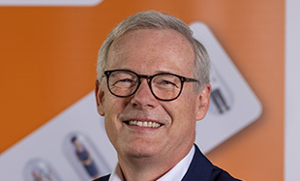
Eight years after establishing its Swiss affiliate as a one-man operation, Accord Healthcare has built a strong position in one of Europe’s most competitive markets, with a focused strategy in oncology, rheumatology, and neurology. In this interview, Country Director and General Manager Richard Hummel reflects on the affiliate’s rapid growth, the impact of regulatory reforms on biosimilar adoption, and the organisational shift required to enter originator medicines.
How would you reflect on your professional journey, and what led you to take on the challenge of building Accord Healthcare Switzerland from the ground up?
I completed a PhD in molecular biology at the University of Freiburg, focusing on oncology research. In the mid-1990s, I moved to Switzerland for a postdoctoral position at the Biozentrum in Basel, before deciding to pursue a career in the pharmaceutical industry.
Over 13 years, I progressed from international product management to leading a marketing team. A defining achievement was consolidating the company’s fragmented branding into a coherent identity. Another milestone at Mepha was leading its expansion into oncology, including the introduction of some of Switzerland’s first biosimilars.
After international experience at Clariant and a return to generics at Spirig Healthcare, I was offered the rare chance in 2017 to build Accord Healthcare’s Swiss affiliate from the ground up. I began as the first and only employee, working from home while securing the licence and premises, before moving the affiliate to Basel, which offered both strategic convenience and access to strong talent. Establishing Accord Switzerland in this way was truly a once-in-a-lifetime professional opportunity.
What made the opportunity to establish Accord Switzerland particularly compelling in 2017, and how did you approach shaping the affiliate’s strategy?
When I look back, two defining moments guided my decision. The first was my long-term experience in defining marketing strategies and making brands successful. The base of such success was always to have a vision and keep going even when it became tough. Being part of such success stories was deeply rewarding and showed me the impact of setting ambitious yet achievable goals.
The second was the prospect of creating an affiliate from the ground up, something that rarely comes along in this industry. Before accepting, I examined Accord’s strategy and portfolio carefully and was reassured both by the strength of the parent company and by the seriousness of its plans for Switzerland. What made the opportunity truly compelling was the freedom given to me as country manager to define the local portfolio within broad strategic parameters. With years of experience in this market, I knew what could succeed and what would struggle, and having the trust to shape the affiliate accordingly was extremely attractive.
Accord offered something unique: the combination of ambition, realism, and strong institutional backing, together with the chance to shape a company’s direction from its very first day. That made the decision clear.
How is Accord Healthcare positioned in Switzerland today, and how do you see your portfolio contributing to the affiliate’s growth?
Accord is today one of Europe’s leading generics and biosimilars companies, and this continental reputation has been an important foundation for our Swiss operations. Switzerland was among the last affiliates to be established – only Hungary came later – with the entity officially registered in 2016, the Swissmedic licence granted the following year, and our first deliveries made in October 2018. Serving that first customer was a significant milestone, and by the second year, we had already reached financial self-sufficiency, covering operating costs and salaries entirely from locally generated revenues, which for such a young affiliate was a remarkable achievement.
From the beginning, we adopted a deliberately focused strategy. Oncology has been our principal area, complemented by rheumatology and autoimmune diseases, and more recently, neurology. Unlike long-established generic players, we did not attempt to build a broad portfolio across every therapeutic category. Segments such as antibiotics, cardiovascular, or diabetes are already well covered and highly competitive, whereas oncology offers both opportunity and need. Hospitals and prescribers were open to a new entrant, recognising that an additional supplier broadens choice and strengthens supply security.
What has further distinguished Accord is our commitment to products that deliver clear value beyond cost. Our leading biosimilar was among the first to be approved across Europe in 2018 and launched shortly after in Switzerland. In addition to cost reductions versus the original, it offers stability for up to 15 days at room temperature, which is a considerable advantage in practice. Whether in hospitals or in patients’ homes, interruptions to the cold chain can lead to expensive wastage; our formulation mitigates that risk and has been widely appreciated. Another example is our parenteral cytostatics in big vial format, which reduces the workload of hospital pharmacists and lowers the amount of cytostatic-contaminated waste requiring specialised disposal. These kinds of practical innovations have strengthened our reputation as a partner attuned to real-world needs.
Today, oncology generics continue to account for the majority of our business, but biosimilars are an increasingly important growth driver. Our sales are also evenly split between hospitals and retail, which is unusual in Switzerland, given that most major generics players remain heavily weighted towards retail categories. This balance reflects both the therapeutic areas we have chosen to prioritise and the fact that our products are used either in hospitals or in private clinics, depending on geography. Taken together, this positioning has allowed us to build a distinct and resilient footprint in the Swiss market.
What impact have recent policy and regulatory measures had on the uptake of generics and biosimilars in Switzerland, and how has this influenced your business?
Pharmacists in Switzerland were first granted substitution rights in the early 2000s, accompanied by a modest fee the first time a patient was switched from an originator to a generic. This worked reasonably well for short courses of treatment such as antibiotics or analgesics, but had little effect on long-term therapies like statins, where the incentive was paid only once and then lost its impact.
The real turning point came with the 2024 reform of distribution margins. Previously, prescribers and pharmacists earned more by dispensing originators, which created a structural disadvantage for biosimilars. In oncology, this was particularly impactful as prices are higher than in many other therapeutic areas
By introducing a uniform margin across originators, generics and biosimilars, the reform removed this disincentive and immediately boosted uptake. Generics benefited too, but the effect was most dramatic for biosimilars, where the original products are substantially more expensive. This shift has changed the nature of our discussions with healthcare professionals. Instead of being dominated by price, conversations now focus on product benefits and features, such as the room-temperature stability of our pegfilgrastim, which reduces wastage and brings tangible advantages for both pharmacists and patients.
Another measure – higher co-payments for originator medicines – has also been introduced. Its effect in oncology is limited, as out-of-pocket contributions are capped per year and patients with cancer typically exceed that threshold quickly. Even so, the policy plays an important educational role by reminding patients of the value of alternatives.
Overall, these reforms have made Switzerland a far more favourable environment for competition and patient access.
Where do you see the most promising opportunities for Accord in Switzerland, whether in therapeutic areas, new launches, or portfolio expansion?
For companies active in generics and biosimilars, the greatest opportunities inevitably come with major patent expiries. When a high-value molecule loses exclusivity, the market is redistributed among the players, and being able to launch on the first day is critical. Those who enter immediately can establish themselves strongly, while those arriving later are often left with only marginal volumes. We have managed several successful day-one launches, which has been a real advantage and ensured that our portfolio remains competitive from the outset.
Beyond these opportunities, we see central nervous system (CNS) therapies as an increasingly promising growth area. As in oncology, substitution levels remain low because pharmacists are understandably cautious when dealing with particularly vulnerable patients. In multiple sclerosis, for example, no one wants to risk triggering a relapse by switching therapy without careful consideration. We recently introduced a product in this field, which reinforces our strategy of focusing on specialist-driven markets rather than the broader general practitioner segment, at least for the time being.
Switzerland remains an attractive environment for such launches because marketing and product features still play a decisive role. While price is clearly important, pharmacists and specialists also recognise the practical benefits of a product. If a treatment reduces their workload, minimises the risk of error, or improves patient safety, those advantages are given real weight. Pharmacists in particular feel a strong responsibility in this respect, and they value solutions that make handling safer and more efficient. This makes Switzerland a market where differentiation goes beyond cost alone and where features that deliver tangible improvements can strongly influence uptake.
Looking back at the past eight years, what achievements stand out for you in terms of market performance and organisational development?
Two achievements stand out for me. The first is our market position. According to the IQVIA panel, Accord now ranks sixth in the overall generics market in Switzerland, even though we focus almost exclusively on oncology, with only a modest presence in rheumatology, bone health, and CNS disorders. Within oncogenerics, we are already in third place, and the distance to the second position is narrowing.
The second is the team we have built. Creating a company from scratch requires bringing people along on a constantly evolving journey. Roles change, new colleagues join, some leave, and in certain cases, we have had to part ways when paths no longer aligned. Steering the organisation through these transitions while maintaining our trajectory has been as important an achievement as our commercial success.
How do you foster a strong culture within Accord Switzerland and ensure that your team remains motivated and aligned in such a competitive environment?
For me, everything begins with selecting the right people. I often tell candidates that joining Accord is like tending an entire garden rather than one small plot. Some plants flourish, others may not survive a difficult winter, but ultimately, you are responsible for the whole. That requires agility, ownership, and a willingness to contribute beyond narrow boundaries, qualities essential for anyone who wants to be part of this journey.
A good example is our current Head of Marketing and Sales. She joined five years ago as a marketing manager at a time when our sales were very low and our budget was extremely limited. Today, we are the number six in the generics market, and she has progressed first to Head of Marketing and now to her current leadership role. Her trajectory reflects not only her ability but also our philosophy: focusing on customer needs rather than simply pushing products.
Organisational changes have also been part of our growth. In the early years, one individual covered both Regulatory Affairs and Quality while also serving as a Qualified Person (QP). With only three local product releases in the first year, this was manageable. When that person left last year, we used the moment to split the functions into two dedicated departments, each now with its own leadership and expanded teams.
I often refer to Tuckman’s team development model – Forming, Storming, Norming, Performing – because every new hire sets the cycle in motion again. Enthusiasm and uncertainty lead to friction, followed by alignment, and eventually strong performance. It is a constant process, but at its core, this business is about people. Seeing colleagues develop – whether a junior product manager becoming a full manager within a year, or a marketing manager advancing to head of sales – is one of the most rewarding aspects of my role.
Where do you see Accord Healthcare Switzerland in the next two to three years?
The coming years will be shaped by a number of important patent expiries, which always create significant opportunities in our industry, and we have a strong pipeline prepared to take advantage of them. Equally important is our ongoing transition into originator products, which is already reshaping both our organisation and our profile in the market. It has now been almost two years since we launched our first originator in oncology, and a second will follow next year. This is an entirely different challenge from generics. It requires sales teams with new skills, the ability to interpret clinical trial data, and the confidence to engage prescribers directly and convince them to adopt a new therapy.
This change has already altered how we are perceived in Switzerland. In the generics space, oncologists usually advised us to speak with hospital pharmacists, as they were the ones deciding which products to purchase. With originators, however, the conversation shifts to physicians, who must be persuaded on the basis of clinical and therapeutic value. It is a more demanding process, but so far, we have managed it well. Unlike large multinational companies with extensive resources, we cannot simply cover all aspects required for successful marketing new molecules; instead, we must rely on creativity, innovation, and pragmatic solutions, which are often valued by customers who appreciate a fresh approach.
Our entry into originators has also required organisational adaptation. We have, for instance, introduced a Medical Science Liaison Manager (MSL) to the team, a role rarely seen in generics but essential when dealing with innovative products. More broadly, the line between generics companies and originator companies is becoming increasingly blurred. Major innovators will remain focused on breakthrough medicines, but others are now active in both innovation and biosimilars. At Accord, we are following a similar path, supported by extensive biotech capabilities, large-scale manufacturing facilities in India, and highly skilled development teams.
Most importantly, we enjoy strong backing from our parent company, Intas Pharmaceuticals. Their commitment to investing in and supporting the Swiss affiliate gives us the resources and confidence to pursue this next stage of growth. With that foundation, I believe we are well-positioned to expand our portfolio, deepen our presence in oncology, and strengthen our standing in Switzerland’s healthcare landscape.
How would you like Accord Healthcare to be perceived in Switzerland, and what message would you like to leave with patients, partners, and stakeholders?
Our industry is undergoing constant transformation, and the pace of change is only increasing. While many external factors remain beyond our control, what we can do is prepare ourselves, cultivate the right mindset, and ensure that we are agile enough to adapt. For me, building Accord Switzerland from the ground up has been one of the most exciting experiences of my career. Yet beyond having a clear strategy and strong support from headquarters, true success comes down to people who share the same passion and commitment to make such a project work.
I am fortunate to lead a team that consistently goes beyond expectations. In oncology, especially, where every decision directly affects patients, this dedication truly matters. I recall situations where a call would come late in the afternoon requesting a product needed urgently the next morning, even though the logistics cut-off had already passed. Time and again, the team has managed to find a solution. This is not the case of a nasal spray being delayed for a few days; these are medicines for cancer patients, and the consequences are entirely different. That willingness to act decisively and responsibly in critical moments defines us.
Ultimately, I would like Accord to be recognised as an organisation that combines strategic ambition with an unwavering focus on patients, supported by people who are prepared to go the extra mile when it matters most. I am proud of the colleagues I work with here in Switzerland, and equally grateful for the collaboration and backing we receive from our teams in the UK, across Europe, and in India. Their support has been invaluable in establishing our affiliate and continues to play a crucial role in shaping our growth.