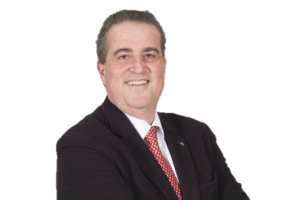

Five decades since its founding, Helsinn has recently undergone one of the most consequential transformations in its history. Executive Chairman Riccardo Braglia and Group CEO Melanie Rolli reflect on a period marked by strategic separation, operational reinvention, and renewed therapeutic ambition. From navigating a near-collapse to redefining the company’s role in oncology and rare diseases, their account is a study in resilience, clarity, and conviction.
How has Helsinn evolved its structure and strategy to overcome recent adversity and position itself for the future?
Riccardo Braglia (RB): Ahead of Melanie Rolli’s arrival, our family made the decision to restructure the Helsinn Group into three independent business units, enabling greater strategic focus and resilience. Helsinn remains a pharmaceutical company centered on cancer supportive care; Healthcare Advanced Synthesis (HAS), our CDMO based in Biasca, now operates entirely independently with its own leadership, supplying high-potency APIs and including oncology products and antibody-drug conjugates (ADCs) to major pharmaceutical companies across the US, Europe, and Asia. Recently HAS acquired Cerbios-Pharma to consolidate its position as CDMO. Though still family-owned, HAS shares no operational overlap with Helsinn, aside from commercial supply agreements.
The third arm comprises our biotech venture funds,3B future health, with two already active and a third in development. These vehicles focus on early-stage companies in oncology, rare diseases, and immunology, typically at the preclinical or Phase II stage, which we support and scale alongside other investors, ultimately exiting through standard venture pathways. By separating these activities, each business can pursue its own strategy and financing independently, allowing for greater operational clarity and long-term viability.
In 2022, Melanie joined Helsinn as Chief Operating Officer to prepare for a planned Nasdaq listing. However, a series of compounding events – including product setbacks, leadership issues, the war in Ukraine, and my own prolonged hospitalisation for leukaemia – created a “perfect storm” that forced us to withdraw the IPO and pushed the company to the brink of collapse. Despite these challenges, Melanie remained fully engaged, and in January 2023, assumed the role of CEO. Upon my return, we jointly led a comprehensive restructuring effort that restored financial stability and repositioned the company on stronger footing.
Melanie Rolli (MR): I was drawn to Helsinn by its distinctive legacy: a values-driven, family-owned company approaching its 50th anniversary, with deep roots and a resilient foundation. Despite the turmoil, the organisation had a clear sense of purpose, a loyal team, and the potential to rebuild and evolve. Our transformation focused on streamlining operations, enhancing commercial capabilities, and strengthening Chemistry, CMC (Chemistry, Manufacturing and Controls) functions.
While HAS now operates separately, the finished product manufacturing business remains within my remit, with a strong presence in Ireland. Alongside our headquarters in Lugano, we maintain commercial operations in the United States, a small but strategic team in China, and partnerships that allow us to reach patients in over 190 countries. The company today is lean, flexible, and highly collaborative, building on long-standing relationships while embracing new ones.
As a physician, I was particularly inspired by the opportunity to deliver meaningful impact at a global scale. Our direct control over finished product and distribution not only ensures consistent quality but also allows us to work with partners worldwide from a position of operational strength. Another defining element is Helsinn’s early and unwavering commitment to Environmental, Social and Governance (ESG) principles. Even in the most difficult moments, we maintained our ESG focus, something that resonates strongly with future talent, long-term investors, and our broader vision for the company. Our upcoming ESG report will reflect how we upheld those values through one of the most demanding periods in our history.
How is Helsinn building on its legacy in supportive care to expand into oncology therapeutics and rare diseases?
MR: Supportive care has always formed the cornerstone of Helsinn’s identity, rooted in treatments that enhance patients’ quality of life while undergoing cancer therapies. Historically, this included pain and anti-emetic medications, continually adapted to meet evolving patient needs. From a medical perspective, this area remains profoundly important, as it addresses aspects of the treatment journey that are too often overlooked. Our ambition has never been limited to prolonging life but has consistently embraced the broader imperative of preserving its quality.
Building on this legacy, we are expanding our scope to meet the shifting demands of modern oncology. As cancer therapies grow more sophisticated, supportive care must evolve in parallel, addressing both the direct impact of treatment and its broader physiological toll. At the same time, we are exploring adjacent opportunities in chronic diseases where similar principles apply, instances where enhancing patient comfort and function can significantly improve therapeutic outcomes. This broader vision is shaping the development of our pipeline, enabling us to extend our expertise beyond traditional boundaries without diluting our focus.
A notable example is our introduction of mechlorethamine (Valchlor/Ledaga) for cutaneous T-cell lymphoma, a rare dermatological malignancy. With a narrowly defined patient population and a highly specific treatment profile, it represents precisely the type of indication where Helsinn can make a meaningful contribution. Rather than pursuing areas already dominated by large players, we are concentrating on therapeutic niches where our size, capabilities, and commitment to patients offer a distinct advantage.
Where is Helsinn focusing its innovation efforts, and how has its model for development and commercialisation evolved?
MR: Helsinn has adopted a clear and focused strategy for the next phase of its evolution. We have consciously moved away from in-house development to concentrate on identifying late-stage assets from innovative biotech’s, building upon our longstanding legacy as an in-licensing organisation. Our internal capabilities – particularly in life cycle management and commercialisation – enable us to integrate and scale these products efficiently across our global infrastructure.
This shift represents a strategic refinement from our earlier engagement with earlier-stage assets, which often began in preclinical or Phase I development. Over the next three years, our priority will be on securing assets in Phase III or beyond, allowing us to mitigate development risk while accelerating the path to market. This model also enables us to concentrate resources where we can deliver the greatest value, both to our partners and to patients.
Commercially, we maintain direct operations in the United States, supported by a fully integrated organisation that includes headquarters capabilities and a dedicated field force. Beyond the US, we work through an extensive network of long-standing commercial partners, ensuring broad international access. In select geographies, we also continue to engage in out-licensing where it aligns with our strategic and operational priorities. This hybrid model offers us the agility to adapt to local market dynamics while maintaining control over product quality and commercial performance.
Why does supportive care remain central to Helsinn’s strategy, particularly in the context of emerging oncology modalities?
RB: Helsinn has long been recognised by international partners and licensing collaborators as a company that delivers innovative, high-quality therapeutic solutions, particularly in supportive care. Our leadership in this field is underpinned by a series of successful launches, including palonosetron (Aloxi), netupitant + palonosetron (Akynzeo), and fosnetupitant (Arokaris), all of which have significantly improved the management of chemotherapy-induced nausea and vomiting. Supportive care is not simply part of our legacy, it remains a strategic pillar because the need persists, particularly as cancer therapies become more potent. My own experience as a patient undergoing chemotherapy reinforced how essential this dimension of care is, not only in easing the burden of treatment, but also in improving its overall outcome. Even with novel agents such as ADCs, side effects like nausea remain prevalent, underscoring the continued relevance of this therapeutic area. For Helsinn, supportive care is both a space of clinical importance and one in which we are uniquely positioned to lead with purpose and precision.
MR : The evolution of oncology therapies is creating new and urgent demands for supportive care, making it more integral than ever to the patient journey. As treatments extend survival and convert certain cancers into chronic conditions, patients are remaining on therapy for longer periods, intensifying the need to maintain their quality of life. Innovations such as ADCs have delivered impressive clinical outcomes – particularly in breast cancer – yet they have also introduced unexpected toxicities, with side effect profiles that, in some cases, mirror those of earlier-generation chemotherapies. This has led us to actively engage with ADC developers to explore how Helsinn’s supportive care portfolio can mitigate these burdens. The complexity increases further with cell and gene therapies, which frequently induce immune-mediated reactions such as cytokine release syndrome. While some symptom management options already exist, others, including targeted anti-cytokine interventions used in intensive care, present opportunities for more specialised collaboration. As therapeutic science advances, supportive care must evolve alongside it, and that is precisely where Helsinn intends to remain a driving force.
What defines Helsinn’s philosophy when it comes to identifying and nurturing long-term licensing partnerships?
RB: At Helsinn, partnerships are not viewed as transactions, but as enduring, trust-based collaborations built over time. Many of our commercial relationships have lasted several decades, which speaks to the consistency and mutual commitment that define our approach. When seeking new partners – whether due to evolving strategies within existing companies or to support the growth of our portfolio – we look for organisations that share both a therapeutic focus aligned with our expertise and a conviction in the value our products bring to patients. Just as important is their willingness to engage in a relationship that extends far beyond the licensing agreement itself. We provide comprehensive support across regulatory affairs, CMC, logistics, and commercial strategy, and we ensure regular engagement at every level, from senior executives to product and marketing teams. This structure fosters transparency, responsiveness, and alignment. Increasingly, potential partners also approach us proactively, attracted by our reputation for scientific rigour, reliability, and long-term perspective. Whether the partnership is newly formed or well established, we maintain the same philosophy: genuine collaboration, open communication, and a shared focus on delivering meaningful, sustainable value to patients and healthcare systems worldwide.
How did Helsinn’s leadership and values-based ownership model enable the company to recover from near-collapse?
RB: Helsinn’s recovery from its most challenging period was driven by two essential strengths: the enduring values of the Braglia family, with my three sons working in the business, and the cohesion and determination of its leadership team. The separation of the group into three independently operating entities – Helsinn Healthcare, HAS, and our biotech venture arm – allowed each to focus more precisely on its mandate. Yet the transformation came at a cost; we were faced with the extremely difficult task of reducing our workforce by nearly 200 people, many of whom had been with the company for decades. This was not undertaken lightly, but it was managed with care, clarity, and a strong sense of purpose. What truly distinguished us in that moment was the family’s unwavering support. In a scenario where financial investors might have stepped back, we stepped in, offering guarantees and the capital required to stabilise the business and preserve its future. This decisive, values-driven response created a foundation for renewed trust, internally and externally. Looking back, the outcome reinforced a core belief that has always guided us: never give up, even in the face of profound adversity.
MR: Navigating such a profound organisational transformation required not only structural realignment, but also a fundamental shift in mindset. We knew from the outset that our previous way of operating would no longer serve us, and the scale of the changes – particularly the significant duction of our workforce – demanded clarity, speed, and decisiveness. What allowed us to succeed was an unflinching focus on our strategic goal and a relentless commitment to transparent, inclusive communication. We never wavered from our vision, and we brought people with us, explaining each decision, its rationale, and how it contributed to a more stable, future-ready organisation. That openness fostered trust and cohesion, empowering teams to take ownership of the transformation. Within 18 months, we had rebuilt our operating model, implemented more efficient processes, and returned the company to a high level of performance. By early 2024, the results of this effort were clear. It was a difficult and at times painful journey, but one that ultimately re-energised the organisation and reaffirmed the power of shared vision, trust, and resilience.
What has guided Helsinn’s international expansion strategy, particularly in complex markets such as the United States, China, and Japan?
RB: As a Swiss-based company, expanding beyond domestic borders was imperative. Switzerland, while stable, is not a commercially significant market in our sector. Rather than initially pursuing neighbouring European countries, we chose to take a bold step in 2008 by entering the United States. Through the acquisition of a small biotech firm holding rights to anamorelin (Adlumiz), which would later be successfully launched in Japan for cancer cachexia, we established our US subsidiary. Although the decision proved strategically sound, the reality of operating in the United States has been consistently demanding. The complexities of distribution channels, hospital networks, and promotional frameworks continue to pose challenges. Nevertheless, our long-term presence has elevated the group’s visibility and contributed meaningfully to its global positioning.
Our entry into China was driven more by regulatory necessity than commercial ambition. Registering our products proved difficult, prompting us to establish a regulatory office in Beijing and later an R&D hub near Shanghai. There, we advanced a pipeline of ghrelin-based compounds, several of which were successfully out-licensed, including to a Swedish partner. These local activities enabled us to build strong relationships with Chinese authorities and develop intellectual property aligned with regional expectations. We also established a sales team in Shanghai, though evolving policy dynamics and tightening access for foreign companies led us to revise our model. In 2023, we appointed Fosun Pharmaceutical as our commercial partner, supported by our local marketing team; a hybrid approach that allows us to maintain relevance while adapting to new realities.
Our experience in Japan has been shaped by persistence. Initial attempts to enter the market were met with setbacks, largely due to underperforming partnerships and difficulties around our early anti-inflammatory products. However, we re-engaged the market with a more disciplined strategy, leading to the successful registration and launch of palonosetron (Aloxi), followed by anamorelin (Adlumiz). Today, our long-standing relationships with Taiho Pharmaceutical and Ono Pharmaceutical represent trusted, mutually beneficial partnerships that reflect both the quality of our products and the value we place on long-term collaboration. Together, these three markets illustrate the flexibility and commitment that underpin Helsinn’s international strategy.
What are Helsinn’s international ambitions, and how is the company ensuring agility and resilience in an increasingly unpredictable global environment?
MR: Our international ambition is to grow deliberately and sustainably, while remaining agile in the face of constant and often unpredictable change. The global healthcare environment evolves rapidly, and we have designed our commercial structure to be inherently flexible. Across our key markets, we operate through differentiated models: a fully integrated organisation in the United States, a lean and adaptive presence in China, and strategic partnerships in other regions. This diversity is not incidental, it is a core strength that enables us to respond swiftly to shifts in market conditions, regulatory landscapes, and policy frameworks. Relying on a single operating model would expose us to unnecessary risk; instead, our decentralised approach allows us to tailor our strategies, preserve continuity, and scale efficiently where needed. As we continue to expand our portfolio, we will evaluate each new opportunity in context, ensuring that our market approach reflects both local needs and global priorities. At the heart of this mindset is resilience, a deeply held commitment to perseverance, adaptability, and delivering long-term value without ever compromising the principles that define us.
How does Helsinn integrate philanthropy and patient advocacy into its corporate mission, and what impact does this have on the organisation’s broader purpose?
RB: Philanthropy and patient advocacy are not peripheral to Helsinn’s mission, they are fundamental to how we define our purpose as a healthcare company. From the outset, we have fostered long-standing relationships with patient associations and medical foundations, recognising their role not only in care delivery but also in advancing research and awareness. I have served on the board of the Conquer Cancer Foundation in the United States, where our contributions have supported both fundraising and early-stage research, particularly for young investigators. At the local level, we support cancer research initiatives in Ticino, helping to ensure that scientific progress benefits our immediate community. I am also actively involved with the Helmut Horten Foundation – Switzerland’s largest healthcare foundation – which funds transformative research projects and institutions, such as the Institute for Research in Biomedicine and the region’s cardiovascular centre. Our engagement is both global and local, rooted in a belief that medical innovation must ultimately serve patients. Recognition from initiatives like the CEO Roundtable on Cancer, launched by President George H. W. Bush, has been particularly meaningful, reinforcing our belief that leadership in this industry comes with responsibility. While commercial success is vital, it is a means to an end; the end being better care, better outcomes, and lasting support for those we serve. As family we also run two Foundations: The Gabriele and Anna Braglia Foundation for art and the New Flower in Africa Foundation that built and manage 30 schools in the sub-Sahara countries with around 35.000 students.
MR: Riccardo’s vision for combining scientific innovation with social impact continues to shape the company at every level. His deep commitment to patients and the broader oncology community is reflected not only in the values we uphold but also in how we operate day to day. Our teams, particularly in medical affairs, are consistently engaged with clinicians, researchers, and patient advocates to maintain a clear understanding of the real-world challenges facing patients and caregivers. These insights inform our strategies, ensuring they are grounded in clinical relevance and societal need. It is not a parallel effort, it is embedded in the business. Through this integration of purpose and execution, we ensure that our commitment to patient wellbeing is not just aspirational but actively lived throughout the organisation.
What distinguishes Ticino as a life sciences hub, and how has the region evolved in recent years to support the industry’s growth?
RB: Ticino has evolved into a strategically positioned and increasingly sophisticated life sciences hub, marked by a growing cluster of pharmaceutical companies, research institutions, and international industry events. Historically rooted in finance, the region has shifted its economic focus in recent years, with pharmaceuticals now playing a central role in its industrial transformation. Today, Ticino hosts 28 pharmaceutical and biopharmaceutical companies of varying scale – including established players such as IBSA Institut Biochimique and Zambon Switzerland – alongside several Contract Development and Manufacturing Organisations (CDMOs) and production sites. This diversification has brought new dynamism to the region, supported by its excellent infrastructure and geographical proximity to key centres such as Milan and Zurich. Beyond its corporate presence, Ticino has also positioned itself as a venue for high-calibre scientific dialogue. The biennial International Conference on Malignant Lymphoma (ICML), organised by the Foundation for the Institute of Oncology Research (IOR), is among the most prominent oncology meetings worldwide. The region has also hosted specialised congresses in medical devices and orthopaedics, and will soon welcome DECAT Europe, focused on the chemical and CDMO sectors. With its blend of industrial capability, academic engagement, and international accessibility, Ticino is emerging as a compelling destination for life sciences investment and collaboration.
What is your vision for Helsinn moving forward, and what strategic priorities are guiding the company’s next chapter?
RB: Our vision for Helsinn is to continue growing with integrity, grounded in our values and our role within both the healthcare system and society at large. We are committed to strengthening the commercial performance and long-term relevance of our current portfolio through strategic lifecycle management, ensuring our existing products continue to deliver value to patients. In parallel, we are actively exploring complementary opportunities through external innovation and licensing, building on the company’s heritage as a partner of choice. The foundation we have rebuilt – following a year of intense transformation – has brought renewed clarity, alignment, and ambition. As we enter this new phase, we are focused on responsible growth, underpinned by agility, scientific excellence, and a deep-rooted commitment to improving patient outcomes.
How has your experience shaped your leadership at Helsinn, and what distinguishes working within a family-owned company from other environments?
MR: Leading a family-owned company like Helsinn is a uniquely intense and rewarding experience, defined by speed, resilience, and shared purpose. Having previously worked in large pharmaceutical organisations, biotech ventures, and academic institutions, I recognise how each environment demands a different mindset. In big pharma, projects can be quickly reallocated. In biotech, a failed asset can mean the end of the company. At Helsinn, there is stability, commitment, and the ability to work through uncertainty with the support of a long-term vision and a values-driven ownership. What drew me here was a strong alignment in purpose; from my first interview, I felt that this environment reflected both my professional goals and personal principles. That alignment was tested early on as we faced an exceptionally difficult year, but we navigated it together, with honesty and determination. My diverse background helped me adapt, but it was the trust and shared belief in our direction that allowed us to persevere. Not every project succeeds, not every year goes as planned, but in a company like Helsinn, there is the space to keep going and the commitment to see it through.