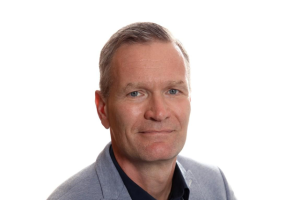
Cell and gene therapies are redefining the boundaries of what is scientifically and operationally possible in healthcare, but bringing these innovations to patients at scale requires more than breakthrough science. In this conversation, Ralf Altenburger, Global Head of Cell & Gene Therapy at Roche, discusses how the company is navigating the complexity of this evolving field, from regulatory harmonisation and talent development to cross-portfolio integration and long-term investment strategy.
What distinguishes cell and gene therapies from more established modalities, and what organisational approaches are needed across the industry to handle their complexity?
Cell and gene therapies differ profoundly from traditional treatment modalities such as small molecules or biologics, not only in terms of their scientific complexity but also in how they are developed, manufactured, and delivered. Recognising this, we established an integrated technical operations unit dedicated entirely to cell and gene therapies. This organisation brings together all the core capabilities required – regulatory, quality, manufacturing, development, and supply chain – under a single, specialised structure designed to address the specific demands of these therapies.
What sets this field apart is the direct and ongoing interaction with treatment centres and, in many cases, with the patients themselves. In autologous settings, for example, material is collected from a patient, modified externally, and returned as a personalised treatment. This model introduces a level of proximity and complexity far beyond that of off-the-shelf products. The supply chains must be extremely precise, adaptable, and patient-specific; something that did not exist within Roche just a few years ago and which required focused investment and development.
At the same time, the commercial and regulatory environments around cell and gene therapies remain highly dynamic. Gaining approval is only one step; ensuring access often involves extended pricing negotiations, the establishment of licensing frameworks, and close collaboration with healthcare providers across diverse geographies.
What’s driving the move from rare diseases to broader indications in cell and gene therapies?
The early development of gene therapies naturally centred on rare, genetically defined conditions, where the underlying biology provided a clear rationale for intervention. These cases offered a well-mapped therapeutic pathway, but the limited patient populations made it difficult to build a commercially viable model around rare diseases alone.
What we are now seeing, across the industry and within Roche, is a deliberate shift towards broader indications. While rare diseases continue to be an important focus, they cannot be the sole basis for sustainable innovation in this space. Increasingly, we are exploring areas where gene therapy could address diseases with higher incidence, offering both therapeutic value and a feasible business case. This evolution reflects a growing understanding that the promise of cell and gene therapies must be matched by models capable of reaching more patients, more consistently, and at scale.
How should companies decide where to apply cell and gene therapies, and how do you address the complexity that comes with integrating these technologies?
At Roche, we do not begin with a focus on the modality itself. Rather, our strategy starts with the disease areas we aim to address, guided by scientific understanding and patient need. From there, we determine which modalities – cell and gene therapies among them – offer the most promising pathways. In this sense, the modality serves as a means to an end, not the objective in and of itself. Cell and gene therapies have significantly broadened our scientific capabilities, opening opportunities to address diseases that would otherwise remain out of reach, and in some cases offering the potential for curative treatment.
Yet the complexity of these technologies – especially when involving multimodal approaches such as gene editing, delivery systems, or engineered platforms – requires a fundamentally different framework. This is precisely why we created a dedicated cell and gene therapy organisation within Roche. Its purpose is to ensure the right level of focus, structure, and expertise to manage this complexity, while also fostering the kind of cross-functional understanding needed to transform scientific progress into real, accessible medicines. Rather than simplifying the science, our aim is to build the internal capacity to navigate it with clarity and intent.
What regulatory and harmonisation efforts are needed in cell and gene therapy, and how close is the industry to achieving greater consistency in manufacturing and quality standards?
Regulatory harmonisation remains a critical enabler for advancing cell and gene therapies globally, and it is an area in which we are actively engaged. Navigating different regulatory frameworks across regions not only creates operational complexity but can also delay access to potentially life-changing treatments. Our regulatory teams are deeply involved in efforts to align processes, working closely with international associations and authorities to foster shared understanding and accelerate convergence where possible.
That said, the global landscape remains uneven. Some countries, particularly in Asia, have made notable progress and now bring considerable experience in reviewing cell and gene therapies. In other regions, however, the field is still emerging, and regulators are building the technical and organisational capacity required to assess these complex modalities. This variability introduces challenges, particularly when local systems are not yet equipped to evaluate the nuanced scientific and manufacturing considerations that these therapies entail.
On the manufacturing side, the industry continues to work toward greater standardisation and consistency. The earliest CAR-T therapies were launched under highly collaborative and exploratory conditions, and much has been learned since. One of the most important realisations was that cell and gene therapies cannot be treated like traditional pharmaceuticals; they demand new frameworks both technically and procedurally. Achieving homogeneous quality remains a core objective, not only for patient safety and efficacy, but also to enable reliable, scalable production. Still, working with living cells brings a level of biological complexity that simply does not exist with small molecules or even antibodies, and this makes full standardisation an ongoing challenge rather than an immediate goal.
What drives Roche’s sustained investment in cell and gene therapies, and how do recent acquisitions support this vision?
Our continued investment in cell and gene therapies is anchored in a conviction that these modalities will play a critical role in the future of medicine. While the field is still maturing commercially, we view these technologies as essential additions to our scientific toolbox, capable of addressing diseases in ways that were previously out of reach. Acquisitions are not pursued for modality’s sake, but rather based on a clear biological rationale and their potential to align with our broader strategic priorities.
Poseida Therapeutics is a compelling example. The acquisition provides us with access to an allogeneic CAR-T platform, which we view as a strategic opportunity to broaden access to cell therapies in Oncology and Autoimmune Diseases. Our aim is to help “democratise” CAR-T, moving beyond the limitations of autologous approaches by enabling scalable, off-the-shelf treatments. This direction is especially meaningful in oncology, where demand is high and the potential to reach more patients through consistent and accessible solutions is both urgent and profound.
How do cell and gene therapies complement Roche’s broader portfolio in key areas such as oncology and ophthalmology?
In oncology and haematology, therapeutic areas where we hold a long-established leadership position, cell and gene therapies represent the logical next step. The acquisition of Poseida Therapeutics and its allogeneic CAR-T platform reflects our ambition to move beyond current treatment thresholds and explore new therapeutic territory. These modalities are to extend and complement our portfolio, offering new options for patients.
Ophthalmology is another strategic pillar. Within our cell and gene therapy pipeline, we are advancing a stem cell programme in partnership with the Israeli-based subsidiary of Lineage Cell Therapeutics. The project, OpRegen, is focused on retinal pigment epithelial cells as a potential treatment for geographic atrophy. It exemplifies our broader philosophy: integrating cutting-edge modalities into areas where we already bring deep scientific expertise to deliver meaningful improvements in care.
What is needed to build the talent and technical capabilities required to lead in cell and gene therapies, and how can organisations ensure long-term commitment and resilience?
When I began my career, cell and gene therapies were not even on the horizon. Over the years, I have worked across three organisations and held more than fifteen roles, each requiring me to step into new areas and learn continuously. My transition into this field, just over three years ago, was no exception. But the ability to remain curious, to learn from those around me, and to adapt quickly has always been essential, and I see those same qualities reflected across our teams at Roche.
Our approach to talent development combines internal growth with strategic external hiring. We invest in training and upskilling our people while attracting new colleagues with the specialised expertise this area requires. What strengthens our ability to build a robust cell and gene platform is the breadth of Roche’s organisation. With both a diagnostics and pharmaceutical presence, we can foster synergies across disciplines; for example, by leveraging work on reagents that support cell and gene therapy applications. Talent mobility between these domains is actively encouraged, and it helps us to embed this capability more deeply and sustainably.
As for our long-term commitment, this is not a tactical experiment; it is a strategic priority. We recognise the volatility in the space and the correction cycles that have affected others, but we are resolute in our belief that cell and gene therapies represent a vital addition to our scientific and therapeutic toolbox. This is reflected in our dual research engine – Genentech Research and Early Development (gRED) in South San Francisco and Pharma Research and Early Development (pRED) in Basel – both of which are actively advancing programmes in this field. We are not merely participating in this space; we are building the foundation to lead it. Our recent acquisitions, such as Poseida, underscore that belief.
Looking back on your career, how has your experience in cell and gene therapy compared to your earlier roles?
After nearly three decades in the industry, I can say that cell and gene therapy represents one of the most dynamic, challenging, and rewarding chapters of my career. The science moves quickly, and the operational demands are high. Yet, what truly sets this field apart is how closely it connects us to the patient. In this role, more than any other, I feel that connection directly and tangibly. That proximity to real-world impact is what makes this work so compelling, and why I remain energised by what lies ahead.