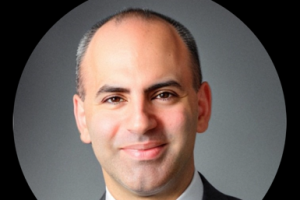
Philippe de Saab, Vice President, Vision Care at Bausch + Lomb, outlines the company’s strategy amid rising global demand for contact lenses. He highlights innovations in contact lenses, a localised approach across 50 diverse markets and efforts to expand patient access through professional partnerships – all built on Bausch + Lomb’s 170+ year legacy in eye health.
Could you begin by sharing your professional background and current role at Bausch + Lomb?
I’ve spent my entire career in health care, working across everything from over-the-counter products to medical devices. It’s a sector I find deeply rewarding, because at its core, it’s about improving people’s lives. That purpose has always guided my professional choices.
My career foundation was built through 20 years at Novartis, where I gained extensive international experience across Switzerland, the US, Germany and France. Those roles helped me develop what I’d call strategic and cultural agility – the ability to lead diverse teams, adapt to different market dynamics and build solutions that work locally while aligning with broader strategic goals.
Seven years ago, I joined Bausch + Lomb, an organisation with more than 170 years of leadership in eye health and a truly global footprint. Today, I lead the Vision Care business across Europe, Russia, the Middle East and Africa (EMEA), overseeing our portfolio of contact lenses and lens care products. Our EMEA footprint spans nearly 50 markets and involves both direct operations and distributor partnerships. A big part of our work involves partnering with eye care professionals, particularly opticians, to support them in their daily fitting practices. In addition to my regional responsibilities, I also lead global commercial strategy with a focus on driving sustainable, long-term growth. This dual role allows me to stay close to local market dynamics while helping shape Bausch + Lomb’s global trajectory.
What major trends are shaping the EMEA contact lens market?
The contact lens industry is entering a period of exceptional growth, with projections suggesting it could nearly double over the next decade. That momentum is being driven by two key trends that are reshaping the market.
First, we’re seeing growth in the contact lens user base. One of the biggest factors is the rising prevalence of myopia, particularly among children and adolescents, with studies indicating that 50% of the global population will have myopia by 2050. This is largely due to lifestyle factors like increased screen time and reduced outdoor activity. As a result, we expect a growing number of people to need vision correction. In parallel, population growth and improved affordability in developing markets are making contact lenses more accessible, allowing an increasing number of consumers to enter the category.
Second, existing wearers are trading up within the category. The shift to daily disposable lenses, valued for their convenience and hygiene, is accelerating. We’re also seeing rising demand for more complex vision correction, such as lenses for astigmatism and presbyopia, where innovation has helped create lenses that offer excellent comfort and optics.
How do you assess governmental receptiveness and priority allocation toward ophthalmology compared to other therapeutic areas?
Two factors are driving increased attention toward eye health: the rise in paediatric myopia, as I mentioned before, and the ageing population. As people live longer, we’re seeing a growing prevalence of age-related eye conditions like cataract, macular degeneration, retinal diseases and glaucoma. This is creating a need for expanded and more comprehensive eye care services.
These trends align closely with Bausch + Lomb’s positioning as a global eye health company. Our portfolio spans the full spectrum of ophthalmology – from contact lenses and lens care to surgical solutions, dry eye treatments, vitamins, and prescription medications – allowing us to support patients across all stages of life and vision needs.
That said, contact lenses remain largely a non-reimbursed category, typically treated as consumer health products, which means they fall outside most public reimbursement frameworks. This presents both challenges and opportunities: while it limits direct government involvement, it also allows for more agile, consumer-driven innovation and education. We see this as an opportunity to partner with professionals in shaping the market and driving broader adoption.
Can you elaborate on your region’s performance dynamics and positioning within the global organisation?
EMEA continues to play a pivotal role in Bausch + Lomb’s global vision care business. In the second quarter, we delivered double-digit year over year growth in constant currency, driven entirely by organic performance.
What’s particularly encouraging is the breadth of this momentum. Growth was consistent across every major product category and geography, reflecting the strength of our portfolio, the trust we’ve built with eye care professionals, and the executional excellence of our commercial teams.
Importantly, we are not just growing – we’re outpacing the industry, which typically sees mid-single-digit growth. This performance underscores both the depth of our strategy and the energy behind our teams.
What are some of the key innovations driving your growth and their significance for the market?
Innovation has always been at the heart of Bausch + Lomb. We were the first to mass-produce soft contact lenses and pioneered silicone hydrogel materials, which are now the global standard. Today, our pipeline continues this legacy of leadership, solving complex vision challenges through advanced optical design and material science.
Three recent innovations highlight our approach:
First, Bausch + Lomb ULTRA Multifocal for Astigmatism are the first stock lenses designed for patients with both presbyopia and astigmatism. Previously, made-to-order customisation, involving month-long waiting periods, was required. With over 6,000 parameters now available for next-day delivery, they dramatically reduce wait times for patients and streamline fitting for practitioners, while delivering up to 16 hours of comfort.
Second, Bausch + Lomb ULTRA One Day, our next-generation daily disposable silicone hydrogel contact lenses. These lenses blend MoistureSeal with ComfortFeel technology, which releases ingredients that protect, enrich and stabilise the tear film, hence supporting ocular health. These ingredients were inspired by the TFOS DEWS II global consensus report on dry eye disease, making us the first company to translate these clinical recommendations into a lens design.
Third, to help address paediatric myopia control, we launched Arise Ortho-K. Arise is an overnight lens that gently reshapes the cornea during sleep, offering clear daytime vision without glasses and helping slow myopia progression. What sets it apart is its seamless integration with topographers to accurately capture 3D images of the front curvature of the eye. Our cloud-based platform instantly generates precise lens designs and initiates manufacturing, delivering high accuracy for patients and streamlining the fitting process for professionals.
These innovations reflect our commitment to improving outcomes, expanding access and helping eye care professionals deliver best-in-class solutions.
How do you manage portfolio strategy and commercialisation across such diverse regional markets?
Managing portfolio strategy across EMEA means balancing consistency with flexibility. We maintain a unified global product portfolio, ensuring every market has access to the same high-quality innovations.
That said, our go-to-market strategies are highly localised, due to various dynamics within each country. For example, the education level of eye care professionals varies across markets, which influences how we prioritise our products. In Western Europe, where training is more advanced, we focus on technical lenses that correct presbyopia, astigmatism, or support myopia control. In developing markets, we prioritise more foundational solutions for basic myopia correction.
Channel dynamics also vary widely. While in the majority of countries, the opticians manage the fitting, in others, only the ophthalmologists can fit lenses. Distribution pathways also vary: some countries require only the optician to dispense the lenses, while other markets allow sales through pharmacies, drugstores or online platforms.
Success depends on tailoring commercialisation models to reflect these local realities, while ensuring we maintain global brand consistency. We typically launch products simultaneously across the region, but we adapt our tactics to fit each market’s unique conditions.
How do you position the Bausch + Lomb brand with stakeholders, and what is its recognition based on?
Our greatest opportunity is to grow the overall contact lens category, where adoption rates remain surprisingly low. One barrier is that contact lenses are not always prioritised by eye care professionals, often due to limited training or staffing resources.
That’s why our strategy is built around partnership. We equip professionals with the tools, services, and education they need to fit lenses confidently and seamlessly, supported by innovative products that make their practice more efficient.
Our 170+ year heritage provides a foundation of trust. Eye care professionals recognise Bausch + Lomb as a brand synonymous with reliability and innovation. That reputation strengthens our relationships and reinforces our role as a partner committed to helping people see better and live better.
How do you incorporate real-world evidence and clinical data into your commercial and educational strategies?
Research and evidence generation are deeply embedded in our company’s DNA – they’re central to how we innovate and how we communicate.
We use real-world insight data in two ways. First, we integrate satisfaction surveys and usage data into our sales and educational materials. These findings, gathered in multiple markets across the region, provide highly relevant peer-to-peer insights that resonate more strongly with professionals than traditional clinical studies.
Second, these insights play a critical role in shaping our innovation pipeline. By identifying unmet needs and performance opportunities, we’re able to guide product development in ways that truly reflect what patients and professionals are looking for. It’s a continuous feedback loop that helps us stay ahead of the curve and bring products to market that make a real difference.
What is your philosophy for building and leading a high-performing, diverse team across such a wide region?
Building and leading a high-performing, diverse team across such a wide region starts with a shared sense of purpose. Our mission, “see better, live better”, isn’t just a tagline. It’s something our teams genuinely connect with, especially given the company’s more than 170-year legacy of innovation. That legacy gives our work real meaning and inspires pride across the organisation.
Vision care is also deeply personal to me. I’ve worn contact lenses every day for the past 25 years, and many of my team members do too. We don’t just market the benefits – we live them first-hand. That personal connection creates a strong sense of ownership and passion. We know how life-changing these products can be, and that motivates us every single day.
Having worked across multiple international markets, I know success requires balancing regional strategy with local autonomy. I empower teams to apply the insights and tactics that work best in their markets, while aligning on shared objectives like category expansion, professional partnerships and brand consistency.
Looking towards 2027-28, what are your key strategic objectives for the region?
We’re focused on two major priorities that will shape our growth over the next few years.
First, we’re staying ahead of market trends, especially the rising demand for daily disposables and lenses for presbyopia and astigmatism. Our innovation pipeline specifically targets these high-growth segments, with new product launches planned over the next two years to complete our portfolio.
Second, we are preparing for the next generation of innovation. Advances in materials science and lens design are creating entirely new possibilities for performance and comfort. Even for products still several years away, we’re laying the groundwork now so that we can effectively deliver solutions that address unmet needs and shape the future of the industry.
From your perspective as a leader based here, what are the specific advantages of operating from Switzerland?
Switzerland may be small in size, but it plays a leading role in the global pharmaceutical and medical device industries. These sectors make up a significant portion of the country’s GDP. This creates a supportive environment for health care companies.
The country combines political and economic stability with a strong culture of innovation and world-class academic institutions. The country is therefore a hub for top scientific and business talent, which is critical for driving progress and maintaining high standards.
And from a practical standpoint, Switzerland’s central European location makes it an ideal location for managing EMEA operations.
What final insights would you share with health care industry decision-makers?
Eye health is one of the most dynamic and fast-evolving health care industries, with tremendous potential ahead. While unmet needs remain, the pace of innovation in this space is remarkable, and gives us real confidence in our ability to deliver meaningful progress for patients.
As a global eye health leader, Bausch + Lomb is uniquely positioned to meet these challenges. We are investing in areas of high clinical and personal impact – such as innovative contact lenses, surgical solutions and prescription treatments – and we aim to affect how people experience the world. We’re committed to bringing forward innovations that help patients everywhere, every day see better and live better.