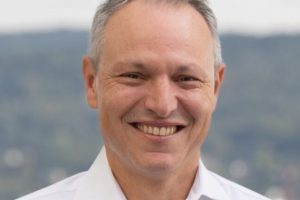
Patrick Amstutz co-founded Molecular Partners 20 years ago with a vision to revolutionize medicine through protein engineering. Inspired by the potential of DARPins, a novel class of custom-built protein drugs, he has led the company through key milestones—including breakthroughs in ophthalmology, infectious diseases, and oncology. Today, Molecular Partners focuses on cutting-edge T-cell engagers and targeted radiotherapies, aiming to deliver precision treatments for cancer and other severe diseases.
You co-founded Molecular Partners 20 years ago. Could you share what initially drew you to this project and some key milestones in its journey?
What truly motivated me was a fundamental desire to make “Drugs That Matter.” From early on, I have always been fascinated by human biology, not just for the sake of studying it, but with the clear goal of helping people. That sense of purpose has always been at the core of why I do what I do.
I had once considered studying medicine, but I soon realised that medicine is primarily about applying existing knowledge. I, on the other hand, was driven by curiosity and the need to invent and create something new. That led me to biology, and eventually to biochemistry, which I studied at ETH Zurich.
I was fortunate to be at ETH at a time when the culture of biotechnology and start-ups was just beginning to blossom. We had professors who encouraged us to think beyond the lab—filing intellectual property, imagining our own companies, embracing a start-up mindset. I hadn’t expected that when I started my studies, but it turned out to be incredibly inspiring.
It was during those university years that I, along with a close friend and colleague, Christian Zahnd, first began thinking seriously about founding a biotech company. We were particularly drawn to the field of protein engineering. Essentially, the idea of taking proteins, often human ones, and engineering them to perform new or improved tasks. We saw that as a frontier for innovation in therapeutics.
After our studies at ETH, we joined the University of Zurich and began working in the lab of Professor Andreas Plückthun, who had co-founded MorphoSys and was a pioneer in protein engineering. His lab offered the perfect convergence of two things that were critical to us: cutting-edge research in protein engineering and mentorship from someone who had successfully transitioned from academia to entrepreneurship.
It was in that setting that we were introduced to repeat proteins—a class of molecules that would eventually lead to the creation of Designed Ankyrin Repeat Proteins (DARPins). Andreas had previously been one of the first to express antibodies in bacteria, and he was also an early adopter of phage display technology, which allowed scientists to generate antibodies without relying on immunisation in animals.
This background helped us see the opportunity to do something entirely new—something beyond antibodies. That is where the idea for DARPins emerged. We believed they represented a novel and highly versatile scaffold for drug development. And with that, the vision crystallised: we would build a company, Molecular Partners, with the purpose of developing innovative, custom-built drugs based on this technology platform, along with a team of 6 co-founders from the University of Zurich.
The dream, from the start, was to help patients. That purpose has never changed, and since those early days, Molecular Partners has been a journey of constant learning, growth, and discovery. And I am fortunate today to have my co-founder and friend Michael T Stumpp along with a strong team of dedicated and passionate colleagues along and working towards our purpose of making drugs that matter.
Could you summarise Molecular Partners’ overarching vision and highlight some key moments in your history?
At its core, the vision of Molecular Partners has remained remarkably consistent over the past two decades: to address significant unmet medical needs with our DARPin candidates, offering tangible solutions for patients living with severe, often life-threatening diseases.
What makes our approach distinctive is that we only pursue solutions where we can bring something truly unique. If someone else is better positioned, we are not needed and step aside. However, when we have the key to solving a problem, we pursue it fully. That is why we focus on developing drugs with single-agent activity that can show clear value early in their development, particularly in oncology, where early-phase data often provides meaningful insight.
This early validation is crucial not only from a scientific standpoint, but also from a business perspective. In biotech, resilience is essential, and the ability to halt a programme early if it is not working is just as important as pushing forward when it is. This mindset has been vital to our sustainability over 20 years. Hence, we have become very strategic in evaluating which projects are worth the investment, both scientifically and financially, and which are not. That discipline has helped us stay nimble and focused.
Another cornerstone of our success is collaboration. We believe in forging win-win relationships not only with pharmaceutical companies but also with academic institutions, clinical investigators, and other research partners. These investigators, in particular, are essential because they are closest to the patients. Over time, we have learned to work more closely with them, listening to their insights and aligning more directly with patient needs.
Being at the heart of a vibrant biotech ecosystem and building the right team has been critical. We don’t pretend to be experts in every therapeutic area, but we do know how to partner with the right experts and how to complement their strengths. That is what allows us to keep moving forward with focus and impact.
How do DARPins differ from traditional antibodies, and what unique advantages do they offer?
To understand DARPins, it helps to first consider antibodies. Antibodies are naturally evolved binding proteins with multiple functions, including immune activation and long half-life. While powerful, they are also bulky and complex structures, and in many therapeutic situations, all of their functionalities are not all that necessary. That is where our approach comes in.
Instead of using antibodies, we turned to a different family of proteins—repeat proteins, which nature evolved for structural tasks, like anchoring. These are much smaller, more stable, and highly modular. We saw an opportunity to take that anchoring framework and engineer it into a new class of highly specific, therapeutically active binders: DARPins. They are smaller and more stable than antibodies, and can bind with equal, if not greater, precision, and without the unwanted extra functionalities.
Our early applications showcased these advantages. One of our first major efforts and breakthroughs was in ophthalmology, developing abicipar, a monodomain DARPin therapy for wet age-related macular degeneration. At the time, the standard treatment required monthly injections, which was burdensome for patients. We engineered a VEGF-targeting molecule with half-life extension in the eye, aiming to reduce dosing to once every three months. The programme, after being licensed by Allergan, showed excellent efficacy in large-scale trials and completed Phase 3 studies with strong results. However, abicipar didn’t receive approval due to safety concerns with inflammation in eyes: silicone oil in syringes could interact with DARPins and lead to the formation of subvisible particles, hence causing inflammation – a hypothesis proven later on in animal studies. This was a difficult but important lesson. When developing a new modality, every detail matters—down to the syringes used.
The second major breakthrough was during the COVID-19 pandemic. Our DARPin platform allowed us to rapidly develop ensovibep, a tri-specific DARPin candidate that could target the SARS-CoV-2 virus from multiple angles, raising the barrier to viral escape. Unlike antibody cocktails, which require manufacturing multiple large proteins and delivery of high doses, we achieved comparable efficacy with 75 milligrams of a single DARPin-based molecule compared to Regeneron’s cocktail which required eight grams of protein. It was also easier and cheaper to manufacture ensovibep thanks to microbial systems. In clinical trials involving over 400 patients, our candidate reduced hospitalisation by 90 percent and mortality by 100. Although the pandemic subsided before approval, ensovibep showcased the record speed from project start to clinical candidate selection, and the versatility and power of our DARPin technology together with our team capabilities and experience. We partnered with Novartis to develop ensovibep – treating hundreds of patients globally and completing pivotal trials. Novartis in-licensed the drug for USD 150 million in January 2022, shortly before the pandemic faded.
Today, our most exciting work is in oncology where we are developing highly sophisticated DARPin-based therapeutics. On one front, we are designing next-generation T-cell engagers—molecules that direct immune cells to attack cancer. On the other, we are going back to the simplicity of mono-DARPins to deliver therapeutic radioisotopes directly into tumours, effectively killing them from within. Both approaches are highly targeted, and both aim to meet specific and urgent needs in cancer treatment.
This evolution from mono-DARPins to multi-specifics with tunable half-life extension, spanning therapeutic areas of ophthalmology, virology, and today’s focus on oncology, highlight the versatility and innovative potential of our DARPin technology and the platforms we’ve developed. It is a testament to the power of engineering biology to meet unmet medical needs in smarter, more efficient ways.
Of the candidates in Molecular Partners’ pipeline, could you highlight the most promising ones and their potential impact?
Our pipeline comprises DARPin candidates built from our two platforms, namely next-generation T cell engagers, including Switch-DARPins, and targeted Radio-DARPin therapeutics.
Our work on Radio-DARPins was motivated by Novartis, the global leader in radioligand therapies: they saw a clear opportunity for DARPins to address limitations of peptide vectors to broaden the target and indication space beyond prostate and neuroendocrine tumors. We leveraged several key properties of DARPins, such as high affinity and specificity amenable to a broad target space, to develop and validate our Radio-DARPin platform pre-clinically.
Today, we have a full pipeline of up to ten lead-212-based targeted radiotherapy programs with our strategic partner Orano Med, leveraging the power of DARPins as ideal vector for radiopharmaceuticals and lead-212 as potent therapeutic radioisotope.. Our lead radio-DARPin program is MP0712, a DLL3-targeting candidate being developed for small cell lung cancer (SCLC) patients and entering the clinic this year. Our second named radio-DARPin program targets mesothelin (MSLN) for ovarian cancer and other MSLN-expressing cancers.
Next to the Radio DARPin work, we set out to design next-generation T cell engagers with a broader therapeutic window. One of our lead candidates, MP0533, is a tetraspecific DARPin designed for acute myeloid leukaemia (AML)—a disease with notoriously poor treatment outcomes and no clear target. MP0533 engages not one, but three tumour-associated antigens: CD33, CD123, and CD70, while simultaneously targeting CD3 to activate T cells. Through careful affinity tuning, we ensured it selectively engages dual- and triple-positive malignant cells, sparing healthy cells that express just one or none of the targets.
This candidate is currently in a Phase 1 trial. While earlier cohorts showed promise in patients with low disease burden, recent dose optimisations have improved exposure and yielded a response rate of around 30 percent—an encouragingresult in this population with very limited options. It is not the most clinically advanced programme in our portfolio, but it is the most actively pursued and will deliver key data this year, including response rate, depth, and durability of patients on the amended dosing scheme. That will form the basis of a potential Phase 2 trial next year.
Building on the learnings from MP0533, we have developed a logic-gated T-cell engager platform, which we believe could redefine the treatment of solid tumours. Traditional T-cell engagers activate T-cells systemically, often leading to significant toxicity. Our innovation introduces a built-in DARPin-based molecular “switch” that keeps the T cell engager inactive in circulation. Only upon binding to a tumour-specific target does the molecule ”switch” activate T-cells, precisely where they are needed. Moreover, we can integrate co-stimulatory signals into the same construct to enhance exhausted T-cell responses. This smart, modular system, which we call the “Switch-DARPin platform”, represents a new generation of precision immunotherapy.
In terms of pipeline progress, what can we expect to see next from Molecular Partners?
We are advancing our first Radio-DARPin candidate, MP0712, which targets DLL3 and delivers lead-212, in small cell lung cancer together with our partner Orano Med. This programme is moving fast, and we expect imaging data later this year with efficacy data next year. That brings it close in maturity to our lead AML programme. If one or both of these show strong results, that is when we will look to engage further with investors to accelerate development and potentially expand our pipeline even further.
Molecular partners recently announced a partnership with Orano Med. Could you tell us more about that collaboration and the area you are focusing on together?
At Molecular Partners, we have always maintained a strict focus on therapies that show meaningful single-agent activity. T-cell engagers certainly meet that bar, but they can sometimes be too potent, which is why we built our DARPin switch platform. The other class of highly potent agents gaining traction in recent years is radioligand therapy—particularly those using alpha-emitting radioisotopes, which can deliver lethal doses of radiation to cancer cells with extraordinary precision.
Our collaboration with Orano Med stems from this belief. Orano Med, though perhaps less known, is an offshoot of the French nuclear company Orano, which has access to a unique and proprietary global supply of lead-212. They are already in Phase 3 trials with a lead programme in neuroendocrine tumours and recently partnered with Sanofi in a deal worth up to USD 400 million, so they are well-capitalised for late-stage development and commercial supply. Importantly, they are also strong believers in the DARPin approach, which gives us a powerful joint platform to build on.
Molecular Partners and Orano Med entered into a strategic partnership in January 2024 to develop Targeted Alpha Radio-Therapies for cancer. The agreement, which was strengthened and expanded in January 2025, enables both companies to fuel a broad and innovative pipeline of 212Pb-Radio-DARPin candidates, bringing the total number of programs up to ten. The expanded partnership highlights the parties’ emerging leadership in targeted alpha therapies (TAT), leveraging Orano Med’s expertise in the development of 212Pb-based TAT and vast proprietary supply of 212Pb and Molecular Partners’ unique Radio-DARPins as an ideal vector for radiopharmaceuticals. The most advanced 212Pb-Radio-DARPin, DLL3-targeted MP0712, starts clinical trials in 2025.
As President of the Swiss Biotech Association, how do you view the current landscape in Switzerland? What do you think is needed to ensure that Swiss biotech companies remain competitive and continue to thrive internationally?
I believe Switzerland is in a very strong position when it comes to life sciences. We benefit from a unique combination of world-class academic research institutions, a deep-rooted pharmaceutical heritage thanks to major players like Novartis and Roche, and a growing, dynamic biotech ecosystem that sits in between.
Each year, we see promising new companies emerge, as well as meaningful exits that reflect the maturity of the sector. Just recently, Araris Bio was acquired for more than USD 400 million while still preclinical, and earlier last year, Numab Therapeutics sold an asset for over USD 1.2 billion. These companies are born from within this ecosystem, either directly from academia or from experienced biotech entrepreneurs branching out with new innovations.
Switzerland consistently ranks among the most innovative countries globally, and we certainly have the scientific talent and technical expertise to back that up. Where I believe there is still untapped potential, however, is in the scale of ambition.
So far, many of the success stories in Swiss biotech resulted in early acquisition—often at the preclinical or Phase I stage. These exits are valuable, of course, but they also limit the long-term impact and global positioning of our homegrown companies. If you look at the few who made it all the way, like Actelion, you realise how rare that level of growth has been in Switzerland.
What we need now is to nurture more companies willing and able to go the full distance. That means finding investors who are ready to take that journey beyond Phase I, to support scaling through later-stage development, and ultimately into commercialisation. Positively, we are seeing many US biotechs are setting up their commercial operations in Switzerland. This is helping to build the local talent pool in marketing, sales, and market access—areas traditionally seen as weak spots in our ecosystem.
At the Swiss Biotech Association, together with our CEO Michael Altorfer, we are working to create stronger bridges between early-stage entrepreneurs and later-stage biotech leaders. The goal is to foster more collaboration across the growth journey, and ultimately to build fully integrated biotech companies right here in Switzerland without needing to be acquired prematurely.
Given that Molecular Partners has been publicly listed on the SIX Swiss Exchange since 2014, how do you view the market environment today for Swiss biotech companies looking to scale?
The Swiss biotech ecosystem is thriving, particularly at the early stages. The venture capital landscape is very healthy, and we are seeing a steady stream of young companies building promising platforms. However, when it comes to scaling and considering the public markets, the decision becomes more nuanced.
When a company reaches the stage of preparing for an IPO, there is a question of should it list in Switzerland, or look to the US? We are dual-listed, and I would say that if you want to fully scale and raise capital across multiple rounds, you can’t ignore the US. The access to capital is greater, the investor base is more biotech-savvy, and importantly, the US remains the largest and most mature biotech market in the world.
That said, it is not just about listing, but rather building relationships. Tapping into the US investor landscape requires time, presence, and building trusted connections. Companies planning to forward-integrate, grow across clinical stages, and ultimately commercialise, will almost certainly need US investors and likely FDA approval first. So, while Switzerland offers a great foundation, stability and credibility, the US market is key for long-term trajectory.
After nearly a decade as a public company would you take the same path again?
Looking back, I think the environment has evolved in interesting ways. When we went public, the model was either sell the whole company or go public. Today, we are seeing the rise of platform companies that develop multiple assets and spin them out individually, retaining flexibility without committing the whole company to a public listing. That model simply didn’t exist in our earlier days.
If Molecular Partners were being founded now, we might well choose to stay private longer and structure ourselves to develop and spin out assets rather than managing everything under one public umbrella. That approach gives greater optionality and can attract different types of investors.
At the same time, I will say many of the platform companies from our era that sold early didn’t last. Some of the antibody platform companies that were acquired then have disappeared altogether. In contrast, those of us that took the longer, more independent route are still here, and in some cases, stronger than ever.
Today’s biotech entrepreneurs have more flexibility. Asset-centric development, hybrid private-public structures, and creative licensing deals give them tools we didn’t have. That is a good thing for the whole industry.
Access to the right talent is often cited as a challenge. How have you approached building and retaining the right team at Molecular Partners?
We built Molecular Partners on the idea of collaboration, and the partnership mindset is deeply rooted in our culture. It is also in many ways a very Swiss trait. We don’t operate on hierarchy, but rather through shared ownership of the mission and respectful, rigorous debate. From day one, we made decisions through consensus and consent, not by veto or unilateral direction.
Of course, when Roche and Novartis are your neighbors, attracting top talent can be challenging. But we have found that the unique opportunity to have real impact, to hold a project in your hands and shape its trajectory, is incredibly compelling to people. They see that here, they are part of something where their contribution directly moves science forward.
That said, what Switzerland still lacks a bit is biotech density. In Boston or the Bay Area, you walk down the street and see many companies also fundraising, launching, and scaling. That entrepreneurial critical mass builds momentum. We are getting there, but we are not quite at that level yet. Still, for early- to mid-stage R&D and scientific collaboration, Switzerland is exceptional. The quality of people, the proximity to academia, and the ability to partner is all here.
As we look to the future, what are the next big milestones we can expect from Molecular Partners in the coming years?
On the radiotherapy side of our business, we have our DLL3-targeting program for small cell lung cancer. Imaging data this year will help us assess therapeutic index—indicating where the drug goes and how precisely it hits the tumor. That data will guide us into a de-risked phase I trial. Alongside that, we have a mesothelin-targeting candidate also moving towards the clinic.
In parallel, in T-cell engagers, our lead program MP0533 for AML is progressing well. We are looking for a durable response rate above 30 percent, with meaningful clinical benefit for patients with no other options. Beyond that, our Switch platform for conditionally activated T-cell engagers holds real promise for tackling solid tumors—an area that has long been a challenge.
What final message would you like to deliver on behalf of Molecular Partners.
Something we don’t always emphasize enough is that our public pipeline is just the tip of the iceberg. Over 20 years, we have brought seven candidates to the clinic, treated over 2,500 patients, and built an extensive and proprietary foundation of knowledge around DARPins.
We have developed multiple proprietary DARPin Candidates for several indications. For each candidate there is a lot of background development. For example for Radio DARPins, it took three years to engineer a radio-DARPin that avoids the kidneys to prevent radiation damage. That is not something you see in a pipeline chart, but it is what makes the platform clinically viable.
Further, we have built a team of experts that span everything from ideation to clinical POC, not only with deep understanding of the DARPins, the biology, translational and clinical development, but even more working together as one united team.
With over 20 years of DARPin leadership, we now hold over 500 patents in this space, covering not just molecules but deep know-how in manufacturing and formulation. Others can work with DARPins, but no one knows them like we do. That is what we offer to partners, patients, and the broader biotech community—a unique ability to innovate with purpose and precision.